
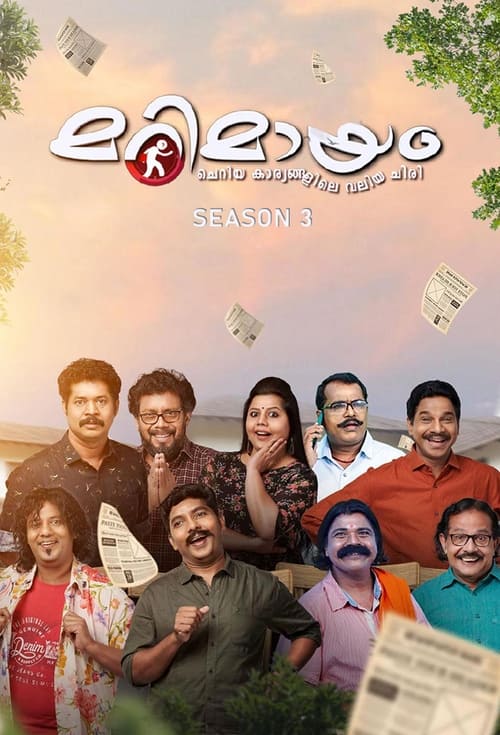








Popular
What specific events lead to the climax of Season 3?
What role does humor play in the interactions between the characters in Season 3?
How do the supporting characters contribute to the main storyline in Season 3?
What are the main conflicts faced by the characters in Season 3 of Marimayam?
How does the character Keshavan evolve throughout Season 3?
Should I watch it?
Ask Your Own Question

What is the plot?
In Season 3 of Marimayam, the series opens with the familiar setting of the local government office, where the characters are engaged in their usual bureaucratic antics. The episode begins with a humorous scene where the office staff is preparing for a surprise birthday party for one of their colleagues, leading to a series of comical misunderstandings about the party arrangements. The excitement is palpable as everyone tries to keep the preparations a secret, but the chaos of office life leads to several near-reveals.
As the party preparations unfold, the character of Kunjumon, known for his mischievous nature, decides to play pranks on his colleagues. He hides the birthday cake in a cupboard, leading to a frantic search when the time comes to present it. The tension builds as the characters scramble to find the cake, showcasing their quirky personalities and the dynamics of their relationships. Kunjumon's antics provide comic relief, but they also highlight the camaraderie among the staff.
In the next sequence, the office receives an unexpected visit from a government inspector, which throws everyone into a panic. The inspector is known for being strict and meticulous, and the staff fears that their disorganized office will be scrutinized. The characters quickly shift from party mode to crisis management, trying to clean up and present a more professional image. This leads to a series of frantic and humorous attempts to hide their mess, with each character contributing to the chaos in their own way.
As the inspector arrives, the atmosphere becomes tense. The characters attempt to act natural, but their nervousness is evident. The inspector begins to ask questions about the office's operations, and the staff struggles to provide coherent answers. This scene is filled with comedic moments as the characters inadvertently reveal their incompetence, leading to a series of misunderstandings that only escalate the inspector's suspicions.
Following the inspection, the characters regroup to discuss the outcome. They are relieved to learn that the inspector did not find any major issues, but the experience has left them shaken. This moment of relief quickly turns into a debate about how to improve their office efficiency. Each character presents their ideas, leading to humorous disagreements and exaggerated proposals that reflect their individual quirks.
In a subsequent episode, the focus shifts to a new character introduced as a motivational speaker who is brought in to inspire the staff. The speaker's over-the-top enthusiasm contrasts sharply with the staff's cynical attitudes, creating a comedic clash. The motivational session is filled with awkward moments as the speaker encourages team-building exercises that the staff finds ridiculous. The characters' reluctance to engage leads to a series of funny situations, showcasing their distinct personalities.
As the season progresses, the characters face various challenges, including a budget cut that threatens their office's operations. This development forces them to confront their shortcomings and work together in unexpected ways. The characters devise a plan to save their jobs, leading to a series of comedic schemes that involve community outreach and fundraising efforts. Each character's unique skills come into play, resulting in a blend of humor and heartfelt moments.
In the climax of the season, the characters organize a community event to raise funds. The event is chaotic, filled with mishaps and comedic blunders, but ultimately brings the community together. The characters' determination to succeed despite the odds showcases their growth and the bonds they have formed. The event culminates in a heartwarming moment where the community expresses their support, reinforcing the theme of unity.
The season concludes with a reflective moment among the characters as they celebrate their achievements. They acknowledge the challenges they faced and the lessons learned, but the comedic tone remains intact. The final scene features a humorous twist that leaves the audience laughing, as Kunjumon once again finds a way to turn a serious moment into a comedic one, setting the stage for future antics in the next season.









What is the ending?
In the ending of "Marimayam" Season 3, the various storylines converge as the characters face the consequences of their actions. The comedic chaos that has unfolded throughout the season reaches a climax, leading to resolutions that reflect their personal growth and the relationships they have built.
As the season wraps up, the main characters find themselves in a series of humorous yet poignant situations that highlight their individual journeys. The final scenes showcase a blend of laughter and reflection, leaving the audience with a sense of closure and the understanding that life continues with its ups and downs.
The final episode of "Marimayam" Season 3 opens with a bustling scene in the local market, where the characters are preparing for a community festival. The air is filled with excitement and the aroma of street food, setting a vibrant backdrop for the unfolding events.
Scene 1: The camera pans to the main characters, including the ever-optimistic Raghavan, who is busy organizing the festival. His enthusiasm is palpable, but there's an underlying tension as he worries about the turnout. Raghavan's internal motivation is clear; he wants to prove that he can bring the community together, despite previous failures.
Scene 2: Meanwhile, we see Meera, who is struggling with her own insecurities about her role in the festival. She is torn between wanting to support Raghavan and her fear of not being good enough. Her emotional state is one of anxiety mixed with determination, as she decides to step up and help with the decorations.
Scene 3: As the festival preparations continue, we shift to the comedic duo of Suresh and Babu, who are attempting to set up a food stall. Their banter is filled with humor, but it also reveals their deep friendship. Suresh is trying to impress a girl he likes, while Babu is more focused on the food than the romantic angle. Their contrasting motivations create a light-hearted tension that adds to the overall atmosphere.
Scene 4: The festival day arrives, and the market is alive with music and laughter. Raghavan's efforts seem to be paying off as the community gathers. However, a sudden mishap occurs when the food stall catches fire due to a cooking accident. The chaos that ensues is both comedic and frantic, showcasing the characters' quick thinking and teamwork.
Scene 5: In the midst of the chaos, Meera steps up, using her resourcefulness to help extinguish the fire and calm the crowd. This moment is pivotal for her character, as she finally embraces her strengths and gains confidence. The crowd cheers for her bravery, marking a significant turning point in her character arc.
Scene 6: As the fire is put out and the festival resumes, Raghavan reflects on the day's events. He realizes that despite the setbacks, the community has come together in a way he never expected. His internal journey culminates in a moment of pride and fulfillment, as he acknowledges that success isn't just about perfection but about connection.
Scene 7: The episode concludes with a heartfelt gathering of all the characters, sharing food and laughter under the stars. Each character's fate is tied to their growth throughout the season. Raghavan finds a renewed sense of purpose, Meera gains confidence, and Suresh and Babu strengthen their friendship.
The final scene fades out with the characters enjoying the festival, symbolizing the resilience of community and the importance of support and friendship. The laughter and joy encapsulate the essence of "Marimayam," leaving the audience with a warm feeling of hope and camaraderie as the credits roll.
Is there a post-credit scene?
In Season 3 of "Marimayam," there is no post-credit scene. The episodes typically conclude without additional content after the credits, focusing instead on the main storylines and character interactions throughout the episodes. The show maintains a consistent format, emphasizing humor and social commentary without the inclusion of post-credit sequences. Each episode wraps up its narrative within the main storyline, leaving viewers with the comedic resolutions typical of the series.
What specific events lead to the climax of Season 3?
The climax of Season 3 is built up through a series of escalating events that highlight the bureaucratic chaos within the local government. Key events include a major public event that goes awry due to mismanagement, leading to a confrontation between the characters. Tensions rise as Keshavan's ambitions clash with the realities of the situation, culminating in a humorous yet chaotic resolution that forces the characters to confront their shortcomings and work together to salvage the situation.
What role does humor play in the interactions between the characters in Season 3?
Humor is a central element in the interactions among characters in Season 3 of Marimayam. The comedic timing and witty dialogues create a light-hearted atmosphere, even amidst serious bureaucratic issues. Characters like Suresh and Keshavan often engage in banter that highlights their contrasting personalities, with Suresh's laid-back attitude clashing with Keshavan's seriousness. This humor not only serves to entertain but also acts as a coping mechanism for the characters as they navigate the absurdities of their work environment.
How do the supporting characters contribute to the main storyline in Season 3?
The supporting characters in Season 3 of Marimayam play crucial roles in enriching the main storyline. Characters like the witty and sarcastic office staff provide comic relief while also reflecting the absurdities of bureaucratic life. Their interactions with the main characters often serve to highlight the central themes of ambition and incompetence. For example, the character of the office peon often finds himself in the middle of the chaos, inadvertently influencing the outcomes of various situations, thus showcasing how each character, no matter how minor, contributes to the overarching narrative.
What are the main conflicts faced by the characters in Season 3 of Marimayam?
In Season 3 of Marimayam, the characters face various conflicts that revolve around their personal and professional lives. For instance, the bureaucratic challenges faced by the local government officials create tension, as they navigate the complexities of their duties while dealing with the absurdities of the system. Additionally, interpersonal conflicts arise among the characters, particularly between the ambitious and often overzealous characters like Keshavan and the more laid-back, humorous characters like Suresh, leading to comedic situations that highlight their differing motivations.
How does the character Keshavan evolve throughout Season 3?
Keshavan, portrayed as an ambitious and somewhat self-serving character, experiences significant development in Season 3. Initially, he is focused on climbing the bureaucratic ladder, often at the expense of his colleagues. However, as the season progresses, he begins to confront the consequences of his actions, leading to moments of self-reflection. This evolution is marked by his interactions with other characters, particularly when he faces setbacks that challenge his worldview, ultimately pushing him towards a more collaborative approach.
Is this family friendly?
"Marimayam," particularly in Season 3, is a comedy series that often incorporates social satire and humor that may not be suitable for all children. While the show primarily aims to entertain, there are a few aspects that could be considered objectionable or upsetting for younger viewers or sensitive individuals:
-
Mature Themes: The show occasionally touches on adult themes, including societal issues, relationships, and family dynamics that may not be easily understood by children.
-
Language and Humor: Some dialogues may include innuendos or humor that relies on cultural references or adult situations, which might not be appropriate for younger audiences.
-
Conflict and Tension: Certain episodes may depict interpersonal conflicts or arguments that could be distressing for sensitive viewers, as they explore the complexities of human relationships.
-
Social Commentary: The series often critiques societal norms and behaviors, which might include portrayals of negative stereotypes or situations that could be uncomfortable for some viewers.
-
Emotional Moments: There are scenes that delve into emotional struggles or conflicts among characters, which could evoke feelings of sadness or discomfort.
Overall, while "Marimayam" is primarily a comedic show, parents may want to preview episodes to determine their suitability for younger viewers.