








Popular
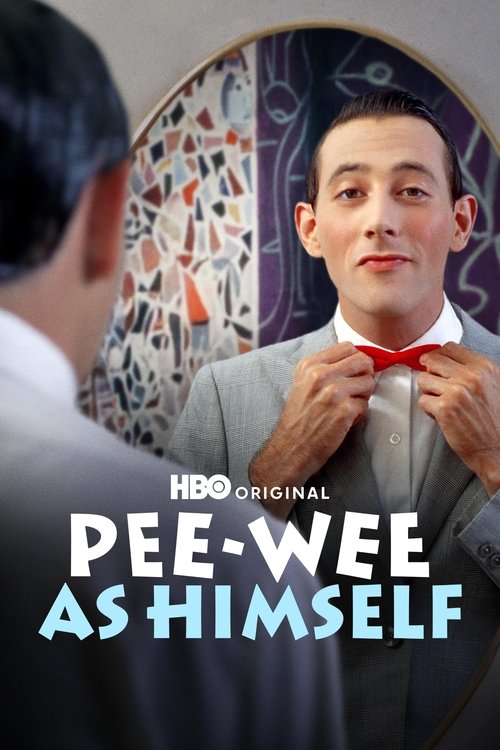
What aspects of Paul Reubens' life and career does Pee-wee as Himself focus on?
How does the documentary portray Paul Reubens' personal reflections?
What themes does Pee-wee as Himself explore regarding storytelling and public perception?
How is the relationship between director Matt Wolf and Paul Reubens depicted in the series?
What kind of portrait does Pee-wee as Himself offer of Paul Reubens as an artist?
Should I watch it?
Ask Your Own Question

What is the plot?
The series opens with Paul Reubens looking back on his early life and artistic formation, explaining that in the 1950s and 1960s he developed his performance instincts through CalArts and The Groundlings while building the Pee-wee Herman character from his influences in television, comedy, and performance art.
He then traces how Pee-wee Herman gradually becomes a fully realized alter ego rather than just a comic invention, and the documentary follows Reubens as he describes the process of separating that character from his private self while still using Pee-wee as the vehicle for his career.
The story moves into the breakthrough years, when Pee-wee gains major traction and Reubens becomes increasingly identified with the character. After the global success of Pee-wee's Big Adventure in 1985, he becomes fully immersed in Pee-wee's public identity, and the series presents this as the moment when fame starts to become complicated and difficult to control.
Reubens then describes the expansion of the character into television, culminating in Pee-wee's Playhouse and the height of Pee-wee's mainstream popularity. The series presents this period as a creative triumph, but also as the point at which Reubens' own identity is most thoroughly absorbed into the persona.
The narrative then turns to the backlash and collapse that follow the 1991 arrest, which the series identifies as a major rupture in Reubens' public life. The documentary depicts this as a scandal that damaged his reputation and forced him out of the center of the entertainment world.
After that, the series follows Reubens through the years of recovery and reinvention, including later returns through cameos and Broadway appearances. These later efforts are shown as part of a gradual restoration of his legacy, with Reubens working to reestablish himself after the years in which his name had been defined by scandal.
The final movement of the series presents him reflecting on his life and career in hindsight, with the documentary framing his own testimony as an effort to correct the public record and explain the choices behind his career, his alter ego, and the costs of separating Pee-wee Herman from Paul Reubens. The series ends by situating his later resurgence and restored reputation as the last major chapter before his death, leaving his story as both a celebration of the character and a portrait of the man who created him.
Related Titles
Browse All Titles →









What is the ending?
The ending of the 2025 documentary miniseries "Pee-wee as Himself" features Paul Reubens delivering his final thoughts in a poignant and dramatic scene recorded just one day before his death, reflecting on his life, career, and impending mortality.
In the final sequence of "Pee-wee as Himself," the narrative unfolds with Paul Reubens, the man behind the iconic Pee-wee Herman character, offering a deeply personal and philosophical reflection on death and legacy. After extensive interviews spanning 40 hours, Reubens, who had been battling blood cancer privately for six years, gradually reveals his thoughts on the finality of death and the significance of having the chance to tell his story on his own terms. The documentary captures a complex dynamic between Reubens and director Matt Wolf, with Reubens often resisting the process, asserting control over his narrative, and expressing discomfort with being the subject of the film.
As the documentary progresses toward its conclusion, it touches on the darker chapters of Reubens' life, including his 1991 arrest for indecent exposure, a moment that publicly derailed his career and deeply affected him. However, Reubens withdraws from the project before these parts are fully explored on camera, leaving some of the more sorrowful details to be conveyed indirectly.
The final scene is especially powerful: Reubens' last recorded words, spoken just a day before his death in 2023 from acute myelogenous leukemia and metastatic lung cancer, serve as a moving farewell. This moment encapsulates his desire to have the final word on his identity, both as Paul Reubens and as Pee-wee Herman, and underscores the documentary's themes of control, identity, and mortality.
Regarding the fate of the main participant, Paul Reubens, the documentary ends with the acknowledgment of his passing at age 70, having fought his illness privately while leaving behind a legacy as a uniquely talented and complex performer. The film does not focus on other characters at the end, centering entirely on Reubens' personal journey and final reflections.
Is there a post-credit scene?
Yes, the 2025 HBO documentary miniseries "Pee-wee as Himself" does have a post-credits scene. After the credits roll on the second part, there is a deeply emotional and poignant audio clip recorded by Paul Reubens the day before he died. In this clip, Reubens tries to answer questions and clear his name, presenting himself as a complex, charismatic, and human figure beyond the public controversies. The scene is accompanied by serene pastoral visuals--cats at sliding doors, deer in the Hollywood Hills, and a lynx near a pool--offering a glimpse into what Reubens might have seen in his final moments. His voice is strained as he delivers these final words, creating a heartbreaking and profound sense of loss that lingers as the documentary concludes.
What aspects of Paul Reubens' life and career does Pee-wee as Himself focus on?
The series focuses on Paul Reubens' life story, his creative process, and the creation of his beloved alter ego Pee-wee Herman, portraying his drive and how he negotiated life in the public eye, including the impact of his 2002 arrest and public labeling.
How does the documentary portray Paul Reubens' personal reflections?
It includes intimate moments such as a voice note recorded by Reubens the day before he died, where he reflects on his past controversies and the pain of being mischaracterized, revealing his desire to show who he really was.
What themes does Pee-wee as Himself explore regarding storytelling and public perception?
The documentary explicitly asks who has the right to tell a person's story, showing the tension between Reubens' own perspective and the public narrative, especially in the age of social media and traditional media scrutiny.
How is the relationship between director Matt Wolf and Paul Reubens depicted in the series?
Matt Wolf is shown as deeply respectful and admiring of Reubens, determined to do right by him and to make meaning out of his story, which results in a film that captures Reubens' humanity, even in unflattering moments.
What kind of portrait does Pee-wee as Himself offer of Paul Reubens as an artist?
The series offers a touching and honest portrait of Reubens as a creative technician who rarely revealed himself publicly, explaining his artistic drive and the challenges he faced in sharing his true self with the world.
Is this family friendly?
The TV miniseries "Pee-wee as Himself" (2025) is a documentary portrait of Paul Reubens, the man behind the Pee-wee Herman character, focusing on his life, career, and personal reflections rather than the fictional Pee-wee persona. It is not a typical family-friendly children's show but rather an adult-oriented documentary exploring complex themes including Reubens' creative process, personal struggles, and public controversies.
Potentially objectionable or upsetting aspects for children or sensitive viewers include:
- Discussion and depiction of adult themes such as Reubens' arrests in 1991 and 2002, which involve mature legal and personal issues.
- Exploration of Reubens' private life, including struggles with identity and media sensationalism.
- Some archival footage and interviews may contain candid or intense emotional content reflecting the challenges he faced.
- The tone is reflective and sometimes somber, with no attempt to sanitize or glamorize difficult aspects of his life.
Because it is a documentary aimed at adults interested in the real person behind a beloved character, it is not designed as family entertainment or for young children. Sensitive viewers should be aware that it deals with mature and complex subject matter without plot spoilers or fictional storylines typical of children's programming.









