
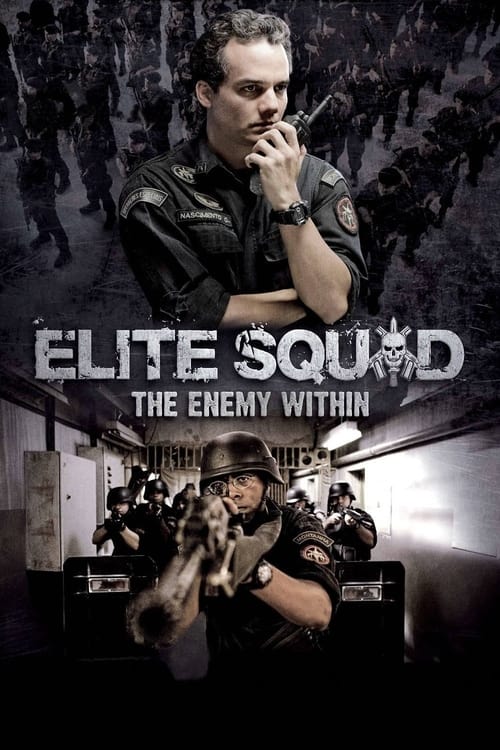































Popular
What motivates Captain Nascimento to take drastic actions against corruption within the police force?
How does the relationship between Nascimento and his son evolve throughout the film?
What role does the character of Captain Fábio play in the narrative, and how does he influence Nascimento's decisions?
How does the film portray the relationship between the police and drug traffickers in Rio de Janeiro?
What are the consequences of Nascimento's decisions on the police force and the community?
Should I watch it?
Ask Your Own Question

What is the plot?
Sorry, we aren't able to watch and write up a full detailed plot yet. Check back in a few days.








What is the ending?
In the ending of "Elite Squad: The Enemy Within," Captain Nascimento confronts the corruption within the police force and the government. He ultimately decides to leave the BOPE and take a stand against the system. The film concludes with a sense of unresolved tension, highlighting the ongoing struggle against corruption in Brazil.
As the film approaches its climax, we find Captain Nascimento grappling with the moral complexities of his role within the BOPE and the pervasive corruption that surrounds him. The narrative builds tension as Nascimento, who has been a staunch enforcer of the law, begins to see the cracks in the system he has dedicated his life to protecting.
In a pivotal scene, Nascimento attends a meeting with high-ranking officials, where he is confronted with the reality of police corruption. The atmosphere is thick with tension as he realizes that the very people he has trusted are complicit in the criminal activities that plague the city. This moment is a turning point for Nascimento, as he feels the weight of betrayal and the futility of his efforts to combat crime through brute force alone.
As the story unfolds, Nascimento's relationship with his partner, Captain Fábio, becomes strained. Fábio, who has been a loyal ally, is increasingly drawn into the corrupt practices that Nascimento despises. Their conversations are fraught with emotional conflict, as Nascimento tries to convince Fábio to see the truth, while Fábio struggles with the allure of power and the dangers of defying the system.
In a dramatic confrontation, Nascimento faces off against the corrupt officials and the drug lords who have infiltrated the police force. The tension escalates as he realizes that the fight against crime is not just a battle against the drug trade but also against the very institutions meant to uphold justice. The stakes are high, and Nascimento's resolve is tested as he weighs the consequences of his actions.
In the final scenes, Nascimento makes the difficult decision to leave the BOPE. He understands that his fight against corruption cannot be won from within a system that is fundamentally broken. This decision is not made lightly; it is filled with a sense of loss and resignation. He reflects on his journey, the lives he has impacted, and the sacrifices he has made. The emotional weight of his choice is palpable as he walks away from the life he has known.
The film concludes with Nascimento standing on the streets of Rio de Janeiro, looking out at the city he has fought to protect. The camera captures the chaos and beauty of the city, a stark reminder of the ongoing struggle against corruption and violence. The ending leaves viewers with a sense of unresolved tension, as the fight for justice continues, echoing the film's central themes of morality, loyalty, and the complexities of power.
As for the fates of the main characters, Nascimento steps away from the BOPE, symbolizing a rejection of the corrupt system. Fábio, who remains entrenched in the corrupt practices, represents the tragic reality of those who choose to compromise their values for power. The film closes on a note of ambiguity, suggesting that while Nascimento may have left the BOPE, the battle against corruption is far from over, leaving the audience to ponder the future of both the characters and the society they inhabit.
Is there a post-credit scene?
"Elite Squad: The Enemy Within" does not have a post-credit scene. The film concludes its narrative without any additional scenes after the credits roll. The story wraps up with a focus on the themes of corruption, moral dilemmas, and the complexities of law enforcement in Brazil, leaving the audience to reflect on the events and character arcs presented throughout the film.
What motivates Captain Nascimento to take drastic actions against corruption within the police force?
Captain Nascimento is driven by a deep sense of duty and a desire to protect his family and the community from the rampant violence and corruption that plague Rio de Janeiro. His internal struggle is amplified by the realization that the very institution he serves is compromised, leading him to make morally ambiguous decisions in his quest for justice.
How does the relationship between Nascimento and his son evolve throughout the film?
The relationship between Nascimento and his son is strained, primarily due to Nascimento's obsession with his work and the violent world he inhabits. As the story progresses, Nascimento's attempts to shield his son from the harsh realities of his job create tension, ultimately leading to moments of vulnerability where he reflects on the impact of his choices on his family.
What role does the character of Captain Fábio play in the narrative, and how does he influence Nascimento's decisions?
Captain Fábio serves as a foil to Nascimento, representing the idealistic yet naive approach to policing. His commitment to reform and his belief in the system challenge Nascimento's more cynical view. Fábio's influence pushes Nascimento to confront his own beliefs about justice and the effectiveness of the police force, ultimately leading to a clash of ideologies.
How does the film portray the relationship between the police and drug traffickers in Rio de Janeiro?
The film depicts a complex and often violent relationship between the police and drug traffickers, illustrating a cycle of corruption and betrayal. The police are shown as being deeply infiltrated by criminal elements, leading to a lack of trust and cooperation. This dynamic creates a tense atmosphere where both sides are constantly at odds, highlighting the moral ambiguities faced by characters like Nascimento.
What are the consequences of Nascimento's decisions on the police force and the community?
Nascimento's decisions, particularly his willingness to resort to extreme measures to combat corruption, have far-reaching consequences. While he aims to restore order, his actions often lead to increased violence and further entrenchment of corruption within the police force. The community suffers as a result, facing the fallout of a system that prioritizes power and control over genuine reform.
Is this family friendly?
"Elite Squad: The Enemy Within" is not considered family-friendly due to its intense and mature themes. The film contains several potentially objectionable or upsetting scenes, including:
-
Graphic Violence: The film features numerous scenes of brutal violence, including shootouts and physical confrontations, which may be disturbing for younger viewers.
-
Corruption and Crime: The narrative delves into themes of police corruption, drug trafficking, and organized crime, presenting a grim view of law enforcement and societal issues.
-
Strong Language: The dialogue includes frequent use of profanity, which may not be suitable for children.
-
Drug Use: There are depictions of drug use and the drug trade, which could be upsetting or inappropriate for sensitive viewers.
-
Moral Ambiguity: The characters often face morally complex situations, leading to ethical dilemmas that may be difficult for younger audiences to understand.
-
Emotional Turmoil: Characters experience significant emotional distress, including betrayal, loss, and moral conflict, which may resonate deeply and be unsettling for some viewers.
Overall, the film's mature content and heavy themes make it more appropriate for adult audiences.









