

























Popular
What motivates the character of Pastor Abin Cooper in Red State?
How do the characters of the three teenagers, Travis, Billy-Ray, and Jarod, end up at the Cooper compound?
What role does the ATF play in the events of Red State?
What is the significance of the character of Deputy Cheche in the story?
How does the film depict the relationship between the Cooper family members?
Should I watch it?
Ask Your Own Question

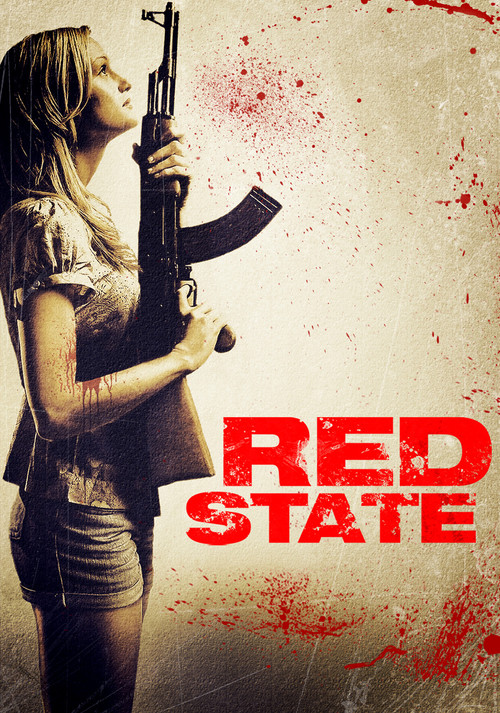
What is the plot?
Classroom chatter hums in a small-town high school somewhere in rural Middle America, the fluorescent lights buzzing faintly overhead. At the front of the room, a teacher guides a discussion about a recent hate‑crime murder: a gay man beaten and killed, the perpetrators linked to the radical Five Points Trinity Church. The name hangs over the room like a storm cloud: Pastor Abin Cooper's flock. Everyone knows the church as a local menace, a fringe of hate that still somehow feels too close. Teenagers mutter, some condemning, some shrugging, but the message is clear--this is a place where faith has curdled into something dangerous.
Across town, on a lonely stretch of two‑lane blacktop flanked by endless fields, Sheriff Wynan sits in his parked patrol car in a secluded pull‑off. The world outside is dark, quiet, emptied out. Inside the car, Wynan, a middle‑aged man with the easy authority of a long‑time small‑town cop, is in the middle of furtive sex with another man. The contact is hurried, tense, suffused with fear. When they finish, the other man slips away into the night. Wynan adjusts his uniform, wipes sweat from his brow, and glances around, terrified someone might have seen. He starts his car and pulls out, the taillights shrinking down the road.
Not long after, three teenage boys--Travis, Jarod, and Billy Ray--barrel down that same two‑lane road in their beat‑up car. They are high‑school friends, faces still soft with youth and bravado, obsessed with sex and porn and the next dirty joke. Jarod sits in the back seat, clutching his phone, the glow of the screen bright in the dark car. He has answered an online ad from an older woman promising a gang‑bang. A 38‑year‑old, she wrote. Up for a foursome. No strings. No questions. Just come to her trailer.
In the front, Travis drives, cracking jokes, while Billy Ray snickers in the passenger seat. Their conversation is crude, juvenile, giddy with anticipation. Safety never crosses their minds. This is a fantasy come true.
Travis, not paying attention, swerves slightly. The car suddenly shudders--metal scraping metal. He's sideswiped a parked vehicle, a sheriff's car sitting half off the shoulder. The teens shout, hearts pounding.
"Shit, what was that?" Billy Ray yells.
"Must've been parked too close," Travis snaps, more worried about missing the rendezvous than about property damage.
Jarod twists around and sees the sheriff's logo in the rear window fading into the night. "Dude, that was a cop car."
"Then we really don't stop," Travis says, stomping the accelerator. The car speeds off, taillights disappearing into the rural darkness.
Some time later, Wynan returns to his cruiser, finds the damage, and stiffens in panic. It's not the dented fender that terrifies him; it's the possibility that any investigation of the accident might expose what he was doing here. At the sheriff's station--a cramped, functional office where the walls are lined with old photos and certificates--he slams his keys down and calls his deputy, Pete.
"Some little punks tagged my car out on County Road," Wynan tells him, trying to sound gruff instead of scared. "You see a vehicle with red paint on the side, you pull 'em over. Quiet, you hear me? No reports, no paperwork unless I say."
Pete, earnest and loyal, nods. "Yes, sir. You all right?"
"I said it's fine. Just find that damn car."
He doesn't say the rest: that if anyone starts digging into why his cruiser was parked in that hidden turnout, his secret gay life could ruin him.
Meanwhile, the boys follow the directions from the online ad, their headlights sweeping across the trees as they turn off the main road and onto a narrow track that winds through woods. Eventually they pull up in front of a dilapidated trailer, its aluminum skin dull under a single porch light. It looks shabby, isolated, the kind of place people forget exists.
"Dude, this is… perfect," Billy Ray laughs nervously.
They step out, walking up the groaning steps. The door opens before they can knock. A woman stands there, late thirties or older, dressed in plain clothes, her hair pulled back. This is Sarah Cooper. Her smile is polite but oddly flat, her eyes measuring them.
"You boys Jarod, Travis, and Billy Ray?" she asks mildly.
"Yeah," Jarod says, trying to sound grown‑up. "You must be Sarah."
She nods and steps aside. "Come on in. I got beer in the fridge."
Inside, the trailer is cramped but tidy. A small kitchen, a worn couch, muted colors. Sarah moves with the unhurried calm of someone used to playing host. She takes three cold beers from the refrigerator, pops the tops, and hands them out.
"Figured you might want to loosen up," she says, glancing at them with a faint, knowing smile.
The boys don't hesitate. They drink greedily, nerves smoothing into smugness. There's a faint off taste, but none of them question it. They talk, joke, brag about what they plan to do. Sarah listens, saying little, an inscrutable presence in the cramped space.
The room starts to tilt. Travis blinks, hand tightening on the beer bottle. Jarod's head feels thick, his words slowing. Billy Ray laughs, then slurs mid‑sentence.
"What… what did you…?" Travis tries to say.
Sarah just watches, her expression still mild. The floor seems to rise toward them. The boys slump, their limbs heavy, their eyelids too hard to keep open. The last thing Jarod sees is Sarah's impassive face looking down at him as the world fades to black.
Darkness.
Jarod wakes to suffocating darkness and the muffled murmur of voices. He's upright, cramped, something hard pressing against his back and sides. Panic surges. He pushes forward and hits wood, cloth. When he shifts, his cage creaks.
Above him or nearby, the murmur grows into hymn‑like singing. Then lights flicker through cracks, and someone pulls back a covering. Jarod blinks into the harsh glow of a sanctuary: wooden pews arrayed in rows, faces turned toward the front. He's in a cage at the front of a church sanctuary.
He recognizes the place not from having visited, but from news stories and whispered conversations: Five Points Trinity Church.
The congregation faces the pulpit where Pastor Abin Cooper stands, a lean, older man with white hair and a benign, faintly amused expression that doesn't match the venom in his tone. He preaches in a rich, folksy baritone, the cadence of a man who knows how to hold a room.
"America has turned her back on God," Cooper declares, his voice echoing in the rafters. "She wallows in filth--homosexuals parading their sin, fornicators rutting in the streets, and you, my children, are all that stand between this nation and total damnation."
Jarod grips the bars of his cage, trying to speak, but his voice croaks uselessly. He looks around for Travis and Billy Ray, but they are nowhere in sight. Instead, the congregation's attention is fixed on something else--a figure, bound and gagged, strapped to a wooden crucifix‑like frame standing near the pulpit.
It is a captive gay man, the latest sacrifice to the church's hatred.
Cooper's sermon tightens around the man like a noose. He steps closer, pointing at the trembling victim.
"This man," Cooper says, "embodies everything the Lord abhors. He flaunts his perversion. He seduced good Christian men into sin. And what does the Good Book say? 'They which commit such things are worthy of death.'"
The congregation murmurs, some nodding, some muttering "Amen." Children sit among them, their faces solemn and accepting. Hate has been taught to them like scripture.
Beneath the sanctuary, in the hidden crawl space, two other drugged captives are regaining consciousness. Travis and Billy Ray lie bound together, wrists tied, backs pressed against each other on cold dirt. Above them, Cooper's voice vibrates through the floor. They can't see what's happening, but they can hear every word, every cruel cheer.
"What the hell is this?" Billy Ray whispers, struggling against the ropes.
"Shut up and listen," Travis hisses, his own fear sharpening his focus.
They hear the captive gay man's muffled cries above, the sickening ritual of humiliation as Cooper and the congregation spit homophobic slurs. The preaching builds to a crescendo.
"God's justice will be done," Cooper intones.
Then a gunshot cracks like thunder. The singing stops. The body hits something, and a moment later, a hidden trap door in the sanctuary floor creaks open. The executed man's corpse drops into the crawl space, landing near Travis and Billy Ray with a dull, heavy thud. Blood seeps into the dirt.
Travis stares at the dead man lying inches away, head blown out.
"Oh my God. Oh my God," Billy Ray whispers, voice breaking.
"They're gonna do that to us," Travis says quietly, understanding with a clarity that cuts through the last of the drug. "They're gonna kill us."
Above them, the congregation resumes singing, this time with the ecstatic fervor of people convinced they have pleased their God.
Back in the cage, Jarod trembles as Cooper's gaze finally turns to him.
"And this one," Cooper says, gesturing at the boy imprisoned on display, "came here to fornicate. Answered a call to rut in filth with a woman not his wife, to spill his seed in sin. You see how easy Satan works? All he needed was a computer and a lonely heart."
The congregation chuckles darkly.
"Please," Jarod croaks, voice raw. "Please, I just… I'm sorry, okay? I'm sorry."
Cooper regards him, head tilted. "Sorry ain't the same as repentant, son." His voice is almost gentle. "And besides, the wage of sin is death."
Jarod sobs in his cage as church members prepare another crucifix frame nearby. The ritual will repeat, and this time he will be the sacrifice.
In the crawl space, Travis tests the ropes binding his hands. They're tight but not impossible. The adrenaline of terror sharpens his strength, and the rough fibers start to give.
"We gotta get out," he whispers. "Billy, push with me. On three."
Together they twist and strain, their shoulders grinding painfully. Above them, Cooper's sermon shifts slightly; he begins preparing the congregation for Jarod's execution, describing the boy's sins, his lust, his online invitation. As he speaks, Travis manages to loosen one knot enough to slip a wrist free. Gasping, he unties his other hand, then fumbles with Billy Ray's bonds.
On the sanctuary floor, some congregants move toward Jarod's cage, keys jangling. Cooper lifts his arms, closing his eyes in prayer as he readies to oversee another killing. Then, through a distant window at the back of the sanctuary, he notices headlights sweeping across the church grounds. A car is approaching along the gravel drive.
He squints, and even from the pulpit, he can make out the shape: a county sheriff's vehicle. Deputy Pete has followed Sheriff Wynan's order, tracked the damaged mystery car's plate or description, and the trail has led him to the church compound.
Cooper lowers his arms, pausing mid‑ritual. "Hold a moment," he says to his flock. "The Enemy approaches."
Jarod's execution is postponed for now.
Travis frees Billy Ray completely. The dead man's body lies beside them, a gruesome warning. Above, footsteps thud as Cooper moves to address whatever threat the arriving car represents. Travis and Billy Ray move toward the edges of the crawl space, searching for any exit. It's dark, low, full of beams and dust, but Travis's fingers eventually brush against a rough panel, a hatch leading up into another part of the church.
"We go up," Travis whispers.
Billy Ray hesitates. "We don't know what's up there."
"We know what's down here," Travis snaps, glancing at the corpse. "Move."
In the sanctuary parking area, Deputy Pete pulls his cruiser up, eyes narrowing at the sight of the compound. The church sits on farm‑like grounds--sanctuary, outbuildings, modest homes clustered around. It looks peaceful, but the reputation of the Five Points Trinity Church and Cooper's connection to recent killings hums at the edge of Pete's thoughts.
He steps out, adjusting his belt, and approaches the main building cautiously. Inside, Cooper has already signaled his people. Men and women slip into positions, some picking up weapons, others moving children to the back rooms.
Deputy Pete knocks on the church door, then pushes it open a crack.
"Sheriff's Department," he calls. "Anybody here?"
Before he can step fully inside, a shot rings out from within. A Cooper follower, armed and ready, fires. Pete jerks, a red bloom spreading across his uniform. He staggers back onto the porch, gasping, then collapses. With the last of his strength, he grabs his radio and chokes out a call toward Wynan, giving his location, naming the church, before the life bleeds out of him.
His body lies crumpled at the threshold.
That desperate call is enough. Law enforcement attention begins to pivot toward the Five Points Trinity Church in a way the Coopers have both feared and prepared for.
Inside, Travis and Billy Ray clamber up through the hatch into a back corridor. The church's innards are a maze of hallways and small rooms, plain but functional. They hear muffled yelling, movement, distant hymns, and now the harsh bark of commands as the congregation mobilizes.
"Get the guns," someone shouts. "They're here!"
Billy Ray panics. "Travis, they're everywhere. We gotta hide."
"Not just hide," Travis says, breath coming fast as he scans for an exit. "We need to get the hell off this property."
They slip down a hallway, but before they can get far, a younger church member--Caleb, a teenage or young adult congregant--spots them. He has the intensity of someone raised in this ideology, eyes bright with certainty, a rifle already in his hands.
"Hey!" Caleb shouts. "Sinners!"
Travis bolts one way. Billy Ray instinctively runs the other, deeper into the building. Caleb chooses a target and chases Billy Ray, boots thudding on the wood.
"Billy!" Travis hisses, torn for a moment, then ducks behind a door, pressing himself into the shadows.
Caleb fires a warning shot as Billy Ray crashes through a door at the end of the hall. He stumbles into a room and skids to a stop, stunned. Racks line the walls, loaded with assault rifles, shotguns, and crates of ammunition. This is the church weapons room, a hidden arsenal that confirms everything people have whispered: the Five Points Trinity Church is not just hateful; it is armed for war.
Caleb steps in behind him, breath ragged, gun raised. Billy Ray's eyes dart, pulse hammering. He spots a shotgun leaning against a crate. Time slows.
Caleb's face is twisted, not with sadism but with righteous fury. "You think you can come here and defile our women?" he snarls. "You think you can mock God?"
"I didn't know, man," Billy Ray stammers, edging toward the shotgun. "We didn't know what this was."
Caleb's grip tightens. "You knew enough to sin."
He raises the rifle. In the same heartbeat, Billy Ray lunges, grabbing the shotgun, swinging it up. Two shots explode almost simultaneously--rifle and shotgun. The room flashes with muzzle fire. Both boys jerk as bullets tear into them. Caleb's eyes go wide as he falls back into a rack of guns. Billy Ray collapses where he stands, the shotgun dropping from numb fingers, his blood mixing with Caleb's in the room full of weapons.
Both die there, two young men on opposite sides of a twisted faith, killing each other for reasons neither fully understood.
Down another hall, Travis hears the shots and flinches. He swallows, grief and terror merging into a single, raw drive to survive. He doesn't know for sure, but some part of him understands that Billy Ray is gone.
He edges forward until he finds another door and peeks through. He's back near the sanctuary now, looking down from a side balcony. Below, he sees Jarod still in the cage, trembling, as Cooper's congregation swirls in agitation around him. They're armed now; some have rifles slung over their shoulders. Cooper's voice cuts through the chaos, issuing instructions.
"Brothers, sisters, do not fear," he calls. "The government's dogs have come, just as the Lord promised. But we are prepared. We have made ready our house."
Travis slips into a side room where a few weapons have been laid out. In a daze, he picks up a rifle, feeling its unfamiliar weight. For a moment, rage burns in him. He could step out onto that balcony, aim at Cooper, and unleash the kind of violence they've turned on others. He raises the gun, sights through it, the crosshairs trembling over the pastor's head.
But then he sees Jarod, helpless in the cage, and dozens of children clustered near their parents, caught in the crossfire of a war they didn't start. He falters. Whatever vengeance flickered inside him is drowned by the realization that he would be no better than them if he starts slaughtering from the shadows.
He lowers the gun, heart pounding, and backs away. He has to get out, then maybe he can somehow help Jarod from outside. He moves toward the rear of the building, searching for a door that leads to the open air.
Outside the compound, the world is shifting. Deputy Pete's death call has triggered more than just local concern. ATF agents, already investigating Five Points Trinity Church for firearms violations, accelerate their plans. Agent Joseph Keenan, a weary but competent ATF regional head, arrives in the area. His mobile command is set up around the church grounds--dark federal SUVs, tactical trucks, radios crackling, snipers moving into position overlooking the compound.
Keenan's face is lined with experience and quiet skepticism. He has dealt with armed religious groups before, seen how quickly things can go wrong. He knows they have a warrant for Cooper's arrest on firearms charges and probable cause to suspect more. He also knows that Sheriff Wynan is compromised by his own secrets, though the specifics don't matter to him as much as the practical reality: local law enforcement is shaky.
In the makeshift perimeter, Keenan confers with Agent Brooks, one of his men. They discuss the plan: contain, call out Cooper, show the warrant, arrest him, catalogue the weapons, and hopefully avoid bloodshed.
"Doubt they'll just walk out and hand us their guns," Brooks says dryly.
"Yeah, well," Keenan replies, "we still gotta ask nice first."
He picks up a loudhailer, steps out where he can be seen, and orders his people to hold fire.
Inside the sanctuary, tension thickens as congregants peer through windows at the federal vehicles encircling their land. Cooper walks to one of the windows, moving the curtain aside just enough to see the line of armed men outside. He smirks, recognizing an old prophecy in this moment: the godless state coming to destroy God's chosen.
Keenan lifts the loudhailer. His voice booms across the yard.
"Abin Cooper! This is Special Agent Joseph Keenan with the Bureau of Alcohol, Tobacco, and Firearms. We have a warrant for your arrest on firearms violations. We're not here about your beliefs, we're here about your weapons. You and your people need to come out unarmed and surrender peacefully."
For a long moment, nothing happens. Then a figure appears at an upper window: Cooper himself, framed by stained glass, holding a hunting rifle like a ritual object.
He leans out just enough to line up a shot. Keenan and his team see the movement; Brooks steps forward, squinting.
"Is that--?" Brooks begins.
Before he can finish, Cooper fires. The crack of the hunting rifle shatters the stand‑off's brittle calm. Agent Brooks's head snaps back, a spray of blood arcing into the air. He collapses to the ground, dead before he hits the dirt.
There is a heartbeat of stunned silence.
Then the world erupts.
Gunfire explodes from both sides. ATF agents dive for cover, returning fire at the church façade. The Cooper congregation responds with their illegal arsenal, rifles barking from windows and doorways. Bullets chew through wood, shatter glass, send splinters raining down on hymnals and pews. The church, once a place of supposed worship, becomes a battlefield.
Sheriff Wynan, who has arrived at the perimeter, staggers into the chaos. His face is pale, his nerves frayed--not only by the firefight but by the fear that any fallout will expose his secret. He shouts into his radio, trying to coordinate with Keenan, but his words are swallowed by gunshots.
Inside, children scream as bullets punch through walls. Cooper strides through the sanctuary, shouting scripture and orders in the same breath.
"The Lord is our shield!" he roars. "Do not fear those who can kill the body but not the soul!"
Travis, who has maneuvered to a back exit, hears the battle erupt behind him. He grips his stolen rifle, near the threshold. The door opens onto the church grounds, where he can see ATF agents in cover positions and the bodies already sprawled in the dirt--some cult members, some law enforcement.
He pushes the door open and steps out, hands shaking, the rifle in front of him. In the smoke and confusion, he looks like just another armed figure emerging from the church.
Sheriff Wynan, jittery and terrified, sees movement near the building. He barely registers that the figure is young, just that he's armed and coming from the compound. His mind, frayed by guilt and panic, narrows to a single conclusion: threat.
"Drop the weapon!" Wynan screams, raising his gun.
Travis freezes, turning toward the voice. He opens his mouth.
"I--"
A single shot cracks. Wynan's bullets slam into Travis's chest. The boy staggers, eyes wide with disbelief and pain. He drops the rifle and collapses in the grass, gasping. Blood spreads across his shirt. Whatever he might have said dies on his lips.
Sheriff Wynan realizes, a second too late, that he just killed one of the kids the church abducted. Horror flickers across his face, but there is no time to process it. A barrage of gunfire from the church rips into his position. He attempts to move, to scramble to safety, but bullets find him. Wynan jerks, then falls beside the boy he mistakenly shot, both of them lying still in the churned earth.
With Brooks dead, Travis and Billy Ray gone, Deputy Pete and Sheriff Wynan killed, the human cost is already immense. And the siege has barely begun.
Keenan takes cover behind a vehicle, thinking fast. The plan to serve a warrant has dissolved into a Branch Davidian–style stand‑off. The Cooper compound is now an armed fortress that has murdered a federal agent. Keenan's radio crackles with frantic calls: agents pinned down, wounded, the church firing from multiple points. In Washington, higher‑ups monitor the situation, worried less about lives and more about optics--memories of previous fiascos like Waco hovering over every decision.
At some point during the firefight, Keenan is called away from the immediate front line to take a phone call from ATF headquarters. He steps behind a vehicle, breath ragged, and presses the phone to his ear.
The voice on the other end is firm, bureaucratically calm.
"We can't afford another media circus," his superior says. "We already lost one agent. This is going to look bad enough."
Keenan listens as the directive becomes clear: escalate. No more negotiations. Conduct a full raid and ensure there are no witnesses from inside the compound. No survivors who can talk to the press about missteps, about the warrant, about how this spiraled from arrest to slaughter. It is a kill‑everyone order, couched in the antiseptic language of operational necessity.
"You're telling me to wipe them out," Keenan says, his voice low.
"You're to neutralize all threats," the voice replies. "We'll handle the paperwork. We can't have this turn into another disaster. Do you understand?"
He does. Too well.
When Keenan returns to the tactical cluster, he calls over Agent Harry, one of his subordinates--a moral center in this murky operation. Away from the others, Keenan relays the order as bluntly as he can.
"They want us to go in hard," he says. "Full raid. No survivors."
Harry stares at him, disbelief turning quickly to anger. "That's not an arrest, Joe. That's a massacre."
"Maybe," Keenan says. "But that's the order."
Harry's jaw clenches. "You know that's illegal. You know that's wrong."
Keenan's eyes are weary, conflicted. He thinks of his career, of the dossiers on past botched raids, of how quickly the higher‑ups will sacrifice him if this becomes a public relations nightmare. "I know what happens if we don't," he says. "They hang us out to dry. They make us the face of this mess."
"So you'd rather shoot women and kids than take a hit on your pension?" Harry demands.
Keenan doesn't answer directly. His silence is its own confession.
"I'm not doing it," Harry says finally. "You can court‑martial me, you can fire me, whatever. I'm not killing civilians because some suit in D.C. is scared of bad press."
He storms off, disgusted, refusing to participate in the slaughter his own agency is ordering. Keenan watches him go, trapped between his conscience and his survival. Then he turns back to the operation and starts issuing commands that will tighten the noose around the church.
Inside the compound, amidst the gunfire and shouted prayers, Cheyenne Cooper--Sarah's teenage daughter and one of Abin's grandchildren--moves through the chaos. She has grown up steeped in this doctrine, taught that the outside world is evil and her family's church is salvation. But the reality of bullets chewing through walls and people she knows falling bleeding to the floor cracks that certainty.
She hears Sarah barking orders, helping to shuttle younger children to a back room, telling them to pray and be brave. Cheyenne's eyes fill with tears. She imagines all of them dead, the children's bodies cooling in the pews. The idea that this is God's will suddenly feels thin and brittle.
Cheyenne makes a decision. She grabs a few of the youngest kids--or in some accounts, tries to--intent on getting at least someone out of this slaughter. Either way, she slips out of a side door and runs across the church grounds toward what she thinks is safety.
The sun is high, casting harsh light over the carnage. Shots crack past her, agents screaming for positions, cult members firing from windows. Cheyenne runs, arms pumping, her breath sobbing in her chest. She is a teenage girl in a simple skirt and blouse, wholly unprepared for war.
An ATF sniper, set up on the perimeter and peering through his scope, sees her burst from the building. He tracks her, rifle steady. Through the magnified lens, he sees she is young, unarmed, terrified. He lifts his finger off the trigger.
He calls out softly, voice calm. "Hey! Stop! Stop where you are!"
Cheyenne, hearing him, stumbles to a halt, chest heaving, eyes wide. She looks toward his position, seeing only the glint of glass and the vague shape of a man behind it.
"Please," she sobs. "Please don't shoot."
He keeps his crosshairs on her center mass, torn between duty and humanity. Over his com‑link, the channel crackles. It's the new directive, passed down from Keenan: no one from inside the compound leaves alive.
"All inside are considered hostile," the message says. "No survivors. Execute the order."
The sniper closes his eyes briefly, sickened. Then he opens them, and his training takes over. His finger tightens on the trigger. He is about to kill a surrendering teenage girl because a voice in his ear told him to.
Before he can fire, a new figure appears in his peripheral vision. Sarah Cooper, having seen her daughter bolt from the building, has followed. She steps out onto the grounds, sees the sniper with his rifle trained on Cheyenne, and without hesitation raises her own gun.
She fires. The bullet slams into the sniper, knocking him back from his perch. He falls, dead, his rifle clattering aside. Cheyenne hears the shot and screams, but Sarah is already at her, grabbing her by the arm, dragging her back toward the church.
"Momma--" Cheyenne chokes out, torn between relief and horror.
"You stay inside," Sarah orders, voice fierce. "You stay with your family. We're going home soon. We're all going to Heaven."
Cheyenne stares at her, tears streaking her face. The word "Heaven" no longer sounds comforting; it sounds like surrender to mass death. But Sarah's grip is iron, her faith unshaken even as she kills to defend her daughter in what she believes is their final earthly test.
Inside, the firefight continues, both sides losing people. ATF agents fall behind cars and in the tall grass, some shot by cultists who have trained for this day. Congregants fall in doorways and aisles, their blood staining hymnals and Bibles. Among the dead will be many of Abin's family members and followers. The film does not linger to painstakingly name each one, but the body count climbs.
At some point, at the height of the chaos, a strange sound cuts through the gunfire. It is loud, deep, resonant--a trumpet‑like blast that seems to come from the sky itself. Everyone, inside and outside, hears it. Bullets pause mid‑flight as fingers hover off triggers; heads turn upward instinctively.
The sound is eerie, metallic yet almost musical, like a great horn being blown in the distance. It echoes over the fields, reverberating off the church walls.
Inside the sanctuary, Cooper stops mid‑shout. His eyes widen, face flushing with excitement. Many congregants gasp, then begin crying, praying, clutching one another.
"The Seventh Trumpet!" someone cries.
"It's the Lord!" another shouts.
Cooper's voice booms, now full of exultant certainty. "Do you hear that?!" he yells. "The Lord has sounded His trumpet! The end is at hand! The angels come! Our martyrdom is upon us! Rejoice!"
Some of his followers laugh with joy through their tears, convinced that the apocalypse is literally sounding in their ears. They believe their deaths will now be not just tragic but divinely orchestrated, a straight path to eternal reward.
Outside, ATF agents look at one another, shaken. The noise is unsettling even to men who don't believe in apocalyptic scripture. A few mutter theories--nearby factory siren, some kind of alarm. No one knows in the moment. For a brief interval, gunfire falters as both sides are distracted by the inexplicable sound.
The trumpet blast comes again, then again, and eventually fades. Its origin is unknown to the combatants. But the psychological effect is real. Inside the church, the Coopers are more convinced than ever that their violent end is ordained. Outside, the ATF, unnerved and confused, begins to recalibrate, some doubting the wisdom of pressing the attack.
Between the attrition of casualties and the disorienting sound, the firefight does not sustain its initial ferocity forever. At some point after the horn blast, the momentum shifts. The ATF, already wary of the optics of a slaughter and rattled by the surreal atmosphere, begins to pull back from the kill‑everyone directive as it was conceived. Some cultists have been killed, including men and women who fired on agents; others are wounded and disarmed. The sheer chaos makes a clean execution of the "no survivors" order practically impossible.
The gunfire gradually tapers off. Smoke hangs over the grounds. Commands change tone: "Hold fire! Hold fire!"
ATF agents move in cautiously, weapons still raised but fingers off triggers, shouting for any remaining congregants to drop their guns and lie down. Some of the Cooper flock, battered and bloodied, comply. Others are dead where they fell, their sting of fanaticism quenched only by bullets. Women and children who survived huddle together, sobbing as they are pulled from the building and taken into custody.
Abin Cooper is ultimately captured alive. He is dragged out of his sanctuary, still shouting scripture, his face twisted not in fear but in rage and righteous indignation. He rails at the agents as they manhandle him into restraints, spitting about Babylon and judgment, insisting that God sees all and will avenge his people.
Sarah Cooper's ultimate fate is less explicitly tracked by name in the chaos, but the film makes clear that many Coopers and followers die in the siege, felled by ATF gunfire inside and outside the church. Whether Sarah is among the dead by the time the shooting stops is implied by the heavy casualties and the fact that she does not appear in the final scenes as a surviving voice. The compound is littered with bodies, more than enough to satisfy the anatomical meaning of massacre even if not every target on the "no survivors" list is eliminated.
The long, bloody day ends with the church compound secured, smoke dissipating, vehicles idling as agents begin the grim work of cataloguing the dead and processing the living.
Later, in a sterile government conference room far removed from the mud and blood of the church grounds, Joseph Keenan sits at a table facing a panel of superiors or investigators. The atmosphere is bureaucratic, the stakes political rather than immediate. Keenan, in suit and tie now, looks tired but composed. His job here is to explain.
He recounts the events dispassionately: the warrant for firearms violations, the reconnaissance on Five Points Trinity Church, the trip to the compound, the attempted negotiation, Abin Cooper's execution of Agent Brooks with a hunting rifle, the ensuing shoot‑out, the deaths of Sheriff Wynan and multiple ATF agents, and the order he received from Washington.
"They told me to go in and make sure there were no survivors," Keenan says. "Their words were more… euphemistic. 'Neutralize all threats.' But the intent was clear."
He admits that he passed the order on, that he was willing to follow it, rationalizing it as necessary to protect his agency and his own position from scandal. He describes Agent Harry's reaction, his refusal, his storming out in disgust.
"Harry was right," Keenan concedes in tone if not outright words. "But Harry doesn't have kids in college and a mortgage, and Harry's never had his career hung out over a fire because some politician needed a scapegoat."
He explains that, regardless of the order, circumstances on the ground and the horn incident prevented a total extermination. "In the end, we took Cooper alive," he notes. "Several of his people, too. Women, some of the kids. There's no way to spin it as anything but a bloodbath, but it could have been worse."
One of the officials asks about the strange trumpet‑like sound reported in multiple agents' logs, something that had spooked both sides.
Keenan smirks faintly, a weary, sardonic expression. "Yeah. That." He leans back, remembering. "Turned out it was just some damn idiots down the road. Neighbors with a big piece of industrial equipment--a horn from a ship, or some kind of farm siren. They'd been getting drunk and firing the thing off, thought it was funny. Timing was… unfortunate."
He explains that investigators eventually traced the sound to a mundane source near the compound. No angels, no seventh trumpet, just human stupidity and bad timing. This revelation undercuts the Cooper family's apocalyptic interpretation and exposes how eager people on both sides were to see divine or fated meaning in what was really random noise.
Keenan's summary speech turns broader, more philosophical in its cynicism. He talks about the Coopers as a symptom of deeper rot, about how fear and hate curdle into religious extremism, and about how institutions like his own respond with their own brand of destructive self‑protection. He admits, in his own way, that there are no heroes here--only people protecting their own while demonizing the other side.
As he finishes, he delivers a final, bitterly humorous line--Kevin Smith's script gives him a wry closing sentiment--that encapsulates the moral vacuum at the heart of the whole affair. He implies that in this "red state," driven by fear, politics, and God talk, everybody lost: the sinners, the saints, and the people in between.
As the meeting disperses and the officials move on to their next task, the camera follows Keenan down a hallway past a row of holding cells. From behind one door, a voice rises, loud and fervent. Abin Cooper, imprisoned now, stands in his cell, still bellowing hymns and scripture at the top of his lungs. His tone hasn't softened; if anything, captivity has sharpened his conviction. He shouts verses about persecution, about the faithful being hounded by godless authorities, about the narrow path to salvation.
His words reverberate through the institutional concrete, mixing with the hum of fluorescent lights and the distant shuffle of paperwork. On one side of the wall sit men in suits rationalizing violence in the name of order. On the other side, an old fanatic rants about God and judgment, untouched by self‑reflection even after leading his family to ruin.
The film ends on that unsettling juxtaposition: Joseph Keenan walking away from a disaster he helped shape, trying to file it under procedure and politics, and Abin Cooper continuing to preach, his faith unbroken, his hatred intact. Outside, somewhere far from these walls, the graves of Travis, Billy Ray, the unnamed gay man, Deputy Pete, Sheriff Wynan, Agent Brooks, the sniper, Caleb, Sarah and other congregants, and the many uncounted dead lie under a broad Midwestern sky that offers no explanations, no trumpets--just silence.
More Movies Like This
Browse All Movies →






What is the ending?
In the ending of "Red State," the characters face a violent confrontation with the authorities, leading to a chaotic and tragic conclusion. The film culminates in a standoff between the cult members and law enforcement, resulting in significant casualties and a sense of moral ambiguity.
As the narrative unfolds, we find ourselves in the aftermath of the intense events that have transpired. The scene opens with the cult, led by Abin Cooper, having taken the three kidnapped teenagers--Travis, Jarod, and Billy--hostage in their compound. The tension is palpable as the teenagers are subjected to the cult's extreme beliefs and practices.
The first significant moment occurs when the police, led by a determined officer, arrive at the compound. They are met with hostility from the cult members, who are armed and prepared to defend their beliefs at all costs. The atmosphere is thick with fear and aggression, as the law enforcement officers attempt to negotiate the release of the hostages.
As the standoff escalates, the cult members, particularly Abin Cooper, display a fervent commitment to their ideology, showcasing their willingness to die for their beliefs. The internal conflict within the group becomes evident, as some members begin to question the extremity of their actions. This moment of doubt is fleeting, however, as the cult's indoctrination runs deep.
The situation deteriorates rapidly when the police decide to take action. A tactical team is deployed, and a violent shootout ensues. The chaos is overwhelming; gunfire erupts, and both cult members and law enforcement officers are caught in the crossfire. The camera captures the frantic movements, the shouts, and the visceral fear of those involved.
In the midst of the chaos, Travis, one of the kidnapped teenagers, manages to escape the clutches of the cult. He runs through the compound, desperately seeking safety. His heart races as he navigates the gunfire, embodying the instinct to survive. Meanwhile, Jarod and Billy are still trapped, their fates uncertain as the violence unfolds around them.
As the shootout continues, the film highlights the brutality of the situation. The cult members, driven by their beliefs, fight fiercely, but they are ultimately outmatched by the police force. The camera captures the grim reality of the confrontation, with bodies falling and the sound of gunfire echoing through the air.
In a pivotal moment, the police manage to breach the compound, leading to a final confrontation with Abin Cooper. The tension reaches its peak as Cooper, defiant until the end, faces off against the officers. The scene is charged with emotion, as Cooper's unwavering faith in his cause contrasts sharply with the reality of the violence surrounding him.
As the dust settles, the aftermath reveals the tragic consequences of the conflict. The fate of the main characters is laid bare: Travis survives, but he is left traumatized by the events he has witnessed. Jarod and Billy, however, do not share the same fate; their lives are claimed in the chaos, serving as a stark reminder of the cost of extremism and the fragility of life.
The film concludes with a sense of ambiguity, leaving the audience to grapple with the moral complexities of the characters' choices and the violent world they inhabit. The final scenes linger on the aftermath, showcasing the devastation left in the wake of the confrontation, and the haunting realization that the cycle of violence may continue.
Is there a post-credit scene?
Yes, "Red State" features a post-credit scene that adds a chilling conclusion to the film's themes. After the credits roll, the scene opens with a close-up of a man, who is revealed to be a member of the extremist group known as the Five Points Trinity. He is seen in a dimly lit room, speaking directly to the camera.
The man delivers a fervent monologue, expressing his unwavering belief in the righteousness of their cause and the impending judgment he believes is coming for those who oppose them. His eyes are intense, filled with a mix of zealotry and madness, as he outlines the group's ideology and their view of the world as a battleground between good and evil.
As he speaks, the camera slowly pulls back to reveal that he is surrounded by other members of the group, all nodding in agreement, their faces a mix of fanaticism and conviction. The atmosphere is thick with tension, underscoring the film's exploration of extremism and the dangers of blind faith. The scene leaves the audience with a haunting sense of unease, emphasizing that the ideologies presented in the film are not confined to fiction but resonate in the real world.
This post-credit moment serves as a stark reminder of the film's central themes, reinforcing the idea that the struggle against such extremism is ongoing and far from resolved.
What motivates the character of Pastor Abin Cooper in Red State?
Pastor Abin Cooper, portrayed by Michael Parks, is driven by a fervent belief in his interpretation of Christianity, which he uses to justify his extremist views and actions. He sees himself as a protector of his faith and believes that he is on a divine mission to rid the world of sin. His motivations are deeply rooted in a sense of righteousness and a desire to create a community that adheres strictly to his beliefs, leading him to commit heinous acts against those he deems immoral.
How do the characters of the three teenagers, Travis, Billy-Ray, and Jarod, end up at the Cooper compound?
Travis, Billy-Ray, and Jarod are drawn to the Cooper compound after responding to an online advertisement for a sexual encounter. The allure of a supposed 'hookup' leads them to the isolated location, where they are initially excited but quickly find themselves in a terrifying situation as they are captured by the members of the extremist church led by Pastor Cooper.
What role does the ATF play in the events of Red State?
The Bureau of Alcohol, Tobacco, Firearms and Explosives (ATF) plays a crucial role in the climax of Red State. After the teenagers are taken hostage, the ATF is alerted to the situation and decides to intervene. Their involvement escalates the tension, leading to a standoff between law enforcement and the members of the Cooper compound, ultimately resulting in a violent confrontation that highlights the chaos and moral ambiguity of the situation.
What is the significance of the character of Deputy Cheche in the story?
Deputy Cheche, played by Kevin Pollak, serves as a morally conflicted character within the narrative. He is part of the law enforcement team responding to the crisis at the Cooper compound. Throughout the film, Cheche grapples with the ethical implications of the raid and the violence that ensues. His character represents the struggle between duty and morality, as he witnesses the brutality of the situation and the impact it has on both the hostages and the officers involved.
How does the film depict the relationship between the Cooper family members?
The relationship between the Cooper family members is depicted as deeply dysfunctional and rooted in their shared extremist beliefs. Pastor Abin Cooper's authority is absolute, and his children, particularly his daughter, are shown to be indoctrinated into his worldview. The family dynamics are tense, with moments of loyalty and conflict, particularly as the situation escalates. The interactions reveal a chilling commitment to their father's ideology, showcasing the psychological manipulation and fear that binds them together.
Is this family friendly?
"Red State," produced in 2011, is not family-friendly and contains several potentially objectionable or upsetting scenes and aspects that may be distressing for children or sensitive viewers.
-
Violence: The film features graphic violence, including shootings and physical confrontations that can be intense and disturbing.
-
Strong Language: There is frequent use of profanity throughout the film, which may be inappropriate for younger audiences.
-
Religious Extremism: The film explores themes of religious fanaticism, which may be unsettling for some viewers, particularly in the context of the actions taken by the characters.
-
Sexual Content: There are scenes that involve sexual situations and suggestive themes that may not be suitable for children.
-
Tension and Fear: The overall atmosphere of the film is tense and suspenseful, with moments that evoke fear and anxiety, which could be distressing for sensitive viewers.
-
Moral Ambiguity: The characters often face morally complex situations that may be confusing or troubling for younger audiences to process.
Due to these elements, "Red State" is recommended for mature audiences only.








