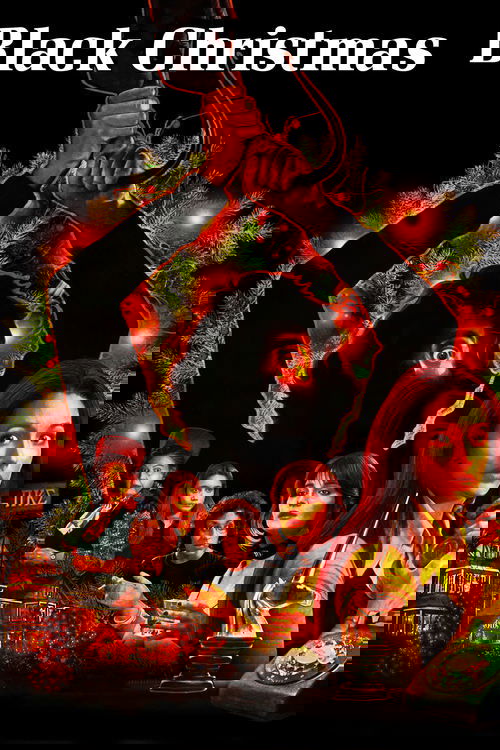


Popular
Who is the killer in Black Christmas and what is their motivation?
What is the significance of the phone calls in Black Christmas?
How does the character of Jess respond to the events unfolding in the film?
What role does the setting of the sorority house play in the film?
How do the other sorority sisters react to the threat posed by the killer?
Should I watch it?
Ask Your Own Question

What is the plot?
Sorry, we aren't able to watch and write up a full detailed plot yet. Check back in a few days.
More Movies Like This
Browse All Movies →
What is the ending?
In the ending of "Black Christmas" (1974), the remaining sorority sisters, Jess and Phyllis, are terrorized by the unseen killer in their house. After a tense confrontation, Phyllis is murdered, leaving Jess alone. She eventually discovers the killer in the attic, but before she can escape, she is attacked. The film concludes with Jess unconscious in the house, and the police, unaware of the danger, leave her behind as they believe the situation is resolved.
Now, let's delve into the ending in a more detailed, chronological narrative.
As the night deepens, the atmosphere in the sorority house grows increasingly tense. Jess, played by Olivia Hussey, is on edge, having already received disturbing phone calls from the unseen killer. The other sorority sisters, including Phyllis, are also feeling the weight of the strange occurrences, but they try to maintain a sense of normalcy amidst the chaos.
The film reaches a critical point when Jess, having just learned that she is pregnant, decides to confront her boyfriend, Peter, about their future. Their conversation is fraught with tension, as Peter is emotionally volatile and struggles to accept Jess's decision to have an abortion. This personal conflict adds to Jess's emotional turmoil, making her feel increasingly isolated.
Meanwhile, the killer, who has been lurking in the shadows, continues to stalk the sorority house. The audience is aware of the danger, but the characters remain blissfully unaware of the true threat that looms over them. One by one, the sisters begin to disappear. The first victim, Barb, is brutally murdered in her room, and her absence is felt deeply by the remaining girls.
As the night progresses, Jess and Phyllis are left alone in the house. They hear strange noises and receive more unsettling phone calls, heightening their fear. The tension escalates when Jess decides to call the police for help. The officers arrive, but their investigation is superficial, and they leave without realizing the true danger that still lurks within the house.
In a chilling turn of events, Phyllis goes to check on Barb's room, only to meet her own demise at the hands of the killer. Jess, now completely alone, begins to piece together the horrifying reality of her situation. She climbs the stairs to the attic, where she discovers the killer hiding. In a moment of sheer terror, she confronts him, but he attacks her before she can escape.
The film's climax is marked by Jess's desperate struggle for survival. She fights back, but the scene is chaotic and filled with dread. Just as it seems she might escape, the screen fades to black, leaving her fate uncertain. The final moments of the film show the police outside, having left the house after believing the situation is resolved. They are unaware that Jess is still inside, unconscious and vulnerable, with the killer still lurking in the shadows.
The film ends on a haunting note, emphasizing the themes of isolation and the failure of those in authority to protect the vulnerable. The audience is left with a chilling sense of dread, as the fate of Jess remains ambiguous, and the killer's presence lingers in the dark corners of the house. The final shot of the house, quiet and still, serves as a stark reminder of the horror that has unfolded within its walls.
Is there a post-credit scene?
The movie "Black Christmas" produced in 1974 does not have a post-credit scene. The film concludes with a chilling final sequence that leaves viewers with a sense of dread and uncertainty. After the main characters have faced the terror of the unseen killer, the film ends with a haunting shot of the sorority house, and the sound of the phone ringing, suggesting that the threat may still be present. This ending reinforces the film's themes of isolation and the pervasive nature of fear, leaving the audience with lingering questions about the fate of the characters and the identity of the killer.
Who is the killer in Black Christmas and what is their motivation?
The killer in Black Christmas is an unidentified man who is revealed to be a disturbed individual with a history of mental instability. His motivation appears to stem from a deep-seated psychological trauma and a compulsion to kill, which is hinted at through his disturbing phone calls to the sorority sisters.
What is the significance of the phone calls in Black Christmas?
The phone calls in Black Christmas serve as a chilling narrative device that heightens the tension and sense of dread. The calls, which are made by the killer, are filled with disturbing and incoherent ramblings, showcasing his unstable mental state and creating an atmosphere of fear among the sorority sisters.
How does the character of Jess respond to the events unfolding in the film?
Jess, portrayed by Olivia Hussey, is initially portrayed as a strong and independent woman, but as the events unfold, she becomes increasingly anxious and fearful. Her emotional state fluctuates between determination to protect her friends and despair as the reality of the situation becomes more dire, especially as she grapples with her own personal issues, including her pregnancy.
What role does the setting of the sorority house play in the film?
The sorority house in Black Christmas serves as a claustrophobic and isolated setting that amplifies the horror elements of the film. Its dark, shadowy corners and the festive decorations contrast sharply with the unfolding terror, creating a sense of vulnerability for the characters as they are trapped in a seemingly safe space that becomes a site of horror.
How do the other sorority sisters react to the threat posed by the killer?
The other sorority sisters exhibit a range of reactions to the threat posed by the killer. Some, like Barb, played by Margot Kidder, display a bravado that masks their fear, while others, like Phyllis, are more cautious and anxious. As the tension escalates, their initial disbelief and dismissal of the danger turn into panic and desperation as they realize the severity of the situation.
Is this family friendly?
"Black Christmas" (1974) is not considered family-friendly due to its horror genre and themes. Here are some potentially objectionable or upsetting aspects that may affect children or sensitive viewers:
-
Violence and Murder: The film features scenes of violence, including the murder of characters, which can be graphic and disturbing.
-
Psychological Terror: The characters experience intense fear and paranoia, which may be unsettling for younger viewers.
-
Sexual Content: There are references to sexual situations and themes, including discussions about sexual relationships that may not be appropriate for children.
-
Strong Language: The dialogue includes profanity and harsh language that may be unsuitable for younger audiences.
-
Themes of Abduction: The film revolves around the abduction and killing of young women, which can be particularly distressing.
-
Disturbing Imagery: The film employs unsettling visuals and sounds that contribute to a tense atmosphere, which may be frightening.
Overall, the film's horror elements and mature themes make it more suitable for adult audiences.