


































Popular
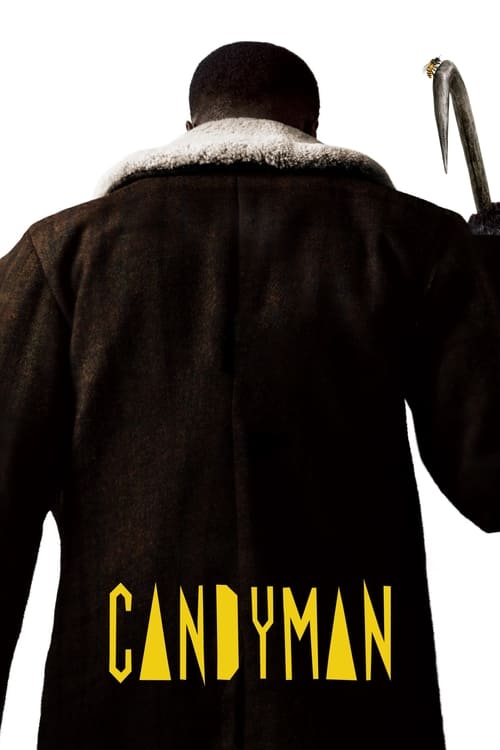
What is the significance of the character Anthony McCoy in Candyman 2021?
How does the character Brianna Cartwright react to Anthony's transformation?
What role does the character William Burke play in the story?
What is the significance of the art installation that Anthony creates?
How does the film address the theme of gentrification through its characters?
Should I watch it?
Ask Your Own Question

What is the plot?
Sorry, we aren't able to watch and write up a full detailed plot yet. Check back in a few days.



What is the ending?
In the ending of "Candyman" (2021), Anthony McCoy, the protagonist, fully transforms into the Candyman after being fatally wounded. He kills several people, including his art dealer, and ultimately confronts Brianna, his girlfriend. In a climactic moment, he allows himself to be shot by police, who mistake him for a threat. In the aftermath, Brianna calls upon the Candyman, and he appears, leading to a haunting conclusion that ties back to the themes of legacy and trauma.
As the film approaches its conclusion, the tension escalates. Anthony McCoy, who has been experiencing disturbing visions and physical changes, becomes increasingly consumed by the legend of Candyman. After a series of violent incidents, he finds himself in a dark, abandoned area of Chicago, where he is confronted by the spirit of the original Candyman, Daniel Robitaille. This encounter solidifies Anthony's transformation, as he begins to embrace his role as the new Candyman.
In a pivotal scene, Anthony, now fully embodying the Candyman persona, confronts his art dealer, who has exploited his work. In a moment of rage and desperation, Anthony kills him, marking a significant turning point in his character arc. This act of violence is not just a physical transformation but also a psychological one, as Anthony grapples with the weight of his identity and the legacy of trauma that comes with it.
As the story unfolds, Brianna, Anthony's girlfriend, becomes increasingly alarmed by his behavior. She witnesses the changes in him and the violence that surrounds him. In a desperate attempt to save him, she tries to reach out to him, but Anthony is too far gone, consumed by the Candyman's influence. In a heart-wrenching moment, Brianna finds herself in a confrontation with Anthony, who is now fully aligned with the Candyman's legacy.
The climax reaches its peak when the police arrive at the scene, responding to the chaos that has ensued. In a tragic twist, Anthony, now a figure of fear and violence, is shot by the police as they misinterpret the situation. This moment is laden with tension, as Brianna watches helplessly, torn between her love for Anthony and the horror of what he has become.
In the aftermath of Anthony's death, Brianna is left to grapple with the consequences of the events that have unfolded. In a haunting final scene, she calls upon the Candyman, invoking his name in front of a mirror. This act serves as a powerful conclusion to the film, as it suggests that the cycle of violence and trauma will continue, echoing the themes of legacy and the inescapable nature of history.
The fate of each main character is sealed in this tragic ending. Anthony McCoy, once an artist seeking to understand his identity, becomes the embodiment of the Candyman, ultimately leading to his demise. Brianna, who loved him, is left to confront the haunting legacy of the Candyman, now intertwined with her own life. The film closes on a note of ambiguity, leaving the audience to ponder the implications of the characters' choices and the enduring impact of the Candyman legend.
Is there a post-credit scene?
Yes, "Candyman" (2021) features a post-credit scene that adds a chilling layer to the film's narrative.
As the credits roll, the scene opens in a dimly lit, abandoned bathroom, reminiscent of the one where the legend of Candyman is often invoked. The atmosphere is thick with tension, and the air feels heavy with the weight of the urban legend. The camera slowly pans to reveal a figure standing in front of a mirror, shrouded in shadows.
This figure is revealed to be Anthony McCoy, the protagonist who has been deeply affected by the Candyman legend throughout the film. His transformation into a vessel for the Candyman spirit is palpable, as he stands with a haunting expression, his eyes reflecting a mix of fear and acceptance of his new identity.
As he stares into the mirror, he whispers the name "Candyman" five times, invoking the spirit. The lights flicker ominously, and the atmosphere grows even more oppressive. Suddenly, the scene shifts to a police officer entering the bathroom, responding to a disturbance. The officer, initially skeptical, is confronted by Anthony, who has now fully embraced his role as the new Candyman.
In a shocking moment, Anthony attacks the officer, showcasing the violent power that has overtaken him. The scene ends with the sound of the officer's screams echoing through the bathroom, leaving the audience with a sense of dread and the realization that the cycle of violence and horror continues.
This post-credit scene serves as a powerful conclusion, reinforcing the themes of legacy, trauma, and the inescapable nature of the Candyman mythos, while also setting the stage for potential future stories within this haunting universe.
What is the significance of the character Anthony McCoy in Candyman 2021?
Anthony McCoy is a pivotal character in Candyman 2021, serving as both the protagonist and a vessel for the film's exploration of trauma and legacy. Initially introduced as a promising artist, Anthony becomes increasingly obsessed with the Candyman legend after discovering his connection to the original story. His internal struggle is marked by a desire for recognition and a fear of losing his identity, which is compounded by the physical transformation he undergoes as he becomes more entwined with the Candyman mythos. This transformation is both literal, as he develops a disturbing infection that symbolizes his connection to the past, and metaphorical, representing the weight of historical violence and the impact of gentrification on Black communities.
How does the character Brianna Cartwright react to Anthony's transformation?
Brianna Cartwright, Anthony's girlfriend, experiences a complex emotional journey as she witnesses Anthony's transformation into the Candyman. Initially supportive, she becomes increasingly alarmed as Anthony's obsession deepens and his physical condition worsens. Brianna's concern is palpable; she feels a mix of love, fear, and helplessness as she tries to reach out to him. Her emotional state shifts from hopefulness to desperation, especially as she grapples with the implications of Anthony's connection to the Candyman legend and the danger it poses to both of them. Ultimately, her character embodies the struggle between supporting a loved one and recognizing when that love may lead to destruction.
What role does the character William Burke play in the story?
William Burke serves as a crucial figure in Candyman 2021, acting as a mentor and a harbinger of the Candyman legend's darker truths. He is an art dealer who introduces Anthony to the history of the Candyman, revealing the tragic backstory of Daniel Robitaille, the original Candyman. William's character is enigmatic; he appears to be knowledgeable and somewhat benevolent, but his true intentions are revealed to be more sinister as he manipulates Anthony into embracing the Candyman identity. His motivations are rooted in a desire to perpetuate the legend, and he embodies the theme of exploitation within the art world, using Anthony's pain and transformation for his own gain.
What is the significance of the art installation that Anthony creates?
The art installation that Anthony creates serves as a critical narrative device in Candyman 2021, symbolizing his internal conflict and the broader themes of the film. As Anthony delves deeper into the Candyman myth, his artwork transforms from abstract pieces to a haunting representation of the violence and trauma associated with the legend. This installation becomes a reflection of his psychological state, illustrating his descent into madness and the merging of his identity with that of the Candyman. The installation also acts as a catalyst for the film's climax, as it draws attention to the historical injustices faced by the Black community, ultimately leading to a resurgence of the Candyman legend and the violence that accompanies it.
How does the film address the theme of gentrification through its characters?
Candyman 2021 intricately weaves the theme of gentrification into its narrative through the experiences of its characters, particularly Anthony and Brianna. As they navigate their lives in a rapidly changing Chicago neighborhood, the film highlights the tension between the new, affluent residents and the historical significance of the area, which is steeped in Black culture and trauma. Anthony's struggle as an artist reflects the broader implications of gentrification, as he grapples with his identity and the erasure of the community's history. Brianna, who works in a gallery that showcases contemporary art, represents the complicity of the art world in this process, as she is torn between her career aspirations and her connection to the neighborhood's legacy. Their relationship becomes a microcosm of the larger societal issues at play, illustrating how gentrification not only displaces communities but also complicates personal identities and relationships.
Is this family friendly?
The movie "Candyman" (2021) is not considered family-friendly and contains several potentially objectionable or upsetting scenes and aspects that may be distressing for children or sensitive viewers. Here are some of those elements:
-
Graphic Violence: The film features intense and graphic scenes of violence, including murders that are depicted in a visceral manner.
-
Gore: There are moments of gore that may be unsettling, with blood and dismemberment shown on screen.
-
Supernatural Horror: The film delves into themes of urban legends and supernatural horror, which may be frightening for younger audiences.
-
Themes of Trauma: The narrative explores heavy themes such as racial trauma, gentrification, and societal violence, which may be emotionally challenging.
-
Psychological Horror: The film employs psychological horror elements that can create a sense of dread and anxiety.
-
Disturbing Imagery: There are unsettling visual sequences that may provoke fear or discomfort.
-
Strong Language: The dialogue includes strong language that may not be suitable for younger viewers.
These elements contribute to the film's mature rating and make it more appropriate for adult audiences.








