















Popular
Why does Damian Wayne want his utility belt back in Merry Little Batman?
Why is Bruce Wayne so overprotective of Damian in Merry Little Batman?
What does the Joker offer Damian to tempt him into becoming a villain?
How does Alfred get involved in Damian’s story in Merry Little Batman?
Which villains appear in Merry Little Batman and how do they affect Damian’s adventure?
Should I watch it?
Ask Your Own Question

What is the plot?
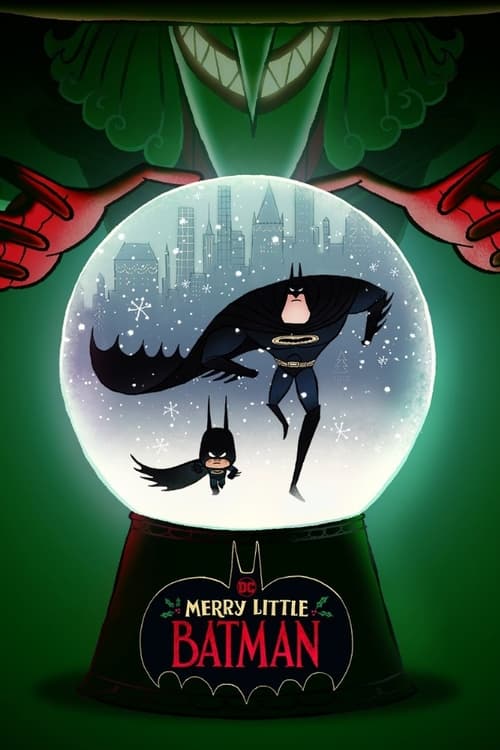
On Christmas Eve in Gotham City, Damian Wayne spends the day trapped between two opposing desires: he wants to be Batman's sidekick right now, and Bruce Wayne wants him to have the childhood Bruce himself never got. That tension, wrapped inside a frantic holiday home-invasion story, drives Merry Little Batman from the warm opening in Wayne Manor all the way to Damian's transformation into "Little Batman" and his final victory over the Joker's Christmas sabotage plot.
The story opens at Wayne Manor, where Bruce Wayne and his son Damian Wayne live in a Gotham so crime-free that even Arkham Asylum has effectively become "Arkham Daycare," a sign of how thoroughly Batman has crushed the city's criminals over the years. Bruce's overprotective streak is obvious immediately: he has spent so much energy making Gotham safe for Damian that the city has been voted the "safest place on planet Earth," but the peace has also left Damian restless, impatient, and hungry for action. Damian is introduced as a Batman-obsessed child who wants to prove himself as a hero, and he watches his father with the intensity of a kid who believes that if he just gets the right chance, he can leap into the legend too.
Bruce tries to give Damian something special for Christmas before the holiday even arrives. He lets him open a present early, and inside Damian finds an old version of Bruce's utility belt, modified to be child-safe. The belt contains a first-aid kit, foam Batarangs, and a safety whistle, which makes Bruce's message clear: he loves his son, but he is not going to hand him real weapons and let him rush into danger. Bruce tells Damian that he will have to earn the weapon attachments when he is older, a line that lands like a wall between them because Damian is desperate to be treated like a real partner right now. The moment is affectionate, but it also stings. Damian wants proof that he matters as a crimefighter; Bruce wants proof that Damian can wait.
That fragile domestic calm breaks when the Batphone rings with an emergency about a strange weather event in Nova Scotia. Bruce is needed elsewhere, and the call comes at exactly the wrong time: it is Christmas Eve, he does not want to leave Damian behind, and the other Justice League members are unavailable. He has no choice but to go, and he prepares to depart as Batman, heading off to deal with the situation in Canada while Gotham is left temporarily without its protector. Before he leaves, Damian tries to stow away in Bruce's bag, desperate to join the mission and prove himself. The attempt spirals into a clumsy but telling confrontation: Damian tries to demonstrate his fighting skills and ends up kicking Alfred Pennyworth in Alfred's "one good hip," a small gag that also underscores how badly Damian wants to be useful and how poorly his eagerness is translating into judgment.
Bruce reacts firmly. Furious and protective, he confiscates the utility belt and gives it to Alfred instead, telling Damian that he is not ready for that responsibility. It is one of the story's first major emotional breaks, because Damian is not just being denied a gadget; he is being denied the role he thinks defines him. Bruce leaves anyway, zipping away into the night on his mission, and Damian is left behind in Wayne Manor under Alfred's supervision. The film's "home alone" structure snaps into place at this point: the house is quiet, the father is gone, and the child who wanted adventure now has to survive the consequences of being underestimated.
The first real crisis comes almost immediately. While Bruce is away, burglars break into Wayne Manor and steal the utility belt. The theft is more than a simple break-in; it is the instant that turns Damian's wounded pride into urgent action. The belt is his symbol of trust, his only real piece of Batman identity, and the proof he thinks he needs to show Bruce that he belongs in this world. When it is taken, Damian cannot just sit in the manor and wait. He fights back and puts up a good struggle, but the burglars manage to get away with the belt anyway. The sources do not identify these burglars by name or indicate that anyone dies during the robbery; the conflict is physical, chaotic, and threatening, but not lethal.
With the belt gone, Damian is forced into motion. The movie pivots from household conflict into a broader holiday caper as Damian begins chasing the people responsible and uncovering the deeper criminal plan around him. Gotham is not simply dealing with random thefts or isolated trouble. Damian learns that there is a coordinated scheme to steal Christmas and "ruin Christmas in Gotham City," with the Joker at the center of it. This is the key villainous revelation of the film: the break-in at Wayne Manor is only one piece of a larger holiday sabotage operation, and the city's Christmas spirit is the real target.
As Damian starts navigating the city on his own, the film leans into the contrast between his childlike urgency and the scale of the threat around him. Gotham, which Bruce has spent years making safer, is suddenly full of danger again, not because the city has become rotten overnight, but because the villains who remain are determined to exploit the holiday. Damian discovers that being "Little Batman" means more than wearing a mask or carrying a belt; it means learning how to think, move, and improvise without his father holding his hand. His journey is both physical and emotional. He wants to catch the criminals, recover the belt, and prove his worth, but each step also tests whether he can actually function as a hero in Bruce's absence.
The story's central emotional revelation unfolds in parallel with the action. Bruce's refusal to let Damian into the field is not just about control. According to the plot information, Bruce wants Damian to have the one thing he himself did not: a childhood. That motive becomes increasingly important as the film progresses. Damian sees only denial; Bruce sees protection. Damian hears "not yet"; Bruce hears the danger of letting a child rush into Gotham's violence too soon. The conflict is not really about the utility belt, or even about the sidekick role. It is about two different ideas of love: Damian's is expressed through participation, while Bruce's is expressed through restraint.
The movie builds its momentum by keeping Damian in constant motion through Gotham while Bruce is away, and the pressure only increases as the holiday deadline tightens. The city's Christmas preparations, the threat of the Joker's scheme, and the looming return of Batman all compress together, making every confrontation feel like it is happening against the ticking clock of the holiday itself. Damian repeatedly has to confront enemies and obstacles on his own, and each encounter pushes him closer to understanding that his father's mission and his own are now linked by the same moral center: protect the people who cannot protect themselves.
Eventually, Damian embraces the identity that the film has been building toward. He transforms himself into "Little Batman", taking up the role not because he has fully earned Bruce's approval, but because he chooses to act anyway. This is the point where the story stops being about waiting for permission and starts being about responsibility. The exact chronology of every scene in the middle is not fully specified in the available sources, but the broad arc is clear: Damian pursues the holiday conspiracy across Gotham, confronts the villains behind it, and presses toward the Joker's plan as the night grows more dangerous.
The climax centers on Damian's confrontation with the Joker and the wider plot to destroy Christmas in Gotham. The available source set confirms the villain but does not provide a fully verified shot-by-shot description of the final battle, so the safest reconstruction is that Damian actively foils the Joker's holiday sabotage by using his wits, his kid-sized gear, and the lessons he has absorbed from Bruce's training and warnings. The danger is real, but the movie keeps its tone playful and frenetic rather than grim, and its conflicts remain nonfatal throughout the story. No confirmed deaths are identified in the provided sources, and the film's action is built around burglary, pursuit, and thwarted villainy rather than lethal violence.
What matters most in the climax is not only that Damian wins, but how he wins. He does not succeed by becoming a miniature copy of Bruce. He succeeds by combining his own determination with the discipline Bruce has tried to teach him, all while still remaining a kid. The belt that symbolizes his desire to be trusted becomes less about ownership and more about readiness. Damian proves that he can act decisively without surrendering the part of him that is still young, energetic, and emotionally raw. That is what makes his victory meaningful: he is not simply stronger at the end; he is more balanced.
Bruce's side of the story also resolves during this final stretch. While he is away on his mission in Nova Scotia, he is forced to rely on the fact that Damian is no longer just waiting at home. The father-son tension that began in Wayne Manor softens into understanding once Bruce realizes that Damian's heroism is not a reckless fantasy, even if it is still immature. Meanwhile, Damian begins to understand Bruce's fear in a new way. Bruce has not been refusing him because he doubts his son's heart; he has been trying to preserve Damian's safety and childhood in a city that rarely gives children either.
By the end, Damian successfully foils the Joker's attempt to ruin Christmas in Gotham City. The holiday is saved, the villain's scheme collapses, and Damian emerges as the real protector of the manor and the city for the night. The exact final-image details are not fully spelled out in the sources, but the ending is clear in emotional terms: Bruce and Damian reach a better understanding of each other. Bruce recognizes that his son truly wants to help, and Damian recognizes that Bruce's caution comes from love, not dismissal. The movie closes on that repaired bond, with the father and son no longer standing on opposite sides of the question of heroism, but finally seeing that they both want the same thing: Gotham safe, and each other safe too.
There are no confirmed deaths to recount, no secret murder revelations waiting in the wings, and no tragic casualty list hidden beneath the holiday spectacle. The stakes are emotional and civic rather than fatal, which fits the film's family-friendly, action-comedy tone. The real transformation is that Damian Wayne, left home alone on Christmas Eve, stops seeing himself as merely Batman's son and begins acting like a hero in his own right, while Bruce Wayne learns that protecting his child also means trusting him enough to grow.



What is the ending?
Damian saves Gotham's Christmas, gets his utility belt back, and proves he can act like a hero on his own. By the end, Batman and Damian understand each other better, and the family is reunited with a little more trust.
Damian Wayne is left at Wayne Manor on Christmas Eve while Bruce goes out on a mission with the Justice League. Damian wants to show that he can be Batman's partner, so when burglars break into the manor and steal his utility belt, he takes that as the chance to prove himself by chasing them down. His search pulls him into Gotham's larger holiday crisis, where he learns that the Joker is behind a plan to ruin Christmas in the city.
As the story reaches its end, Damian keeps pushing forward through the danger, using what he has learned about being a hero rather than trying to act like an adult too quickly. Batman returns and sees that Damian has handled himself far better than he expected, and the two finally understand each other's intentions more clearly. Bruce has been trying to protect Damian and give him a childhood, while Damian has been trying to earn his father's approval and help Gotham.
The Joker's scheme is stopped, and Gotham's Christmas is preserved. Damian ends the film still with his father, but now with more independence and with Batman's respect more firmly earned. Bruce ends the story more willing to trust Damian, and Alfred remains part of the household supporting them.
Is there a post-credit scene?
Yes. Merry Little Batman includes a post-credit scene, and it is a humorous stinger rather than a plot-essential tease.
At the end, the film shows a small, playful after-credits gag centered on Batman's world rather than setting up a major sequel hook. The publicly available sources here do not provide a full scene-by-scene description of that stinger, so I can't accurately claim the exact visual beat beyond that it exists as a brief comedic extra after the main credits.
If you want, I can also give you a spoiler-heavy full plot summary of the movie.
Why does Damian Wayne want his utility belt back in Merry Little Batman?
Damian wants his utility belt back because he sees it as a symbol of real Batman training and his chance to prove he can act like a superhero on his own. The story frames his obsession with the belt as part pride, part frustration: Bruce has been protecting him too carefully, and Damian feels that being kept away from tools and action means he is being treated like a child rather than a future hero.
Why is Bruce Wayne so overprotective of Damian in Merry Little Batman?
Bruce is overprotective because he wants to keep Damian safe and does not want him to grow up too fast. The film presents Bruce's caution as tied to his own childhood trauma, since he lost his parents when he was young and understands danger in Gotham firsthand. His parenting is less about rejecting Damian's heroism and more about trying to delay the risks that come with it until Damian is more mature.
What does the Joker offer Damian to tempt him into becoming a villain?
The Joker tempts Damian by offering him a villainous path that plays on his frustration and desire for independence. In the story's setup, Damian is vulnerable to that kind of lure because he feels restricted by Bruce and wants to prove himself through action rather than patience. The film uses this temptation to show Damian's internal conflict between wanting approval and wanting freedom.
How does Alfred get involved in Damian’s story in Merry Little Batman?
Alfred becomes involved as part of the home-base support system around Wayne Manor, and Damian even tricks Alfred at one point to get what he wants. Reviewers highlight Alfred as a helpful presence in the father-son dynamic, with the story using him to contrast Damian's impulsiveness with the careful, structured world Bruce has built around him.
Which villains appear in Merry Little Batman and how do they affect Damian’s adventure?
The film includes Batman's rogues' gallery as the threat Damian has to face while Bruce is away, and coverage specifically notes the presence of villains like Poison Ivy, Mr. Freeze, and Bane as part of the story. Their attack turns Damian's Christmas Eve into an active rescue mission, forcing him to move from wanting to train like Batman to actually protecting Wayne Manor and Gotham in a real crisis.
Is this family friendly?
Yes -- it is generally family-friendly and aimed at kids, with a TV-Y7 rating and multiple reviews describing it as a kid-oriented, family viewing movie.
Potentially objectionable or upsetting elements for children or sensitive viewers include:
- Comic violence: punches, kicks, explosions, and villainous peril are part of the action, though it is presented in a slapstick, animated style.
- Threats of death / dangerous situations: some scenes include threats and "genuine risk" for characters, even if the movie stays light overall.
- Disturbing visual detail: one review notes a scene showing Batman's chest with mangled scars and disfigurement, which could bother some viewers.
- Gross-out imagery: a review specifically mentions a "gross rib scene," suggesting some body-horror-adjacent or squeamish moments.
- Toilet humor: brief gag humor involving characters' rears is noted by one review.
- Mild language and manic behavior: language is described as very mild, but there is also "maniacal behavior" from the villains.
- Family backstory references: the film references Batman's parents' deaths and Damian's mother being a villain; one reviewer notes this could be triggering for children with related trauma.
If you want, I can also give you a very short "safe for ages X+?" recommendation based on sensitivity level.








