























Popular
What motivates Martin Luther to challenge the Catholic Church?
How does Luther's posting of the 95 Theses impact his relationship with the Church?
What role does Frederick the Wise play in Luther's life?
How does Luther's understanding of faith evolve throughout the film?
What are the consequences of Luther's refusal to recant his writings at the Diet of Worms?
Should I watch it?
Ask Your Own Question

What is the plot?
Sorry, we aren't able to watch and write up a full detailed plot yet. Check back in a few days.





What is the ending?
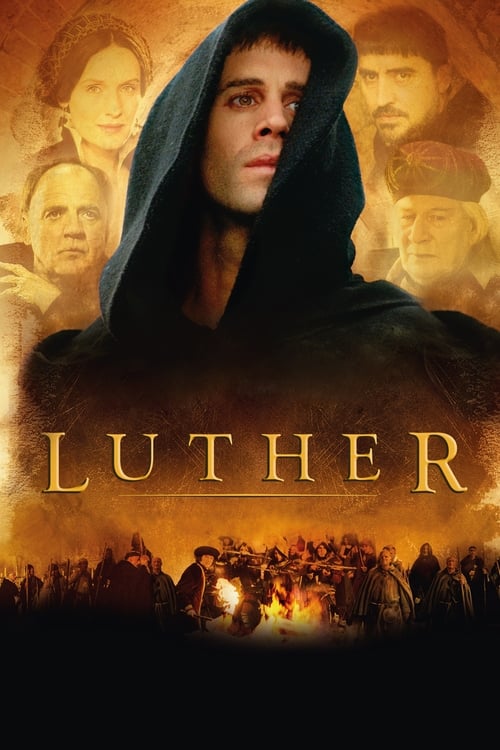
In the ending of the movie "Luther," Martin Luther stands before the Diet of Worms, where he is confronted about his teachings and writings. Despite the threat of excommunication and potential death, he remains steadfast in his beliefs. After a tense moment, he refuses to recant, declaring that he cannot go against his conscience. The film concludes with Luther being protected by his supporters, and he continues to spread his ideas, leading to the Protestant Reformation.
Now, let's delve into the ending in a more detailed, chronological narrative.
As the film approaches its climax, we find Martin Luther in a tense atmosphere at the Diet of Worms in 1521. The grand hall is filled with dignitaries, clergy, and the Holy Roman Emperor, Charles V, all gathered to hear Luther's defense. The air is thick with anticipation and fear, as Luther knows the stakes are incredibly high. He stands before the assembly, a solitary figure, embodying both courage and trepidation.
Luther is presented with his writings, and the officials demand that he recant his teachings. The camera captures the flicker of doubt in his eyes, but it quickly transforms into a resolute determination. He takes a deep breath, feeling the weight of history upon him. The audience watches intently, some with disdain, others with hope. Luther's internal struggle is palpable; he knows that his refusal could lead to his death, yet he feels compelled to stand by his convictions.
In a moment of profound silence, Luther speaks. He articulates his beliefs with clarity and passion, emphasizing the importance of faith and scripture over the traditions of the Church. His voice resonates through the hall, and the tension is almost suffocating. As he concludes his defense, he famously states that he cannot recant anything unless convinced by scripture or reason, declaring, "Here I stand, I can do no other." This declaration is met with gasps and murmurs from the assembly, highlighting the gravity of his stance.
The Emperor and the Church officials are visibly shaken by Luther's defiance. They threaten him with excommunication and the possibility of being declared an outlaw. Luther, however, remains unyielding, his conviction shining through the fear that surrounds him. The scene captures the essence of his character--brave, principled, and unwavering in the face of overwhelming opposition.
Following this pivotal moment, Luther is escorted out of the hall, and the atmosphere shifts. His supporters, including friends and fellow reformers, rally around him, offering their protection. The film portrays a sense of solidarity among them, emphasizing the growing movement that Luther has ignited. As they leave the Diet, the weight of the moment hangs in the air, but there is also a glimmer of hope for the future of the Reformation.
In the final scenes, we see Luther continuing his work, translating the Bible into German, making it accessible to the common people. This act symbolizes the shift in power from the Church to the individual believer, a key theme of the Reformation. The film closes with a montage of Luther's influence spreading across Europe, showcasing the impact of his teachings on society.
As for the fates of the main characters, Martin Luther emerges as a pivotal figure in history, his courage leading to the Protestant Reformation. His steadfastness inspires many, and he becomes a symbol of faith and reform. The Church officials, on the other hand, are left grappling with the consequences of Luther's actions, facing a growing movement that challenges their authority. The film ends on a note of transformation, highlighting the enduring legacy of Luther's convictions and the profound changes they bring to the religious landscape of Europe.
Is there a post-credit scene?
The movie "Luther," produced in 2003, does not contain a post-credit scene. The film concludes with a focus on Martin Luther's impact on the Reformation and his steadfast commitment to his beliefs, leaving the audience with a sense of resolution regarding his journey and the historical significance of his actions. The narrative wraps up without any additional scenes or content after the credits.
What motivates Martin Luther to challenge the Catholic Church?
Martin Luther is motivated by a deep sense of spiritual conviction and a desire for reform within the Catholic Church. He is troubled by the sale of indulgences, which he sees as a corruption of true faith. His internal struggle is marked by a quest for personal salvation and a longing to return to the core teachings of Christianity.
How does Luther's posting of the 95 Theses impact his relationship with the Church?
Luther's posting of the 95 Theses on the church door in Wittenberg serves as a catalyst for his estrangement from the Catholic Church. Initially, he hopes to spark a debate, but the Church's reaction is one of hostility, leading to his excommunication. This act symbolizes his break from the Church and his commitment to reform.
What role does Frederick the Wise play in Luther's life?
Frederick the Wise, the Elector of Saxony, plays a crucial protective role in Luther's life. He provides Luther with sanctuary after the excommunication, allowing him to continue his work and writings. Frederick's support is pivotal in giving Luther the space to develop his ideas and gain followers.
How does Luther's understanding of faith evolve throughout the film?
Throughout the film, Luther's understanding of faith evolves from a fear-based approach to one rooted in grace and personal relationship with God. Initially, he struggles with guilt and the fear of damnation, but as he delves deeper into scripture, he comes to embrace the concept of justification by faith alone, which becomes a cornerstone of his teachings.
What are the consequences of Luther's refusal to recant his writings at the Diet of Worms?
Luther's refusal to recant his writings at the Diet of Worms leads to significant consequences, including his excommunication from the Church and a bounty placed on his head. This act of defiance solidifies his role as a leader of the Reformation and inspires others to challenge the authority of the Catholic Church, but it also places him in grave danger.
Is this family friendly?
The movie "Luther," produced in 2003, is a biographical drama that explores the life of Martin Luther, the theologian who initiated the Protestant Reformation. While it is a historical film with significant educational value, there are several aspects that may be considered objectionable or upsetting for children or sensitive viewers:
-
Religious Conflict: The film depicts intense religious debates and conflicts, which may be distressing for some viewers, especially those sensitive to themes of faith and belief.
-
Persecution: There are scenes that illustrate the persecution of Luther and his followers, including threats of violence and imprisonment, which may be unsettling.
-
Violence: While not graphic, there are moments that suggest violence and the consequences of dissent against the church, which could be alarming for younger audiences.
-
Emotional Turmoil: Luther experiences significant internal conflict, doubt, and despair throughout the film, which may resonate deeply and evoke strong emotions.
-
Death and Sacrifice: The film touches on themes of martyrdom and sacrifice, including the implications of standing up for one's beliefs, which may be heavy for younger viewers.
Overall, while "Luther" is a thought-provoking film, its themes and some scenes may require parental guidance for younger audiences.









