






























Popular
What motivates Happy Gilmore to pursue a career in golf?
How does Happy's hockey background influence his golf game?
What is the significance of the character Shooter McGavin in Happy's journey?
How does Happy's relationship with his grandmother impact the story?
What role does Chubbs Peterson play in Happy's development as a golfer?
Should I watch it?
Ask Your Own Question

What is the plot?
Sorry, we aren't able to watch and write up a full detailed plot yet. Check back in a few days.



What is the ending?
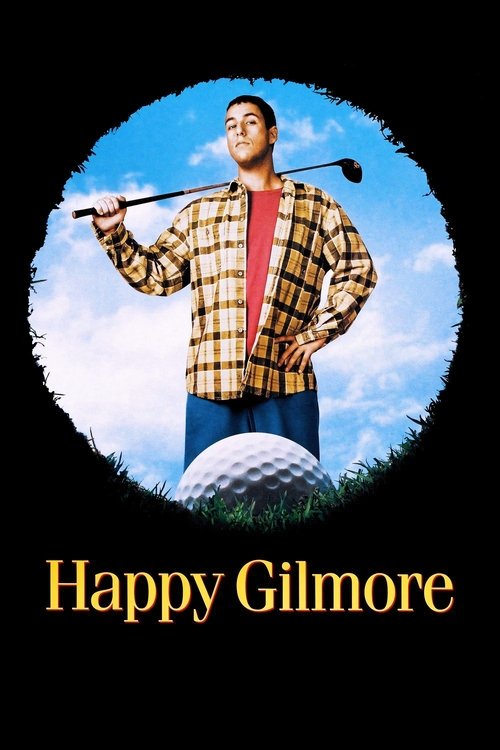
At the end of "Happy Gilmore," Happy wins the Tour Championship, securing enough money to save his grandmother's house. He also reconciles with his love interest, Virginia Venit, and finds a sense of belonging in the world of golf. Shooter McGavin, his rival, is left humiliated and defeated.
As the final round of the Tour Championship unfolds, the atmosphere is electric with anticipation. Happy Gilmore stands on the 18th hole, the crowd buzzing with excitement. He has fought hard throughout the tournament, overcoming numerous obstacles, including his own temper and the relentless rivalry with Shooter McGavin. Happy's determination is palpable; he is not just playing for the trophy but for his grandmother's house, which is at risk of being taken away.
The scene shifts to the final putt. Happy, with his signature unorthodox style, approaches the ball. The camera captures the tension in his face, a mix of focus and anxiety. He recalls the support of his friends and the love of his grandmother, which fuels his resolve. As he takes a deep breath, the crowd falls silent, all eyes on him. He swings, and the ball rolls toward the hole, teetering on the edge before finally dropping in. The crowd erupts in cheers, and Happy's face lights up with joy and disbelief.
In the aftermath of his victory, Happy is surrounded by reporters and fans, basking in the glory of his achievement. He is approached by Virginia Venit, who has been a steadfast supporter throughout his journey. Their connection deepens as they share a moment of celebration, hinting at a romantic reconciliation. Happy's growth is evident; he has transformed from a hot-headed hockey player into a champion golfer who has learned to channel his emotions positively.
Meanwhile, Shooter McGavin, who has been the antagonist throughout the film, stands on the sidelines, visibly furious and humiliated. His plans to win the championship and take the prize money have crumbled. As Happy basks in his victory, Shooter's defeat is complete, and he is left to grapple with the consequences of his arrogance and underhanded tactics.
The final scenes depict Happy returning to his grandmother's house, where he joyfully reveals that he has won enough money to save it. The warmth of family and the comfort of home envelop him, symbolizing his journey back to his roots. The film closes with a sense of fulfillment and belonging, as Happy has not only won a golf tournament but has also found his place in the world, surrounded by those who care for him.
In summary, Happy Gilmore's victory signifies personal growth, the importance of family, and the triumph of perseverance over adversity. Each character's fate is tied to their actions throughout the film: Happy emerges victorious and fulfilled, while Shooter is left to face the consequences of his defeat.
Is there a post-credit scene?
In the movie "Happy Gilmore," produced in 1996, there is no post-credit scene. The film concludes with Happy winning the Tour Championship and reuniting with his grandmother, who had been living in a nursing home. The final moments show Happy celebrating his victory and the joy of being able to provide for his grandmother, emphasizing the film's themes of family and personal growth. After the credits roll, there are no additional scenes or content that follow.
What motivates Happy Gilmore to pursue a career in golf?
Happy Gilmore is initially motivated to pursue a career in golf to save his grandmother's house from being repossessed. After discovering his unique ability to drive the ball long distances, he sees golf as a way to earn the money needed to help her.
How does Happy's hockey background influence his golf game?
Happy's hockey background influences his golf game significantly; he uses his powerful slap shot technique to drive the golf ball, which gives him an edge in distance. However, his aggressive and unorthodox approach to the game often leads to conflicts with traditional golfers and the sport's etiquette.
What is the significance of the character Shooter McGavin in Happy's journey?
Shooter McGavin serves as the primary antagonist in Happy's journey. He represents the established, elitist world of golf that Happy struggles against. Shooter's jealousy and attempts to undermine Happy's success highlight the challenges Happy faces as he tries to prove himself in a sport that values tradition over raw talent.
How does Happy's relationship with his grandmother impact the story?
Happy's relationship with his grandmother is central to the story. Her financial struggles and the threat of losing her home drive Happy's determination to succeed in golf. Their bond is emotional and comedic, showcasing Happy's loyalty and the lengths he will go to protect her.
What role does Chubbs Peterson play in Happy's development as a golfer?
Chubbs Peterson plays a crucial role in Happy's development as a golfer. As a former professional golfer who lost his hand to an alligator, Chubbs becomes Happy's mentor, teaching him the fundamentals of the game and helping him channel his raw talent into skill. Their friendship also provides emotional support, as Chubbs encourages Happy to believe in himself.
Is this family friendly?
"Happy Gilmore," produced in 1996, is generally considered a family-friendly comedy, but it does contain some elements that may be objectionable or upsetting for children or sensitive viewers. Here are a few aspects to consider:
-
Language: The film includes some strong language, including profanity, which may not be suitable for younger audiences.
-
Violence: There are comedic scenes of physical altercations, including a memorable fight between Happy and another character. While the violence is exaggerated and played for laughs, it may still be unsettling for some viewers.
-
Aggressive Behavior: Happy exhibits aggressive behavior, particularly in his interactions with other golfers and during his attempts to succeed in professional golf. This could be seen as a negative example for children.
-
Themes of Anger and Frustration: Happy struggles with his temper and often reacts impulsively, which may resonate with some viewers but could also be concerning for those sensitive to themes of anger management.
-
Death and Grief: The film touches on themes of loss and grief, particularly related to Happy's relationship with his grandmother. This may evoke emotional responses in some viewers.
-
Romantic Elements: There are mild romantic undertones and some suggestive humor that may not be appropriate for younger children.
While "Happy Gilmore" is primarily a lighthearted comedy, these elements may warrant parental guidance for younger viewers or those who are particularly sensitive to such content.








