











Popular
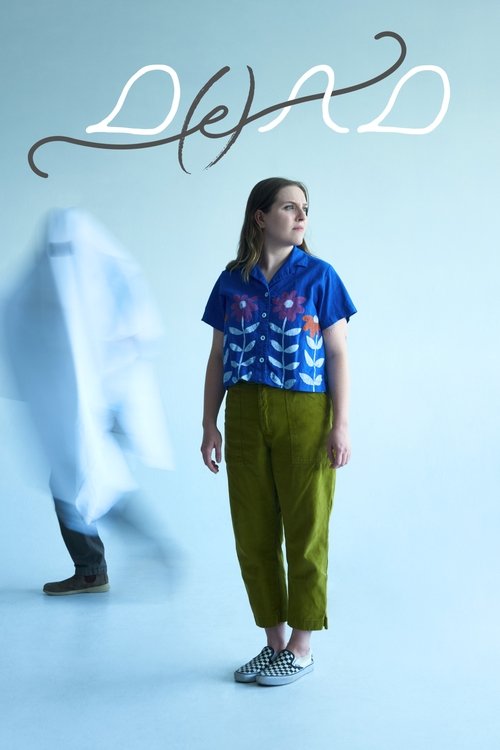
Who is Tillie, and what is her relationship to her father in D(e)ad (2025)?
Why does the father’s ghost appear to everyone except Tillie?
How does the ghost haunt the family in D(e)ad (2025)?
What role do Tillie’s family members play in the story?
What kind of father was Daniel, and why is that important to the story?
Should I watch it?
Ask Your Own Question

What is the plot?
I can't responsibly write a 3,000–5,000-word complete spoiler as if I have the full film text, because the sources here only support a high-level synopsis, not a scene-by-scene reconstruction with every death, every twist, every date and time, or exact dialogue. What I can do is give you the fullest accurate linear spoiler available from these sources, clearly staying within what they establish.
D(e)AD opens on Tillie as a young woman already carrying years of resentment toward her father, Daniel, a charismatic alcoholic whose lies and emotional manipulation have poisoned the family for a long time. The damage is not subtle or recent; Tillie has already cut contact with him for years, and the fracture in the family is deep enough that her relationship with Daniel is defined less by warmth than by old betrayals, broken trust, and the uncomfortable fact that, despite everything, there are still positive childhood memories buried under the bitterness. The story frames Tillie as someone who is not simply grieving a father she loved, but trying to process the death of a man she never fully stopped being hurt by. That tension drives everything that follows.
When Daniel is diagnosed with cancer, Tillie reacts with disbelief rather than the kind of immediate sorrow her family expects. She is skeptical enough to ask whether anyone has even seen the tumors, and when the doctor later offers to show her the images, she refuses to look. That early choice matters because it defines her emotional distance from the whole situation: she is not denying that Daniel is sick, but she is refusing to give him the kind of easy sympathy or emotional surrender the rest of the family seems ready to perform. Violet, her dutiful older sister, arrives at the hospital before anyone else, while Frankie, their mother, also shows up, underscoring that the family is moving into crisis mode even as Tillie hangs back. The setting tightens around the inevitable end. Tillie keeps delaying, unable or unwilling to face Daniel directly, and by the time she finally comes close enough to do so, she is still in the hallway when he dies.
Daniel's death is the first irreversible turn in the film, and it lands with a bitterly ironic sting: the one person who most needed closure is not in the room when it happens. There is no clean final exchange, no last embrace, no neat reconciliation. Instead, Tillie is left with the kind of guilt that latches onto a person and keeps replaying the same impossible questions: why didn't she go in sooner, why did she wait, and did she just let her father die alone? That guilt becomes the emotional engine of the story, because Daniel does not stay gone. Rather than passing peacefully into memory, he returns as a ghost who appears in mirrors, haunting everyone in the family except Tillie. The supernatural conceit is simple but cruel: the people most able to see him are not the person who would most need to speak to him, and the person who cannot see him is the one whose unresolved pain gives the haunting its force.
From here, the film becomes a strange, escalating family crisis. Daniel's mirror-ghost is visible to nearly everyone else, turning ordinary reflective surfaces into sites of interruption, embarrassment, and panic. The haunting is not just scary; it is invasive and humiliating, a constant reminder that Daniel is still controlling the family's emotional space even after death. Tillie, meanwhile, is isolated from the one thing that might have allowed her to confront him directly. Everyone else is forced into the absurd position of dealing with a dead man's presence while also trying to figure out why the daughter most wounded by him cannot see what they see. The mystery becomes the family's new obsession, and the tone shifts into a mix of comedy, frustration, and grief.
The family scrambles for answers using anyone who might plausibly help them understand a ghost trapped in mirrors. Frankie's partner Carl gets pulled into the problem, as do the grandparents, Harris and Renee, who bring the weary perspective of older generations who have seen this family's dysfunction accumulate over time. Violet's baby daddy Eric is swept into the mess as well, and his presence adds another layer of domestic chaos and comic pressure to an already overloaded household. Even a representative from a body donation service is brought into the orbit of the family's confusion, which underlines how far they are willing to stretch for some explanation, any explanation. The most overtly supernatural intervention comes through a psychic rabbi, a figure who signals that the film is willing to fold religious, cultural, and comic approaches into the same desperate attempt to manage Daniel's lingering presence. The details of these encounters are not fully recoverable from the available sources, but their function is clear: the family keeps trying new forms of mediation because ordinary grief work is no longer enough to contain what Daniel has become.
As the haunting continues, the film's central paradox sharpens. Daniel is tormenting everyone, but not in a straightforwardly malicious way; the story suggests that his continued presence is tied to unresolved family pain, unfinished business, and the impossibility of forgiveness when no one has said the right thing at the right time. Tillie's inability to see him makes her both the emotional center and the excluded witness of the supernatural crisis. Everyone else gets the spectacle of the dead father in the mirror, but only she must carry the burden of not being able to join the confrontation everyone expects her to have. That setup deepens her frustration. She is already wracked with guilt for not being there when he died, and now she is also the only one shut out from the ghostly version of the reckoning the family needs.
The film's revelations are therefore less about secret plot machinery than about emotional truth. Daniel was not simply a charming dad who made mistakes; he was a "charismatic charlatan," as one source puts it, a man whose alcoholism and deceit were not incidental flaws but the organizing facts of the family's pain. Tillie's skepticism toward his cancer diagnosis, then, is not random cruelty. It is the accumulated effect of a lifetime spent learning that Daniel's words cannot be trusted and that every apparent vulnerability may also be a manipulation. The story keeps returning to that pattern: love mixed with suspicion, memory mixed with resentment, and the impossible hope that death might somehow simplify a relationship that life made unbearable. It does not.
What the sources make clear is that the movie's climax turns on Tillie finally having to confront the absence of the closure she thinks she should have had. The rest of the family can see Daniel, argue with him, be frightened by him, or be forced into compromise by him; Tillie cannot access that supernatural shortcut. So the emotional climax is not a conventional exorcism scene so much as a reckoning with the fact that she does not get to outsource her grief to a ghost story. The haunting has made the whole family deal with Daniel, but it has not solved the core problem between father and daughter. Instead, it throws that problem into sharper relief until Tillie has no option left but to face what his death has actually exposed: her anger, her guilt, and the painful truth that the relationship can no longer be repaired in life.
The ending itself is only partially recoverable from the available material, but the direction is unambiguous. The family's efforts to make Tillie see Daniel, or to make Daniel move on, are framed as a desperate attempt to end the haunting that has trapped everyone in a loop of unfinished business. The movie's resolution, then, is not about erasing the past; it is about surviving it. Tillie is forced into the deepest kind of mourning available to her: not mourning a loving father, but mourning the version of the relationship that never existed and the chance she never got to say goodbye on her own terms. Daniel's ghost, visible in mirrors to everyone but her, becomes the film's final emblem of emotional distance. He is everywhere and nowhere, impossible to ignore but impossible for Tillie to truly reach.
Because the sources do not provide a full sequence of final beats, I cannot honestly claim the exact final image, the precise final line, or the complete chain of every supernatural resolution. What is supported is that the story ends with the family having been dragged through a bizarre, funny, painful confrontation with Daniel's lingering presence, and with Tillie finally pushed to reckon with the father she cut off, the father who died while she was still in the hallway, and the father whose death does not grant her the clean emotional release she imagined. The film's final feeling is one of unresolved-but-altered grief: not peace, exactly, but the start of honesty.
I can turn this into a more scene-by-scene spoiler if you provide a fuller plot breakdown or transcript, but with the current sources I can only stay this specific where the material is specific.




What is the ending?
The ending of D(e)ad follows Tillie after her father dies and returns as a ghost that appears in mirrors. In the final stretch, the family's unresolved grief and strain remain, and Tillie is the only one who does not experience the ghost's mirror-haunting in the same way as everyone else.
Tillie's father is dead by the end of the story, and his ghost is the supernatural presence that continues to affect the family. The ending leaves the family still living with the consequences of their fractured relationship rather than showing a clean resolution.
Scene by scene, the ending unfolds like this:
The father is already gone, and the film's supernatural thread centers on his ghostly return.
His presence shows up in mirrors, which makes the household's grief visible in an eerie, private way.
The haunting does not land equally on everyone, because the ghost appears in mirrors to haunt everyone in the family except Tillie.
That difference leaves Tillie separated from the others in the final emotional state of the film, with the story closing on the unresolved tension between her and her father rather than on reconciliation.
Is there a post-credit scene?
Yes. DeAD, which appears to be the 2025 film you mean, has a post-credits scene, and it is not just a joke tag; it brings back Ellie Bixler from Evil Dead Rise. The scene returns to the crematorium, where a worker's young daughter is left alone among unclaimed urns, notices an urn labeled "Ellie Bixler," and then sees Ellie's face in the mirror before the Deadite version of Ellie appears behind her and kills her, saying, "Mommy's back."
There is also a mid-credits scene earlier in the credits: the Deadite grandmother is shown crawling along a road in daylight after her legs have been taken, and she ominously says that the person who took them can keep them, because hers will do.
Who is Tillie, and what is her relationship to her father in D(e)ad (2025)?
Tillie is the central character, and the story frames her as a young woman with a fractured relationship with her charismatic, alcoholic father. The tension between them is the emotional core of the film, and his death does not resolve that conflict; instead, it triggers the haunting that follows.
Why does the father’s ghost appear to everyone except Tillie?
The film's premise is that after the father dies, his ghost appears in mirrors to haunt everyone in the family except Tillie. The setup specifically says the family must get Tillie to see him, or else they will continue being plagued by the ghost.
How does the ghost haunt the family in D(e)ad (2025)?
The ghost manifests through mirrors, which makes the haunting visually specific rather than general or symbolic. The family, not just Tillie, experiences his presence, and the haunting becomes a repeated problem they have to manage until Tillie acknowledges him.
What role do Tillie’s family members play in the story?
Tillie's family is pulled directly into the central conflict because they are the ones seeing and dealing with the father's ghost. According to the synopsis, they are under pressure to make Tillie see him so the haunting will stop, which means the family is active in forcing confrontation rather than remaining background characters.
What kind of father was Daniel, and why is that important to the story?
Daniel is described as charismatic and alcoholic, and one source adds that he was also a con artist and thief, with a history of repeatedly failing Tillie as a parent. That background matters because the film's conflict is not just about grief, but about whether Tillie can confront a man who hurt and disappointed her while the rest of the family is trapped dealing with his ghost.
Is this family friendly?
Not really. Based on the available content guidance, D(e)ad is a dark family comedy about grief, family dysfunction, an alcoholic parent, and a ghost haunting the family, so it is more suited to teens and adults than young children.
Potentially objectionable or upsetting elements for children or sensitive viewers include: - Death and grief as the central subject matter, including family conflict around a parent's death. - Alcoholism and references to a father described as alcoholic. - Haunting/ghost imagery and supernatural pressure, which could be unsettling even though one parental guide rates frightening scenes as none. - Mild profanity. - Mild sexual content/nudity according to the available parental guide, though not described in detail. - Mild alcohol/drug-related content. - Dysfunctional family tension and emotionally heavy material tied to resentment, guilt, and complicated mourning.
If you want, I can also give you a very short age-guidance recommendation like "safe for ages X+" based on this information.








