












Popular
How did Elisa kill her older sister, and what happened to the body afterward?
What is Elisa’s relationship with her father while she is in prison?
Who is criminologist Alaoui, and why does Elisa agree to speak with him?
What memories does Elisa recover during her interviews with Alaoui?
What do we learn about Elisa’s family background and her mother’s role in her life?
Should I watch it?
Ask Your Own Question

What is the plot?
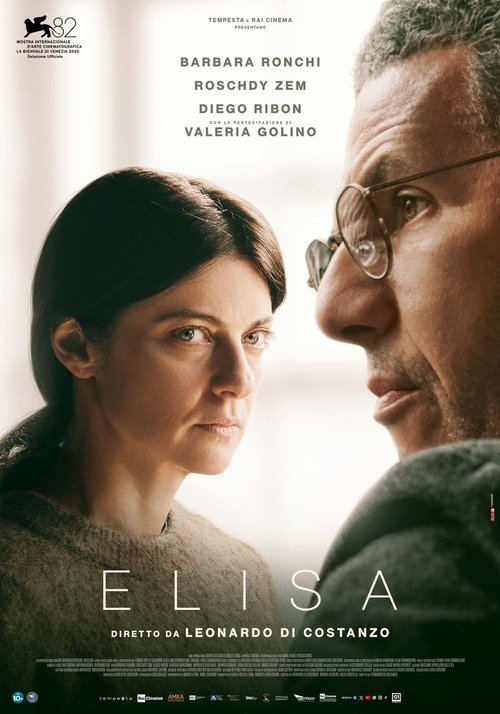
Inside the cold, orderly world of Moncaldo prison in Switzerland, Elisa begins with a paradox: a place built for punishment and control is also a place of study, reflection, and limited freedom, with an attached Department of Criminology and a teaching center where professors and prisoners cross paths in the name of research. The snow around the prison softens the landscape, but the atmosphere inside is rigid and airless, and that contrast quietly defines the film from the start. At the center of this enclosed world is Elisa Zanetti, a 35-year-old woman who has been in prison for ten years for killing her older sister and burning and hiding the body. No one has ever gotten a clear motive from her, and Elisa has lived for years inside the silence surrounding that crime, claiming that she remembers almost nothing and behaving as if her own life has been sealed away behind a wall of amnesia.
Elisa's daily existence is built around that silence. She is not portrayed as a dramatic or defiant inmate but as someone emotionally locked down, almost emptied out by what she has done and by what she refuses to say. Her father is the only member of her family who still comes to visit her regularly, a detail that immediately shows how completely the murder has torn apart the rest of the family while also hinting that some fragile bond still survives between father and daughter. That bond matters because Elisa has nothing else to anchor her to the outside world. Her mother is effectively part of the burden of the past rather than a comforting presence, and the film's later flashbacks reveal a household shaped by humiliation, pressure, and emotional damage. Elisa has become a prisoner not only of the institution around her but of the blank space in her own memory, or at least of the story she tells herself about that blankness.
Into this quiet but charged environment comes Professor Alaoui, a renowned criminologist and guest lecturer who specializes in family crimes and is involved in a research project centered on restorative justice. He is not there to condemn Elisa or to stage a conventional interrogation. Instead, he is conducting what the reviews describe as restorative interviews, a method designed to make room for the voices of perpetrators rather than simply labeling them and moving on. Alaoui's work turns Moncaldo into something more unsettling than a prison: a place where truth is coaxed out rather than extracted, where the language of scholarship becomes a tool for moral excavation. He opens his talks with the idea of restorative justice, and the film keeps returning to the question that hangs over everyone in the room: "What drives you?"
Elisa does not immediately volunteer to participate out of curiosity or remorse. She enters Alaoui's study from within the structure of the prison itself, and that makes her involvement feel cautious, almost procedural at first. Yet the meetings quickly begin to erode the barrier she has spent a decade building. Alaoui speaks to her without the harshness of a prosecutor or the indulgence of a therapist; he listens, asks, and waits. In those conversations, Elisa starts to answer in fragments, and the film begins to fold back into the past through flashbacks that interrupt the present-day prison scenes. The shifts are not abrupt for shock value. They are slow, painful, and cumulative, as if the act of remembering itself has to be endured one piece at a time.
The first memories that surface are not clean revelations but emotional impressions: a family home that feels ordinary on the surface and corrosive underneath, a mother who belittles rather than nurtures, and a young Elisa weighed down by responsibilities that are too large for her age. One of the most important burdens in her earlier life is the family sawmill, where she is made to shoulder heavy obligations at a young age. That detail matters because it shows that her life is not a simple story of inexplicable violence. It is a life shaped by labor, obligation, and a constant sense of being trapped in other people's expectations. The sawmill becomes a symbol of the family economy and the family pressure at once: rough wood, grinding machinery, physical work, and no space for softness or failure.
As Alaoui continues his restorative interviews, Elisa's memories begin to take shape around the emotional violence that preceded the murder. The film's tension comes from the fact that the answer is never presented as a single hidden fact waiting to be uncovered. Instead, the "truth" is a chain of humiliations, resentments, and pressures that Elisa has both lived through and buried. She does not suddenly confess in a dramatic outburst. She moves toward recognition through discomfort, through the slow breakdown of self-protection, and through the unbearable realization that her silence has not preserved innocence but has delayed accountability. The reviews make clear that Alaoui's method is not about forcing a confession in the conventional sense. He is helping Elisa reconstruct her own past until the meaning of what happened becomes impossible to evade.
The crucial twist is not that Elisa did not commit the crime--she did--but that the film gradually reveals how deeply the murder is rooted in a life of accumulated damage rather than in an empty, motiveless explosion. At the start, she presents herself as someone who remembers little or nothing, as if a veil of silence has covered her mind. That veil is not simply forgetfulness. It is defense, suppression, and perhaps shame, all fused together into a survival mechanism. The interviews force her to see that her claimed amnesia is part of the tragedy rather than an escape from it. She has not been waiting for the right question to remember; she has been avoiding the full weight of remembrance because once it returns, she must finally understand what she has done.
The film deepens this psychological pressure with the recurring presence of the prison's calm routines against Elisa's internal unraveling. Moncaldo remains orderly, almost serene, with its snow-covered grounds and institutional architecture, but every polite corridor and classroom becomes more ominous as the conversations intensify. The contrast is important: the outside world may appear peaceful, but Elisa's mind is a storm. Alaoui's questions enter that storm with clinical patience. He is not shown as a predator or manipulator, but his persistence is relentless in its own quiet way. He keeps bringing her back to the family, the household atmosphere, the pressures of responsibility, and the emotional damage that accumulated around her until violence became thinkable.
One of the strongest emotional pivots in the film comes when Elisa begins to understand that her murder of her sister is not only a remembered event but a moral truth she has avoided. The realization is devastating precisely because it is not sensationalized. There is no courtroom revelation, no sudden external witness, no new forensic evidence. The central revelation happens inside Elisa herself. She starts to see that the crime is hers in a deeper sense than legal guilt alone--that she is not merely the person who committed the act, but the person who has lived all these years by refusing to fully own it. This is why the film's climax lands as an emotional collapse rather than a violent confrontation. Elisa's breakdown is the moment when the last barrier between memory and responsibility gives way.
The murder itself, as established from the outset, is brutal in its simplicity: Elisa kills her older sister, burns the body, and hides the remains. The available sources do not describe a second killer, a hidden accomplice, or any other death. The horror lies in the fact that the act appears to have been committed by Elisa alone, and for years no motive has been publicly established. As her memories return, the film emphasizes not the mechanics of the killing but the emotional state that led to it: the suffocation of family conflict, the resentment built from humiliation, and the unbearable weight of obligations she cannot escape. The body-burning and concealment turn the crime into something both literal and symbolic--a physical erasure that mirrors Elisa's own attempt to erase the event from consciousness.
The confrontations in the film are therefore almost entirely verbal and internal. The most important one is the ongoing exchange between Elisa Zanetti and Professor Alaoui, a dialogue that starts as research and gradually becomes an excavation of conscience. Their meetings are tense because Alaoui never lets Elisa remain at the level of abstraction. He keeps pressing for the human source of violence, the "what drives you" underneath the legal facts. Elisa, meanwhile, must confront her own evasions. Each answer she gives opens another layer of memory, and each layer reveals that the murder was not an isolated rupture but the climax of a longer collapse. Even when the film avoids explicit dramatic speeches, the emotional force of these scenes comes through in the pauses, the discomfort, and the way Elisa's face seems to register recognition before her words can catch up.
The flashbacks continue to clarify the family dynamic without turning the past into a neat explanatory machine. Elisa's upbringing is ordinary in outward appearance and deeply troubled underneath. Her mother's belittling attitude is one of the clearest signs of the emotional climate in the home. The family sawmill adds a layer of economic and practical pressure, making Elisa's young life feel like a sequence of duties rather than choices. These details matter because they explain why the film resists the idea of a single motive. The sister's murder is not framed as jealousy in the shallow sense or as a random psychotic break. Instead, the film insists that the act emerges from a dense knot of family roles, resentment, exhaustion, and pressure that Elisa can barely articulate even as it comes into focus.
As the interviews progress, Elisa reaches the point where her silence stops functioning as protection and starts functioning as denial. The emotional logic of the film is that remembering is not liberating at first; it is crushing. She sees more clearly than ever that she has carried the truth like a wound she kept closed, and the reopening is unbearable. The reviews describe this as the moment when she becomes fully conscious of her own guilt for the first time. That phrase captures the ending's force: not that she suddenly learns she was guilty, but that she finally experiences guilt as an undeniable reality rather than an abstract legal status.
The final stretch of the film is therefore inward rather than outward. There is no escape attempt, no renewed violence, and no courtroom spectacle to resolve the story in a conventional thriller shape. Instead, the climax is Elisa's emotional breakdown after the truth becomes clear enough to bear no more evasion. Alaoui's research has done what it was designed to do: it has given voice to someone who has spent years mute, and in doing so it has made the hidden chain of circumstances visible. Elisa does not emerge purified or healed. What she gains is harsher and more limited--a terrible clarity about her own responsibility and the beginning of possible redemption through honest self-recognition.
The last movement of the film leaves Elisa in that aftermath, no longer protected by the amnesia she claimed and no longer able to pretend that silence is innocence. The emotional resolution is not a happy one. It is the moment when she finally knows who she is in relation to the crime, her sister, and the family from which she came. The prison remains, the snow remains, and Moncaldo's calm institutional surfaces remain unchanged, but Elisa herself has changed irrevocably. Where she once lived behind a veil of silence, she now stands in the wreckage of recognition, aware that the first step toward redemption is not freedom but the unbearable act of telling the truth to herself.







What is the ending?
Elisa ends with Elisa finally confronting the full truth of her sister's killing and accepting her guilt after years of silence. The ending is quiet and severe: there is no escape from prison, but there is a clear emotional shift as she stops hiding from what she did and faces it directly.
Elisa has been in prison for ten years for killing her older sister and burning the body, and the film's final movement follows her through the conversations with criminologist Alaoui that force her buried memories to surface. As those memories come back, she stops treating the crime as something blank or unreachable and instead begins to understand it as her own act. The ending closes on that recognition: Elisa fully acknowledges her culpability, and the film presents that as the first step toward possible redemption.
In the final stretch, Alaoui's role is to keep drawing Elisa back into the truth through questioning and listening, rather than through punishment or accusation. Elisa's father remains the only family member still close to her during her imprisonment, and the film has established him as a steady presence through prison visits, though the available sources do not describe any separate final scene for him. Elisa's older sister is already dead long before the ending, and her fate is the crime at the center of the story: she was killed by Elisa and her body was burned and hidden.
What the ending leaves most clearly is Elisa's state of mind. She does not leave prison, and the film does not give a dramatic external resolution; instead, it ends on the moment when she can no longer deny her responsibility and breaks down under the weight of it.
Is there a post-credit scene?
No verified source in the results confirms a post-credit scene for Elisa (2025), so I can't reliably describe one.
The available results identify the film and its premise, but none of them mention end-credits or post-credits content. A result about a different film, Drop (2025), explicitly says there is no post-credits scene, but that does not apply to Elisa.
If you want, I can help you check more targeted coverage of Elisa specifically, such as festival reviews or audience reports, to see whether anyone documented a post-credit or mid-credit scene.
How did Elisa kill her older sister, and what happened to the body afterward?
Elisa was imprisoned for killing her older sister, and the film's synopsis states that she burned and hid the body after the murder. The motive was not determined at the time, and Elisa later claims to remember very little or nothing about the act itself.
What is Elisa’s relationship with her father while she is in prison?
Elisa receives regular visits from her father, and he is described as the only family member who remained close to her after the killing. Their continued contact is a key part of her prison life and emotional isolation.
Who is criminologist Alaoui, and why does Elisa agree to speak with him?
Alaoui is a famed criminologist specializing in family crimes who comes to Moncaldo prison as a guest lecturer. Elisa decides to participate in his research, which opens the door to difficult conversations about her past and the crime she committed.
What memories does Elisa recover during her interviews with Alaoui?
As Elisa speaks with Alaoui, fragmented memories begin to take shape and she starts recalling the events surrounding the murder. The film's description emphasizes that these conversations slowly force her to confront details she had long suppressed or could not fully access.
What do we learn about Elisa’s family background and her mother’s role in her life?
The film presents Elisa as coming from an ordinary, middle-class family, and one review adds that her upbringing was troubled, with a mother who belittled her and a young Elisa burdened by managing the family's sawmill. These details are used to show the pressures and dysfunction surrounding her before the killing.
Is this family friendly?
Elisa (2025) is not a family-friendly choice for young children; it is a drama/crime film centered on a woman imprisoned for killing her sister, and its subject matter is emotionally heavy and disturbing.
Potentially objectionable or upsetting elements include: - Family homicide as the core subject, including a murder involving a sibling. - Violent crime details and references to burning a body. - Psychological distress, guilt, and trauma-related memories, which the film explores in a serious, contemplative way. - Intense emotional themes around culpability, memory, and redemption that may be upsetting for sensitive viewers. - While IMDb lists the film's violence as mild and gives it a 10+ certification in Italy, the premise itself is still likely to be unsettling for children because of the murder-focused storyline.
If you want, I can also give you a very short "parent guide" version in one sentence.








