

Popular
Who are the four siblings at the center of *Lost in the Jungle*, and what ages are they?
What happened to the children’s mother and the pilot in the plane crash?
How long were the siblings missing in the Amazon rainforest before they were found?
Who took part in the search for the children in *Lost in the Jungle*?
How does *Lost in the Jungle* present the children’s story on screen?
Should I watch it?
Ask Your Own Question

What is the plot?
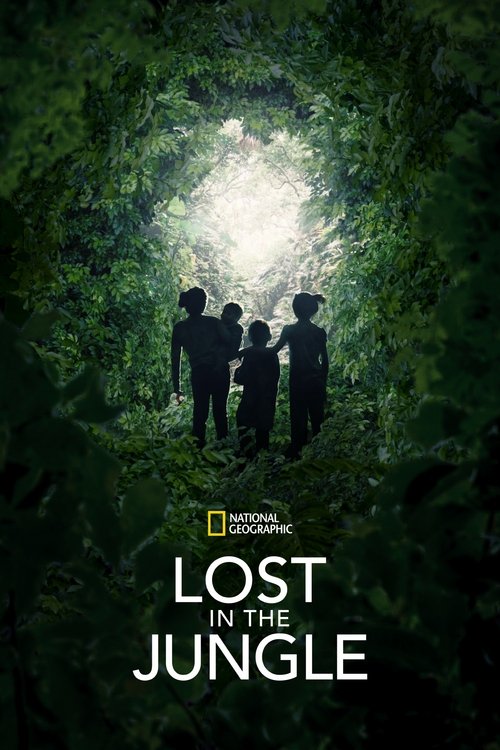
Lost in the Jungle does not provide a reliable scene-by-scene fictional plot to spoil in the usual sense, because it is a documentary reconstructing a real rescue story rather than a scripted narrative. What can be told with confidence is the full documentary arc: four young siblings survive a deadly plane crash in the Colombian rainforest, and a desperate 40-day-and-night search brings together Indigenous trackers and the military in a race against time.
The film opens by plunging into the aftermath of catastrophe: a plane goes down in the Colombian jungle, and four Indigenous siblings are suddenly alone in one of the most hostile environments on earth. The documentary frames the event as a survival story from the start, emphasizing that the children are not merely missing but fighting to stay alive against hunger, injury, exposure, and the crushing isolation of the rainforest. Rather than treating the rescue as a standard missing-person case, the film presents it as a mounting emergency that depends on terrain knowledge, endurance, and the willingness of searchers to keep going when the odds look impossible.
From there, the narrative widens to the search effort itself. The documentary highlights the collaboration between Indigenous trackers and the military, showing that the rescue is not achieved by force alone but by combining different kinds of expertise. The Indigenous trackers are central because they know how to read the jungle's signs, and the military supplies manpower, organization, and sustained pressure as the days pass. The search stretches on for 40 days and nights, and that span becomes the emotional engine of the film: every failed lead deepens the suspense, while every small trace in the forest raises hope that the children are still alive.
Because the documentary is built from the children's own accounts and the testimonies of rescuers, the storytelling works less like a linear reenactment with invented dialogue and more like a layered reconstruction of memory. That means there is not a publicly verified transcript of every exchange, date, time stamp, or scene beat to quote accurately. The film's power comes from that exact structure: the children's perspective supplies the fear and fragility of survival, while the rescuers' recollections give shape to the relentless, exhausting effort to find them before it is too late.
As the days in the jungle accumulate, the documentary builds tension around a simple but devastating question: how long can four children endure in the wild after a crash that has already turned their world upside down? The answer, revealed through the film's account, is that they do endure long enough for the search to succeed. The documentary underscores that the children survive the ordeal, which is the central factual outcome of the story. No publicly available source in the provided material identifies additional deaths among the children during the search, and the available synopsis does not support naming any individual casualties beyond the plane crash being described as "deadly."
The film's momentum comes from the search parties' increasing determination as clues begin to point in the children's direction. The rainforest is presented as a living obstacle--dense, wet, disorienting, and vast--and the searchers must move through it while trying to outlast time itself. The documentary's premise is clear: this is a race against time in which every hour matters, and every decision about where to search next can mean the difference between life and death. The military and Indigenous trackers are not depicted as separate efforts but as a single urgent mission, unified by the knowledge that the children are somewhere inside the jungle and may still be waiting to be found.
The climax arrives when the search finally pays off and the siblings are located alive after their weeks-long ordeal. The documentary presents this as the culmination of perseverance rather than luck: the trackers' knowledge, the soldiers' effort, and the children's own survival instincts all converge at the decisive moment. The emotional release is enormous because the story has spent its entire length hovering over the edge of tragedy, and the rescue turns that tension into relief. The film does not need fictional embellishment to land its ending; the fact that the children are found after 40 days and nights is itself the resolution.
In the final movement, Lost in the Jungle closes by honoring both halves of the story: the children who lived through the crash and the searchers who refused to stop looking. The documentary's "exclusive account" format means the ending is rooted in testimony, not invention, and that gives the conclusion a solemn, documentary-finality rather than a dramatic twist ending. The children survive, the rescue succeeds, and the film ends on the hard-won result of a mission that began with disaster and ends with recovery.
What the available sources do not support is a more granular spoiler involving exact scene order, specific date-and-time markers, detailed confrontation beats, or a list of individual deaths beyond the deadly crash itself. They also do not provide a verified character roster beyond the siblings, the rescuers, and named participant Lesly Jacobombaire Mucutuy as listed in one review source. So the complete confirmed story is this: a plane crash strands four young siblings in the Colombian rainforest, a 40-day search unfolds, Indigenous trackers and the military combine their efforts, and the children are ultimately rescued alive.
More Movies Like This
Browse All Movies →








What is the ending?
The film ends with the four siblings being found alive after 40 days lost in the Colombian rainforest, and the rescue effort coming to a close with the children safe and the search team finally reaching them.
In a short, simple way: the ending shows that the children survived the jungle, the rescue mission succeeded, and the story closes on the moment their long ordeal is finally over.
The ending unfolds like this:
- The rescue operation has been underway for days with Indigenous trackers and the military working together through the rainforest.
- The search continues over rough ground and dense jungle as the team pushes toward the children's location.
- After the long search, the rescuers finally find the four siblings alive, ending the 40-day ordeal.
- The film closes on the survival of the children and the completion of the rescue, which is presented as the central outcome of the story.
The fates of the main participants at the end are:
- The four siblings survive and are rescued alive after 40 days in the jungle.
- The Indigenous trackers and military rescuers complete the search and bring the rescue mission to its successful end.
The available sources do not provide a detailed shot-by-shot description of the final scene, so I cannot factually narrate the exact final images beyond the confirmed outcome of the rescue.
Is there a post-credit scene?
There is no evidence in the available sources that Lost in the Jungle has a post-credit scene.
The listed materials describe the film as a documentary about four Indigenous siblings surviving 40 days after a plane crash in the Colombian jungle, but none of the sources mention any extra scene after the credits. If you want, I can also check whether any reviews or viewer reports specifically mention a post-credit moment.
Who are the four siblings at the center of *Lost in the Jungle*, and what ages are they?
The documentary centers on four Indigenous siblings who survived the plane crash: the eldest is 13, the others are 9 and 5, and the youngest is 11 months old.
What happened to the children’s mother and the pilot in the plane crash?
According to the film's premise, the Cessna crashed in the Colombian rainforest, killing the children's mother and the pilot.
How long were the siblings missing in the Amazon rainforest before they were found?
The siblings were missing for 40 days and nights before rescuers found them.
Who took part in the search for the children in *Lost in the Jungle*?
The search involved Indigenous trackers working alongside the Colombian military in a race against time.
How does *Lost in the Jungle* present the children’s story on screen?
The documentary tells the story through the voices of the children themselves, along with the rescuers who searched for them, rather than only through outside narration.
Is this family friendly?
Lost in the Jungle is not especially family-friendly for younger children; it is a documentary about a deadly plane crash and a 40-day survival ordeal involving four siblings, and IMDb lists it as TV-14.
Potentially upsetting or objectionable elements for children or sensitive viewers may include:
- Plane crash / fatal accident context and the aftermath of a life-threatening emergency.
- Young children in extreme danger, with sustained tension around survival in the jungle.
- Distressing real-life subject matter involving a grueling search and rescue over many days.
- Possible accounts of abuse or trauma are suggested in viewer commentary on IMDb, though that is not part of the official synopsis and should be treated cautiously.
If you want a conservative choice for kids, I would treat this as better suited for older teens and adults rather than younger children.







