
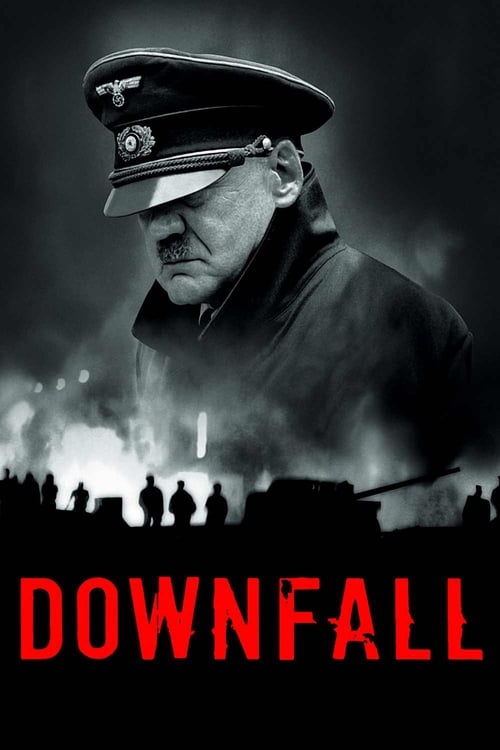
























































Popular
What role does Traudl Junge play in the story of Downfall?
How does Hitler's mental state deteriorate throughout the film?
How does the film depict the relationship between Hitler and Eva Braun?
What is the significance of the character of Joseph Goebbels in Downfall?
What events lead to the final moments in the bunker?
Should I watch it?
Ask Your Own Question

What is the plot?
Sorry, we aren't able to watch and write up a full detailed plot yet. Check back in a few days.
More Movies Like This
Browse All Movies →





What is the ending?
In the ending of "Downfall," Adolf Hitler and several of his inner circle face the collapse of Nazi Germany in the Führerbunker. As Soviet forces close in on Berlin, Hitler chooses to end his life rather than face capture. He marries Eva Braun, and they both commit suicide. The film concludes with the aftermath of their deaths, showing the chaos in Berlin and the fates of other key characters.
As the film approaches its climax, the atmosphere in the Führerbunker grows increasingly tense and desperate. The once-mighty Nazi regime is crumbling under the relentless advance of Soviet troops. The walls of the bunker, once a symbol of power, now feel like a tomb, echoing with the despair of its inhabitants.
In the final days, Adolf Hitler, portrayed with a mix of arrogance and despair, becomes increasingly isolated. He is surrounded by a small group of loyalists, including Joseph Goebbels and his wife Magda, who remain devoted to him despite the dire circumstances. The bunker is filled with the sounds of distant artillery and the frantic movements of soldiers trying to defend the city above.
On April 29, 1945, Hitler and Eva Braun decide to marry in a small, somber ceremony within the bunker. The atmosphere is heavy with a sense of finality. Hitler, dressed in his military uniform, appears both resolute and defeated. Eva, in her simple white dress, seems to embody a tragic hope amidst the chaos. After the brief ceremony, they share a moment of intimacy, knowing that their time is limited.
As the clock ticks down, the reality of their situation becomes undeniable. Hitler, consumed by paranoia and despair, instructs his aides on how to proceed after his death. He expresses a desire to avoid capture, revealing his deep-seated fear of humiliation. The tension in the bunker escalates as he gives orders for the destruction of documents and the burning of his body to prevent it from being displayed by the Soviets.
On April 30, 1945, the moment arrives. In a private room, Hitler and Eva take their final steps. Hitler bites into a cyanide capsule and simultaneously shoots himself in the head, while Eva takes cyanide as well. Their deaths mark the end of an era, and the film captures the stark reality of their demise with haunting imagery.
Following their suicides, chaos erupts in the bunker. Magda Goebbels, distraught over the loss of her Führer, decides to take the lives of her six children rather than allow them to live in a world without Nazism. In a chilling scene, she administers poison to each child, showcasing the depths of her fanaticism and despair. Joseph Goebbels, unable to live without Hitler, follows suit, committing suicide alongside his wife.
As the film concludes, the camera shifts to the streets of Berlin, where the city is engulfed in flames and chaos. The once-proud capital of the Third Reich is now a battlefield, with Soviet soldiers advancing and civilians fleeing. The final scenes depict the aftermath of the bunker's collapse, emphasizing the futility of the regime's ideology and the tragic end of its key figures.
The fates of the main characters are sealed in this final act of desperation. Hitler and Eva Braun are dead, their lives extinguished in a moment of cowardice. The Goebbels family meets a similarly tragic end, consumed by their loyalty to a dying cause. The film closes with a stark reminder of the consequences of fanaticism and the collapse of a regime that once held such power. The haunting images of a devastated Berlin serve as a poignant conclusion to the narrative, leaving viewers with a sense of the profound loss and destruction wrought by the war.
Is there a post-credit scene?
The movie "Downfall," produced in 2004, does not have a post-credit scene. The film concludes with the intense and dramatic events surrounding the final days of Adolf Hitler in his bunker during World War II. After the credits roll, there are no additional scenes or content that follow. The film ends on a somber note, reflecting the gravity of the historical events depicted, focusing on the collapse of the Nazi regime and the emotional turmoil experienced by the characters involved.
What role does Traudl Junge play in the story of Downfall?
Traudl Junge is portrayed as Adolf Hitler's personal secretary. Her character provides a unique perspective on the events unfolding in the Führerbunker during the final days of World War II. As she types Hitler's last will and testament, her internal conflict and naivety about the regime's atrocities are highlighted, showcasing her emotional turmoil as she witnesses the collapse of the Nazi regime.
How does Hitler's mental state deteriorate throughout the film?
Hitler's mental state deteriorates significantly as the film progresses. Initially, he is depicted as defiant and in denial about the impending defeat, but as the situation worsens, he becomes increasingly paranoid, erratic, and delusional. His outbursts of rage and despair reflect his inability to accept reality, culminating in a tragic and violent breakdown as he realizes the futility of his situation.
How does the film depict the relationship between Hitler and Eva Braun?
The relationship between Hitler and Eva Braun is depicted as complex and deeply personal, yet overshadowed by the chaos of the war. In the film, their interactions reveal a mix of affection and tension, as Braun attempts to maintain a semblance of normalcy amidst the turmoil. Their marriage, hastily conducted just hours before their deaths, symbolizes both a personal escape and the ultimate futility of their lives in the context of the impending doom.
What is the significance of the character of Joseph Goebbels in Downfall?
Joseph Goebbels, the Minister of Propaganda, is portrayed as fiercely loyal to Hitler and the Nazi cause. His character embodies the fanaticism and moral decay of the regime. As the situation in Berlin becomes dire, Goebbels remains committed to the Führer, ultimately leading to his tragic decision to poison his children and commit suicide with his wife, Magda, reflecting the depths of his devotion and the despair of the regime's collapse.
What events lead to the final moments in the bunker?
The final moments in the bunker are precipitated by a series of desperate events. As Soviet forces close in on Berlin, the atmosphere becomes increasingly tense. Hitler's orders become more irrational, and the remaining loyalists, including Goebbels and Bormann, grapple with their loyalty versus the reality of defeat. The culmination of despair, betrayal, and hopelessness leads to the tragic suicides of Hitler and Braun, marking the end of an era.
Is this family friendly?
"Downfall," produced in 2004, is not considered family-friendly due to its intense and graphic portrayal of historical events during the final days of World War II in Nazi Germany. The film contains several potentially objectionable or upsetting scenes, including:
-
Graphic Violence: There are scenes depicting the aftermath of battles, including dead bodies and injuries, which can be quite disturbing.
-
Suicide: The film includes moments where characters take their own lives, which is portrayed in a stark and emotional manner.
-
Emotional Distress: The characters experience extreme stress, fear, and despair, which may be unsettling for younger viewers or sensitive individuals.
-
War Atrocities: The film addresses the horrors of war, including the impact on civilians and the moral dilemmas faced by the characters, which can be heavy and distressing.
-
Strong Language: There are instances of harsh language and intense confrontations that may not be suitable for children.
Overall, the film's themes and content are heavy and may not be appropriate for younger audiences or those who are sensitive to such topics.









