





Popular
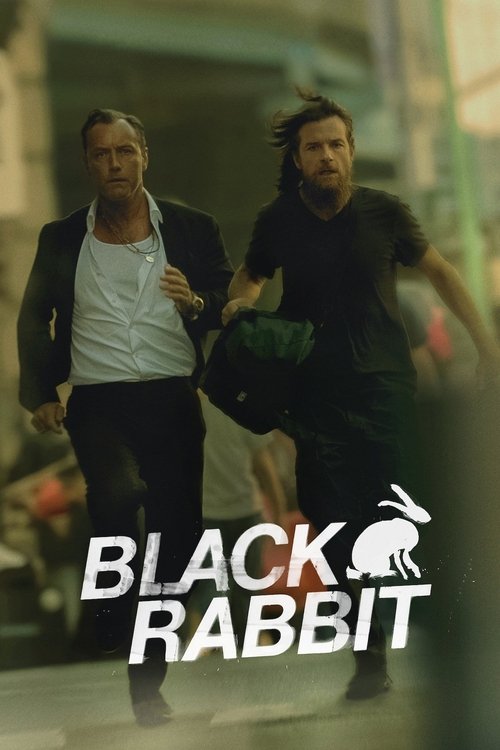
Who are Jake Friedkin and Vince Friedkin, and how do their personalities and histories drive the conflict in Black Rabbit?
What happens when Vince returns to New York, and why does his comeback create so much trouble for Jake?
What is the Black Rabbit restaurant, and why is it such an important setting in the story?
Who is Joe Mancuso, and what role do the loan sharks play in the plot?
How does the show structure the early story around the heist and the brothers’ conflict?
Should I watch it?
Ask Your Own Question

What is the plot?
In the opening scene, Vince Friedken is already in trouble: he is cash-strapped, gambling, and trying to sell his father's coin collection when the deal goes wrong, and the story immediately frames him as a man running out of options. The episode then jumps into the restaurant world around Jake Friedken, whose New York hotspot, the Black Rabbit, is succeeding on the surface while hidden strain is already building underneath.
The narrative reveals that Jake is trying to keep his life and business under control while Vince drifts back into his orbit. Jake has built the Black Rabbit into a successful, fashionable place, but the success is fragile because it depends on appearances, borrowed money, and the confidence of people around him. Vince, by contrast, is chaotic and unstable, and the brothers' reunion reopens old wounds rather than healing them.
As the season moves forward, Vince's gambling problem becomes the central engine of the plot. He is shown taking escalating risks, losing money, and falling deeper into debt, which leads to violent consequences from the people he owes. His financial desperation and impulsive behavior repeatedly force him to seek help from Jake, who is pulled into cleaning up Vince's messes even when he does not trust him.
The show also fills in the brothers' shared history. Vince was involved in building the restaurant and had briefly owned it before nearly setting it on fire, and a flashback later shows that he was ousted from the business after an incident involving a staff member, after which Jake bought out his shares. This backstory makes clear that the restaurant is not just a business to them; it is the source of their pride, resentment, and unresolved betrayal.
In the present-day storyline, Jake is under pressure from multiple directions, including financial strain and outside threats tied to Vince's problems. He keeps trying to preserve the Black Rabbit's reputation while being forced into increasingly desperate decisions, including attending to business crises while managing the damage Vince causes around him. The season shows that Jake is not simply rescuing Vince out of love; he is also trying to keep Vince away from the parts of his life that Vince can destroy.
A key stretch of the story involves Vince's claim that his girlfriend Marcee and a mechanic ex attacked him, with a wrench and a gun, but Jake does not believe the explanation. Jake also pushes Vince to confront his responsibilities toward his daughter Gen, trying to shame him into acting like a father instead of a liability. These scenes make their relationship feel like a cycle of accusation, disappointment, and reluctant caretaking.
The conflict expands when Vince's debt situation catches up with him. He has already been cut off by Mancuso, but he manages to borrow money from Junior, only for that to prove temporary because Junior later confronts him directly. This confirms that Vince's supposed solutions are only delays, and the people he owes are still closing in.
A major flashback to two years earlier shows the brothers' fractured business relationship in sharper detail. Vince is forced out of the restaurant after the staff incident, and Jake buys out his shares, formalizing the split between them even as they remain emotionally entangled. The series uses that earlier break to explain why every present-day interaction between them carries both family loyalty and long-simmering resentment.
The danger becomes physical and immediate as Vince's debts and bad choices lead to brutal retaliation from the men pursuing him. He is beaten by loan sharks, and the violence reinforces that he no longer has control over the situation he created. Instead of stopping his downward spiral, the assault drives him to seek more desperate help from Jake.
The season's middle stretch also turns outward from the brothers and into the wider world around the restaurant, where money, loyalty, and betrayal begin to overlap. Jake is forced into desperate measures to keep things afloat, including planning or relying on a benefit event while dealing with mounting pressure from multiple people connected to his personal and professional life. The Black Rabbit itself becomes a place where everyone's secrets are converging.
In the later episodes, the show reveals that the family history is darker than anyone had admitted. The brothers' past includes the burning of their parents' house, which they use as part of a plan to obtain a large insurance payout. That act shows that long before the present crisis, both men had already made morally catastrophic choices together.
The season's murder mystery element centers on Anna, whose death is eventually explained as an accident rather than a planned killing. Junior and Babbitt force their way inside, Anna fatally strikes her head, and Junior later returns to her apartment only to find that the authorities have already arrived. The sequence shifts the story from simple criminal intent to a messier chain of panic, concealment, and irreversible damage.
At the same time, the season exposes more of the social and romantic betrayals orbiting the restaurant. Roxie tells Wes that they should buy Jake out, and in doing so reveals Estelle's infidelity. This adds another layer of personal fracture around the business, showing that the restaurant's collapse is being accelerated not just by crime and debt but by intimate betrayals among the people tied to it.
By the final episode, the story returns to the brothers' earliest ambitions, showing a younger, more hopeful Vince and Jake as the idea for the bar first takes shape. That return to the beginning places the entire season in the shadow of what their dream became: a source of pride that also became the mechanism of their destruction.
In the endgame, Campbell gives Jake an ultimatum: turn Vince in, or Jake himself will be the one who ends up in jail because of their involvement with Mancuso. Vince is then on the run, and Jake moves to protect his niece before eventually finding Vince again. The final movements of the season bring the brothers back to the place where their shared disaster began, the restaurant itself.
At the restaurant, Vince finally recognizes that he has been the anchor dragging Jake down all along. He sees himself as bad news and believes he was doomed from the start because of what he did to his father when they were younger; the season reveals that Vince killed their father as a child because their father was hurting their mother. That confession gives the entire series its deepest wound, linking Vince's self-loathing, Jake's loyalty, and the family's ruin to a single buried act of violence.
The closing sequence leaves Vince convinced that as long as he is alive and near Jake, he will keep ruining his brother's life. He goes to the top level where his friend once jumped and, after a final moment framed like he might surrender to arrest or confession, he throws himself off and dies. Jake is left to witness the aftermath in shock, and the season ends with the brothers' story closing in tragedy rather than reconciliation.





What is the ending?
Short version: Vince does not make it out alive. In the finale, he and Jake are trapped by the consequences of the robbery, the deaths, and the mob pressure, and Vince ends the story by killing himself after confessing the truth and calling the police. Jake survives, turns over the damaging footage of Jules, and is left to rebuild his life in a much quieter way.
Here is the ending in a more complete chronological narrative:
The final stretch begins with Jake and Vince running out of options. The robbery, the murder of Wes, and the pressure from the Mancuso crime family have closed in around them. Vince is exposed as the center of the collapse, and Jake is forced to face how much damage has built up around the brothers' choices.
They head back to the Black Rabbit, the restaurant that started so much of the conflict. It becomes the last place where they can still speak to each other without being interrupted. There, Vince finally admits the deepest truth he has been carrying: he killed their father, the man who abused him and their mother.
Jake reacts with the kind of pain that comes from already suspecting the truth. He has been trying to manage the fallout, to keep Vince moving, and to keep the whole mess from swallowing everyone around them. At this point, he tries to get Vince out of town and salvage what is left.
But Vince does something else. Instead of taking the escape Jake is trying to arrange, he calls the police and turns himself in. He reports his location and admits to the robbery and the killing connected to Wes.
Then the ending turns fully tragic. At the rooftop of the Black Rabbit, Vince makes the final choice he has been circling for years. He jumps and dies by suicide in front of Jake.
After Vince's death, the story shifts to the aftermath. Jake hands over the incriminating security footage involving Jules, and that evidence leads to Jules being arrested.
The closing future scenes show how the surviving characters move on. Roxie opens a new restaurant named Anna's, honoring Anna after everything that happened.
Tony is part of that new start with her.
Estelle is shown working in a new line of work, separated from Jake and no longer tied to the chaos around the brothers.
Jake ends up back behind the bar, living a smaller life than the one he once chased. He is shown taking his son to dance class and commuting to work, no longer trying to build a grand future out of the Black Rabbit dream.
Mancuso also reappears in the aftermath. Instead of immediately retaliating, he sees Jake in his grief and lets him live.
As for the people who do not survive the story, Vince is dead by suicide, Wes is dead from the earlier violence, Anna is dead from the confrontation around the restaurant, and Junior is dead after the conflict with Vince.
The ending leaves Jake alive, but stripped down to the life he has left after the collapse of the restaurant, the family, and the violent world that surrounded them.
Is there a post-credit scene?
There is no evidence in the available sources that Black Rabbit includes a post-credit scene, and the sources describing it identify it simply as a limited series without mentioning any post-credits tag or teaser.
What the available material does show is that the story centers on Jake, the owner of the Black Rabbit venue, and his brother Vince, whose unexpected return sparks the conflict that drives the series. Since none of the provided sources mention a scene after the credits, the safest answer is that no post-credit scene is documented in the material I have.
Who are Jake Friedkin and Vince Friedkin, and how do their personalities and histories drive the conflict in Black Rabbit?
Jake Friedkin is the polished, ambitious owner of the Black Rabbit restaurant and VIP lounge in New York, while Vince Friedkin is his troubled brother, whose return from Reno brings debt, violence, and emotional chaos back into Jake's life. The story centers on the pressure created by their long, complicated bond: Jake is trying to expand and protect what he has built, while Vince's gambling problems and dangerous entanglements threaten to pull both brothers under.
What happens when Vince returns to New York, and why does his comeback create so much trouble for Jake?
Vince's return is the inciting disruption of the series: he arrives with dangerous debts and violent creditors attached to him, immediately destabilizing Jake's business and personal life. His comeback reopens old trauma, forces Jake back into family dysfunction, and escalates the threat level around the restaurant, especially because the brothers' relationship is both emotionally bound and structurally destructive.
What is the Black Rabbit restaurant, and why is it such an important setting in the story?
Black Rabbit is both the name of Jake's upscale Manhattan restaurant and VIP lounge and the central arena where the brothers' conflict plays out. It matters because Jake has built his identity, reputation, and future around it, so any threat to the restaurant becomes a threat to his ambition, status, and sense of control. The opening heist and the pressure from criminal entanglements make the venue feel less like a backdrop and more like the fragile core of the story.
Who is Joe Mancuso, and what role do the loan sharks play in the plot?
Joe Mancuso leads the criminal pressure surrounding Vince's debt, and his people function as the external force that turns the brothers' private dysfunction into a larger danger. Their presence raises the stakes from family conflict to organized criminal threat, creating escalating consequences around Jake's restaurant and pushing the story toward violent confrontation.
How does the show structure the early story around the heist and the brothers’ conflict?
The series begins in medias res with a suspicious heist at Jake's restaurant, then rewinds one month to show how events spiraled into that moment. That structure makes the audience question who is responsible, while gradually revealing how Vince's return, Jake's ambitions, and the criminal debt crisis all converge on the Black Rabbit restaurant.
Is this family friendly?
No, Black Rabbit is not family friendly for children or most sensitive viewers.
Potentially upsetting or objectionable content includes:
- Very frequent strong language, including repeated profanity.
- Violence and blood, including shootings and other intense scenes.
- A graphic finger-cutting scene with blood.
- Drug and alcohol content, including marijuana use and references to cocaine, heroin, and heavy drinking.
- Theft, threats, lying, and criminal behavior throughout.
- Sexual content and nudity references, including near-nudity, cleavage, and crude sexual references.
- Disturbing themes such as assault, suicide, and dismemberment noted by Plugged In.
If you want, I can also give you a very short parent-style age suitability verdict (for example: "okay for teens?") based on these content warnings.