










Popular
How does the documentary handle Billy Joel’s early family history and childhood trauma, and how do those events shape his later behavior?
What does the series reveal about Billy Joel’s relationships and romances, especially the ones that inspired his songs?
Which songs or albums get the most attention in the miniseries, and why are they important to the story?
How does the series portray Billy Joel’s songwriting process and the emotional meaning behind his lyrics?
What role do the people closest to Billy Joel play in the documentary, such as family members, collaborators, and ex-partners?
Should I watch it?
Ask Your Own Question

What is the plot?
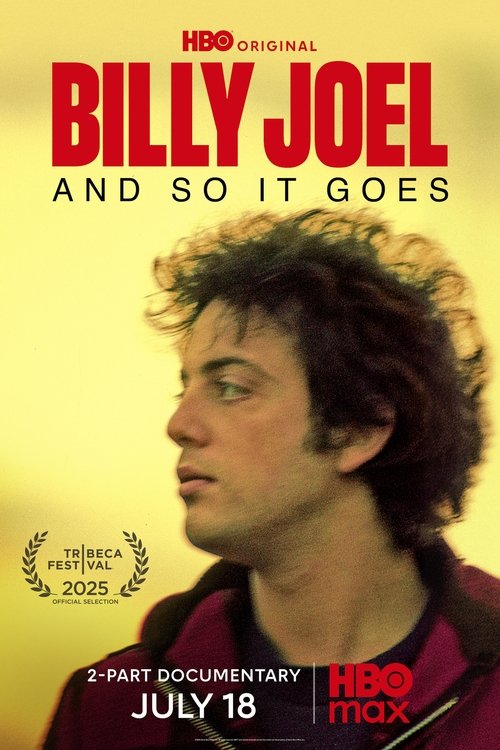
The documentary begins with Billy Joel in his late seventies, reflecting on his life as he approaches his eighth decade, situated in a setting that includes exclusive interviews, home movies, and personal photographs. The narrative immediately moves to his childhood in the Bronx, New York, detailing his upbringing as the son of working-class parents, where his father was a musician and his mother was a homemaker, establishing the early environment that shaped his musical interests. The story progresses to his teenage years, showing his early attempts at playing the piano and his formation of a band, which marks his first significant step into the professional music world. The plot then shifts to his early adult career, documenting his move to Los Angeles and his initial struggles to gain recognition, leading to his first major contract and the release of his debut album. The narrative continues with the release of subsequent albums, detailing the creative process and the commercial reception of each work, highlighting the key decisions he made regarding his musical style and production. The story moves to a pivotal period in his life, addressing his personal struggles, including his alcoholism and two documented suicide attempts, which are explored through exclusive interviews and personal accounts, showing the emotional weight of these events. The documentary then covers his marriage to Christie Brinkley, detailing their meeting, the development of their relationship, and the subsequent marriage, which marks a significant turning point in his personal life. The plot progresses to his later career, showcasing his continued success and the release of more albums, including the key decisions he made to evolve his musical style and maintain his relevance in the industry. The narrative concludes with Joel reflecting on his legacy, his enduring impact on music, and his personal journey, bringing the story to a close with a final reflection on his life and career.
Related Titles
Browse All Titles →









What is the ending?
Billy Joel: And So It Goes does not end with a dramatic plot twist or a fictional resolution; it ends as a documentary portrait of Billy Joel's life and career, with the later part of the film continuing through his post-Elizabeth years and his present-day situation. The clearest ending note in the available coverage is that Joel is still alive, married again, has children with his current wife, and has stepped back from performing while doctors manage his normal pressure hydrocephalus.
In short, the ending presents Billy Joel as someone who has survived the major crises of his life, moved into a different family phase, and is currently pausing his career for health reasons.
The documentary's structure, as described in reviews, is split around the collapse of his marriage to Elizabeth Weber, so the ending belongs to the later chapter of his life rather than to a single final event. One review notes that the film moves from the "Elizabeth era" into the "post-Elizabeth era," and that by the time the documentary reaches its later material, Joel is married again, has children with his current wife, and says he is trying to be the kind of father he did not have.
Scene by scene, the ending coverage available in the search results is limited, but the documented arc is this: the film has already established Joel's earlier life, his marriage to Elizabeth Weber, and the motorcycle accident that damaged his marriage and working relationship with her. From there, the later part of the documentary carries him into a new domestic life, where he is shown as a husband again and as a father to younger children, with his own words framing that stage of life around the wish to parent differently from how he was raised.
The final present-day condition described in the coverage is that Joel is not performing for the moment while the brain condition is being treated. That means the ending leaves him in a pause rather than a finish: alive, married, and still in motion through treatment, with his career temporarily on hold.
For the other main people tied to the ending, the available sources give these outcomes: Elizabeth Weber is no longer part of Joel's marriage or working life, because the documentary marks their divorce as the dividing line between the two halves of the story. His current wife remains his spouse in the later-period material, and his children with her are part of the home life the film brings into focus near the end. The documentary also continues to situate Joel himself at the center of the story, not as a figure whose life is concluded, but as one still living through its later chapter.
Is there a post-credit scene?
There is no reliable evidence in the available sources that Billy Joel: And So It Goes includes a post-credit scene. The season is described as a two-part documentary/miniseries covering Billy Joel's life and music, but the results do not mention any post-credit material.
If you want, I can also help verify whether the finale has any bonus epilogue, end-card text, or extra footage after the main credits.
How does the documentary handle Billy Joel’s early family history and childhood trauma, and how do those events shape his later behavior?
The documentary is widely described as digging into the painful family story behind Joel's youth and connecting it to the emotional core of his work, rather than treating those events as background decoration. It also emphasizes the idea that his songwriting is tied to feelings he could not easily express directly, which suggests the film frames childhood pain as a major driver of his adult emotional reserve and artistic output.
What does the series reveal about Billy Joel’s relationships and romances, especially the ones that inspired his songs?
The available coverage indicates that the series explores Joel's love life as part of the emotional engine of his songwriting, with the documentary explicitly described as examining the love and loss that fuel his music. Interview material around the film also points to revisiting past relationships through art, which suggests the series pays close attention to how specific romances shaped both his personal life and his songs.
Which songs or albums get the most attention in the miniseries, and why are they important to the story?
The documentary is presented as an exhaustive portrait of Joel's career, meaning it places major emphasis on the songs and recordings that best illuminate his life and creative process. Promotional comments also stress that the film treats songwriting as deeply personal and emotionally revealing, so the most prominently featured works are likely the ones that connect directly to heartbreak, memory, and healing.
How does the series portray Billy Joel’s songwriting process and the emotional meaning behind his lyrics?
The interview coverage suggests the miniseries treats songwriting as the central lens for understanding Joel, with one key point being that he could express feelings through songs that he might not have been able to say outright. Another producer comment describes Joel's writing as grounded in honesty, heartbreak, and healing, indicating the series focuses on how lyrics became a private emotional outlet and a public form of self-revelation.
What role do the people closest to Billy Joel play in the documentary, such as family members, collaborators, and ex-partners?
The miniseries is described as using exclusive interviews, home movies, and personal photographs, which implies that people from Joel's inner circle are important in reconstructing his life story. Coverage of the production also highlights a lifelong creative partnership and an effort to tell the story with care and depth, suggesting the series gives substantial attention to collaborators and intimates who helped shape both the man and the musician.
Is this family friendly?
No, it is probably not family-friendly for young children. The series is rated TV-MA, and available descriptions say it explores Billy Joel's "love, loss, and personal struggles," with raw and surprising revelations, so it is best suited for teens and adults.
Potentially upsetting or objectionable elements may include: - Emotional themes involving family pain, loss, and complicated personal history. - Adult relationship content tied to marriages, breakups, and other romantic struggles, as part of the documentary's focus on his life. - Strong or mature personal revelations presented in a candid way, which could be upsetting to sensitive viewers. - General adult-language or adult-life subject matter is likely, given the TV-MA rating, even though the available summaries do not spell out every content detail.
If you want, I can also give a stricter "age-by-age" recommendation, like whether it is okay for 10+, 13+, or 16+.









