






Popular
What happens during the school trip marathon run in the forest?
Why does Sae realize something is wrong with her mind during tennis practice?
How do Sae and Koki end up as rope swingers in the class jump rope competition?
What does Sae do when Koki approaches her during breakfast on the school trip?
Who is Hisui Onodera and what role does she play in Sae's school life?
Should I watch it?
Ask Your Own Question

What is the plot?
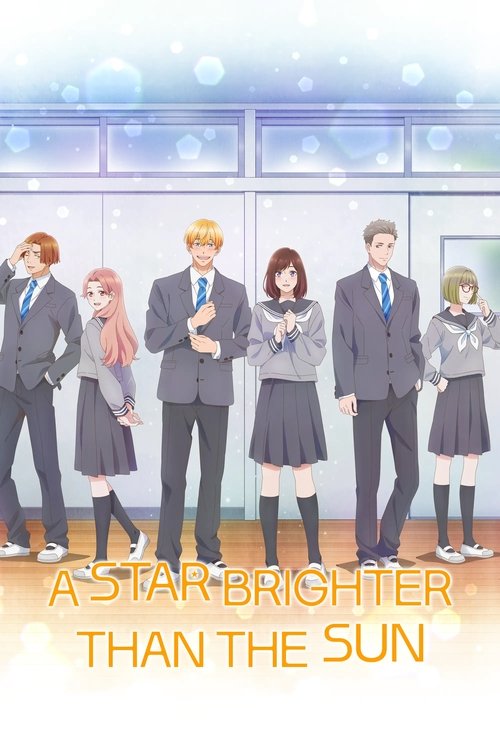
Sae Iwata and Koki Kamishiro grow up as childhood friends, sharing everyday moments from elementary school where Sae protects the weaker Koki during playtime and after-school hangouts.
At the end of middle school, Sae has a revelation during a fateful day when she notices Koki has physically grown up into a tall, athletic boy, changing her view of him.
Entering high school together as classmates, Sae experiences another revelation and realizes she has developed romantic feelings for Koki.
Koki remains popular among classmates for his good looks, considerateness, and athletic skills, but he continues treating Sae as his closest friend, often hanging out with her after school and joining her in activities like testing for the same schools.
Sae internally struggles with insecurities about her extreme height, strength, and perceived lack of femininity, feeling she stands out awkwardly and is unworthy of Koki's side.
Koki internally struggles with his own insecurities, still seeing himself as the weak boy Sae once protected, which creates parallel misunderstandings in their dynamic.
Other girls, including a romantic rival who falls down the stairs in an early incident, show interest in Koki, making Sae aware she is not the only one with feelings for him.
Koki admits to Sae that he has a crush on someone he considers too unreachable, leading Sae to immediately assume it is not her and promise to support his love endeavors.
The next morning during breakfast, Koki approaches Sae, immediately throwing off her internal plan to distance her feelings.
Sae gives her group's presentation before the class leaves the hotel from a school trip.
Afterwards, the class participates in a marathon run through the forest in boy-girl pairs; Sae deliberately chooses Yota as her partner to avoid Koki, while Koki pairs with Mio.
After school, Sae spaces out during tennis practice; Koki dislodges a ball stuck in the fence for her, prompting Sae to realize something is wrong with her mind as her feelings intensify.
During a physical test in gym class, Sae sees measurable evidence of how much she has grown in height and strength.
Afterwards, the homeroom teacher announces the school's class jump rope competition, selecting Sae and Koki as the rope swingers due to their physical abilities.
Hisui and Mio inform Sae about the after-party for the school festival, where couples confess their love when their requested song plays.
Preparations for the school festival begin; Mio and Izawa are nominated as committee members, and Subaru is appointed as the committee chair.
As first-year classes prepare classroom exhibits, Sae's class debates and decides on their theme.
Sae's friends, including supportive figures like Hisui and Mio, encourage her confidence and help her experience a more normal high school life without undermining her individuality.
Male supporting characters like Ayukawa provide contrast, highlighting strengths and weaknesses in Sae and Koki's bond through alternative interactions.
The story builds with steady progress through honest conversations, preventing problems from festering too long despite lingering misunderstandings.
During the school festival, everything culminates as key events unfold, resolving the central tensions.
At the festival after-party, confessions occur tied to requested songs, leading Sae and Koki to confront their feelings.
Kamishiro's earlier assumptions about his unreachable crush are clarified through direct communication.
Sae and Koki mutually confess their love, overcoming insecurities about their past roles and self-perceptions.
The first season concludes with their relationship blooming, followed by the announcement of a second season.
More TV Shows Like This
Browse All TV Shows →

What is the ending?
In the finale of A Star Brighter than the Sun, Sae confesses her love to Koki ahead of his own planned confession during the school festival, leading to their mutual reciprocation and a heartfelt promise from Koki never to make her cry again, setting up their relationship for the confirmed second season.
Now, let me take you through the ending scene by scene, as the episode unfolds in its final moments, drawing you into the emotional crescendo of Sae and Koki's journey.
The school festival buzzes with energy as it winds down toward the closing ceremony. Koki stands alone on stage, microphone in hand, his face etched with quiet upset from earlier events--Sae had been seen crying, her tears stemming from a raw confrontation where her feelings nearly spilled over too soon. The crowd quiets, lights dimming slightly under the festival lanterns, but Koki's mind races with unspoken resolve; he had been contemplating confessing right there to the girl he loves, his childhood friend Sae Iwata.
Offstage, Subaru Kamishiro--Sae's friend and Koki's relative--spots Koki and storms toward him, fists clenched, eyes blazing with anger. Subaru had witnessed Sae's tears and charges up, ready to pounce and demand answers for hurting her. His face twists in fury, shoulders tense, voice rising as he approaches the stage edge.
But Koki turns swiftly, spotting Subaru's advance. Without hesitation, Koki cuts him off mid-stride, his own expression hardening with determination. He steps forward, voice steady and firm, declaring directly to Subaru: he vows never to make Sae cry again. Koki's eyes lock onto Subaru's, his posture unyielding, hands gripping the microphone tighter, the weight of his promise hanging in the air amid the fading festival cheers. Subaru halts, shock widening his eyes, the tension deflating as Koki's sincerity lands.
Earlier that day, in a pivotal rooftop moment away from the festival chaos, Sae had taken the lead once more. Koki, heart pounding, had just admitted to her that he planned to confess to the girl he likes--unaware she knew it was her. Sae's face flushes, her hands trembling at her sides, the wind tousling her hair as the school rooftop overlooks the vibrant festival below. Overwhelmed, she beats him to it, blurting out her confession far ahead of schedule: she loves him, has loved him since their childhood days through middle school growth spurts and high school revelations.
Koki freezes, eyes widening in stunned silence, the confession echoing between them. Then, his shock melts into a soft, reciprocal smile--he feels the same, his own feelings mirroring hers all along. They stand close, the sun dipping low, casting golden hues over their uniforms, sealing the moment with mutual understanding. No kisses yet, just the raw honesty of two friends crossing into something deeper.
As the episode closes, the screen fades on their shared gaze, the festival lights twinkling in the background. A second season announcement flashes post-credits, leaving their story open.
Sae Iwata ends the season blissfully aware of Koki's reciprocated love, her bravery in confessing securing their budding romance; she walks away from the festival with hope, no longer navigating feelings alone. Koki Kamishiro concludes with his vow intact, committed to protecting Sae's happiness, his planned confession now fulfilled through her boldness--he departs the stage lighter, ready for what's next. Subaru Kamishiro halts his rage, fate shifted by Koki's promise, stepping back as a supportive ally with lingering surprise. Mio and Sui, Sae's steadfast friends, remain woven into her circle, their minimal drama resolved, fates tied to her joyful path forward.
Is there a post-credit scene?
No, the TV show A Star Brighter than the Sun (2025) does not feature a post-credits scene in its finale or any episode based on available episode recaps and reviews.
Episode 12, the series finale, concludes with Koki confronting Subaru after seeing Sae upset, vowing never to make her cry again during the festival's closing ceremony, amid their mutual confessions and synchronized insecurities about love--Sae beats Koki to confessing first, revealing her bravery and their shared emotional orbit, but no teaser or extra scene follows the credits.
The Wikipedia synopsis details the final arcs, including Sae's forehead injury at the youth center gift shop, their movie date reminiscing ten years of friendship, and Koki's protective jealousy, ending with festival committee resolutions involving Izawa, without mention of post-credits content.
Production notes from Crunchyroll highlight the creditless opening sequence by Motohiro Hata, emphasizing standard episode structure focused on the gentle "Stellar Days" theme, but nothing indicates post-credits scenes. Reviews and wikis confirm a clean narrative wrap-up announcing a second season, prioritizing emotional closure over cliffhanger teases.
What happens during the school trip marathon run in the forest?
In episode details from the school trip, after Sae's group presentation at the hotel, the class participates in a marathon run through the forest in boy-girl pairs. Sae, desperate to avoid Koki, quickly chooses Yota as her partner, leaving Koki to pair with Mio. The forest path is thick with overhanging branches and dappled sunlight filtering through leaves, Sae's heart pounding not just from the run but from the relief of dodging Koki's easy smile, her long legs carrying her ahead while guilt flickers in her chest for abandoning her plan so transparently. Koki glances back at her disappearing figure, a mix of confusion and determination hardening his jaw as he matches Mio's pace, the earthy scent of damp soil and pine filling the air.
Why does Sae realize something is wrong with her mind during tennis practice?
After school at tennis practice, Sae spaces out staring at the ball stuck high in the chain-link fence, her racket limp in her hand, sweat beading on her forehead under the late afternoon sun. Koki notices, strides over effortlessly, and dislodges it with a casual leap and swing, handing it back with his warm grin that makes her stomach twist. In that frozen moment, surrounded by the thwack of balls and chatter of teammates, Sae's cheeks burn as she internally panics--her distraction isn't fatigue, but the fluttering obsession with Koki that disrupts her focus, confirming her feelings have hijacked her thoughts.
How do Sae and Koki end up as rope swingers in the class jump rope competition?
Following a grueling physical test in gym class, where Sae measures her own surprising growth spurt on the height chart, the homeroom teacher announces the school's class jump rope competition. Sae and Koki are selected as the rope swingers due to their athletic prowess--Sae's powerful arms from tennis and Koki's precise timing from his sports background. The gym echoes with students' cheers and groans, Sae's pulse racing at the prospect of syncing their rhythms side by side, her mind swirling with dread and secret thrill at the unavoidable proximity.
What does Sae do when Koki approaches her during breakfast on the school trip?
The night before, in the dim hotel room lit by a single lamp, Sae confides in Hisui and Mio her firm plan to avoid talking to Koki entirely, her voice steady but eyes betraying anxiety. But the next morning in the bustling cafeteria, amid clinking trays and chatter, Koki spots her and approaches with his tray, his casual 'Morning, Sae' shattering her resolve instantly. She stammers a reply, heart hammering, the steam from her miso soup mirroring her flustered heat as her avoidance crumbles under his effortless familiarity.
Who is Hisui Onodera and what role does she play in Sae's school life?
Hisui Onodera, voiced by Hina Yomiya, is one of Sae's close high school friends and confidante, present during key moments like the hotel room chat on the school trip where Sae vows to dodge Koki. With her sharp wit and supportive nature, Hisui listens intently in the shadowed bunk beds, her expression a mix of empathy and amusement at Sae's predicament, offering quiet advice that bolsters Sae's wavering courage amid the emotional turmoil of unspoken crushes.
Is this family friendly?
Yes, A Star Brighter than the Sun is family-friendly overall, as a sweet slice-of-life romance anime centered on teenage childhood friends navigating high school crushes and insecurities, with no depictions of violence, explicit content, or mature themes based on available reviews and episode summaries.
Potentially objectionable or upsetting aspects for children or sensitive viewers are minimal and mild: - Mild emotional insecurity or self-consciousness from the protagonist about her physical appearance and fitting in socially. - Subtle romantic tension or jealousy hints involving a potential rival character. - Standard comedic moments like carsickness references (quickly overcome) or awkward adolescent misunderstandings.