






























































Popular
What is Forrest Gump's relationship with his mother?
How does Forrest meet Jenny, and what is the significance of their relationship?
What role does Lieutenant Dan play in Forrest's life?
What are some key events that showcase Forrest's achievements throughout his life?
How does Forrest's running journey impact his character development?
Should I watch it?
Ask Your Own Question

What is the plot?
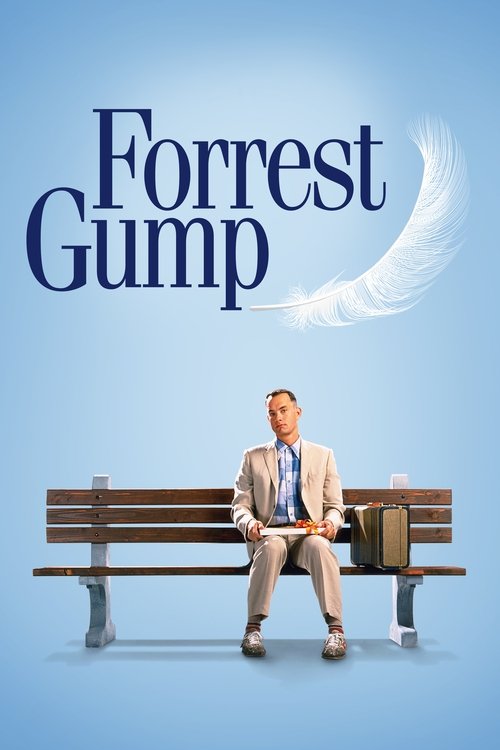
A white feather drifts through the air, floating above the rooftops of Savannah, Georgia, on a quiet Tuesday morning, June 6, 1981. It dances on the breeze, gliding past trees and buildings, before finally landing at the feet of a man sitting on a bus stop bench. Forrest Gump, a middle-aged man with a gentle face and a soft Southern drawl, picks it up, smiles, and turns to the stranger beside him. "My name's Forrest Gump," he says. "People call me Forrest Gump." He begins to tell his story, and as he speaks, the world around him fades, replaced by the memories of a life that has touched history.
In the 1950s, in the small town of Greenbow, Alabama, young Forrest Gump wears leg braces to correct a curved spine. His mother, Mrs. Gump, runs a boarding house out of their home, and she is fiercely protective of her son. She tells him, "Life is like a box of chocolates. You never know what you're gonna get," a phrase that will echo through his life. Forrest is often called "stupid" by other children, but his mother never criticizes his mind. She teaches him that "stupid is as stupid does," and Forrest grows up believing in kindness and honesty.
One day, as Forrest walks to school, a group of bullies begins to chase him. Jenny Curran, a girl with long brown hair and a warm smile, shouts from the schoolyard, "Run, Forrest, run!" Encouraged by her voice, Forrest takes off, his legs moving faster than anyone expects. The braces snap off, and Forrest discovers he can run like the wind. From that moment, running becomes his refuge, his escape, and his gift.
Jenny becomes Forrest's only true friend. She lives with her abusive father, and Forrest often stands by her, offering comfort and protection. Their bond deepens as they grow older, but Forrest's innocence keeps him from fully understanding the complexities of love and loss.
Years pass, and Forrest's running talent earns him a football scholarship to the University of Alabama. On the football field, he becomes a star, running past defenders with ease. His coach praises him, but Forrest remains humble, never seeking fame or glory. During his time at the university, Forrest witnesses the integration of the school, standing beside Governor George Wallace as he blocks the entrance to the building. Forrest, unaware of the racial tension, simply wants to play football.
After college, Forrest enlists in the U.S. Army. At basic training, he meets Bubba Blue, a young man from Bayou La Batre, Louisiana, who dreams of starting a shrimping business. Bubba shares his plans with Forrest, describing the different ways to cook shrimp and the potential for success. Forrest listens, intrigued by Bubba's passion. He also meets Lieutenant Dan Taylor, a stern officer who is a descendant of a long line of soldiers. Lieutenant Dan is skeptical of Forrest's abilities, but Forrest's kindness and determination begin to earn his respect.
Forrest and Bubba are sent to Vietnam, where they serve in the same platoon. The jungle is hot and humid, filled with the sounds of gunfire and the constant threat of ambush. Forrest's running talent saves his platoon during a Viet Cong attack, but Bubba is killed in the chaos. Forrest carries Bubba's body to safety, but Bubba dies in his arms, whispering, "I wanna go home." Forrest is shot in the buttock during the rescue, and he is awarded the Medal of Honor for his bravery.
While recovering in the hospital, Forrest learns to play table tennis, a skill that becomes his new passion. He becomes so good that he defeats Chinese table tennis champions and gains fame for his abilities. After his discharge, Forrest finds himself at an antiwar rally in Washington, D.C., where he encounters a bitter and alcoholic Lieutenant Dan and his beloved Jenny, who is following a hippie lifestyle.
Forrest returns to Alabama and buys a shrimping boat, fulfilling Bubba's dream. He names the boat "Jenny" in honor of his childhood friend. Lieutenant Dan, now a bitter and broken man, joins Forrest on the boat. Together, they create the Bubba Gump Shrimp Company, and their business becomes wildly successful. Lieutenant Dan invests the profits in Apple Computer, and both men become wealthy. Forrest shares their earnings with the community and Bubba's family, ensuring that Bubba's legacy lives on.
Forrest's mother dies of cancer, and he is devastated by her loss. He decides to stay in Greenbow, where he feels most at home. Jenny returns to stay with Forrest in 1976, recovering from years of child abuse, drugs, and prostitution. When Forrest proposes to her, she tells him she loves him and the two have sex, but she leaves the next morning. Heartbroken, Forrest spends the next three years in a relentless cross-country run, becoming famous again. He eventually decides that he's grown tired of running--metaphorically and physically--and returns home to Greenbow.
Back in 1981, Forrest reveals that he is waiting at the bus stop because he received a letter from Jenny, who asked him to visit her. As Forrest is finally reunited with Jenny, she introduces him to their son, named Forrest Gump, Jr. Jenny tells Forrest she is sick with an unknown disease, implied to be Hepatitis C, and the three move back to Greenbow. Forrest and Jenny finally marry, but she dies a year later. The film ends with Forrest seeing his son off on his first day of school.
The feather from the movie's opening floats on the wind, and the film ends with Forrest's voiceover: "Life is like a box of chocolates. You never know what you're gonna get." Forrest sits on the bus stop, waiting for his son, and the world continues to move around him, filled with the randomness and beauty of life.



What is the ending?
At the end of Forrest Gump, Forrest learns that his childhood love, Jenny, has passed away. He attends her funeral and reflects on their time together. He takes care of their son, Forrest Jr., and finds solace in the memories of Jenny. The film concludes with Forrest waiting at the bus stop, sharing his thoughts about life and the unpredictability of it, as he sends his son off to school.
In a more detailed narrative:
The final act of Forrest Gump begins with a somber tone as Forrest receives a phone call from a doctor informing him that Jenny is very ill. He rushes to her side, where he finds her in a small, modest home. Jenny, now a mother, is frail and weak, having battled a serious illness. She reveals to Forrest that she has a son, whom she names Forrest after him. The two share a tender moment, reminiscing about their past and the love they had for each other. Jenny expresses her regret for the pain she caused him and tells him that he is the only person she has ever truly loved.
After a heartfelt reunion, Jenny passes away, leaving Forrest devastated. He attends her funeral, where he is surrounded by a small group of mourners. The scene is poignant, with Forrest standing by her grave, reflecting on their shared memories. He recalls the moments they spent together, from their childhood in Greenbow, Alabama, to their adventures as adults. The emotional weight of her loss is palpable as he struggles to comprehend the finality of her death.
Following the funeral, Forrest takes on the responsibility of raising their son, Forrest Jr. He is determined to be a good father, despite his own challenges. The film shows him navigating the joys and difficulties of parenthood, highlighting his unwavering love and commitment to his son. Forrest Jr. is depicted as a bright and curious child, and Forrest is proud to share his life with him.
In the final scenes, Forrest takes Forrest Jr. to the bus stop on the first day of school. As they wait, he reflects on the nature of life, sharing his thoughts with his son. He tells him that life is like a box of chocolates, you never know what you're gonna get. This iconic line encapsulates the film's exploration of fate and chance. The bus arrives, and Forrest Jr. boards, waving goodbye to his father. Forrest watches him go, filled with a mix of pride and sadness, knowing that he has given his son the best start he can.
The film concludes with Forrest sitting on the bench, contemplating the journey of his life. He has experienced love, loss, and the unpredictability of existence. The final shot shows him running through a field, symbolizing the freedom and simplicity he has always cherished. The screen fades to black, leaving the audience with a sense of hope and the enduring power of love.
In summary, the fates of the main characters are as follows: Jenny has passed away, leaving Forrest heartbroken but with the responsibility of raising their son. Forrest Jr. is a bright child, and Forrest Gump, despite his losses, continues to embrace life with an open heart, embodying the film's themes of love, resilience, and the unpredictability of life.
Is there a post-credit scene?
Forrest Gump does not have a post-credit scene. The film concludes with a poignant moment where Forrest sits on a bench, reflecting on his life and the people he has encountered. After sharing his story with a woman waiting for the bus, he watches his son, Forrest Jr., as he runs off to catch the school bus. The film ends with a shot of the feather floating in the air, symbolizing the randomness of life and the journey of the characters. The credits roll without any additional scenes following this emotional conclusion.
What is Forrest Gump's relationship with his mother?
Forrest Gump shares a deeply loving and protective relationship with his mother, who is portrayed as a strong and nurturing figure in his life. She instills in him the values of kindness and resilience, often reminding him that 'life is like a box of chocolates; you never know what you're gonna get.' She fights for his right to attend a regular school despite his intellectual challenges, ensuring he receives the same opportunities as other children.
How does Forrest meet Jenny, and what is the significance of their relationship?
Forrest first meets Jenny Curran when they are children. She becomes his closest friend and love interest, representing a source of comfort and understanding in his life. Their relationship is marked by a deep emotional connection, but it is also tumultuous, as Jenny struggles with her own demons and choices. Throughout the film, their paths cross at various points, highlighting themes of love, loss, and the impact of personal choices.
What role does Lieutenant Dan play in Forrest's life?
Lieutenant Dan Taylor is a pivotal character in Forrest's life, serving as his commanding officer during the Vietnam War. After losing his legs in battle, Dan struggles with his identity and purpose, feeling bitter about his fate. Forrest's unwavering loyalty and friendship help Dan find a new sense of purpose, ultimately leading him to embrace life again. Their relationship evolves from one of military hierarchy to a deep bond of friendship.
What are some key events that showcase Forrest's achievements throughout his life?
Forrest Gump's life is marked by a series of extraordinary achievements that highlight his unique perspective and determination. He becomes a college football star, wins a medal for bravery in Vietnam, captains a shrimp boat, and even runs across the country. Each of these events showcases his ability to succeed despite his limitations, often driven by his love for Jenny and his desire to make her proud.
How does Forrest's running journey impact his character development?
Forrest's running journey begins as a means of escape from bullies during his childhood, but it evolves into a profound personal quest. After Jenny leaves him, he embarks on a cross-country run that lasts for over three years. This journey symbolizes his search for meaning and closure, reflecting his emotional state and desire to cope with loss. It also inspires others, leading to a sense of community and connection, ultimately showcasing Forrest's impact on those around him.
Is this family friendly?
Forrest Gump, produced in 1994, is generally considered a family-friendly film, but it does contain some scenes and themes that may be objectionable or upsetting for children or sensitive viewers. Here are some aspects to be aware of:
-
Violence and War: The film includes depictions of the Vietnam War, which feature combat scenes, explosions, and the emotional toll of war on soldiers. These scenes may be intense and distressing.
-
Death and Grief: Several characters experience loss, including the death of loved ones. The emotional weight of these moments can be heavy and may be difficult for younger viewers to process.
-
Substance Abuse: There are references to drug use, particularly in the context of the Vietnam War and the 1960s counterculture. Some characters are shown using drugs, which may not be suitable for all audiences.
-
Mental Health: Forrest's intellectual disability is a central theme, and while it is portrayed with sensitivity, some viewers may find the portrayal of mental health issues challenging or uncomfortable.
-
Sexual Content: There are brief scenes that imply sexual situations, including nudity and discussions about relationships, which may not be appropriate for younger audiences.
-
Language: The film contains some strong language and profanity, which may be unsuitable for children.
-
Social Issues: The film touches on complex social issues such as racism, poverty, and disability, which may require context for younger viewers to fully understand.
While Forrest Gump offers many positive messages about love, friendship, and perseverance, these elements should be considered when determining its suitability for children or sensitive individuals.







