










Popular
Why do Rose and Heinrich decide to leave home and search for the silver bridge?
Which fairy-tale characters fall out of the book, and how do they interact with the children?
What is the 'Dicke Ende,' and why is it chasing the book and the children?
Who is Frau Liebegüte, and what role does she play in the children’s quest?
What happens when Rose and Heinrich try to protect the fairy-tale world from being forgotten?
Should I watch it?
Ask Your Own Question

What is the plot?
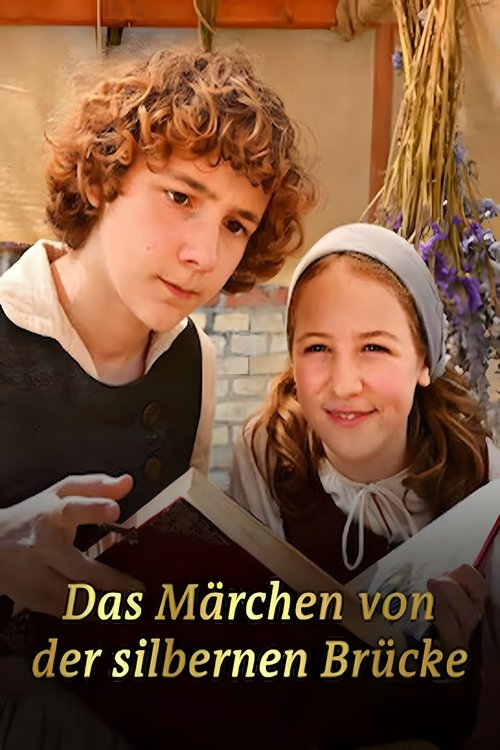
Rose und Heinrich live in a world that feels hurried, joyless, and starved of stories, and that emotional emptiness is where the fairy tale begins. Their parents run a bakery and are so overwhelmed by work that they have no time to read to them, so the children drift through their days feeling overlooked while the larger world around them becomes, as the film describes it, trostlos und unglücklich and unable to make time for one another.
One day, while Rose and Heinrich wander through the market, they find an old, faded fairy-tale book lying neglected on a heap of trash, and the discovery immediately feels like a small miracle in a world that has forgotten wonder. They take the book home, but because they do not know the fairy-tale figures inside, the encounter quickly turns strange and chaotic: the book's magic is fragile, and when an argument breaks out, the stories inside begin to spill into the human world. Out tumble the familiar figures of Hexe, Teufel, Schneewittchen, Rotkäppchen, and Rumpelstilzchen, suddenly stranded between the pages and the everyday world, frightened because they sense what is happening to them: if people stop reading and retelling their stories, they will be forgotten forever.
The appearance of the fairy-tale characters turns the children's ordinary life into a crisis. The stories are no longer safely contained in the book, and the book itself is losing power, becoming an object on the edge of extinction, a magical archive that can no longer protect what it holds. The fairy-tale figures explain that the world's neglect of stories is allowing the sinister force known as das Dicke Ende to grow stronger. This is the film's central threat: not a simple monster in a forest, but a consuming force that wants to devour the book so that the tales will be erased from memory altogether.
The children are then drawn into the fairy-tale world's desperate logic. Because the book is weakening, Rose and Heinrich must help restore it, and the only way to do that is to find the silberne Brücke, the silver bridge that leads into the Märchenwald. That bridge is not merely a path through space; it is the threshold between the human world and the realm where the stories still have a chance to survive. The fairy-tale figures, fearful and impatient, effectively send the children on the quest, because they know that only in the Märchenwald can the hidden guardian Liebegüte help them.
Rose and Heinrich do not set out as brave heroes in the classical sense. They are children who have been neglected by the adult world, and now they are asked to act with a seriousness that the adults around them have failed to show. Before leaving, they leave a note for their parents, asking them to trust them and explaining that they are going to save the fairy-tale book. That note is a quiet but powerful moment, because it is the first time the children speak back to the adults in a voice of determination rather than disappointment. It also makes their departure feel final: while the parents are still absorbed in the bakery and daily routine, the children are already crossing into a more dangerous reality.
As Rose and Heinrich move away from the bakery and toward the hidden path of the silver bridge, the story gains momentum. The fairy-tale companions join them in uneasy alliance, especially Hexe and Teufel, who are said to help the children find the bridge even though they themselves are among the creatures newly shaken loose from the book. Their presence adds a playful but unstable energy to the journey. The children must rely on beings who are not entirely trustworthy in appearance, and the film turns that uncertainty into part of its tension: the quest is not only about reaching a destination but about learning whom to trust in a world where every character is shaped by old stories and old fears.
Meanwhile, das Dicke Ende is already on their trail. The film frames it as a voracious, looming threat that wants to stop the children before they can restore the book, and every step toward the bridge feels like a race against a force that is both literal and symbolic. It is the embodiment of forgetting, of destruction by neglect, of the idea that stories can be swallowed not through violence alone but through indifference. When the group crosses the dark market and hurries onward, the danger becomes immediate: on the dark market, Rose and Heinrich only barely escape das Dicke Ende, which is drawn to the chaos and disturbance caused by the fairy-tale figures' argument. The escape is crucial because it proves that the monster is not a distant menace but one that can close in quickly whenever the stories are exposed and unstable.
That pursuit forces the characters deeper into the fairy-tale landscape. The children, the witch, the devil, and the other figures make their way through the forest toward the hidden house of Liebegüte, and the atmosphere shifts from the human world's drab exhaustion to a realm of mythic urgency. The Märchenwald is not simply scenic; it is a place where the fate of stories is being negotiated in real time. Here, the film reveals its larger idea: fairy tales do not survive by themselves. They survive when they are remembered, read, repeated, and passed on. The fear of the characters is therefore existential. Schneewittchen, Rotkäppchen, and Rumpelstilzchen are not merely concerned about being out of place; they are afraid of vanishing into oblivion.
When Rose and Heinrich finally reach Frau Liebegüte, the story makes its central revelation explicit. Liebegüte lives in the Märchenwald and guards the mysterious Rad der Zeit, the Wheel of Time, which has the power to revive the fairy-tale book and restore the stories' life-force. The film does not present this as easy magic. Instead, the children are told that to save the Märchenbuch, they must solve a riddle connected to the Wheel of Time. This is the final test, and it turns the emotional core of the movie into an intellectual and moral challenge: to save stories, the children must understand them, believe in them, and answer correctly under pressure.
The confrontation at Liebegüte's house becomes the climax of the film. das Dicke Ende is still close enough to threaten them, and the tension rises because the rescue can fail at the last second. The fairy-tale world is now compressed into a single decisive moment: the hidden structure of time, memory, and storytelling lies in the riddle, while the monster of forgetting presses in from outside. Rose and Heinrich have come a long way from the bakery, from the market, and from the initial sense of neglect, but now their success depends on their ability to choose the right answer before everything is lost.
In the final stretch, the children solve the riddle in letzter Minute. The exact wording of the puzzle is not available in the sources, but the outcome is clear: they succeed just in time, and their success restores the book's power. That means the fairy tales are saved, the magical object regains its life, and the threat posed by das Dicke Ende is defeated at the crucial moment. The film's ending therefore resolves both levels of its conflict at once. On the magical level, the book and the fairy-tale realm are preserved; on the emotional level, Rose and Heinrich have proven that stories matter enough to risk everything for them.
The resolution is gentle but meaningful. The children have not just completed a quest; they have repaired a break between generations, between usefulness and imagination, between adult routine and childhood wonder. By the time they save the Märchenbuch, they have also shown that the world's lack of time is not inevitable. The parents' neglect was not malice but exhaustion, and the children's adventure becomes a demand that stories and attention be restored to family life. The returned fairy-tale figures, the revived book, and the defeat of das Dicke Ende all point toward the same idea: stories survive only if people make room for them.
The known ending does not describe any deaths, and the available sources do not record any character being killed during the journey. Instead, the drama is about the threat of disappearance, not literal death, and the film closes on the victory of memory over oblivion. Rose and Heinrich finish the story as children who have become guardians of something larger than themselves, and the fairy-tale world remains intact because they choose to believe that it is worth saving.
More Movies Like This
Browse All Movies →



What is the ending?
The ending is that Rose and Heinrich reach Liebegüte's house in the Märchenwald, solve the riddle of the Rad der Zeit just in time, and save the Märchenbuch from the Dicke Ende. The children succeed, and the fairy-tale world is restored instead of being swallowed by forgetting.
Rose and Heinrich begin the final stretch after the Märchenfiguren have fallen out of the book and sent them off to find the silberne Brücke. By the time they arrive in the Märchenwald, the danger has become immediate: the Dicke Ende is already close behind them, and the book's survival depends on what happens at Liebegüte's home.
At the house of Liebegüte, the last task is waiting. Rose and Heinrich must solve the riddle of the Rad der Zeit while the Dicke Ende stands at the door, ready to stop them. The scene is built around pressure and urgency: the children have no time to waste, because the fate of the book and the Märchenfiguren depends entirely on their answer.
In the end, they solve the riddle in time. That success restores life to the Märchenbuch, which means the Märchenfiguren are not lost to oblivion. The Dicke Ende is prevented from winning, and the threat that it represents is defeated at the point where the children complete their task.
As for the main characters at the end: Rose and Heinrich finish as the rescuers who save the story-world. Liebegüte remains the guardian of the place where the book can be renewed. The Hexe and the Teufel have accompanied the children on the journey, but the decisive outcome belongs to the children's solution of the riddle. The Märchenfiguren survive because the book is restored, and the Dicke Ende does not get to consume it.
In simple terms: the children make it to the end of the path, answer the final riddle, and save the fairy tales before the darkness can take them.
Is there a post-credit scene?
There is no source in the available results confirming a post-credit scene for Das Märchen von der silbernen Brücke, and none of the provided production or broadcast listings mention one.
Based on that absence, the most accurate answer is that a post-credit scene is not documented in the available sources. If you want, I can still help infer whether the film's ending itself functions like a tag or coda based on plot descriptions, but I cannot verify a post-credit scene from the evidence here.
Why do Rose and Heinrich decide to leave home and search for the silver bridge?
Rose and Heinrich leave because they discover that the fairy-tale book they found has become a crisis point for the whole fairy-tale world, and the magical figures tell them the silver bridge is the only way to reach the Märchenwald and help save the stories before they disappear. Their decision is also tied to their home life: they long for more connection with their busy parents, and the adventure becomes both a rescue mission and a test of trust.
Which fairy-tale characters fall out of the book, and how do they interact with the children?
The characters named in the sources include the Hexe, the Teufel, Schneewittchen, Rotkäppchen, and Rumpelstilzchen, and they emerge from the damaged book after it is dropped or disturbed. At first they are disoriented by the human world, but they quickly become the children's uneasy allies and send Rose and Heinrich on the quest for the silver bridge.
What is the 'Dicke Ende,' and why is it chasing the book and the children?
The 'Dicke Ende' is the main threat to the story's fairy-tale world: a giant-like figure that wants to devour the book so the fairy tales and their characters will be forgotten forever. It pursues Rose and Heinrich because their mission to preserve the book directly threatens its plan to erase the stories.
Who is Frau Liebegüte, and what role does she play in the children’s quest?
Frau Liebegüte is the guardian-like figure in the Märchenwald who can help restore the fairy-tale book and the world of stories. The children have to reach her by finding the silver bridge, and she is connected to the 'Rad der Zeit,' which must be solved or activated for the rescue to succeed.
What happens when Rose and Heinrich try to protect the fairy-tale world from being forgotten?
Rose and Heinrich travel with the fairy-tale characters toward the Märchenwald, while their parents later find a message asking them to trust the children. Along the way, the group faces the race against the Dicke Ende and the crucial task tied to the Rad der Zeit, with the children ultimately solving the riddle in time to save the book.
Is this family friendly?
Yes -- it appears family friendly and is presented as a children's/family Märchenfilm in the ARD "Sechs auf einen Streich" series.
Potentially upsetting or frightening elements for children or sensitive viewers include: - A menacing creature called "Das Dicke Ende," described as an ogre-like being that is on the children's trail and creates tension and fright. - Witch and devil characters appear in the story, though the material emphasizes that they are portrayed as helpers rather than purely scary figures. - Mild peril/chase scenes, since the children must escape danger and move quickly to prevent the loss of the fairy-tale world. - A general gruesome or eerie fantasy atmosphere from the old, fading fairy-tale book and the magical world at risk of disappearing.
The available descriptions do not mention graphic violence, gore, or adult content.







