







Popular
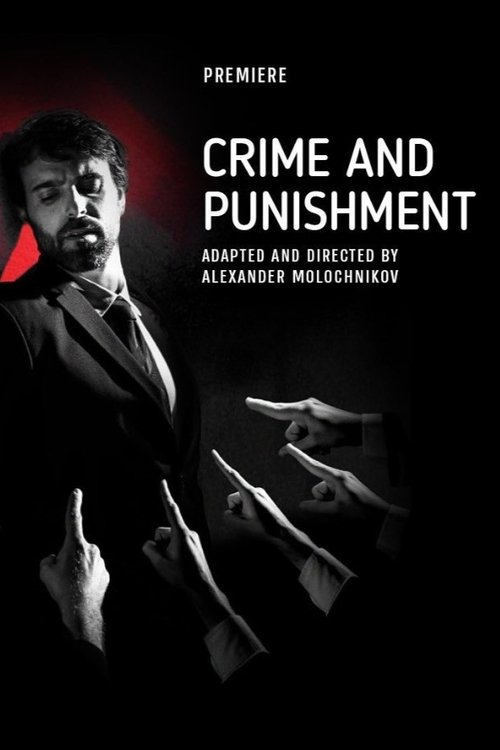
Why does Raskolnikov kill Alyona Ivanovna in the 2024 Crime and Punishment movie?
How does Porfiry Petrovich begin to suspect Raskolnikov?
What role does Sonia play in Raskolnikov’s confession in the 2024 film?
How does Dunya’s relationship with Luzhin affect the family conflict?
What is Svidrigailov’s impact on the story and on Dunya?
Should I watch it?
Ask Your Own Question

What is the plot?
Rodion Romanovich Raskolnikov lives in a tiny, squalid attic room in St. Petersburg, hungry, feverish and convinced that he is destined for something extraordinary. He vacillates between fevered rationales and intense shame, haunted by an article he once wrote arguing that certain men may be justified in breaking moral laws if their actions serve a higher purpose. He believes he belongs to the sort of extraordinary person who can transgress for a greater good and, driven by poverty and by the idea that removing a worthless parasite would free resources for the needy, he plans the murder of Alyona Ivanovna, a pawnbroker who cheats the desperate.
On the day he commits the crime, Raskolnikov goes to Alyona's cramped flat a first time to survey the premises. He returns later with an axe, enters under the pretense of pawning something and strikes Alyona Ivanovna with repeated blows to the head, killing her. As he searches the room for money, her half-witted sister Lizaveta unexpectedly appears. Raskolnikov hits Lizaveta with the same axe; she falls and dies from the blows. He takes what he can find--some small sums and a few trinkets--and staggers out into the street, sick with shock. He throws away or conceals the axe and hides some of the stolen items on his person. In the hours afterwards he wanders in a daze through the city, revisiting the scene of the crime and testing himself in front of onlookers, at times acting boldly and at times sinking into an isolated, feverish state.
News of the murders spreads. At a tavern, Raskolnikov meets Semyon Zakharovich Marmeladov, a bohemian former government clerk whose life spirals in drunken dependence. Marmeladov confesses to Raskolnikov the degradation of his household: his consumptive wife, Katerina Ivanovna, his daughter Sonia forced into prostitution to provide for them, and the household's hunger and shame. After a quarrel in a tavern Marmeladov walks away in a storm and, later that day, he is struck down in the street by a cab. Raskolnikov arrives at the scene, hauls the shattered man back to Marmeladov's cramped apartment and helps carry him upstairs. Marmeladov lies dying; he calls for his daughter Sonya and begs for forgiveness. Sonya cradles him while he breathes his last. Raskolnikov gives the last twenty-five rubles he has--money his mother sent him--to Katerina Ivanovna, telling her it is repayment of a debt, and then slips away.
Physically stranded between mania and collapse, Raskolnikov falls into a fever that lasts several days. His friend Dmitri Prokofych Razumikhin finds him unconscious, nurses him and brings a doctor. During this fevered interval Razumikhin talks with the physician and frets about the ongoing police inquiry into the murders. A local peasant worker, Mikolka, is arrested briefly for suspicion because he was seen near the flat, and investigators interview the pawnbroker's clients. A young official named Zametov, one of the clerks who had watched Raskolnikov faint at a government office shortly before the murders, begins to nurse a general suspicion that something is odd about Raskolnikov, though he lacks concrete proof.
Raskolnikov's family arrives in St. Petersburg: his mother, Pulcheria Alexandrovna, and his proud, self-sacrificing sister, Avdotya Romanovna (Dunya). Dunya has become engaged to Pyotr Petrovich Luzhin, a well-heeled but grasping lawyer who insists on controlling her life and treating her as indebted to him. Luzhin meets Raskolnikov and brags of his fortune and plans; Raskolnikov deliberately insults Luzhin in front of Dunya and their mother, and sends Luzhin away. Dunya and Pulcheria are shaken by the display, and Razumikhin, who has become a warm confidant, comforts them.
Raskolnikov returns again to the neighborhood around the murders and behaves provocatively: he prods workmen and lodgers with questions, requests that they accompany him to the police station, and mocks the officials who puzzle over the crime. He draws attention from Porfiry Petrovich, the investigating magistrate, who begins to take a professional interest in him. Porfiry drops hints in conversation, lures Raskolnikov into psychological jousting and presses him not with direct accusations but with insinuations intended to unnerve. In one private interview Porfiry talks of theories, of the detective's inability to prove guilt without confession, and of the criminal's inner tumult. Raskolnikov meets this with temper and with counter-provocations. He is unsettled but not yet forced to reveal anything.
Sonya Marmeladov, Marmeladov's daughter, lives with her suffering stepmother and siblings, working as a prostitute to keep the family fed. Raskolnikov seeks her out, drawn as much by guilt and fascination as by compassion. At her humble lodgings he questions Sonya mercilessly about her life and about Katerina Ivanovna's condition. She reveals to him that she had known Lizaveta Ivanovna, the pawnbroker's sister, and that Lizaveta once gave her a small cross and a copy of the Gospels. Sonya, fragile but devout, reads aloud the Gospel account of Lazarus being raised from the dead. The reading disturbs and enthralls Raskolnikov. He tells Sonya that he will return the next day and tell her who killed Lizaveta.
Meanwhile, Pyotr Luzhin grows angrier as Dunya resists his patronizing control. Svidrigailov, a lecherous and morally ambiguous former employer of Dunya's, arrives back in St. Petersburg after the sudden death of his own wife, Marfa Petrovna. Marfa is found dead in her bed; the circumstances are not fully explained, but her passing leaves Svidrigailov with three thousand rubles, which he hands to Dunya, raising immediate suspicion and scandal. Svidrigailov insinuates that he knows Dunya's brother's darkest secret; Raskolnikov confronts him in an inn, warns him away from Dunya and follows him. Dunya watches from a window and later confronts Svidrigailov herself in his rooms. He reveals to her that he overheard something concerning Raskolnikov--he claims to have knowledge of a "secret" about Raskolnikov's past behavior--and he attempts to blackmail and seduce her. Dunya pulls a pistol and fires at Svidrigailov, missing. Svidrigailov responds not with revenge but with a kind of weary pity; he allows Dunya to leave and tells her that he will go away. The harassment is over for the moment, but the episode leaves everyone more unsettled.
Luzhin, humiliated by Dunya's rejection, plots to disgrace Sonya by placing money on her person and then accusing her publicly of theft, hoping to force the family to acquiesce to him to avoid scandal. Luzhin confronts Dunya and Pulcheria with his charge, expecting them to cower. Razumikhin and Raskolnikov expose Luzhin's trick by revealing that he planted the money and by confronting him with witnesses; Luzhin is forced to retreat into indignation but not to be physically punished. The conflict destroys Luzhin's standing and frees Dunya from the engagement.
The police investigation intensifies. Zametov passes along his growing suspicions to Porfiry, who continues his psychological games. Porfiry suggests that some criminals confess not because they cannot be caught but because guilt consumes them; he speaks of the criminal's need to unburden. Raskolnikov flirts with confession in private to Porfiry, taunting and almost admitting his crime, but he retreats when he senses the legal consequences. Porfiry uses clumsy charm and intellectual pressure to unsettle him, bringing up irrelevant facts and making Raskolnikov feel trapped by his own arrogance.
Svidrigailov, after leaving Dunya, seeks out Sonya. He offers her three thousand rubles, telling her it will support Katerina Ivanovna's children if she accompanies Raskolnikov into exile. He seems alternately generous and sinister; he asks questions about Sonya and Raskolnikov's relations, watches them carefully and alternates between kindness and threats. The night he visits Sonya he also arranges for Katerina Ivanovna's children and gives Sonya the money with what appears to be a practical desire to tie up loose ends. The next morning Svidrigailov checks into a shabby hotel and, in the morning hours, shoots himself in the head in a public room. He dies from the self-inflicted gunshot; the death shocks the neighborhood and cuts out a manipulative if enigmatic figure.
Katerina Ivanovna, already consumptive and exhausted by poverty and humiliation, succumbs in the aftermath of Marmeladov's death. She collapses and dies in her crowded apartment, her illness worsened by grief and neglect; no specific person kills her, but her death follows a sequence of public shaming, depletion and the shock of her husband's demise. Marmeladov has already died after being struck and mangled by the carriage; he dies in Sonya's arms, calling out for mercy and forgiveness.
Raskolnikov drifts between bravado and confession. After the murders he had intermittently tried to draw the police's attention to himself, returning to the scene of the crime and behaving erratically around investigators and residents. He suffers a religious and moral tremor that he cannot fully explain to himself. He tells Sonya, privately, that he is the one who killed Lizaveta and the pawnbroker; he describes his motives in detached rational terms but cannot reconcile his theoretical justification with the raw horror and psychological collapse he feels. Sonya receives his confession with a mix of condemnation and compassion; she tells him that she cannot judge his soul and urges him to tell the truth to the authorities, to confess and accept the punishment that must befall him.
The legal case proceeds. Porfiry continues to press, having gathered circumstantial connections that seem to point toward Raskolnikov, but he lacks absolute proof. Raskolnikov's behavior--his fever, his withdrawal, his reckless acts--provides Porfiry with psychological leverage. Razumikhin, Dunya and Pulcheria plead for mercy and for rational defense. At a key moment Raskolnikov goes into the police station and, facing the full weight of the legal machinery, gives himself up. He confesses to the double homicide, describing how he planned and executed the murder of the pawnbroker and the accidental killing of her sister during the act.
At the trial the court examines the facts. Witnesses describe the scene; items taken from the pawnbroker's flat are traced. Raskolnikov's mental state, his motives and his social circumstances are discussed by lawyers and the judge. The court convicts him of murder. He is sentenced to penal servitude in Siberia for a term of years, and he is to serve his sentence in hard labor.
After the verdict, Sonya resolves to follow Raskolnikov to Siberia. She sells what she has and travels east to remain near him, an act of devoted solidarity that Raskolnikov receives with mixed feelings: shame, disbelief and a dawning recognition of the loyalty he has inspired in a woman he once considered beneath contempt. Razumikhin remains with Pulcheria and Dunya in St. Petersburg and continues to support them; Dunya's future opens in a new direction now that Luzhin is disgraced and Svidrigailov is dead.
In the penal colony in Siberia authorities place Raskolnikov among other convicts; he performs hard labor and lives under strict discipline. Sonya arrives at the settlement and lodges nearby. She keeps a copy of the Gospels and the small cross Lizaveta once gave her. Each evening she visits Raskolnikov, reads passages aloud and speaks quietly with him. He listens with a mixture of obstinacy and attention. Physically he endures the drudgery and the punishment; inwardly he wrestles with the consequences of his actions and with the realization that his theory of extraordinary men did not absolve him. Sonya's persistent presence--her reading of the Gospel and her patient care--presses upon him a moral and spiritual reckoning. In the final scenes he begins, haltingly, to stir toward a moral transformation: he responds to Sonya's appeals, shows signs of remorse, and allows himself to be touched by her compassion.
The story closes with Raskolnikov in Siberia, serving his sentence and slowly emerging from the withdrawal of his earlier intellectual isolation. Sonya remains by his side, and he opens himself, clumsily but genuinely, to the possibility of confession and renewal. The crowding details of his crimes, the explicit descriptions of who struck whom and how they died--the pawnbroker felled by his axe, the sister killed as she startled into the attack, Marmeladov crushed by a carriage, Katerina Ivanovna's collapse from fevered illness and Svidrigailov's self-inflicted gunshot--stand by him as facts. Raskolnikov's final movement is not toward absolution by law but toward an internal acceptance of punishment and an emergent, if uncertain, willingness to receive the human compassion Sonya offers, as the penultimate image leaves him beginning to respond to that care in the bleak landscape of exile.





What is the ending?
The 2024 Crime and Punishment story ends with Raskolnikov breaking under the pressure of the investigation and his own guilt, and in this version he dies by suicide in the police station. Sonya is left behind in grief, while Porfiry remains the investigator who has forced the truth into the open.
In the final stretch, the story pushes Raskolnikov into a corner. He has already been living in a state of fear, exhaustion, and mental strain after the murder he committed to test his theory about whether certain people have the right to do evil for a greater purpose. Porfiry keeps closing in on him, pressing for a confession and making it harder for him to hold himself together.
As the ending arrives, Raskolnikov goes into the police station. He does not come there to continue hiding; he comes there at the end of his fight with himself. In this 2024 version, instead of surrendering in the way the novel does, he kills himself in front of the investigator. The scene turns the final act into a public collapse rather than a private confession.
Sonya's fate at the end is not escape or victory; she is left carrying the loss and the wreckage of what Raskolnikov has done. The investigator's role is unchanged in the final moment: Porfiry is the one standing at the center of the truth-seeking force that has driven Raskolnikov to the edge.
Seen scene by scene, the ending moves in a straight line: Raskolnikov is already unraveling from the burden of the murder and the investigation. Porfiry keeps tightening the pressure and demanding the truth. Raskolnikov enters the police station, fully broken by what he has done and what he cannot outlast. He ends his own life in front of the investigator. Sonya is left behind in mourning, while the story closes on the ruin of Raskolnikov's attempt to prove his theory through violence.
Is there a post-credit scene?
I could not verify any post-credit scene for the 2024 film titled Crime and Punishment from the results provided. The available search results do not identify a 2024 movie by that exact title with a documented post-credit scene, and the closest relevant result points to a different film, The Roundup: Punishment, which explicitly has no mid- or post-credit scene.
If you meant The Roundup: Punishment, then the answer is no--there is no post-credit scene, so nothing extra plays after the credits. If you meant a different 2024 film, tell me the country, director, or cast, and I can narrow it down.
Why does Raskolnikov kill Alyona Ivanovna in the 2024 Crime and Punishment movie?
Raskolnikov's murder of Alyona Ivanovna is driven by a mix of desperate poverty, intellectual pride, and a brutal experiment in self-justification. He sees the pawnbroker as a grasping burden on the world and convinces himself that eliminating her will prove he is one of the rare people who can step beyond ordinary morality. The act is not coldly efficient; it is tense, physical, and psychologically corrosive, with his fear and revulsion already surfacing as the violence unfolds.
How does Porfiry Petrovich begin to suspect Raskolnikov?
Porfiry Petrovich's suspicion grows through conversation, observation, and the way Raskolnikov repeatedly reveals too much of himself while trying to appear composed. The investigator does not rely only on evidence; he presses at Raskolnikov's conscience, reading the young man's agitation, contradictions, and emotional strain as signs of hidden guilt. Their scenes are defined by a quiet psychological duel, with Porfiry circling and Raskolnikov feeling increasingly trapped.
What role does Sonia play in Raskolnikov’s confession in the 2024 film?
Sonia becomes the emotional center of Raskolnikov's collapse and confession. She responds to his torment with compassion rather than judgment, creating the only space where he can admit the truth without being psychologically destroyed by pride. Her presence intensifies his shame and longing for redemption, and her quiet moral strength pushes him toward speaking the confession he has resisted.
How does Dunya’s relationship with Luzhin affect the family conflict?
Dunya's connection to Luzhin sharpens the family's economic and emotional pressures. Luzhin's courtship is tied to control and self-interest, making Dunya feel the cost of sacrificing herself for security. This strains her bond with Raskolnikov and their mother, because the relationship exposes how urgently the family needs stability and how little dignity they can afford to preserve.
What is Svidrigailov’s impact on the story and on Dunya?
Svidrigailov brings a threatening, predatory energy into the film's emotional landscape, especially around Dunya. He represents a darker, more openly exploitative masculinity than Luzhin's polished manipulation, and his attention to Dunya creates immediate danger and dread. His presence forces Dunya to confront how vulnerable she is, and it sharpens the sense that every major relationship in the story is shadowed by coercion, power, and fear.
Is this family friendly?
Probably not family friendly. The 2024 series is rated for adults in available guides, with severe sexual content, moderate violence, and some frightening or intense material noted.
Potentially upsetting elements for children or sensitive viewers may include: - Strong sexual content and nudity - Violence and gore - Profanity - Alcohol, drug, or smoking use - Frightening or intense scenes
If you want, a more specific age-suitability recommendation can be given for younger kids, teens, or highly sensitive viewers.








