

Popular
Why does Vid refuse to sell the family home even as the mine gets closer?
What is Dule’s relationship with his father Vid, and why does he see him as a hero?
How does Dule’s imagination shape the story scenes around the greenhouse and the mine?
What role does Ada play in the family conflict over whether to stay or leave?
Who is Rado, and how does he influence the family’s decision about the house?
Should I watch it?
Ask Your Own Question

What is the plot?
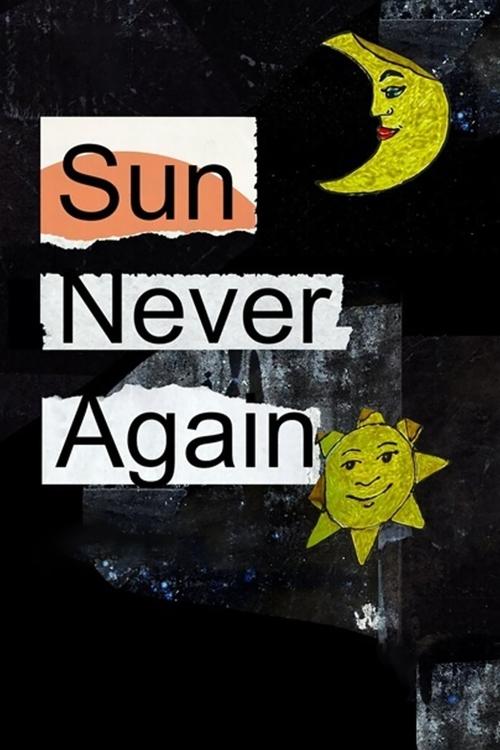
Sun Never Again opens in a mountain village that already feels half-erased, as if the landscape itself is being consumed breath by breath. Villagers are quietly dismantling a house that has been sold to the mining company, carrying off copper wiring and roof tiles before the bulldozers arrive, and the image sets the film's emotional logic at once: this is a place where even the ruins are being harvested for value. The village, once beautiful, now sits under a pall of industrial dust and sour air, and the sun itself seems to have been blotted out by the mine's pollution. The mine is never just background noise; it is the invisible engine of the story, dictating every conversation, every family argument, and every small act of resistance.
At the center of that resistance is Vid, played by Dušan Jović, a stubborn father who refuses to accept what the rest of the village already knows: that the mine is winning. He lives with his wife, Ada, played by Nataša Marković, and their son Dule, played by newcomer Rastko Racić. Dule sees Vid as a hero, almost mythically so, and the film filters much of its tenderness through that child's devotion. But Vid is not heroic in any straightforward sense. He is angry, defiant, and increasingly worn down by the fact that the air itself is making his son struggle to breathe. The film establishes early that the family's private crisis is inseparable from the environmental one: the mine's stench and expanding excavation are physically harming Dule, and the household is already living inside the consequences of a decision they have not yet made.
The first major pressure point arrives when their neighbor Rađo, played by the late Radovan Miljanić, comes to negotiate on behalf of the mine management company. Rađo is no neutral messenger. He is an influential neighbor who has already sold his own house and is eager to move away, and his return carries the grim authority of someone who has already accepted the future everyone else is trying not to name. He tells Ada that the company's prices for land are at an all-time high, but also warns that the offers will soon begin to fall as the area becomes increasingly unlivable and residents lose all leverage. The conversation is not just a sale pitch; it is a prophecy. Ada listens, worried and practical, because she can already see what the pollution is doing to her family, and she wants to sell for the sake of their health.
Vid refuses immediately. He will not sell the house, will not surrender the yard, will not admit that leaving is the only rational choice. His refusal is not framed as nobility in any uncomplicated sense; it is part pride, part denial, part a desperate need to preserve a world that is already disappearing around him. He sees the mine's pressure not only as corporate violence but as a personal challenge, something that must be fought even if reason says the fight is lost. The film repeatedly shows him drowning his common sense in alcohol, drinking himself into a haze rather than confronting the depth of the crisis. Ada sees that clearly. She is exhausted, alarmed, and increasingly unable to hide the fact that she no longer believes resistance alone can protect them.
Yet the most important bond in the film is not the marriage under strain but the father-son relation that keeps reimagining the disaster as something survivable. Vid and Dule are building a greenhouse in the yard, and the structure becomes the film's central symbol: for Vid, it is a last stubborn gesture against ruin; for Dule, it is a magical refuge where life can still be coaxed into bloom. The greenhouse is not merely a physical project but a competing worldview. Inside Dule's imagination, it becomes a place where flowers never die and hummingbirds live forever, a sanctuary suspended above the contamination outside. The boy's fantasy does not erase the danger; it transforms it into something he can emotionally inhabit. He begins to imagine himself as the greenhouse's "protector," a role that the film invests with childlike seriousness and near-religious weight.
That imagination opens the film into its magical-realist register. Dule's devotion to his father remains absolute, even when the adults around him seem broken by realism. He is willing, in the logic of the film, to strike a deal with God himself to preserve the greenhouse and the fragile world it represents. That possibility is embodied in a one-scene cameo by Svetozar Cvetković, who appears as God. The cameo is brief, but the implication is enormous: the boy's private faith is so intense that the film allows it to become literal. In a story defined by industrial extraction and the stripping away of place, Dule's imagination becomes an act of refusal as meaningful as Vid's defiance.
As the pressure mounts, the family's emotional geometry tightens. Ada is pulled between loyalty to Vid and fear for Dule's health. She is not sentimental about the land; she can see the exhaustion, the futility, and the physical danger more clearly than either of the males in the household. Her desire to sell is not a betrayal but a survival instinct. Vid, however, interprets selling as surrender, and Dule, who adores his father, aligns himself with that resistance even when he cannot fully understand its cost. This creates the film's central tension: the mother sees the future as a matter of leaving, the father sees it as a matter of enduring, and the son tries to make endurance feel like enchantment.
The film's cruelty is that neither position is entirely wrong. The mine is not an abstract threat but a material force already remaking the village into a wasteland. The neighbors who have sold are not villains; they are people who have chosen a less painful form of defeat. Rađo's warning about prices dropping is not just cynical manipulation; it is an economic truth that reveals how cornered the villagers are. The land is becoming less livable by the day, and the company's leverage only grows stronger as the pollution advances. Even so, Vid keeps refusing, and his refusal becomes more self-destructive the more he drinks and the more his son's breathing is affected.
The greenhouse work continues, and with it the fantasy that the family can still plant something in poisoned ground. The scenes around it are shaped by a tension between labor and dream: hands hammering, walls rising, air shimmering with industrial decay beyond the yard. Dule's childlike perception gives those moments a fragile radiance. He treats the greenhouse not as a defense against the mine alone but as a pocket of possible eternity, a place where the laws of the ruined village no longer apply. Vid, by contrast, frames the project as a practical form of defiance, a way to motivate himself to continue resisting the company's takeover and the collapse of his own judgment. The same structure holds two incompatible meanings, and the film never fully resolves that contradiction.
What makes the story feel especially tragic is how little room there is for genuine victory. The mine remains offscreen and omnipotent, the kind of corporate force that never needs to show its face because its effects are already everywhere. The village continues to empty out. Houses are dismantled. The air remains thick. The family's choices narrow. Vid's drinking darkens his resistance into something increasingly self-destructive, while Ada's patience frays under the strain of knowing that waiting may cost them Dule's health. The boy, meanwhile, absorbs everything and translates it into symbolic form, as children do when adults cannot offer a coherent story. He turns dread into fable, turning ruin into a task that can be assigned, a threat that can be negotiated with, a world that might still be saved if the right guardian remains on watch.
The climax, as the sources allow it to be understood, is less about a single explosive confrontation than about the convergence of all these pressures: the failing land, the worsening air, the family's disagreement, Vid's alcohol-fueled stubbornness, Ada's exhausted pragmatism, and Dule's need to believe that imagination can still shelter them. The boy's deal-with-God fantasy and the greenhouse's symbolic role crystallize the film's spiritual logic. The mine threatens not only the family's property but the very possibility of a future in which childhood wonder can survive. When the film brings those elements together, it does so with a mixture of grief and tenderness rather than melodramatic explosion. The emotional climax is the moment when resistance stops being abstract and becomes a question of what kind of world the family is willing to let Dule inherit.
The available sources do not provide a full scene-by-scene account of any deaths, and they do not confirm any on-screen death within the film itself beyond noting that Rađo is played by the late Radovan Miljanić. No source in the provided material verifies a character death as part of the plot, so the film's tragedy appears to be environmental, familial, and existential rather than centered on explicit on-screen killings. That absence matters. Sun Never Again is not structured around body-count suspense; its devastation comes from the slow violence of extraction, the slow compression of options, and the emotional death of a home that can no longer remain a home.
By the end, the film leaves the family suspended between surrender and resistance, with the greenhouse standing as the clearest emblem of what they are trying to preserve. The story does not offer a clean triumph over the mine, because the sources describe it as a drama of endurance and magical realism rather than resolution through decisive victory. What remains is the image of Vid still struggling against corporate power and his own self-destruction, Ada still measuring survival against attachment, and Dule still trying to protect the tiny green world he has imagined into being. The final feeling is not of escape but of precarious continuation: a family clinging to one another while the land beneath them keeps disappearing.



What is the ending?
I can give you a careful, source-based ending summary, but the available results do not provide a full scene-by-scene description of the film's actual ending, so I cannot honestly claim details that are not shown in the sources.
Short, simple narrative: The film ends with the family still facing the mine's pressure on their home, and the emotional center stays on Vid, Ada, and Dule as they each respond differently to the same loss. Vid continues resisting, Ada remains focused on the family's survival, and Dule holds onto imagination and hope even as the village is being overtaken by the mine.
Expanded narrative: The sources establish that the story is about a rural Serbian family living beside an expanding iron ore mine, with their village becoming more polluted and unlivable as neighboring houses are sold and taken apart. Vid refuses to sell his home, even after the mine's impact becomes impossible to ignore, while Ada is willing to accept the buyout because she sees the danger to the family's health. Dule, their son, remains deeply attached to his father and treats Vid as a heroic figure, channeling his fear and confusion into imagination, fairy-tale thinking, and efforts to protect the greenhouse they are building in the yard.
The sources do not spell out a final on-screen sequence in detail, but they do make clear the story's endpoint is shaped by continued pressure from the mine rather than a clean resolution. Vid's fate, within the material provided, is that he remains a man struggling against forces larger than himself and is still marked by alcohol and stubborn refusal. Ada's fate is that she stands for practical survival and the need to leave before the village becomes even more dangerous. Dule's fate is that he is left holding the emotional and imaginative core of the family story, trying to preserve hope in a place where the physical world is collapsing around him.
What the sources do show is that the film's ending is not presented as a victory over the mine. Instead, the ending belongs to a family still living under pressure, with the final emotional note centered on persistence, grief, and the child's imagination surviving beside adult defeat.
If you want, I can also give you a spoiler-focused "what happens at the end" version limited strictly to what the available sources support, or a character-by-character ending breakdown.
Is there a post-credit scene?
I could not verify any post-credit scene for Sun Never Again from the available sources. The results identify the film and its story, but none of them document an after-credits or post-credit sequence.
If you want, I can also help by checking whether the film has any mid-credits scene, end-credits text, or festival-version differences.
Why does Vid refuse to sell the family home even as the mine gets closer?
Vid's refusal is tied to his stubborn determination to keep his family's life and land intact despite the mine's expansion. Sources describe him as a father who does not want to leave, even while the pollution and demolition pressure around him make staying increasingly difficult.
What is Dule’s relationship with his father Vid, and why does he see him as a hero?
Dule looks up to Vid with deep admiration and treats him like the greatest hero in the world. At the same time, Dule senses that something is wrong and throws his energy into trying to restore his father's happiness, which makes their bond central to the story.
How does Dule’s imagination shape the story scenes around the greenhouse and the mine?
Dule's childlike imagination transforms the grim reality around him into something more hopeful and magical, especially in relation to the greenhouse they are building. Reviews note that he imagines flowers blooming forever and hummingbirds never dying, turning the greenhouse into a sanctuary of fantasy against the mine's destruction.
What role does Ada play in the family conflict over whether to stay or leave?
Ada represents the practical, exhausted side of the family conflict. She sees the situation as futile, worries about the worsening conditions, and wants to sell the house rather than keep fighting the mine's encroachment.
Who is Rado, and how does he influence the family’s decision about the house?
Rado is the neighbors' example of someone who has already accepted the mining company's buyout. He sold his house, warns that prices may fall as the area becomes more unlivable, and serves as a pressure point showing the family what surrender looks like.
Is this family friendly?
Probably not ideal for young children. Based on reviews, it is a grim drama with environmental devastation, family stress, and strong emotional intensity rather than a light family film.
Potentially objectionable or upsetting aspects for children or sensitive viewers include:
- Pollution and industrial destruction around a village, with a bleak, dreary atmosphere.
- Family distress caused by economic pressure, displacement, and conflict over whether to leave home.
- A father drinking heavily / getting stinking drunk at work, which may be upsetting or inappropriate for some viewers.
- Health concerns affecting a child, including the mine's stench harming the son's breathing.
- Themes of loss, poverty, and forced relocation as people sell homes and face an uncertain future.
- Magical-realism and fantasy elements mixed with the grim setting, which may feel unsettling rather than comforting for younger kids.
If you want, I can also give you a simple age-based recommendation like "okay for teens / not for under 12," based only on the available review information.