









Popular
How does Lucía know María José, and why does she call her Mom?
What is the connection between Lucía and Lolo’s death?
Why is the village so hostile toward María José and Lucía?
Who is Lucía’s father, and what role does he play in the story?
Which characters help María José as the violence in the village escalates?
Should I watch it?
Ask Your Own Question

What is the plot?
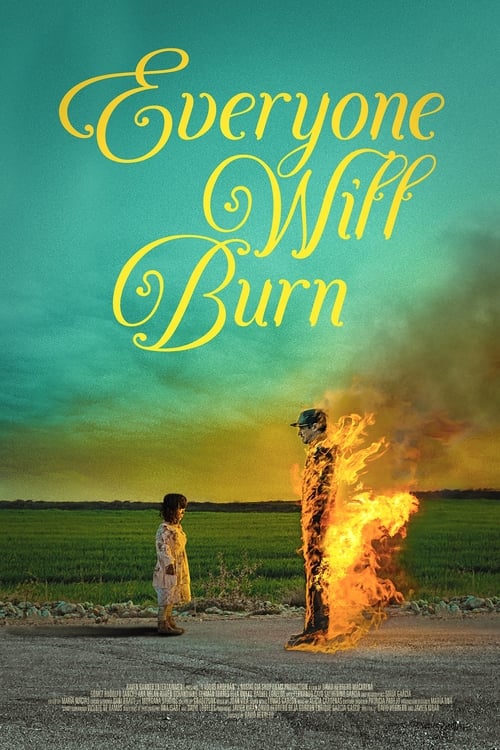
In the small village in León, Spain, the story begins under the shadow of an old curse: a prologue explains that in 1980, in Rozas del Monte, the villagers murdered a child to delay the apocalypse, and the whole town now lives inside the memory of that sin. Decades later, that fear has curdled into something quieter and uglier, and María José stands alone on a bridge outside the village, dressed as if for Sunday mass, staring down into the water and preparing to kill herself after years of grief over her son Lolo, who died by suicide after relentless bullying because of his dwarfism. Her body is rigid with exhaustion, her face hollowed out by sorrow, and the film lingers on the terrible stillness of her decision until a small voice breaks the silence and the whole world shifts.
A strange little girl appears beside her, filthy, barefoot, and oddly ancient in her stillness, and she looks up at María José with total certainty and says, "mom". The word lands like a blow. María José freezes, unable to understand how this child knows her, and the girl--Lucía, though she has not yet properly identified herself--pulls her back from the edge with a calm that feels supernatural. The moment is not gentle so much as fated, as if María José has been interrupted by something that has already decided she belongs to it. Lucía will not explain where she comes from or who she is, and María José, stunned out of suicide, brings the child home as if following an instinct older than reason. She names her Lucía because the girl either cannot or will not give her own name.
At home, the grief that has ruled María José's life begins to split open into something more complicated. She sees Lucía's achondroplasia and, because she is broken by the memory of Lolo, she starts to treat the girl like a second chance, a replacement child, a living answer to the wound that never healed. The bond forms with frightening speed. María José feeds her, protects her, and lets the child stay in her house, even though Lucía's behavior is unsettlingly blank and deliberate, as though she is only partly human and is imitating a child rather than being one. The village around them watches with cold suspicion. María José is already isolated, already judged by people who treated her son as a burden and now seem eager to turn their contempt toward her. The community's superstition gives their hostility a religious shape, and the old prophecy that once led to murder begins to stir again in whispered conversations and warning glances.
The first true rupture happens on the road. María José is stopped by police, and Lucía's presence immediately turns the scene into something unbearable. What should be a routine encounter becomes a display of violence so sudden that it feels like a punishment from the sky. Lucía reveals that she is not an ordinary abandoned child at all; she has supernatural power, and when the officers threaten or question María José, Lucía kills them. In one account of the sequence, she controls one officer into stabbing the other before immolating the survivor with her mind. In another, she simply burns one of them with her gaze. However it happens, the result is unmistakable: two police officers are dead, and María José is left standing in panic beside Lucía, her life now inseparable from the child's lethal mystery. The road becomes the first place where the film makes clear that Lucía is not merely a traumatized orphan but an agent of violent reckoning.
María José tries to understand what she has taken into her home, but the answer keeps sliding out of reach. Lucía is quiet, watchful, and increasingly obvious in her power, and as the two remain together, the village begins to suffer a chain of horrific incidents. The boys who bullied Lucía are struck down by illness or violent retaliation; they are not all confirmed dead in the available accounts, but they are seriously hospitalized after one of her episodes of revenge. Their suffering is not random. It is personal, and it echoes the older cruelty that killed Lolo. María José starts to realize that Lucía is avenging not only herself but also, in some twisted way, the dead children the village has already discarded. The town reads these events through the language of prophecy. What should be interpreted as vengeance and trauma is instead treated as an omen, and that error poisons everything that follows.
As the body count rises, the villagers' fear hardens into ritual logic. The old story from Rozas del Monte--the child sacrifice that supposedly delayed the end of the world--stops being a legend and starts becoming a plan again. Religious dread spreads through the community, and the more devout or superstitious townspeople begin to behave as if Lucía is either the cause of the apocalypse or the thing that must be offered to prevent it. María José is caught between two impossible instincts: to protect Lucía as the daughter she never had and to protect the village from the violence Lucía seems capable of unleashing. But the village has already decided what María José is. To them, she is either a vessel of evil or a woman too broken to be trusted. Her own grief becomes evidence against her.
The deeper the story moves into the village, the more the old sin reasserts itself. The church and religious community turn from passive observers into active threats, and the town's public spaces become arenas of accusation, panic, and mob logic. Rumors intensify around Lucía's connection to the apocalyptic prophecy, and the social cruelty that once targeted Lolo now turns against María José and the child she shelters. The film's tension grows not just from Lucía's power but from the way the village uses faith as a weapon. Every judgment feels communal, every threat sanctioned by shared belief. The horror is not only that Lucía can kill; it is that the town has been waiting for a justification to hurt someone like her again.
Meanwhile, María José's relationship with Lucía becomes more intimate and more tragic. She is not saving a stranger anymore. She is clinging to the possibility that nurturing Lucía might redeem what happened to Lolo, that this child can fill the empty space left behind by suicide and shame. Lucía, in turn, seems to accept the maternal claim, or at least to use it. Her smallness, her silence, and her dependence are constantly undercut by the terrible certainty of her actions. She is both child and force, both victim and executioner. The film keeps tightening the knot between affection and terror until they are indistinguishable.
The final act arrives as the village tips into outright fanaticism. A mass at the local church turns the townspeople into an angry mob, and they storm María José's home convinced that killing Lucía will save them from the apocalyptic end they fear. This is the confrontation the whole film has been circling: María José inside her own home, the villagers outside with religious fervor on their faces, and Lucía at the center like a spark in dry straw. The attack becomes a home invasion soaked in panic and righteousness. The mob believes it is performing prevention; the film makes clear that it is merely repeating the town's oldest violence. The people who once murdered a child to postpone the end of the world are now ready to do it again.
Inside the house, everything collapses into chaos. Lucía unleashes her full power, and the invaders are met not by a frightened girl but by an almost elemental force of retaliation. Flames, bodily terror, and supernatural destruction fill the cramped domestic space, turning María José's refuge into a battlefield. The red tint of the blood moon hangs over the violence, linking the present slaughter to the prophecy that has obsessed the village from the beginning. The mob's certainty breaks apart as their assault spirals out of control. Some flee, others are overwhelmed, and the scene becomes less a battle than a moral undoing: the town's attempt to erase Lucía only confirms what she is to them, while also exposing how much of the horror is human.
What matters most in the climax is the emotional collapse inside María José. She has spent the story trying to decide whether Lucía is a daughter, a curse, or a miracle, and by the time the villagers come for them, that question no longer matters. Lucía is the only thing standing between her and the mob, and María José must face the fact that the village she once belonged to is willing to destroy a child all over again. The fight becomes a revelation of the town's soul. The community is not protecting itself from evil; it is protecting its own narrative of innocence by sacrificing the vulnerable. That is the real prophecy.
The ending completes that logic without softening it. The final confrontation leaves the village shattered by fear, violence, and the consequences of its own desperation. Lucía's powers have turned the attack back on the mob, and the town's social order begins to crumble under the weight of what it has done and what it was willing to do again. María José's attempt to protect Lucía is no longer an act of desperation but an act of refusal. She refuses the role the village assigns her, refuses to let them turn another child into an offering, and refuses to accept the old lie that sacrifice can save the world. The film closes in the ash and panic of that failed exorcism of fear, with the prophecy still hanging over the village like smoke and the bond between María José and Lucía remaining the only fragile human truth in a place built on cruelty.
By the end, the circle is complete and sickeningly clear: Lolo died because the village made room for cruelty, María José nearly dies because grief has hollowed her out, Lucía arrives as both daughter and avenger, and the town responds exactly as it did in 1980, reaching again for a child to kill in the hope of outrunning the end of the world. The apocalypse may or may not be real, but the violence is unmistakably human. The final image leaves that terror unresolved, with the village's ancient fear exposed as the engine of everything that has happened and Lucía's presence as the spark that finally makes the whole rotten structure burn.


What is the ending?
Short version: María José is pulled into the final confrontation with the village, Lucía unleashes her power when the mob closes in, and the ending leaves María José alive and changed, with the story closing on a disturbing final image that suggests the cycle is not over.
Expanded ending, scene by scene:
The final stretch begins with the village fully consumed by fear. The rumors about Lucía, the old prophecy, and the deaths around town have hardened into panic, and the church and the townspeople gather themselves into a furious, almost hysterical crowd. María José is no longer just a grieving woman to them; she is treated like the center of the threat, the person supposedly tied to the darkness that has been spreading through the village.
The mob moves toward her home with one clear purpose: to kill Lucía and stop what they believe is the coming catastrophe. The atmosphere is violent and tight, full of shouting, fear, and the kind of certainty that comes from people who no longer want to think. María José is trapped inside this pressure, trying to protect Lucía while also facing the reality that the village has already decided what they are.
As the attack escalates, Lucía reveals the extent of her power. The violence around the house turns chaotic and terrifying, and the people who came to destroy her are met with force they cannot control. The scene becomes an eruption rather than a battle: the mob's fear becomes real destruction, and the tension that had been building through the film breaks open all at once.
In the confusion, Lucía helps María José escape downward into the earth. María José is pulled through the ground into a hidden space below, while Lucía remains above and is consumed in flame. That separation is the emotional turning point of the ending. María José survives the collapse and reaches the underground refuge, but Lucía's fate is tied to sacrifice, fire, and disappearance.
Below the surface, María José finds her dead son, Lolo. The reunion is quiet and final, but it is also deeply personal, because everything that has happened has been driven by the grief she has carried since his death. In that underground moment, the story makes clear that María José's pain has never been separate from the violence around her. Her son is not returned to the living world; he appears to her in the place beyond the village's fury, and that is where her emotional journey lands.
The ending then moves forward in time. The village does not end with the destruction at the house. Life continues above ground in a changed form, and a church baptism takes place. María José's sister has a baby, and the child's father is David. The ceremony is being conducted by Juan. María José then appears carrying a newborn of her own. The film ends by placing these two babies in visual contrast inside the church, one child brought into the faith, the other brought in by María José, as if the final image is meant to leave the viewer with the sense that the conflict has not truly disappeared.
Main character fates: María José survives the ending and emerges into the final scene with a baby. Lucía is left burning at the climax after saving María José. Lolo appears to María José underground as a dead son she encounters one last time. The village mob survives the immediate confrontation only in the sense that the story moves beyond that night, but their attempt to destroy Lucía fails. Juan is alive and officiating the baptism at the end. María José's sister is alive and present with her child. David's child is born and brought to the baptism scene.
Is there a post-credit scene?
No. For Everyone Will Burn, I could not verify any post-credit scene from the available sources, and the results I found do not provide a reliable description of one.
What I can say is that the film's release materials identify it as a 2023 U.S. release, but none of the sources surfaced here document an end-credits or post-credits stinger for it. One result that mentions a "credits stinger" is actually a review page that appears to be mislabeled or mixed up with another title, so it is not trustworthy evidence for Everyone Will Burn.
If you want, I can also help check whether there is a mid-credits scene versus a true post-credits scene, since those are sometimes confused.
How does Lucía know María José, and why does she call her Mom?
In the story's opening, Lucía appears at María José's lowest point and immediately behaves as if she belongs to her, calling her "Mom" and drawing her away from suicide. The question centers on whether Lucía is a literal daughter, a supernatural messenger, or a figure tied to María José's dead son Lolo, since the film layers their connection with mystery and emotional recognition.
What is the connection between Lucía and Lolo’s death?
Lucía is closely tied to Lolo's memory because she arrives wearing the same physical difference that made Lolo a target of cruelty, and her presence seems to awaken María José's buried grief. The plot repeatedly links Lucía's arrival to the pain caused by Lolo's suicide, making her role feel like a response to that trauma rather than a random encounter.
Why is the village so hostile toward María José and Lucía?
The village's hostility stems from years of shame, gossip, and complicity surrounding Lolo's bullying and death, with María José treated as a social outcast for surviving the tragedy. Lucía's arrival intensifies that hostility because she challenges the town's silence and seems to expose the villagers' guilt, fear, and moral rot.
Who is Lucía’s father, and what role does he play in the story?
Lucía's father is an important off-screen force in the plot, and the story suggests he is connected to her supernatural nature and to the larger apocalyptic danger around the village. His shadow over Lucía shapes her behavior, especially the sense that she is being guided, protected, or driven toward a violent purpose.
Which characters help María José as the violence in the village escalates?
María José receives only limited support, most notably from Juan, an altar server who stands apart from the village's cruelty and offers her a fragile human ally. Other figures around her, including family and religious authorities, are tied to the town's pressure and suspicion, which leaves María José increasingly isolated as the horror deepens.
Is this family friendly?
No, it is not family friendly. It is generally best for older teens and adults because it includes graphic violence, strong language, and children-in-jeopardy themes.
Potentially upsetting or objectionable elements include: - Graphic violence and gore. - Strong language. - Disturbing or high-intensity scenes involving children being endangered. - Mature horror/drama themes that may be stressful for sensitive viewers.









