

























Popular
Should I watch it?
Ask Your Own Question

What is the plot?
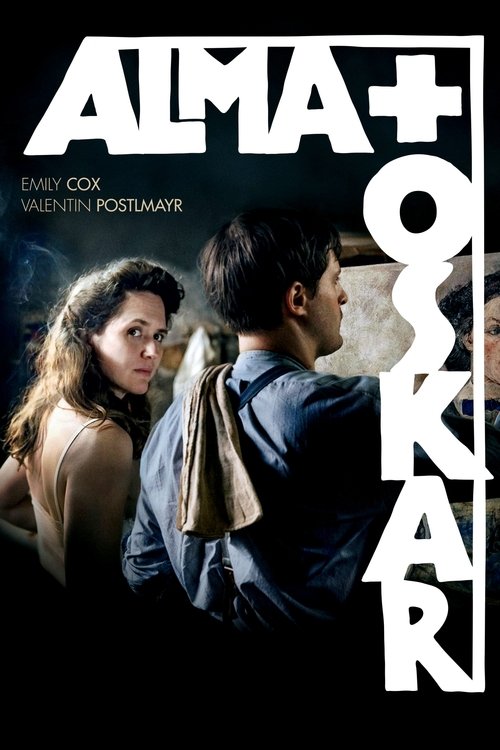
In Vienna in the spring of 1912, Alma Mahler stands at the center of the city's artistic and social world: newly widowed, still radiant, still provocative, and already surrounded by attention as if mourning has only sharpened her allure. The film opens in the shadow of Gustav Mahler's recent death, and that loss is not just background grief but the event that leaves his home, his widow, and his memory exposed to the gaze of Vienna's avant-garde. Alma is not presented as a passive mourner. She is a composer in her own right, a woman who has spent years being used as a wife and assistant, and now moves through society with a mix of elegance, impatience, and self-possession that makes her both admired and misunderstood. She is already entangled in an on-and-off relationship with the architect Walter Gropius, a fact that quietly complicates every later encounter and shows that her life is not beginning anew from a blank slate but branching into overlapping desires.
Into this charged atmosphere steps Oskar Kokoschka, the controversial young painter of Vienna's art scene, the "enfant terrible" who arrives with the fierce confidence of a man who believes art grants him permission to disrupt everything around him. His first connection to Alma is strangely intimate and morbid: he comes to her home to make a face-mask of Gustav Mahler for one of his artistic projects. The scene binds together death, art, and desire in a single gesture. Gustav's absence is made physically present through the mold Oskar takes of his face, and the widow and the artist are already brought into each other's orbit before either has fully admitted what that orbit means. The house itself becomes a threshold between mourning and seduction, a place where the dead composer's memory competes with the living woman's vitality.
What begins next as a portrait commission quickly becomes something much more dangerous. Alma hires Kokoschka to paint her portrait, and the exchange that starts as art turns into sexual fascination, then into full emotional capture. The relationship blooms with startling speed. According to the film's synopsis, what starts as a sexual adventure "quickly turns into an intense affair," and the affair is driven by a balance of attraction, vanity, and mutual exploitation that neither can control. Alma seduces Oskar as much as he pursues her, and the film is clear that she is not simply being swept along by a predatory man; she is testing freedom, power, and pleasure in a city that still expects women like her to be ornamental rather than autonomous. Yet Oskar's response to her is not reciprocal in any healthy sense. He does not see Alma as she is. He sees her as a muse, and the sources emphasize that this "serves more his male fantasy than reality". That distinction becomes the central wound of the story.
The portrait session and the affair begin to fuse into one another. In Oskar's studio, Alma becomes both model and obsession, and each brushstroke pushes them further into dependence. The film's emotional momentum grows from the fact that Oskar is not merely fascinated by Alma's beauty or wit; he wants to possess her, to transform her into something that belongs to him alone. The sources describe a "game of power and dependency" that develops between them, a relationship that gradually moves both characters "to the brink of self-destruction". That phrase is crucial, because it frames the affair not as a tragic romance alone but as a duel in which desire becomes a form of domination. Alma's independence remains visible throughout. She is still an artist, still socially powerful, still capable of choosing and refusing. But Oskar's fixation grows more consuming, and the line between artistic inspiration and emotional imprisonment begins to blur.
The emotional triangle around them sharpens the tension. Walter Gropius remains in Alma's life, a parallel attachment that underscores how little the affair with Oskar is about monogamous devotion and how much it is about competing claims on Alma's body, future, and identity. The presence of other prominent figures in the Viennese world--among them composer Bruno Walter and even Archduke Franz Ferdinand, who appears in the broader social context before history overtakes him--reinforces the sense that Alma inhabits a world where public reputation and private longing are inseparable. But the film does not disperse its focus. Everything keeps returning to Alma and Oskar, to the way he tries to make her into art and the way she resists being reduced to a single image.
As the affair deepens, the film makes the symbolic role of objects increasingly important. The portrait is the first and most obvious one: Oskar's image of Alma is the visual form of his desire, the place where his fantasy claims to become truth. Then comes the death mask of Gustav Mahler, which remains hauntingly tied to the house and to the beginning of the affair. It is a reminder that Alma's past is not gone, only transformed into an object. Later, the narrative's most disturbing object appears: the doll Oskar creates in Alma's likeness. The doll is not just a token of affection; it is the point where obsession becomes grotesque. It shows that Oskar is no longer trying to know Alma, only to preserve an ideal version of her that cannot disappoint him, age, refuse him, or leave.
One of the film's major revelations is that Alma's life remains divided even as the affair with Oskar intensifies. She is not starting from emotional emptiness. She has already been carrying the burden of Gustav Mahler's legacy and the unresolved thread of Walter Gropius, and her choice to enter Oskar's orbit is one of self-assertion as much as passion. That complexity matters because it prevents the relationship from becoming a simple story of seduction. Alma is exploring a kind of freedom, but freedom in this world is unstable, especially for a woman whose social position makes her both powerful and vulnerable. The more Oskar tries to possess her, the more the film reveals that he misunderstands her. He wants the image, not the person. He wants the muse, not the mind.
Over time, the relationship's volatility becomes unmistakable. The passion that initially seems liberating starts to corrode both of them. Oskar's sense of artistic destiny begins to consume ordinary reality. His love is inseparable from control. Alma, meanwhile, finds herself trapped between attraction and suffocation. The sources describe their affair as one that jeopardizes their lives, and that danger is emotional as much as physical. Every meeting carries the possibility of ecstasy, humiliation, or collapse. The more Oskar elevates Alma, the less human he allows her to remain. The more Alma is idealized, the more trapped she becomes inside his imagination.
The story later moves into a decisive rupture. After roughly two years of the relationship, Oskar believes he has finally won Alma completely, but that certainty is false. It is one of the film's great ironies: the moment Oskar thinks he possesses her, he has already lost the possibility of truly knowing her. The sources also reveal a devastating turn in Alma's life: she becomes pregnant, then loses the unborn child. That loss is not just a personal grief; it destroys whatever fragile bridge remained between them. After the miscarriage, Alma never wants to see Oskar again. The affair, already unstable, now reaches a point of final emotional severance. The film does not portray this as a tidy breakup. It is a collapse, a recognition that what has passed between them can no longer be repaired.
The war years widen the distance and make Oskar's obsession even more uncanny. After being seriously wounded in the First World War, he ends up in a sanatorium in Dresden. There, away from the salons and studios of Vienna, he turns even more fully inward and obsessive. The sources say that he recreates Alma as a doll and writes a play in which she appears as Eurydice. The choice is revealing. Eurydice is the figure of the beloved who is lost, the one whom the artist may try to retrieve from death or memory but can never truly restore. Oskar's artistic response to loss is not acceptance but transformation of Alma into an emblem of absence, a figure who exists for him only in art. The war does not cure him; it hardens his fixation into symbol.
This is where the film's emotional logic tightens toward its climax. Oskar's art becomes both memorial and delusion. The doll, the play, and the earlier portrait all point to the same unbearable truth: he is not relating to Alma as a real person. He is preserving a version of her that he can control. Alma, by contrast, has already withdrawn from that fantasy. She is not dead, not lost in any literal sense, but she has become inaccessible to the version of herself Oskar is still trying to recover. The mismatch between image and person is the film's deepest revelation, and it becomes devastating precisely because Oskar cannot see it.
The climax arrives at the premiere of Oskar's play, in a theater or auditorium where art, audience, and memory collide. Alma attends by invitation, entering the space with the calm of someone who knows the past cannot be neatly erased but also cannot be revived on command. The audience's applause swells, the performance ends, and for a moment the film holds the air between recognition and catastrophe. Then Oskar walks past Alma carrying the doll that resembles her. He does not recognize the real woman standing in front of him. The moment is brutal because it is so quiet. There is no grand confrontation, no shouted accusation, no final pleading embrace. Instead, the catastrophe is revealed through absence of recognition. The man who has turned a woman into the center of his art cannot identify her in life.
In that instant, Alma understands the full scope of what has happened. Oskar has never loved her as she is; he has loved an image, an artistic projection, a possession masquerading as devotion. The doll in his arms makes the truth visible in the most painful way possible. He carries a substitute, an object that can be held and admired without resistance, while the living Alma stands before him, unclaimed and unrecognized. The film's final emotional revelation is that the affair was never simply between two lovers. It was between a woman and a man who tried to convert her into an artistic possession, and when reality finally confronts the fantasy, reality is ignored.
Alma then leaves the auditorium and never sees Oskar again. The ending is stark, almost cold in its precision, but that severity is what gives it power. There is no reconciliation, no last-minute confession, no restoration of what was broken. The relationship ends not with hatred but with non-recognition, which is worse. Oskar remains trapped inside the image he has made, and Alma exits the fantasy entirely. The film closes on that irreversible separation: the dead husband whose mask initiated the story, the widow who refuses to remain a symbol, the artist who mistakes art for possession, and the silent distance between the real person and the idealized figure he has been chasing all along.






What is the ending?
Alma leaves Oskar, and the relationship that began as desire ends in separation and emotional ruin. Oskar is left behind in his obsession, while Alma goes back to her own life and ambitions.
In the final stretch of the story, the film shows the relationship collapsing under jealousy, control, and the pressure each of them places on the other. Oskar's need to possess Alma grows more extreme, while Alma resists being reduced to a muse and tries to keep hold of her own identity as an artist.
Scene by scene, the ending moves through their final break: - Alma and Oskar's passion has already turned unstable, and the film pushes them toward the point where love becomes a struggle for dominance. - Oskar's fixation on making Alma his own reaches its limit, and Alma no longer remains inside the relationship on his terms. - Alma separates herself from him, ending the affair rather than surrendering to his possessiveness. - Oskar is left with the consequences of his obsession, while Alma exits as a woman determined to continue her own path beyond him.
The fate of the main characters at the end is: - Alma Mahler: she survives the affair and leaves Oskar behind, preserving her independence. - Oskar Kokoschka: he is emotionally shattered by the breakup and remains trapped in his fixation on Alma. - Walter Gropius: he remains part of Alma's wider life and future, but the ending centers on the collapse of the Alma-Oskar relationship rather than on him.
Is there a post-credit scene?
There is no reliable evidence in the available sources that Alma and Oskar has a postcredit scene, and the film's standard synopsis and distribution listings do not mention one.
Because the sources available here focus on the plot and release information rather than end-credits content, the safest answer is that a postcredit scene is not documented for this 2023/2022 film in the material provided.
How does Oskar Kokoschka first meet Alma Mahler in the film?
In the film's setup, Oskar comes into Alma's orbit after Gustav Mahler's death, when he appears in her social and artistic circle and is later invited to paint her portrait. The portrait commission becomes the key point that turns their acquaintance into an affair.
What is the significance of the portrait Oskar paints of Alma?
The portrait is the catalyst for their relationship: Alma hires Oskar to paint her, and that professional project opens the way to a passionate, volatile affair. The story repeatedly frames Oskar as seeing Alma not only as a lover but also as a muse, which deepens his fixation on her.
Who are the other men in Alma’s life besides Oskar?
The film specifically places Walter Gropius and Bruno Walter around Alma's life, and it also references Gustav Mahler as the husband whose death leaves her newly widowed. The IMDb plot summary also says Oskar eventually believes he has beaten all rivals, but realizes Gustav still remains an emotional presence he cannot overcome.
Does Alma have children in the story, and what happens with the unborn child?
Yes. The plot summary states that after Alma and Oskar expect a child together, Alma loses the unborn child, and after that she never wants to see Oskar again.
What happens to Oskar after Alma leaves him?
After the relationship collapses, Oskar enlists as a soldier in World War I, is seriously wounded, and ends up in a sanatorium in Dresden. Still obsessed with Alma, he recreates her as a doll and writes a play in which she appears as Eurydice.
Is this family friendly?
No, it is not especially family friendly. The film is a mature romantic drama about an intense, volatile relationship, and sources note sexual content/nudity plus a rape scene, along with emotionally disturbing relationship conflict.
Potentially objectionable or upsetting elements for children or sensitive viewers include: - Sexual content and nudity; one source explicitly says "quite a bit of nudity occurs." - Rape/sexual assault, which is listed as a content note by a reviewer. - Toxic, manipulative, and obsessive relationship dynamics that may be distressing. - Emotional intensity and conflict, including possessiveness and self-destructive behavior in the relationship. - Adult themes involving infidelity, desire, and power imbalance.
If you want, I can also give a parental-guidance style age recommendation based on these content points.









