














Popular
What is the significance of the family deli in the story?
How do the main characters, Molly and Jacob, meet?
What role does the Hanukkah celebration play in the characters' development?
What challenges do Molly and Jacob face in their relationship?
How does the theme of family influence the characters' decisions throughout the film?
Should I watch it?
Ask Your Own Question

What is the plot?
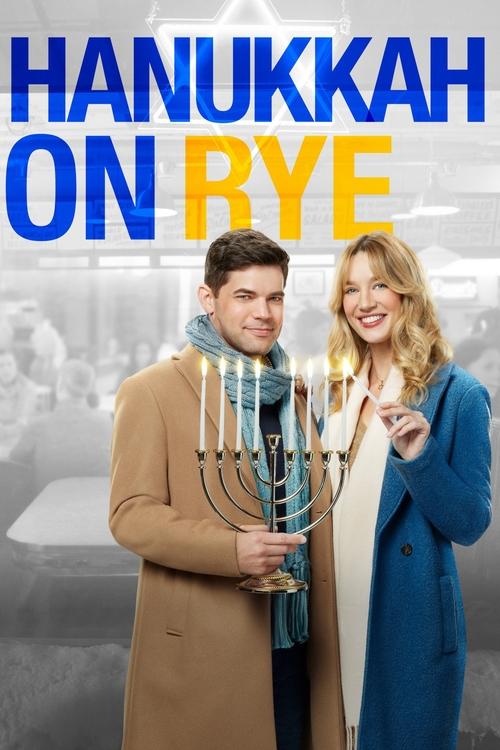
In the heart of New York City's bustling Lower East Side, during the vibrant Hanukkah season, Gilbert's Deli hums with holiday energy. Steam rises from towering stacks of pastrami sandwiches, the air thick with the scents of fresh rye bread and simmering brisket, as customers jostle for counter space amid twinkling blue-and-white lights strung across the ceiling. Molly Gilbert, a poised fourth-generation heir with dark curls tied back in a practical ponytail and flour-dusted apron hugging her curves, darts between the grill and the register, her warm smile masking the quiet desperation of a family business on the brink. Her grandmother Ruth Gilbert, a sharp-eyed matriarch with silver hair pinned in a neat bun and a voice like aged whiskey, oversees the chaos from her stool at the end of the counter, barking orders with affectionate authority. Upstairs in the family's sixth-floor apartments in the nearby Airbnb building, Molly's close-knit clan thrives--her mother meticulously wrapping leftovers in aluminum foil swans, stuffing Molly's already overflowing fridge to bursting, a symbol of their overflowing love and traditions teetering under financial strain.
Across the country in sun-drenched Los Angeles, the Zimmer family deli thrives as a sleek, modern empire of fusion twists on Jewish classics, but its fourth-generation heir, Jacob Zimmer--tall, charismatic, with tousled dark hair and a disarming grin--boards a flight to New York. He's here to seal a lease on an empty storefront down the street from Gilbert's, expanding the Zimmer legacy under the iron will of his grandmother Esther Zimmer, a formidable woman with a penchant for control and a voice that brooks no argument. Jacob rents an Airbnb flat in the same building as the Gilberts, steps from the deli district, his suitcase barely unpacked before he fumbles with a stubborn piece of mail in the lobby. Spotting Molly wrestling with her own stack of envelopes, he flashes a sheepish smile. "Mind giving a New Yorker a hand? These things are sealed tighter than Fort Knox." She laughs, their fingers brushing as she slices it open, an unexpected spark igniting in the fluorescent-lit hallway. Little do they know, their grandmothers have already conspired across boroughs.
In a cozy Brooklyn office cluttered with faded photos of matched couples and stacks of scented stationery, Mrs. Mizansky--known to some as Rose--a matchmaker with cat-eye glasses and a no-nonsense Brooklyn accent, presides over her old-fashioned empire. Ruth and Esther, acting independently, have each dragged their reluctant grandchildren into her web. "No apps, no Instabook," Mrs. Mizansky declares firmly to Molly and Jacob during separate visits, her finger wagging like a metronome. "Letters only. Pseudonyms. Real connection, or no match." Molly, jaded from deli life and family pressures, sighs but agrees, scribbling her first note as "Rye Rose." Jacob, equally skeptical amid his business mission, pens his as "LA Latke," mailing it off with a mix of curiosity and resignation. The letters begin to flow--witty banter about family recipes, Hanukkah memories, the pull between tradition and progress--building an intimate bridge neither suspects spans the same building.
Days blur into a rhythm of chance encounters and secret correspondence. Jacob wanders into Gilbert's Deli, drawn by the aroma of their legendary rye bread, crusty and seeded to perfection. He orders a sandwich, eyes lighting up at the first bite. "This rye--it's like a hug from the old country," he tells Molly, who beams with pride, unaware of the lease papers burning a hole in his briefcase. Upstairs, their building interactions deepen: Molly shares a laugh over her mother's latest foil swan delivery, Jacob confesses his homesickness for LA's shine against NYC's grit. Tension simmers subtly, their real-life chemistry mirroring the letters' growing tenderness, but Jacob holds back, his conscience pricking at the impending rivalry.
Gilbert's struggles mount, prompting Molly to launch a bold promotion: a Hanukkah sing-off called "Write and Sing Your Own Chanukah Song," transforming the deli into a stage of twinkling lights, menorahs, and microphone stands amid the sandwich counter. Patrons pack in, the air electric with anticipation, as families belt out original tunes celebrating miracles and lights. Jacob slips in anonymously, mesmerized by Molly's commanding presence as she emcees, her voice soaring in a heartfelt ballad about rye bread and resilience. Lisa Loeb makes a surprise cameo, strumming an unplugged version of her song "Light," her soulful voice weaving through the crowd like a menorah's glow, drawing cheers and tears. But joy shatters when Ezra, Molly's longtime friend and deli regular--a lanky guy with a mop of curls and loose lips--corners her during a break. "That Jacob guy? He's not just visiting. His family's leasing the empty spot down the street. Zimmer Deli's coming to town--your direct competition." Molly's face drains of color, fury igniting her brown eyes. She storms over to Jacob, who's savoring a latke, and hisses, "You're opening a deli here? Right next to us? While we're barely scraping by?" Jacob stammers, caught off-guard, the lease agreement suddenly a lead weight in his pocket. Their budding friendship fractures, Molly's hurt slicing deeper than anger, as she whirls away, the sing-off's cheers mocking the rift.
Jacob retreats to his flat, letters from "Rye Rose" now a guilty pleasure. He pores over them, heart aching as he realizes the truth: Molly is his pen pal. The words--"I dream of a partner who honors the past but builds the future"--hit like revelations, mirroring her deli passion and his own doubts. He stalls the lease negotiations, scouring maps for alternative sites, but Esther's calls grow insistent from LA: "Sign it, Jacob. The Zimmers don't hesitate." Internally torn, he drafts a letter revealing everything, but hesitation wins--he keeps the secret, hoping to fix things in person. Three tense days pass: missed calls, awkward hallway silences, Molly icing him out at the deli while her family whispers about the "corporate shark" threatening their legacy. Tension builds like a pot on the boil, Jacob's family jetting in from LA, Esther at the helm, demanding closure on the deal.
Meanwhile, the grandmothers' meddling boils over. Ruth, fuming about her "heartbreaker" grandson's unnamed rival, marches to Mrs. Mizansky's Brooklyn office with Esther--who's equally outraged about the girl breaking Jacob's heart--arriving minutes later. The door is locked, Mrs. Mizansky out, leaving the two silver-haired forces pacing the stoop. "My Molly deserves better than some slick operator from California," Ruth gripes, arms crossed over her floral housecoat. Esther nods vigorously. "Jacob's too good for a traditionalist stuck in the past." Their villainizing rants spiral into shared laments over deli woes, then food--rye bread, knishes--until personal histories surface. "My mother Sara came through Ellis Island with nothing but a recipe for latkes," Ruth shares, eyes misty. "Mine, Rebecca, the same ship, same secret ingredient--onions grated just so," Esther counters. Suspicion dawns; descriptions match. Outside that locked door, identities click: they're matchmaking their own flesh unwittingly. But rivalry flares hotter. "My latkes are the best in the city," Ruth declares. "Prove it," Esther snaps. A challenge issues forth: a latke cook-off, judged by Mrs. Mizansky herself, bragging rights and ancestral pride on the line. They storm off, bonded yet battling, the air crackling with decades-old fire.
Momentum surges as families converge. Jacob's clan--Esther leading a parade of Zimmer relatives--descends on his Airbnb flat, lease papers waving like battle flags. "What's the holdup? Sign it now!" Esther demands, her voice echoing down the hall. Jacob, sweating, confesses his heart: "I can't hurt Molly's family. Their deli is tradition--our future shouldn't crush it." Upstairs, Molly overhears snippets through thin walls, her anger softening to confusion. He misses their planned "accidental" date in the deli, where he'd reveal the pen pal truth, choosing instead to plead with Esther. Gilbert's buzzes with pre-Hanukkah frenzy, but Molly's spirit flags, rye loaves piling up unsold.
The climax erupts at the latke challenge, a neutral venue near the delis transformed into a makeshift kitchen arena: sizzling griddles, vats of oil, bowls of grated potatoes shimmering under harsh lights. Ruth and Esther, sleeves rolled up, grate onions with furious precision, the sharp scent stinging eyes and summoning ghosts of Ellis Island. Patrons and family circle like spectators at a gladiatorial bout, tension thick as schmaltz. Molly and Jacob arrive separately, eyes locking across the fray--hurt, hope, unspoken letters hanging between them. Mrs. Mizansky, summoned as judge, tastes blindfolded: first Ruth's golden crisps, fluffy inside, crisp without; then Esther's, identical in every nuance. She unmasks, eyes widening. "These are the same! From Sara and Rebecca's recipe--their mothers, friends on the same ship to Ellis Island." Gasps ripple; Ruth and Esther freeze, then embrace, tears carving paths through flour-dusted cheeks. "We were meant to find each other," Ruth whispers, the revelation shattering decades of imagined divides. Families merge in emotional sobs, the Hanukkah miracle unfolding in potato perfection--no winners, only unity.
Overflowing with emotion, Jacob pulls Molly outside into the crisp Hanukkah night, snowflakes dusting the Lower East Side streets, menorahs glowing in windows like beacons. The city pulses around them--honking taxis, distant carols--but their world narrows to shared breaths clouding the air. "I knew you were my pen pal," Jacob confesses, voice raw. "I should've told you sooner. The lease, the letters--I was scared of losing this." Molly's eyes shimmer, vulnerability cracking her resolve. "You could've put us out of business." He steps closer, hands framing her face. "Not anymore. Not without you." Their lips meet in a tender, snow-kissed kiss, deepening with pent-up longing, the chill forgotten in shared warmth. Families burst from the venue, cheering wildly--Ruth and Esther whooping loudest, arms linked, Ezra pumping fists, even Mrs. Mizansky beaming approval. "A Hanukkah miracle!" someone shouts, laughter and hugs enveloping them.
Resolution dawns bright. The lease? Abandoned. Rivalries? Forged into partnership. They unveil plans for a joint deli, named Sara and Rebecca's in honor of the Ellis Island friends whose latke legacy bridged generations. Gilbert's rye pairs with Zimmer innovation, traditions modernized together. The final scene glows in the deli's warmth: Molly and Jacob behind the counter, hands intertwined, serving steaming plates to a joyous crowd. Ruth and Esther kvell side-by-side, foil swans gliding from Molly's mother's hands, letters framed on the wall as testaments to fate. Hanukkah lights flicker, casting golden hues over united families, the miracle complete--love, legacy, and latkes enduring forever.
More Movies Like This
Browse All Movies →






What is the ending?
In the ending of "Hanukkah on Rye," the main characters, Molly and Jacob, confront their feelings for each other amidst the backdrop of family traditions and a culinary competition. They realize that their connection is deeper than just a rivalry, leading to a heartfelt reconciliation. The film concludes with a celebration of love, family, and the spirit of Hanukkah.
As the final act unfolds, we find Molly and Jacob at the climax of their culinary competition, which has been fraught with tension and misunderstandings. The scene opens in the bustling kitchen of the competition venue, where the aroma of traditional Jewish dishes fills the air. Molly, determined and focused, is plating her signature dish, a family recipe that holds sentimental value. Her hands move deftly, but her mind is clouded with doubt about her relationship with Jacob.
Meanwhile, Jacob is in his own corner of the kitchen, wrestling with his emotions. He glances over at Molly, who is deep in concentration, and a wave of nostalgia washes over him. He recalls their shared moments, the laughter, and the warmth of their families during Hanukkah celebrations. This reflection stirs a longing in him, and he realizes that winning the competition is not as important as being with Molly.
As the competition progresses, the tension between them reaches a boiling point. They have a heated exchange, where old grievances surface, and they both express their frustrations. However, in the heat of the moment, they also reveal their vulnerabilities. Molly admits that she has been scared of losing her family's legacy, while Jacob confesses that he has been afraid of not being good enough for her. This moment of honesty breaks down the walls they have built around themselves.
The scene shifts to the judges tasting their dishes. The atmosphere is thick with anticipation as the judges deliberate. Molly and Jacob stand side by side, their earlier conflict momentarily forgotten as they share a nervous glance. The judges announce the winner, and while it is a close call, they ultimately declare it a tie, recognizing the unique qualities in both dishes. This outcome symbolizes the merging of their culinary talents and their lives.
In the aftermath of the competition, the scene transitions to a warm family gathering for Hanukkah. The room is filled with laughter, the flickering light of the menorah casting a soft glow on the faces of family and friends. Molly and Jacob, now united, share a tender moment as they help each other serve the food. Their families, initially skeptical of their relationship, see the joy they bring to each other and begin to embrace their bond.
The film concludes with a heartwarming scene where Molly and Jacob stand together, surrounded by their loved ones, as they light the menorah. They exchange a knowing look, filled with love and understanding. The camera pulls back, capturing the warmth of the celebration, symbolizing the importance of family, tradition, and the power of love to overcome obstacles.
In the end, Molly and Jacob find not only a romantic connection but also a deeper understanding of their heritage and the significance of their families. They both emerge from the competition not just as individuals but as partners ready to face the future together, embodying the spirit of Hanukkah and the importance of unity.
Is there a post-credit scene?
In the movie "Hanukkah on Rye," there is no post-credit scene. The film concludes its narrative without any additional scenes after the credits roll, focusing instead on wrapping up the story of the main characters and their journey throughout the holiday season. The ending emphasizes the themes of love, family, and tradition, leaving the audience with a warm and fulfilling conclusion to the story.
What is the significance of the family deli in the story?
The family deli serves as a central hub for the characters, symbolizing tradition and heritage. It is where the main characters, who are both connected to the deli, navigate their familial relationships and personal aspirations. The deli's significance is heightened during the Hanukkah season, as it becomes a backdrop for the unfolding romance and the exploration of cultural identity.
How do the main characters, Molly and Jacob, meet?
Molly and Jacob meet through a series of mistaken identities and a shared love for their Jewish heritage. Their initial encounter occurs when they both participate in a Hanukkah-themed event, where they are drawn to each other's passion for their culture and family traditions, setting the stage for their romantic journey.
What role does the Hanukkah celebration play in the characters' development?
The Hanukkah celebration acts as a catalyst for character development, allowing Molly and Jacob to confront their pasts and their feelings for each other. As they engage in various traditions, such as lighting the menorah and cooking traditional foods, they reflect on their family values and what it means to embrace their heritage, ultimately deepening their connection.
What challenges do Molly and Jacob face in their relationship?
Molly and Jacob face several challenges, including familial expectations and the pressure of maintaining their cultural traditions. Misunderstandings arise from their differing views on how to honor their heritage, leading to conflicts that test their bond. They must navigate these obstacles while trying to stay true to themselves and their families.
How does the theme of family influence the characters' decisions throughout the film?
Family plays a crucial role in shaping the characters' decisions, as both Molly and Jacob are deeply influenced by their parents' expectations and the legacy of their ancestors. Their desire to honor their families' traditions often conflicts with their personal desires, leading to moments of introspection and growth as they learn to balance love and loyalty to their families.
Is this family friendly?
"Hanukkah on Rye" is generally considered a family-friendly film, focusing on themes of love, family, and tradition during the holiday season. However, there are a few elements that might be considered potentially objectionable or upsetting for children or sensitive viewers:
-
Romantic Tension: The film features romantic relationships that may include misunderstandings or conflicts, which could be confusing for younger viewers.
-
Family Conflict: There are scenes depicting family disagreements or tensions, particularly around holiday traditions, which might resonate with some viewers but could be uncomfortable for others.
-
Emotional Moments: The film explores themes of loss and longing, which may evoke strong emotions. Some scenes may touch on feelings of nostalgia or sadness related to family dynamics.
-
Cultural References: While the film celebrates Jewish traditions, some viewers unfamiliar with these customs may find certain cultural references or practices confusing.
Overall, while the film is lighthearted and festive, it does contain moments that could be sensitive for some audiences.








