









Popular
What are the key moments that showcase the individual personalities of the NCT DREAM members in the movie?
How does the film depict the relationship between the members of NCT DREAM?
What specific challenges do the members face during their journey in the movie?
What are some memorable performances featured in the movie, and how do they reflect the members' growth?
How does the film explore the theme of dreams and aspirations for each member?
Should I watch it?
Ask Your Own Question

What is the plot?
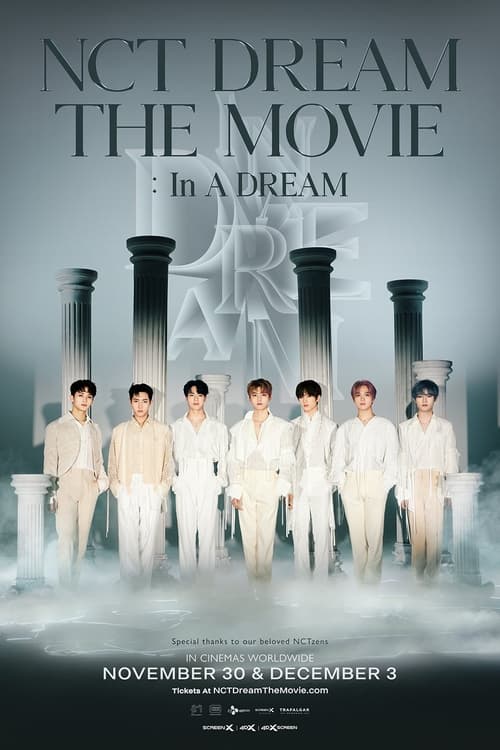
NCT DREAM THE MOVIE : In A DREAM does not have a fictional death-filled plot at all; it is a concert documentary that follows NCT DREAM's second solo concert, NCT DREAM TOUR "THE DREAM SHOW2 : In A DREAM," so the "spoiler" is really the full emotional arc of the performance, the backstage preparation, and the members' reflections on their future. There are no deaths, no murders, and no crime-style twists in the film, because its structure is built around live concert footage and documentary interviews rather than a scripted narrative.
The film opens by presenting the concert as a kind of dream made real, setting its central stage at Seoul's Olympic Main Stadium, also described as Jamsil Olympic Stadium, which the sources repeatedly frame as the "dream venue" for artists and the largest stadium in South Korea. That choice of setting matters immediately: the movie is not just documenting a concert, but framing NCT DREAM's second solo show as a milestone achieved after about six years since debut, making the scale of the venue part of the emotional story itself. From the first moments, the seven members--Mark, Renjun, Jeno, Haechan, Jaemin, Chenle, and Jisung--are presented not as fictional characters, but as real performers whose presence, stamina, and collective chemistry carry the film.
The concert footage begins with the kind of swelling anticipation that only a stadium show can create: lights flare, the crowd's energy rises, and the documentary positions the audience inside the moment before the members fully take command of the stage. The film's rhythm is built from this live intensity, showing the seven-member lineup moving through the show with a sense of synchronization and urgency that the sources describe as "high-energy performances" and the "lively heat of the concert scene." Songs such as "Glitch Mode," "STRONGER," and "Déjà Vu" appear as part of the performance experience, reinforcing that the film's primary dramatic engine is music, movement, and audience reaction rather than plot complication.
As the performance unfolds, the documentary begins shifting between the stage and the invisible labor that supports it. The camera leaves the blinding light of the arena for backstage spaces where the members prepare, rehearse, and wait for their cues, and the contrast is one of the film's key emotional devices. Onstage, they look larger than life; backstage, they become young artists under pressure, focused on details, costumes, timing, and the quiet concentration required to make a stadium show feel effortless. The sources describe this section as including the "thrilling preparation process" and "behind-the-scenes" footage, which means the documentary treats the preparation itself as part of the story's suspense.
The narrative then settles into a pattern that continues throughout the movie: explosive concert sequence, then backstage transition, then candid interview material. The interviews are not presented as a separate side note but as a continuation of the same emotional thread, revealing how each member experiences the weight of the event and how they think about what comes after the stage lights go down. According to the sources, these are "exclusive backstage interviews" and "intimate stories," though no full verbatim transcript is publicly provided in the materials used here. What is clear is that the film uses these interludes to deepen the sense that the concert is both a victory lap and a turning point.
One of the documentary's biggest revelations is not a secret in the usual sense, but the scale of what NCT DREAM has achieved. The film repeatedly reminds the viewer that this is the group's second solo concert, and that it takes place at a venue large enough to symbolize ambition fulfilled. The sources also emphasize that this concert is part of a broader two-day opening event, with The Dream Show2 held over sold-out nights and recorded as a major live milestone. That context turns every performance moment into something larger: the group is not merely singing for a crowd, but proving that they can fill one of the most iconic stages in Korea and carry the full emotional burden of that achievement.
As the movie progresses, the backstage material becomes more important because it humanizes the scale of the event. The camera lingers on moments of quiet tension before a performance, showing the members bracing themselves, preparing to go out again, and absorbing the enormity of what they are doing. The documentary language here is straightforward but effective: the stage is bright and public, while the backstage zone is intimate and vulnerable. That contrast creates the film's closest approximation to conflict. There is no antagonist, but there is pressure--the pressure of expectation, of live performance, and of living up to the "dream" promise embedded in the show's title.
The film's emotional midpoint comes as the members' reflections become more personal. The sources say the documentary includes "a look at the future the members envision away from the stage," and this becomes one of the movie's most important narrative turns because it shifts the focus from what they are doing in the present to what they imagine next. Instead of a twist, the film offers a revelation of purpose: the seven members are not treating this concert as an endpoint, but as a place from which to look forward. This future-facing material gives the documentary a soft, reflective ache, because the viewer sees that the spectacle is temporary, even if the memory of it will endure.
Because the film is a documentary, its "confrontations" are not fights or betrayals, but the repeated encounters between vulnerability and performance. Each time the members step from backstage into the spotlight, they face the same challenge: can they translate preparation, nerves, and ambition into a live moment that feels effortless to the audience? The answer the film gives is consistently yes, and the outcome of every such confrontation is a successful performance that feeds the crowd's energy and pushes the show forward. The momentum comes from accumulation; each song, each costume change, each cut to the audience, and each backstage pause builds toward the sense that this concert is becoming a defining memory rather than just another date on a schedule.
The movie's chronology stays close to the concert itself, and the sources place the recording in September 2022 at Seoul's Olympic Stadium. It was later released theatrically on November 30, 2022, with some sources also listing a December 6 opening in certain territories. That release structure matters only insofar as it reinforces the film's identity as a polished cinematic record of a specific live event, not as a fictional story with invented twists. The documentary's power comes from turning a real concert into an emotionally shaped narrative, and it does so by preserving the sequence of performance, preparation, reflection, and return to performance.
As the show nears its end, the energy becomes more expansive rather than diminishing. The film does not reveal a hidden villain or a tragic secret; instead, it reveals the accumulated intensity of the group's bond and the audience's devotion. The members' performances have the effect of making the stadium feel both enormous and intimate, as if every section of the venue is simultaneously part of a single shared memory. The documentary's visual language emphasizes this by alternating between wide shots of the full arena and close-ups of the members' faces, sweat, smiles, concentration, and relief. Those images are what the film uses in place of a conventional climax: the culmination is emotional, not dramatic in a fictional sense.
The final stretch of the movie brings the backstage and interview material back into sharper focus, and this is where the documentary resolves its central emotional question: what does it mean for NCT DREAM to stand in a dream venue and still look beyond it? The members' off-stage reflections, described in the sources as comments on their future and "intimate stories," give the ending its lingering resonance because they suggest a group that understands success as a moment to be lived, not merely celebrated. The film ends not with loss or revelation of hidden wrongdoing, but with affirmation: the concert happened, the stadium was filled, the performance was captured, and the seven members move forward together from that point.
By the final scenes, the documentary has completed its full arc from anticipation to performance to afterglow. The stage show is no longer only a live event; it has become a cinematic memory, preserved as NCT DREAM's first film and as a marker of how far the group has come since debut. The closing feeling is celebratory and forward-looking, with the members' reflections away from the stage serving as the final note rather than any abrupt plot twist. Mark, Renjun, Jeno, Haechan, Jaemin, Chenle, and Jisung remain the only essential figures in the story, and the "resolution" is simply that they complete their dream concert, share their hopes, and leave the viewer with the sense that this milestone is one step in a continuing journey.
More Movies Like This
Browse All Movies →



What is the ending?
In the ending of "NCT DREAM THE MOVIE: In A Dream," the members of NCT DREAM reflect on their journey and the bonds they have formed. They perform their final song together, celebrating their friendship and the memories they have created. The film concludes with a heartfelt message about dreams, growth, and the importance of cherishing moments together.
As the film approaches its conclusion, the atmosphere is charged with emotion. The members of NCT DREAM gather in a serene setting, a symbolic representation of their journey together. The scene opens with a soft, golden light illuminating their faces, highlighting the warmth of their camaraderie. Each member takes a moment to express their thoughts, sharing personal reflections on their experiences and the challenges they have faced as a group.
Mark, with a contemplative expression, speaks about the importance of dreams and how they have evolved since their debut. His voice carries a sense of nostalgia, as he recalls the early days filled with uncertainty and excitement. He emphasizes the growth they have achieved, not just as performers but as individuals who have supported each other through thick and thin.
Next, Haechan shares his feelings about the bond they have formed, his eyes glistening with unshed tears. He expresses gratitude for the moments they have shared, from the laughter to the struggles, and how these experiences have shaped them. His heartfelt words resonate with the others, creating a palpable sense of unity among the group.
As they prepare for their final performance, the scene shifts to a vibrant stage adorned with colorful lights and a cheering crowd. The energy is electric, and the members take their positions, their faces radiating determination and joy. The music begins, and they launch into their final song, a powerful anthem that encapsulates their journey. The choreography is sharp and synchronized, showcasing their growth as performers.
Throughout the performance, the camera captures close-ups of each member, highlighting their expressions of joy, passion, and a hint of bittersweetness. Chenle, with a bright smile, dances with infectious energy, while Jeno's focused gaze reflects his dedication. Renjun's graceful movements convey a sense of artistry, and Jaemin's charisma lights up the stage.
As the song reaches its climax, the members come together in a tight formation, their voices harmonizing beautifully. The crowd erupts in cheers, and the atmosphere is filled with love and support. In this moment, they are not just performers; they are a family, celebrating their journey and the dreams they have chased together.
The performance concludes with a heartfelt bow, and the members take a moment to soak in the applause. They exchange glances filled with understanding and appreciation, knowing that this moment is a culmination of their hard work and dedication. As they exit the stage, the camera lingers on their faces, capturing the mix of joy and melancholy.
In the final scenes, the members gather once more in a quiet space, reflecting on their journey. They share laughter and light-hearted moments, reinforcing the theme of friendship and support. The film closes with a montage of their memories together, interspersed with clips from their performances, showcasing their growth and the dreams they have fulfilled.
The fate of each member is intertwined with the collective journey of NCT DREAM. They emerge from this experience not only as successful artists but as individuals who have learned the value of friendship, resilience, and the importance of pursuing their dreams together. The film ends on a hopeful note, leaving the audience with a sense of inspiration and the belief that dreams can indeed come true when shared with those you love.
Is there a post-credit scene?
In "NCT DREAM THE MOVIE: In A DREAM," there is indeed a post-credit scene that adds a heartfelt touch to the overall experience. After the credits roll, the screen fades back in to reveal the members of NCT DREAM gathered in a cozy, intimate setting. They are reflecting on their journey together, sharing laughter and reminiscing about their experiences during the filming of the movie and their time as a group.
As they talk, the atmosphere is filled with warmth and camaraderie. Each member expresses their gratitude for the support of their fans, known as NCTzens, and shares personal anecdotes that highlight their growth both as individuals and as a team. The scene captures their genuine emotions, showcasing their bond and the joy they find in creating music together.
The post-credit scene concludes with a promise to continue working hard and evolving, leaving fans with a sense of hope and excitement for the future. The members share a final group hug, symbolizing their unity and commitment to each other, before the screen fades to black, leaving viewers with a lingering feeling of connection and anticipation.
What are the key moments that showcase the individual personalities of the NCT DREAM members in the movie?
Throughout 'NCT DREAM THE MOVIE: In A Dream', each member's personality is highlighted through various segments. For instance, Mark's leadership qualities shine during group discussions, where he encourages open communication. Renjun's artistic side is showcased as he sketches scenes from their journey, reflecting his introspective nature. Jeno's playful spirit is evident in behind-the-scenes footage, where he engages in light-hearted banter with the other members. Haechan's emotional depth is revealed during a poignant moment when he reflects on their growth, while Jaemin's charm and humor come through in his interactions with fans.
How does the film depict the relationship between the members of NCT DREAM?
The film intricately weaves the bond between the members through shared experiences and candid moments. Scenes of them rehearsing together highlight their teamwork and mutual support, while candid interviews reveal their deep-rooted friendships. Emotional moments, such as when they reminisce about their debut and the challenges they've faced, showcase their loyalty and commitment to one another. The film also captures light-hearted interactions, such as playful teasing and shared laughter, emphasizing their camaraderie.
What specific challenges do the members face during their journey in the movie?
In 'NCT DREAM THE MOVIE: In A Dream', the members confront various challenges, including the pressure of performing live and the emotional toll of being in the spotlight. One notable scene depicts them struggling with stage fright before a major performance, showcasing their vulnerability. Additionally, they face the challenge of balancing personal aspirations with group responsibilities, leading to moments of tension and introspection. The film captures their determination to overcome these obstacles, highlighting their resilience and growth.
What are some memorable performances featured in the movie, and how do they reflect the members' growth?
The movie features several memorable performances that serve as milestones in the members' growth. One standout performance is their rendition of 'Hot Sauce,' where the choreography is executed with precision and energy, reflecting their hard work and dedication. Another significant moment is their emotional performance of 'Dreaming,' where the members connect deeply with the lyrics, showcasing their maturity as artists. These performances not only highlight their musical evolution but also their ability to convey emotions through their art.
How does the film explore the theme of dreams and aspirations for each member?
In 'NCT DREAM THE MOVIE: In A Dream', each member shares personal anecdotes about their dreams and aspirations, providing insight into their motivations. For example, Jisung expresses his desire to grow as a dancer, while Chenle discusses his passion for music and performance. The film features reflective moments where they contemplate their journey, illustrating how their dreams have evolved over time. These personal stories are interspersed with visuals of their performances, symbolizing the realization of their aspirations and the hard work that goes into achieving them.
Is this family friendly?
"NCT DREAM THE MOVIE: In A Dream" is generally considered family-friendly, as it primarily focuses on the journey and experiences of the K-pop group NCT DREAM. The film showcases their performances, behind-the-scenes moments, and personal reflections, emphasizing themes of friendship, dreams, and perseverance.
However, there are a few aspects that might be sensitive for some viewers:
-
Emotional Vulnerability: The members share personal stories and struggles, which may evoke strong emotions. Some scenes may touch on feelings of anxiety or pressure related to their careers, which could be intense for younger viewers.
-
Performance Pressure: There are moments that depict the stress and challenges of being in the spotlight, which might be upsetting for sensitive viewers who relate to themes of performance anxiety.
-
Nostalgia and Farewells: The film includes reflections on growth and change, which may resonate deeply with viewers, potentially leading to feelings of sadness or nostalgia.
Overall, while the film is uplifting and focuses on positive messages, the emotional depth and personal struggles shared by the members could be sensitive for some children or viewers.








