







Popular
What are the key locations featured in Duran Duran: A Hollywood High?
How does the film portray the band's relationship with their fans?
What role does nostalgia play in the characters' journeys throughout the film?
How does each band member's personality contribute to the dynamics of the group?
What specific challenges do the band members face during their performance at Hollywood High?
Should I watch it?
Ask Your Own Question

What is the plot?
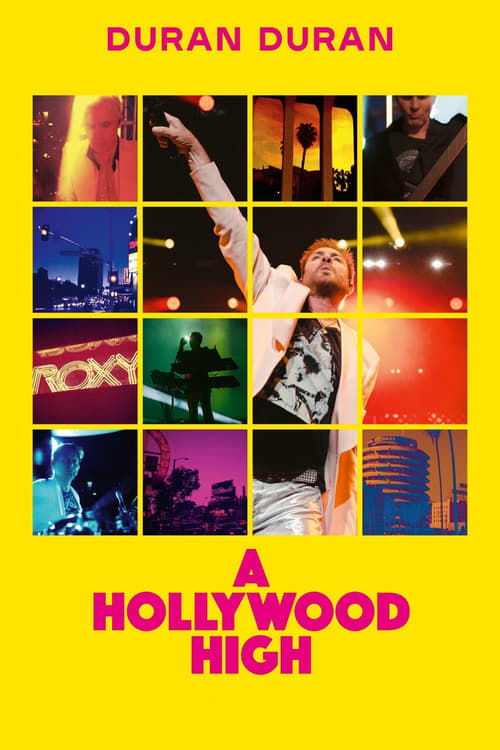
Duran Duran: A Hollywood High is not a fictional story with deaths, betrayals, or hidden murders, but a celebratory docu-concert, so its "plot" unfolds as a performance-driven journey rather than a dramatic narrative. The film opens by situating Duran Duran within their four-decade relationship with Los Angeles, then gradually builds from reflective interview moments into a rooftop concert at The Aster in Hollywood, with the Capitol Records Tower looming behind the band as both landmark and symbol of their origin story.
The film begins in a mood of anticipation and nostalgia. Simon Le Bon, Nick Rhodes, John Taylor, and Roger Taylor appear not as fictional characters but as themselves, speaking in interview segments about the band's history, their bond with Los Angeles, and the meaning of returning to a live stage in 2022. The documentary framing emphasizes that this is not simply a concert, but a milestone: Duran Duran are celebrating their forty-year career, their latest album Future Past, and the launch of a new global tour, all while standing on a rooftop in the city that helped shape their image and mythology. The atmosphere is both intimate and grand, because the film keeps cutting between personal recollections and sweeping visual evidence of legacy--archival images, backstage material, and the gleaming geometry of Hollywood at dusk.
As the opening reflection continues, the film makes clear that Los Angeles is not just a backdrop but a recurring emotional anchor for the band. The Capitol Records Tower sits behind them like a monument to their first major label home, and the Hollywood sign in the distance reinforces the idea that this performance is a kind of homecoming. The documentary segments stress that Duran Duran have grown older without becoming obsolete; instead, they remain stylish, self-aware, and still energized by the city that once fed their rise. The band members speak with the calm confidence of veterans who know the stakes of their own myth, and the film uses that confidence to prepare the viewer for the live set that will soon take over the entire story.
Then the mood shifts from reflection to ignition. The concert portion begins on the rooftop of The Aster Hotel in Los Angeles on March 17, 2022, at an exclusive performance said to have had about 120 attendees. The setting is vivid and unmistakably cinematic: the band plays elevated above the city, with the Capitol Records Tower behind them and the skyline open around them, turning the show into both a live event and a visual tribute to the band's relationship with Hollywood. The film's structure now becomes a steady rise in momentum, as each song functions like another chapter in a retrospective of Duran Duran's evolution. There are no plot reversals, but there is a strong sense of progression: the performance itself becomes the central narrative engine, replacing dramatic conflict with musical accumulation, visual spectacle, and emotional payoff.
The set list moves through eras of the band's identity, and the film treats each number as a marker of memory and reinvention. "A View to a Kill" brings the James Bond-era glamour back into focus, while "Notorious" and "Hungry Like the Wolf" remind the audience of the band's 1980s dominance and pop-culture reach. "Come Undone" and "Ordinary World" deepen the emotional texture, letting the performance shift from swagger into vulnerability and reflection. "Invisible" and "Tonight United" connect the legacy material to the present, showing that the band's current sound is not trapped in nostalgia but still actively evolving. The concert does not merely revisit hits; it arranges them into a living chronology, so the audience experiences the band's career as a forward-moving force rather than a museum display.
Interwoven with the concert are short documentary passages that add context and warmth without interrupting the musical momentum for long. These passages reinforce the band's pride in still performing together and their awareness of how rare that longevity is. The interviews and archival footage create a quiet emotional undercurrent: the members are not only celebrating success, but also acknowledging the passage of time, the endurance of their partnership, and the way Los Angeles remains tied to their identity. The film is especially effective when it lets the band members speak with relaxed familiarity, as if the rooftop itself has become a memory they are revisiting while it is still happening.
A further layer of meaning emerges from the film's treatment of the 2022 moment itself. Duran Duran are not just playing a show; they are presenting themselves as a band still capable of command after the pandemic era, after decades in the industry, and after the changing tides of popular music. The movie presents that return to the live stage as a triumph rather than a struggle. The tension, such as it is, lies in whether the band can make this high-profile rooftop event feel both intimate and monumental, and the answer is visibly yes: the performance feels polished, confident, and celebratory. The film's "conflict" resolves not through defeat or danger but through execution, as the songs, visuals, and setting all align into a single statement of survival and relevance.
One especially notable detail in the event is the symbolic lighting of the Capitol Records building in the colors of the Ukrainian flag, adding a public gesture of solidarity to the performance's visual language. That image broadens the film's meaning beyond simple career celebration, suggesting that the band is also situating itself within the present world rather than sealing itself off in nostalgia. The rooftop show therefore feels larger than a concert and more like a cultural moment, one in which music, place, memory, and current events briefly converge. The documentary framework supports that feeling by reminding viewers that this is a band with history, but also with an ongoing voice in the present.
As the performance continues, the film builds toward its emotional peak through the cumulative force of the songs and the visual expanse of the rooftop setting. The audience sees the band not as isolated stars, but as a tight unit still able to generate chemistry and spectacle together. The stage lighting, city lights, and architectural backdrop give the show a sense of elevation both literal and symbolic, as though Duran Duran are playing above the city that once helped define their image. By the time the final songs arrive, the film has already answered its implicit question: the band can still do this, still command attention, still turn a rooftop into a landmark event.
The closing stretch does not deliver a dramatic twist or a revelation in the thriller sense, because there are no deaths, no villains, and no hidden crimes to expose. Instead, the ending functions as a celebratory release. The concert concludes as a triumphant reaffirmation of Duran Duran's legacy, their longevity, and their continuing connection to Los Angeles. The final impression is of a band that has not only survived the decades but turned them into style, spectacle, and shared memory. The rooftop, the Capitol Tower, and the Hollywood skyline all remain in view as the music fades, leaving behind the sense that this was less a documentary with an ending than a ceremonial night captured and preserved.
The last scene leaves the viewer with the image of a historic live performance rather than a story resolution in the traditional sense. Duran Duran stand as themselves, not as characters with arcs to complete, and the film ends by honoring that reality: the band's past remains alive in the present, and their Hollywood relationship is not concluded but renewed. There are no bodies, no casualties, no final showdown, and no secret identities--only a carefully framed, emotionally resonant victory lap that turns a rooftop in Hollywood into a snapshot of enduring pop history.
More Movies Like This
Browse All Movies →






What is the ending?
In the ending of "Duran Duran: A Hollywood High," the band performs a final, electrifying concert at the iconic Hollywood High School, celebrating their legacy and connection to their fans. The performance is filled with nostalgia and energy, showcasing their greatest hits. As the concert concludes, the band members reflect on their journey, expressing gratitude for their experiences and the bond they share. The film closes with a sense of fulfillment and a celebration of their enduring impact on music and culture.
As the final act of "Duran Duran: A Hollywood High" unfolds, the scene transitions to the vibrant atmosphere of Hollywood High School, where the band is set to perform. The sun begins to set, casting a warm golden hue over the school grounds, and the excitement in the air is palpable. Fans gather, their faces lit with anticipation, as they reminisce about the band's influence on their lives. The camera captures the diverse crowd, showcasing a mix of ages and backgrounds, all united by their love for Duran Duran.
The band members--Simon Le Bon, John Taylor, Nick Rhodes, Roger Taylor, and Dom Brown--are backstage, each lost in their thoughts. Simon, with a reflective expression, recalls the early days of their career, the struggles, and the triumphs. He feels a deep sense of gratitude for the journey they have shared. John, ever the charismatic presence, is buzzing with energy, eager to connect with the audience. Nick, with his signature style, is focused on the music, ensuring everything is perfect for their performance. Roger, the heartbeat of the band, is calm yet excited, while Dom, the newest member, feels a mix of nerves and exhilaration.
As they step onto the stage, the crowd erupts in cheers, a wave of sound that washes over the band. The opening notes of their first song resonate through the air, and the energy is electric. The camera captures the band in their element, performing with passion and enthusiasm. Each song is a journey through their history, with visuals of past performances interspersed, creating a tapestry of memories that connect the present to the past.
Throughout the concert, the band members share moments of connection with the audience, looking out into the sea of faces, each one reflecting a story of their own. The lyrics resonate deeply, evoking emotions of nostalgia, joy, and unity. As they perform "Ordinary World," Simon's voice carries a poignant weight, and the crowd sings along, creating a powerful moment of collective memory.
As the final song approaches, the atmosphere is charged with emotion. The band members exchange glances, a silent acknowledgment of their journey together. They take a moment to express their gratitude to the fans, recognizing the role they have played in their success. The audience responds with thunderous applause, a testament to the bond that has formed over the years.
The concert concludes with a spectacular finale, fireworks lighting up the night sky, symbolizing the celebration of their legacy. The band stands together, arms raised in triumph, soaking in the moment. As the lights dim, the camera captures their expressions--joy, fulfillment, and a sense of closure. They have come full circle, celebrating not just their music but the connections they have forged with their fans.
In the aftermath of the concert, the band members reflect on their experiences. Simon expresses a desire to continue creating music, while John hints at exploring new artistic ventures. Nick, ever the visionary, talks about the importance of evolving as artists. Roger feels a sense of peace, knowing they have left a lasting impact, and Dom, feeling embraced by the band, contemplates his future with them.
The film closes with a montage of their journey, highlighting key moments from their career, interspersed with clips from the concert. The final shot lingers on the Hollywood High School sign, a symbol of their roots and the place where they celebrated their legacy. The screen fades to black, leaving the audience with a sense of hope and the enduring power of music to connect people across generations.
Is there a post-credit scene?
In "Duran Duran: A Hollywood High," there is indeed a post-credit scene that adds a whimsical touch to the film's conclusion. After the credits roll, the screen fades back in to reveal the band members of Duran Duran, dressed in their iconic 80s attire, playfully interacting with fans outside the venue.
The scene captures a vibrant atmosphere, filled with laughter and excitement as the band members sign autographs and take selfies with their devoted followers. Simon Le Bon, with his charismatic smile, engages in light-hearted banter, while John Taylor shares a heartfelt moment with a young fan who expresses how the band's music has impacted her life.
As the camera pans out, the energy shifts slightly, revealing the band members stepping away from the crowd to share a private moment. They reminisce about their journey, reflecting on the highs and lows of their career, and the enduring bond they share. The scene encapsulates a sense of nostalgia and gratitude, leaving viewers with a warm feeling of connection to the band's legacy.
The post-credit scene serves as a reminder of the joy and community that music can create, reinforcing the film's themes of friendship, creativity, and the lasting impact of Duran Duran's artistry.
What are the key locations featured in Duran Duran: A Hollywood High?
The film prominently features iconic locations in Hollywood, including the legendary Hollywood High School, where the band performs, and various vibrant spots around Los Angeles that capture the essence of the 1980s music scene.
How does the film portray the band's relationship with their fans?
The film showcases intimate interactions between Duran Duran and their fans, highlighting moments of connection during performances, backstage glimpses, and the emotional responses of fans as they experience the band's music live.
What role does nostalgia play in the characters' journeys throughout the film?
Nostalgia is a driving force in the film, as the band members reflect on their past experiences, the evolution of their music, and the impact of their early days in Hollywood, creating a poignant contrast between their youthful aspirations and present realities.
How does each band member's personality contribute to the dynamics of the group?
Each member of Duran Duran brings a distinct personality to the group, with Simon Le Bon's charismatic frontman energy, John Taylor's cool demeanor, and Nick Rhodes' artistic vision, all contributing to the band's chemistry and collaborative spirit.
What specific challenges do the band members face during their performance at Hollywood High?
During their performance at Hollywood High, the band faces technical difficulties, such as sound issues and equipment malfunctions, which test their resilience and adaptability, ultimately leading to a triumphant and memorable show.
Is this family friendly?
"Duran Duran: A Hollywood High" is a concert film that captures the iconic band Duran Duran performing at a unique venue in Los Angeles. While the film primarily focuses on the music and the band's journey, there are a few aspects that might be considered potentially objectionable or upsetting for children or sensitive viewers.
-
Mature Themes: The film touches on themes of fame, relationships, and the pressures of the music industry, which may be complex for younger audiences to fully grasp.
-
Visual Imagery: Some concert visuals may include flashing lights and vibrant imagery that could be overwhelming for sensitive viewers or those with photosensitivity.
-
Language: There may be occasional use of mild language or innuendos that could be deemed inappropriate for younger viewers.
-
Emotional Moments: The film includes reflective moments where band members discuss personal struggles and the impact of their careers, which may evoke strong emotions.
Overall, while the film is centered around music and performance, parents may want to consider these elements when deciding if it is suitable for children or sensitive individuals.







