
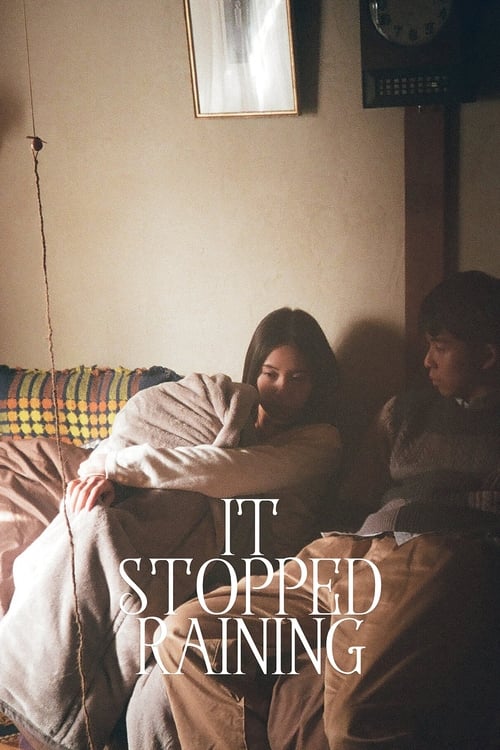













Popular
What role does the setting of the small town play in the story?
What motivates the main character, Sam, to return to his hometown after many years?
How does the relationship between Sam and his childhood friend, Mia, evolve throughout the film?
How does Sam's relationship with his father influence his actions throughout the film?
What is the significance of the recurring motif of rain in the film?
Should I watch it?
Ask Your Own Question

What is the plot?
Yukisuke, a young bioarchaeology research assistant with a limp, moves through his days in the quiet rhythm of university work and a small, almost ritualized detour to a taiyaki stall where Koyomi works alone, turning fish-shaped pastries for passing customers. At first, their connection is nothing more than the gentle familiarity that grows between a regular and the person who serves him, but the film lets that ordinary repetition become the shape of a romance. Yukisuke keeps returning, partly for the taiyaki and partly because he wants to see Koyomi again, and Koyomi, with her direct, unguarded warmth, begins to recognize him. Their conversations lengthen, their silences loosen, and the space between stall and street starts to feel like the beginning of something tender and private. The world around them remains small and restrained: the university where Yukisuke works, the narrow street where the stall stands, the soft daily routines that keep them orbiting one another. Then, in one of those crucial small moments that shifts a relationship from tentative to real, Yukisuke helps Koyomi deal with a drunk customer. The confrontation is brief but decisive. His intervention breaks the barrier between them, and afterward the film lets their relationship deepen with the unhurried certainty of two people who have finally begun to trust each other.
The turning point comes after an evening together. They have spent time in that fragile new closeness, and Koyomi heads home through the ordinary night, unaware that the film is about to wrench away everything it has carefully built. On the road, a car strikes her. The accident is sudden and brutal, and the quiet romance is interrupted by the shock of violence. Koyomi is left in a coma, and the story shifts from courtship to waiting, from shared time to suspended time. Yukisuke begins visiting her in the hospital every day. The hospital becomes the film's second emotional center, a place of sterile light and motionless endurance where Yukisuke sits beside Koyomi's unconscious body and keeps faith with the relationship they were only just beginning to make real. Day after day, he returns, and the repetition of those visits becomes its own form of devotion.
Koyomi's mother appears during this hospital period, but her presence is painfully brief. She does not remain to care for her daughter, and that absence becomes one of the film's most important emotional facts. The mother leaves, and the burden of continuity falls almost entirely on Yukisuke. He is the one who stays. He is the one who watches over the bed, who keeps coming back when everyone else has stepped away. The film does not turn this into melodramatic confrontation; instead, the pain lies in the fact that there is so little said and so much implied. The abandonment is quiet, but it changes everything. Koyomi's vulnerability, and Yukisuke's choice to remain, bind the story more tightly around him.
After some time in the coma, Koyomi wakes. Relief comes immediately, but it lasts only a moment before the film reveals the new shape of the tragedy. She remembers everything up to the accident, but from that point on her memory no longer holds. Her short-term memory is damaged so severely that anything new disappears by the next day. Each morning resets her world. She can recall the life she had before the crash, including who she is and what she did up to that day, but she cannot keep hold of new experiences. The revelation changes the tone of the film completely. What had been a romance threatened by chance becomes a story about the labor of continuity, about how love survives when memory does not.
Yukisuke tries to make a life with Koyomi anyway. He invites her to live with him so he can help her through the condition, and she accepts. His home becomes the third essential setting, replacing the hospital with a domestic space that is at once intimate and impossible. In one of the film's most striking quiet reversals, the place meant to shelter them also becomes the site of their repeated emotional erasure. Every day Yukisuke has to explain where she is, what has happened, and who he is to her. Every day he must build a bridge to her from nothing, because by morning the bridge has vanished. The relationship is no longer measured by first dates or confessions, but by the daily necessity of restaging reality.
The film's emotional momentum comes from this exhausting repetition. Yukisuke, who once only hoped to see Koyomi again at the stall, now becomes the keeper of her present. He has to absorb the fact that Koyomi can remember him only within the narrow span of a day, that every evening's closeness may be gone by morning. He is not merely loving her; he is preserving her sense of the world in real time. The weight of that responsibility steadily wears on him. What had begun as simple affection grows into something more difficult and more vulnerable, because each attempt to build a shared future is undercut by the certainty that Koyomi will not retain it. The film makes this emotional strain feel physical in the way Yukisuke must repeatedly introduce himself, repeat stories, and reconstruct their relationship with patience that borders on grief.
Koyomi's condition also reframes her own behavior. She is not portrayed as broken in a way that erases her personality; instead, she remains recognizable, still herself in tone and presence, even as the mechanics of memory fail her. She knows who she was before the accident, and she retains her broader identity, but the present slips away from her as soon as it is made. The result is that every new interaction has the strange innocence of a first meeting, even when Yukisuke stands before her as someone she loves. The daily routine becomes heartbreaking precisely because it is domestic and ordinary. There are no grand medical breakthroughs or dramatic reversals. There is only the repeated attempt to live together in the same emotional house when one person cannot carry the previous day into the next.
The film's major revelations are all bound to this central condition. Koyomi is not losing her entire self; she is losing the ability to make new memory. The accident did not simply injure her body, it fractured the continuity that makes daily life feel stable. Yukisuke's role changes from romantic prospect to caretaker, witness, and emotional anchor. Koyomi's mother, by contrast, is revealed as absent when presence is most needed. These are not twists in the conventional suspense sense, but they are the film's deepest turns, the points at which the story changes shape and meaning. The romance becomes a test of endurance, and the film asks whether affection can survive when the person beloved can never fully carry it forward alone.
As the days repeat, Yukisuke's struggle becomes the film's quiet climax. He keeps returning to the same explanations, the same reassurance, the same effort to make Koyomi feel safe and understood. The tension is not built around an external villain or a final confrontation with fate; it is built around the emotional cost of continuity itself. Yukisuke must decide, again and again, whether he can remain the one who remembers for both of them. The film lets that question settle into the texture of ordinary life. His love is not expressed through declaration alone but through repetition, persistence, and the willingness to be misunderstood every day if that is what it takes to stay beside her.
The ending does not offer a miracle cure or a dramatic restoration of memory. Instead, it resolves into the uneasy but sincere decision to keep living close to one another despite the damage done by the accident. Yukisuke and Koyomi continue their life together in the shadow of her condition, and the film closes with the sense that what matters is not perfect recollection but the effort to remain present anyway. The final scenes hold onto that delicate balance: the pain of forgetting, the tenderness of being cared for, and the stubborn hope that love can survive in fragments. By the end, the story has moved from a simple routine at a taiyaki stall to a love defined by loss, patience, and daily recommitment. Nothing is neatly healed. Everything important is still fragile. But Yukisuke stays, Koyomi continues to wake into the same uncertain present, and their shared life endures in the only way it can, through the repeated act of beginning again.
More Movies Like This
Browse All Movies →







What is the ending?
In the ending of "It Stopped Raining," the main character, a woman named Anna, finds closure after a tumultuous journey of self-discovery and emotional turmoil. She reconciles with her past and embraces a new beginning, symbolized by the clearing skies after the rain. The film concludes with Anna standing outside, looking up at the sky, feeling a sense of peace and hope for the future.
As the film approaches its conclusion, the atmosphere is heavy with the remnants of the emotional storms that have plagued Anna throughout her journey. The scene opens with Anna sitting alone in her dimly lit apartment, surrounded by the clutter of her life. The rain patters against the window, mirroring her internal struggle. She reflects on her relationships, particularly with her estranged father and her supportive friend, Mark. The weight of her unresolved feelings hangs in the air, creating a palpable tension.
In the next scene, Anna receives a phone call from her father, who has been trying to reach out to her throughout the film. The conversation is fraught with emotion; Anna's voice trembles as she grapples with years of hurt and disappointment. Her father expresses regret for the past, and Anna, torn between anger and longing, finally finds the courage to voice her feelings. The rain outside intensifies, echoing the storm of emotions within her. This pivotal moment marks a turning point for Anna, as she begins to confront her past rather than run from it.
Following this confrontation, the scene shifts to Anna meeting Mark at a local café. The atmosphere is warm and inviting, a stark contrast to the turmoil she has just faced. Mark, who has been a steadfast presence in her life, encourages her to embrace the changes she is experiencing. They share a heartfelt conversation about dreams and aspirations, and Anna begins to articulate her desire for a fresh start. The rain outside begins to lighten, symbolizing the shift in her emotional state.
As the film nears its climax, Anna takes a walk through her neighborhood, the rain finally subsiding. She notices the small details around her--the vibrant colors of the flowers, the laughter of children playing, and the warmth of the sun breaking through the clouds. Each step she takes feels lighter, as if she is shedding the weight of her past. This moment of clarity is beautifully captured, showcasing her transformation from a place of despair to one of hope.
In the final scene, Anna stands outside, looking up at the sky as the last remnants of rain fade away. The clouds part, revealing a brilliant blue sky. She closes her eyes, taking a deep breath, and a serene smile spreads across her face. This moment signifies her acceptance of the past and her readiness to embrace the future. The film ends with a lingering shot of Anna, a figure of resilience and newfound strength, embodying the message that even after the darkest storms, there is always the promise of brighter days ahead.
As for the fates of the main characters, Anna emerges with a renewed sense of self, ready to forge her own path. Her father, having taken the first step towards reconciliation, is left with the hope of rebuilding their relationship. Mark remains a supportive friend, his presence a reminder of the importance of connection and understanding in times of struggle. Each character, in their own way, finds a sense of closure, leaving the audience with a poignant reminder of the power of healing and the beauty of new beginnings.
Is there a post-credit scene?
In the movie "It Stopped Raining," there is no post-credit scene. The film concludes its narrative without any additional scenes after the credits roll, leaving the audience with the emotional weight of the story and the resolution of the characters' arcs. The focus remains on the themes of loss, hope, and the passage of time, encapsulated in the final moments of the film.
What role does the setting of the small town play in the story?
The small town serves as a character in itself, embodying the weight of the past and the memories that haunt Sam. Its familiar streets and landmarks evoke a sense of nostalgia, but also a feeling of entrapment. The town's weather, particularly the rain, symbolizes Sam's emotional state, reflecting his turmoil and the cleansing he seeks as he confronts his past.
What motivates the main character, Sam, to return to his hometown after many years?
Sam is driven by a deep sense of nostalgia and unresolved issues from his past. The death of his estranged father serves as a catalyst, forcing him to confront old memories and relationships that he had long buried. His internal struggle is marked by a mix of regret and a longing for closure.
How does the relationship between Sam and his childhood friend, Mia, evolve throughout the film?
Initially, their relationship is strained due to the years apart and the emotional baggage they both carry. As they reconnect, their shared memories and experiences begin to surface, leading to moments of vulnerability. Mia's own struggles with her family's expectations and her desire for independence create a bond that is both tender and complicated, ultimately leading to a rekindling of their feelings.
How does Sam's relationship with his father influence his actions throughout the film?
Sam's relationship with his father is fraught with tension and unresolved conflict. His father's strict expectations and emotional distance have left Sam feeling inadequate and lost. This complicated dynamic drives Sam's actions as he grapples with feelings of anger, disappointment, and a desperate need for validation. His journey back home is not just about mourning his father's death, but also about seeking understanding and forgiveness for both himself and his father.
What is the significance of the recurring motif of rain in the film?
Rain in 'It Stopped Raining' symbolizes both sorrow and renewal. It often appears during moments of emotional turmoil for Sam, representing his grief and unresolved feelings. As the story progresses, the rain begins to lessen, paralleling Sam's journey towards acceptance and healing, culminating in a moment of clarity when he finally confronts his father's legacy.
Is this family friendly?
"It Stopped Raining," produced in 2020, is a poignant drama that explores themes of loss, grief, and the complexities of family relationships. While the film is rich in emotional depth and character development, it does contain some elements that may be considered objectionable or upsetting for children or sensitive viewers.
-
Themes of Grief and Loss: The film delves deeply into the emotional turmoil of characters dealing with the death of a loved one, which may be distressing for younger audiences or those sensitive to such topics.
-
Emotional Turmoil: Characters experience intense emotional moments, including crying, anger, and despair, which may be overwhelming for some viewers.
-
Conflict within Family Dynamics: There are scenes of conflict and tension between family members that may be uncomfortable, showcasing arguments and misunderstandings.
-
Depictions of Loneliness: The film portrays feelings of isolation and loneliness, which could resonate negatively with sensitive viewers.
-
Mature Themes: While there is no explicit content, the film addresses mature themes that may not be suitable for younger audiences, including existential reflections and the impact of loss on personal identity.
Overall, while "It Stopped Raining" is a beautifully crafted narrative, its emotional weight and mature themes may not be appropriate for all viewers, particularly children.







