
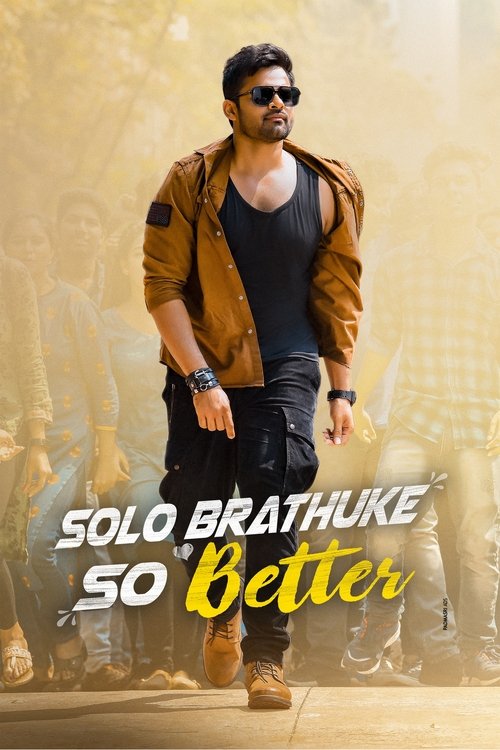












Popular
What motivates the main character, Solo, to reject traditional marriage?
How does Solo's relationship with his father influence his views on love and marriage?
What role does the character of Amrutha play in Solo's life?
How does the film portray the theme of friendship in Solo's life?
What challenges does Solo face in his pursuit of love and independence?
Should I watch it?
Ask Your Own Question

What is the plot?
Sorry, we aren't able to watch and write up a full detailed plot yet. Check back in a few days.



What is the ending?
In the ending of "Solo Brathuke So Better," the protagonist, Solo, realizes the importance of love and companionship. He reconciles with his love interest, and they decide to be together, embracing the idea that life is better shared with someone special.
As the film approaches its conclusion, we see Solo, played by Sai Dharam Tej, grappling with his beliefs about love and relationships. He has been adamant about living life on his own terms, believing that being single is the best way to avoid complications. However, as the story unfolds, he encounters a series of events that challenge this notion.
In the final act, Solo's love interest, Amrutha, portrayed by Nabha Natesh, faces a significant dilemma. She is torn between her feelings for Solo and the expectations placed upon her by her family. The tension escalates when Solo's past decisions come back to haunt him, leading to misunderstandings and conflicts that put their relationship at risk.
The climax occurs during a pivotal confrontation where Solo must confront his fears and insecurities. He realizes that his desire for independence has kept him from experiencing the joys of love. In a heartfelt moment, he expresses his feelings to Amrutha, acknowledging that while he once believed in solitude, he now understands the value of partnership.
As the story wraps up, Solo and Amrutha come together, symbolizing a shift in Solo's character. He embraces the idea that life is indeed better when shared with someone who understands and supports you. The film concludes on a hopeful note, with the couple looking forward to a future together, having learned that love can coexist with personal aspirations.
In the end, Solo's journey reflects a transformation from a solitary mindset to one that appreciates the beauty of companionship. The film leaves the audience with a sense of optimism about love and relationships, emphasizing that while independence is important, connection with others enriches life in profound ways.
Is there a post-credit scene?
In the movie "Solo Brathuke So Better," there is indeed a post-credit scene that adds a humorous twist to the film's conclusion. After the main credits roll, the scene opens with the protagonist, Sree (played by Sai Dharam Tej), and his friend, who are seen discussing their future plans.
As they chat, Sree's friend suggests that Sree should consider getting married, poking fun at his previous commitment to staying single. Sree, still holding onto his belief in the advantages of being solo, humorously counters with his reasons for remaining unattached. The banter between the two friends is light-hearted and showcases their camaraderie, providing a comedic relief after the emotional journey of the film.
The scene captures Sree's internal conflict between his desire for independence and the societal pressures of marriage, all while maintaining a playful tone. It leaves the audience with a sense of closure, yet also hints at the ongoing debate about love and relationships in a modern context. The post-credit scene effectively encapsulates the film's themes of individuality and the complexities of romantic commitments.
What motivates the main character, Solo, to reject traditional marriage?
Solo, played by Sai Dharam Tej, is a strong advocate for individual freedom and self-reliance. His rejection of traditional marriage stems from his belief that love and relationships should not be bound by societal expectations. He values his independence and is determined to live life on his own terms, which drives his character throughout the film.
How does Solo's relationship with his father influence his views on love and marriage?
Solo's relationship with his father is complex; his father, portrayed as a traditionalist, embodies the societal pressures surrounding marriage. This dynamic creates internal conflict for Solo, as he grapples with his father's expectations while trying to assert his own beliefs about love. The tension between them highlights Solo's desire to break free from conventional norms.
What role does the character of Amrutha play in Solo's life?
Amrutha, played by Nabha Natesh, serves as a catalyst for Solo's transformation. Initially, she represents the traditional view of love and marriage that Solo opposes. However, as their relationship develops, she challenges his beliefs and helps him confront his fears about commitment. Her character brings emotional depth to the story, as she embodies both the allure of love and the struggle for personal freedom.
How does the film portray the theme of friendship in Solo's life?
Friendship is a significant theme in Solo's life, particularly through his bond with his friends who support his choices and provide comic relief. Their camaraderie highlights the importance of having a support system while navigating personal challenges. The film showcases various moments where Solo's friends encourage him to pursue his happiness, reinforcing the idea that true friends respect individual choices.
What challenges does Solo face in his pursuit of love and independence?
Solo faces numerous challenges, including societal pressure from family and friends who expect him to conform to traditional marriage norms. He also encounters emotional turmoil as he navigates his feelings for Amrutha, who represents both his desires and his fears. The film illustrates his internal struggle as he tries to balance his quest for independence with the complexities of romantic relationships.
Is this family friendly?
"Solo Brathuke So Better" is generally considered a family-friendly film, but it does contain some elements that may be sensitive for children or more sensitive viewers. Here are a few aspects to consider:
-
Romantic Themes: The film revolves around love and relationships, which may include discussions or depictions of romantic feelings that could be awkward for younger audiences.
-
Mild Language: There are instances of mild profanity and casual language that may not be suitable for all children.
-
Conflict and Tension: The film features moments of conflict between characters, including misunderstandings and emotional confrontations that could be intense for younger viewers.
-
Social Pressure: Themes of societal expectations regarding marriage and relationships are explored, which might be confusing or upsetting for some children.
-
Emotional Struggles: Characters experience emotional turmoil and personal struggles, which could resonate deeply and evoke empathy, but may also be heavy for sensitive viewers.
Overall, while the film is light-hearted and comedic in nature, these elements may warrant parental guidance for younger audiences.






