


Popular
What songs does Katie Melua perform during the concert at the Rivoli Ballroom?
How does the setting of the Rivoli Ballroom contribute to the atmosphere of the concert?
What is Katie Melua's emotional state during her performance?
Are there any interactions between Katie Melua and the audience during the concert?
What visual elements are highlighted in the cinematography of the concert film?
Should I watch it?
Ask Your Own Question

What is the plot?
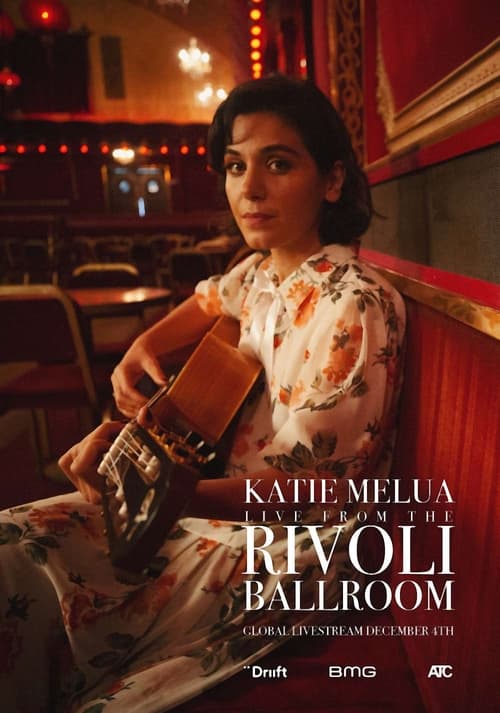
Katie Melua: From the Rivoli Ballroom (2020) is not a story-driven film at all, so there are no deaths, no villains, no revelations, and no final twist to uncover. What it gives instead is an intimate live concert: Katie Melua sings through No. 8 and several older favorites inside the glamorous Rivoli Ballroom, and the "plot" is the emotional arc of the performance itself.
The film opens on the Rivoli Ballroom in London, a richly decorated 1950s-style space that immediately sets a nostalgic, almost dreamlike tone. The room feels unusually quiet and private, with the concert framed less like a large public show and more like a carefully preserved moment captured just for the camera. That stillness matters, because it makes Katie Melua's entrance feel like the start of a confession rather than a conventional stage performance. She appears at once as the central figure, accompanied by a small group of musicians, and the entire visual world narrows to her voice, the polished ballroom interior, and the controlled warmth of live instrumentation.
There is no narrative exposition, no spoken prologue, and no character introduction beyond Katie Melua herself. The concert simply begins as performance, with the first songs establishing the mood: elegant, controlled, and emotionally direct. The set is built around No. 8, her 2020 album, and the songs are presented in a sequence that is not strictly the album's original order. That non-chronological flow gives the concert a shape of its own, moving between introspection, tenderness, and brighter moments without ever breaking the spell of the venue.
As the performance unfolds, the ballroom becomes the emotional center of the film. The sources describe it as a sumptuous and atmospheric location, one of London's older club spaces, and the setting is important because it deepens the sense of isolation and intimacy surrounding the music. The nearly empty room turns every gesture into something visible: a breath before a lyric, the stillness between phrases, the way the band holds back to let Melua's vocals sit in the foreground. The experience is not driven by dialogue, but by the quiet exchange between singer, musicians, and audience--an audience that is mostly implied rather than shown.
The concert's movement comes from the songs themselves. One listed program sequence includes "A Love Like That," "English Manner," "Joy," "Closest Thing to Crazy," "Belfast," "Leaving the Mountain," "Maybe I Deamt it," "Voices in the Knights," "Nine Million Bicycles," "Your Longing is Gone," "Heading Home," "Wonderful Life," "Airtime," and "Remind me to Forget." Another source confirms that the show covers the full No. 8 album, while also adding four older crowd favorites: "The Closest Thing to Crazy," "Belfast," "Nine Million Bicycles," and "Wonderful Life." Because the work is a filmed concert rather than a drama, these tracks function like scenes in a loose emotional narrative, each one shifting the tone a little further while maintaining the same understated elegance.
There are no confrontations in the conventional sense. No one argues, no secret is exposed, and no external conflict interrupts the flow. The only tension is musical tension: the anticipation before a chorus, the slight hush before a familiar refrain, the feeling of an audience leaning forward into a song it already knows. In that way, the concert builds momentum without ever needing plot mechanics. "Closest Thing to Crazy" and "Nine Million Bicycles," in particular, serve as recognition points--moments where the performance briefly widens beyond the specific album focus and connects with the broader memory of Melua's career. Their inclusion gives the set a sense of continuity, as though the concert is not only about where she is in 2020, but also about how her music has traveled up to that point.
Visually, the ballroom remains the constant anchor. The 1950s glamour of the Rivoli surrounds the performance with a kind of faded opulence, making the event feel both vintage and immediate. The camera captures that contrast: ornate surroundings, restrained staging, and a singer whose presence is calm rather than theatrical. Emotionally, the effect is one of closeness. Instead of spectacle, the film offers poise. Instead of dramatic reversals, it offers the comfort of a voice moving through carefully chosen songs in a room designed to make them resonate.
As the set progresses toward its end, the atmosphere does not collapse or explode; it gently deepens. Later songs such as "Your Longing is Gone," "Heading Home," "Wonderful Life," "Airtime," and finally "Remind me to Forget" carry the performance toward closure in a way that feels deliberate and reflective. The final track, "Remind me to Forget," serves as the closing statement of the evening, ending the concert not with a narrative resolution but with the completion of the live sequence itself. There is no final revelation, no last-minute confession, and no aftermath beyond the sense that the performance has ended and the room has returned to silence.
So the "story" of Katie Melua: From the Rivoli Ballroom is the unfolding of a concert inside a beautiful empty ballroom, where Katie Melua performs No. 8 and selected classics with quiet confidence and emotional precision. It begins with the atmosphere of the venue and ends with the last notes of "Remind me to Forget," leaving behind not a solved mystery or a changed fate, but the lingering impression of an intimate live musical event preserved in time.






What is the ending?
In the ending of "Katie Melua: From the Rivoli Ballroom," Katie Melua concludes her performance at the Rivoli Ballroom, leaving the audience captivated and emotionally moved. The film captures the essence of her music and the connection she shares with her fans, culminating in a heartfelt moment of gratitude and reflection.
As the film draws to a close, Katie stands on stage, her voice resonating through the historic venue. The audience, filled with a mix of longtime fans and new listeners, is visibly moved by her performance. The camera captures close-ups of audience members, their expressions ranging from joy to nostalgia, as they sway to the music. The atmosphere is electric, filled with a sense of unity and shared experience.
After the final song, Katie takes a moment to express her appreciation for the audience. She shares a few personal anecdotes, reflecting on her journey as an artist and the significance of performing in such a cherished location. The audience responds with applause and cheers, creating a warm and intimate atmosphere.
As the credits begin to roll, the film showcases behind-the-scenes moments, revealing the camaraderie among Katie and her band members. They share laughter and light-hearted conversations, highlighting the bond formed through their shared passion for music. The film ends on a high note, leaving viewers with a sense of fulfillment and connection to the music and the artist.
In a more detailed narrative of the ending:
The final act of "Katie Melua: From the Rivoli Ballroom" unfolds as the lights dim slightly, casting a warm glow over the stage. Katie Melua, dressed in a stunning outfit that reflects her unique style, stands center stage, her guitar in hand. The audience, a diverse mix of ages and backgrounds, is hushed in anticipation, their eyes fixed on her.
As she begins to sing her last song, the melody fills the Rivoli Ballroom, a venue steeped in history and charm. The camera pans across the audience, capturing the emotional responses of fans who have come to see her perform. Some are swaying gently, lost in the music, while others have tears in their eyes, touched by the lyrics that resonate deeply with their own experiences.
Katie's voice, rich and soulful, carries through the room, weaving a tapestry of emotions that connects her to each listener. The song builds to a powerful crescendo, and the audience erupts into applause, their appreciation palpable. Katie smiles, her eyes sparkling with gratitude as she takes in the moment, feeling the energy of the crowd.
After the final note fades, Katie steps forward, her heart full. She addresses the audience, her voice warm and sincere. "Thank you all for being here tonight," she begins, her words laced with emotion. She shares a brief story about her journey as an artist, reflecting on the challenges and triumphs that have shaped her career. The audience listens intently, nodding in understanding, as they feel a deeper connection to her story.
As she concludes her speech, the applause swells once more, and Katie raises her hands in appreciation. The band joins her on stage, and they take a collective bow, united in their love for music and the joy of performing together. The camera captures the camaraderie among the band members, their laughter and shared smiles revealing the strong bond they have developed over the years.
As the credits roll, the film transitions to behind-the-scenes footage, showcasing moments of levity and connection among Katie and her team. They share jokes, reminisce about past performances, and express their excitement for the future. The film closes with a final shot of Katie, her face illuminated by the stage lights, a look of contentment and fulfillment etched on her features.
In this ending, the film encapsulates the essence of Katie Melua's artistry and the profound impact of music on both the artist and her audience. Each character, from Katie to her band members and the fans, experiences a moment of connection and joy, leaving the Rivoli Ballroom with hearts full of music and memories.
Is there a post-credit scene?
The movie "Katie Melua: From the Rivoli Ballroom," produced in 2020, does not feature a post-credit scene. The film primarily focuses on Katie Melua's live performance at the historic Rivoli Ballroom in London, showcasing her music and the intimate atmosphere of the venue. The narrative concludes with the final moments of her concert, leaving the audience with a sense of completion and reflection on the experience rather than extending into additional scenes or content after the credits.
What songs does Katie Melua perform during the concert at the Rivoli Ballroom?
Katie Melua performs a selection of her most beloved songs, including 'Nine Million Bicycles', 'The Closest Thing to Crazy', and 'Just Like Heaven', showcasing her vocal range and emotional depth.
How does the setting of the Rivoli Ballroom contribute to the atmosphere of the concert?
The Rivoli Ballroom, with its vintage decor and intimate setting, creates a warm and nostalgic atmosphere that enhances the emotional connection between Katie Melua and her audience.
What is Katie Melua's emotional state during her performance?
Throughout the concert, Katie Melua exhibits a blend of joy and vulnerability, deeply connecting with her music and the audience, reflecting her passion and dedication to her craft.
Are there any interactions between Katie Melua and the audience during the concert?
Yes, Katie Melua engages with the audience by sharing personal anecdotes and inviting them to sing along, creating a sense of community and shared experience.
What visual elements are highlighted in the cinematography of the concert film?
The cinematography captures the vibrant colors of the ballroom, the intricate details of the stage setup, and close-ups of Katie Melua's expressive performances, enhancing the overall emotional impact of the concert.
Is this family friendly?
"Katie Melua: From the Rivoli Ballroom" is a concert film that primarily showcases the musical performance of Katie Melua in a vibrant setting. The film is generally family-friendly, focusing on her music and the atmosphere of the performance.
However, there are a few aspects that might be considered potentially objectionable or upsetting for very young children or sensitive viewers:
-
Emotional Themes: Some of the songs performed may explore themes of love, loss, and longing, which could evoke strong emotions. While these themes are not graphic, they may resonate deeply with some viewers.
-
Visuals of a Live Performance: The concert setting includes bright lights and dynamic camera work that might be overwhelming for very young children or those with sensory sensitivities.
-
Audience Reactions: The film captures the audience's emotional responses, which may include moments of intense joy or sadness, reflecting the power of the music.
Overall, the film is centered around the celebration of music and performance, making it suitable for a wide audience, including families.