


Popular
What motivates Danny Hernandez to become a rapper?
How does Danny's relationship with his family influence his decisions?
What role does social media play in Danny's rise to fame?
How does Danny's involvement with gangs affect his career?
What are the consequences of Danny's legal troubles on his personal life?
Should I watch it?
Ask Your Own Question

What is the plot?
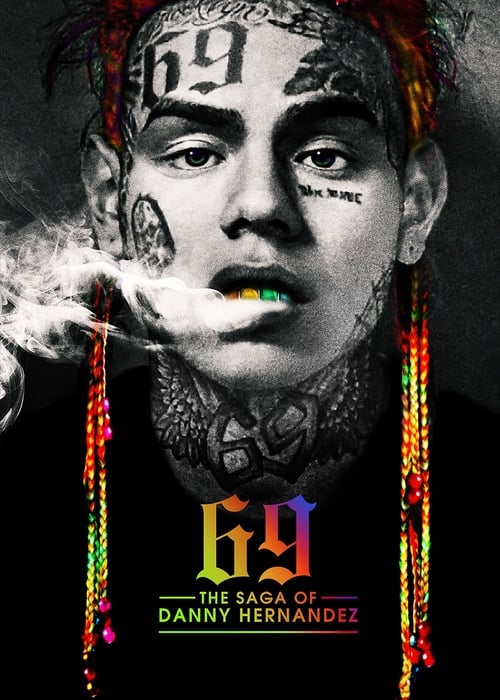
The documentary opens in Bushwick, Brooklyn, where Daniel Hernandez is still just a poor kid in a cramped family apartment, working at a bodega and moving through life with the restless, hungry energy that will eventually become his public weapon. The film lingers on the physical crampedness of that world: tight rooms, crowded family life, a neighborhood that looks worn down but alive, and a young Hernandez absorbing the sense that he has to become louder than everyone else if he wants to be seen. His father is absent and estranged, and that absence hangs over the early sections as a quiet wound that helps explain both his anger and his obsession with making himself impossible to ignore. From the beginning, the documentary frames him as a boy from Bushwick who is not simply ambitious but deeply addicted to attention, as if invisibility is the one thing he cannot tolerate.
As the story moves forward, Hernandez is shown in the bodega, a place that symbolizes the ordinary life he is about to abandon. He is a worker there, not a star, not a menace, not yet Tekashi69 or 6ix9ine, just a kid with a paycheck and a future that still looks undecided. But even in these early scenes, the film emphasizes that his identity is already becoming performative. He is fascinated by style, by provocation, by what makes people react. He begins shaping himself into a character before he has the fame to justify one, and the documentary makes that process feel like a slow transformation from Daniel into a brand. The change is not subtle. It is all color, aggression, shock, and defiance.
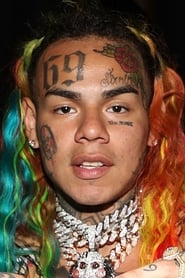
The film traces the first real emergence of that persona through the SoundCloud rap world, where Hernandez discovers that outrage is currency and visibility is power. He starts leaning into a visual language that is almost designed to be hated: rainbow hair, facial tattoos, explicit imagery, violent posturing, and a constant effort to look like a walking dare. The documentary repeatedly returns to the idea that the persona is not accidental. He is not merely becoming outrageous because fame does that to people; he is building outrage as a strategy. The name Tekashi69 becomes less an alias than a weapon, a way to make himself bigger than the music. The effect is immediate and grotesquely effective. He understands early that if people are talking, even in disgust, he is winning.
The film's tone shifts as Hernandez's music career accelerates and his online behavior becomes the engine of his ascent. He uses social media like a stage and a battlefield, generating conflict wherever he can. The documentary shows him surrounded by the machinery of stunt culture: music videos full of women, bright colors, luxury cars, and deliberately trashy excess. In this phase, the film makes clear that the performance is the point. He rents the flashiest objects he can, surrounds himself with the most provocative imagery, and acts as if shock itself is a form of artistic integrity. His brand becomes inseparable from trolling. He insults, provokes, and escalates because every reaction feeds the same appetite. He wants the internet's attention the way other people want oxygen.
Alongside the rise, the documentary keeps bringing in the people who make Hernandez legible as a human being rather than just a meme. Sara Molina, his long-term girlfriend, appears as one of the most important personal anchors in the film. Their relationship is not presented as stable or ideal, but it does reveal that behind the neon spectacle there is a domestic reality: a child, arguments, betrayals, and the fragile intimacy of someone trying to hold onto a man who is already disappearing into his own image. The estranged biological father functions differently, less as a participant in the present than as a symbol of abandonment. The film uses him to underline the emotional vacuum Hernandez is trying to fill with noise. The implication is not that abuse excuses his behavior, but that the need to dominate attention is born out of a deeper insecurity: if nobody stays, then at least everybody will look.
As his notoriety grows, Hernandez keeps pushing the line between performance and real-world danger. The documentary details how he embraces gang symbolism, especially his association with the Nine Trey Gangsta Bloods. At first, this feels like part of the same aesthetic game as everything else: tattoos, colors, posturing, and the willingness to imply he is more dangerous than he really is. But the film steadily reveals that the facade hardens into something far riskier. What begins as branding becomes entanglement. The gang affiliation is not just a costume choice to him, and the documentary makes that frighteningly clear. He is not merely pretending to be embedded in violent street culture; he is increasingly participating in it, and the consequences begin to gather around him like a storm.
The earlier legal controversies deepen the portrait. The film acknowledges Hernandez's guilty plea involving a minor in a sexual performance, treating it as one of the first moments where the public image starts to crack under the weight of his own recklessness. Even before the federal case, he is already accumulating scandal, and the documentary uses that episode to show a pattern: he does not know how to separate attention from destruction. If a line exists, he seems determined to cross it. His career, then, becomes a series of escalating acts that mix self-promotion with self-sabotage. Every time he gets bigger, he gets more reckless. Every time he gets more reckless, he gets bigger.
The criminal side of the story sharpens as the documentary moves into the period when Hernandez is deeply involved with Nine Trey members and the environment around them. The film presents this not as some detached background development but as the central pivot of his downfall. The people around him are no longer just collaborators or hangers-on; they are men whose violence is real, whose loyalty is transactional, and whose world comes with serious legal consequences. Robberies, threats, and intimidation are part of the surrounding atmosphere. The documentary indicates that Hernandez is linked to violent criminal activity across Manhattan, and the glamour of the music videos gives way to a much uglier reality. He has not simply played with gangster imagery. He has entered a structure where reputation is backed by force.
The tension builds toward the federal investigation, and the film's energy changes. The playful absurdity of his public persona starts to look like a trap closing around him. His world is suddenly full of federal scrutiny, surveillance, and betrayal. Prosecutors are no longer an abstract threat; they become the force that can end the entire performance. The documentary emphasizes the weight of the racketeering and weapons charges that follow, as well as the larger case built around his ties to the gang. What once looked like trolling now looks like evidence. The same public swagger that made him famous becomes the thing that can be used against him in court.
One of the film's most devastating turns comes when Hernandez is arrested in 2018 on federal charges, including racketeering and conspiracy-related offenses, along with accusations tied to armed robbery and even conspiracy to commit murder in the broader legal fallout around his gang associations. The documentary does not treat the arrest as the end of a story already told; instead, it turns it into the moment when his entire logic collapses. The man who built himself on dominance and performative fear suddenly faces a system that is more powerful than his persona. His bravado, which worked so well for publicity, has no real force against the federal government.
The courtroom and legal sequences become the film's emotional center. Hernandez is forced to confront the fact that the identity he sold to the world is now legally dangerous. The documentary makes special note of the infamous deposition and cooperation phase, where he chooses to testify against members of the Nine Trey Gangsta Bloods. This is the film's biggest betrayal and its biggest revelation. The same man who marketed himself as untouchable and gangster-loud becomes, in the eyes of much of hip-hop, a "rat." The transformation is not framed as noble. It is presented as self-preserving, calculating, and deeply humiliating to the image he spent years constructing. He saves himself by breaking the code he spent so much time pretending to embody.
The late-film twist involving his former driver intensifies the sense that Hernandez's circle is collapsing from every side. The documentary reveals that the former driver becomes an informant to the government after being detained by ICE, a detail that adds another layer of backchannel cooperation and betrayal around the central case. This matters because it shows that Hernandez is not the only one making deals. The whole world around him is compromised. Loyalty is revealed to be conditional, survival-driven, and fragile. By the time this revelation lands, the viewer understands that the film is not just about one rapper's fall but about a whole ecosystem of opportunism and fear.
The documentary then pushes into the decisive legal outcome. Hernandez's cooperation secures him a substantially reduced sentence, and the film underscores how shocking that outcome feels relative to the scale of the charges he is facing. He ultimately receives two years in prison, a sentence that is later cut short because of the COVID pandemic. The emotional irony is devastating: the man who built a career on invincibility and contempt for consequence ends up surviving because he turns state witness, then survives again because of a global public-health emergency. His legal survival comes at the cost of total reputational collapse. He gets out, but he is no longer the same kind of figure. The price of keeping his freedom is that nearly everyone in the culture he tried to dominate sees him as a traitor.
The final stretch of the documentary shifts from legal drama to fallout. Hernandez is released into home confinement during the COVID era, and the ending does not try to redeem him. There is no clean moral lesson, no moment of repentance that heals what has happened. Instead, the film settles on the bleak image of a man trapped by the identity he created. He is alive, but his public meaning has rotted. The neighborhood that knew him as a kid still remembers him, but not with pride. The older residents of Bushwick and the people around him are left with a sense of betrayal, as if the local boy who left for fame came back only as a symbol of everything cheap and corrosive about modern celebrity. The documentary closes on that uneasy note: Daniel Hernandez has reached the end of one story, but not the end of himself. He has escaped prison, but not consequence; he has preserved his body, but lost the myth that made him powerful.
No on-screen death anchors the documentary as a direct killing or fatal event, and the film's true casualties are reputations, loyalties, and illusions. What dies is the fantasy that Tekashi69's image is somehow separate from Daniel Hernandez's choices. By the final scene, the documentary has torn that fantasy apart completely. He starts as a poor boy in Bushwick, builds a monstrous machine out of attention and outrage, gets pulled into gang life and federal prosecution, betrays the people who stood beside him, and emerges from home confinement as one of the most reviled figures in modern hip-hop. The last note is not triumph but exposure. Everything he wanted to hide has been made visible, and everything he tried to sell as performance has become his permanent legacy.
More Movies Like This
Browse All Movies →





What is the ending?
In the ending of "69: The Saga of Danny Hernandez," Danny Hernandez, also known as Tekashi 6ix9ine, faces the consequences of his actions after cooperating with law enforcement. He is released from prison and returns to a world that has changed significantly, grappling with his identity and the repercussions of his choices.
As the film concludes, Danny's relationships with his former associates are irrevocably damaged, and he must navigate a new reality where trust is scarce. The film leaves viewers with a sense of uncertainty about his future and the impact of his decisions on his life and career.
As the final act of "69: The Saga of Danny Hernandez" unfolds, the atmosphere is thick with tension and uncertainty. The scene opens in a stark prison cell, where Danny Hernandez, portrayed with a mix of vulnerability and bravado, sits contemplating his choices. The camera captures the dim light filtering through the bars, casting shadows that symbolize the weight of his decisions. He reflects on his rise to fame, the loyalty he once had, and the betrayal that led him to cooperate with authorities.
The narrative shifts to a courtroom, where Danny's fate hangs in the balance. The tension is palpable as he stands before the judge, flanked by his legal team. The audience can feel his internal struggle; he is torn between the desire for freedom and the guilt of betraying his friends. The judge delivers the sentence, and Danny is granted a reduced sentence due to his cooperation. The relief is evident on his face, but it is quickly overshadowed by the realization of what he has lost.
The next scene transitions to Danny's release from prison. The bright sunlight contrasts sharply with the darkness of his previous confinement. As he steps out, the world feels both welcoming and hostile. The camera captures the mixed emotions on his face--relief, fear, and uncertainty. He is met by a small entourage, but the warmth of their welcome is tinged with the cold reality of his situation. The streets he once ruled now feel foreign, and he is acutely aware of the animosity directed toward him from former friends and associates.
In a pivotal moment, Danny attempts to reconnect with his family, particularly his daughter. The scene is intimate, filled with a sense of longing and regret. He expresses his desire to be a better father, but the emotional distance is palpable. His daughter's hesitance reflects the strain his choices have placed on their relationship. The audience can sense the weight of his remorse as he grapples with the consequences of his actions.
As the film progresses, Danny tries to re-establish his music career. He releases new tracks, but the reception is mixed. The once adoring fans are now divided, and the backlash from the hip-hop community is evident. The scenes of him in the studio are filled with a sense of desperation; he is trying to reclaim his identity but is met with skepticism and hostility. The vibrant colors of the studio contrast with the somber undertones of his struggle for acceptance.
The climax of the film occurs during a public appearance where Danny faces a crowd that is both curious and hostile. The tension is thick as he steps onto the stage, the lights blinding him momentarily. He delivers a performance that is both defiant and vulnerable, pouring his emotions into the lyrics. The audience's reaction is mixed, with some cheering while others boo. This moment encapsulates his internal conflict--he is seeking redemption but is met with the harsh reality of his choices.
In the final scenes, Danny is seen alone, reflecting on his journey. The camera captures him walking through the streets, a solitary figure amidst the chaos of the city. The weight of his decisions hangs heavy, and the uncertainty of his future looms large. The film closes with a lingering shot of him looking out over the skyline, a symbol of both hope and despair. The fate of Danny Hernandez is left ambiguous; he is free yet trapped by the consequences of his past, embodying the complexities of fame, loyalty, and identity.
As the credits roll, viewers are left to ponder the impact of Danny's choices on his life and the lives of those around him, encapsulating the film's exploration of the duality of fame and the cost of betrayal.
Is there a post-credit scene?
In "69: The Saga of Danny Hernandez," there is indeed a post-credit scene that adds an intriguing layer to the film's narrative. After the credits roll, the screen fades back in to reveal Danny Hernandez, also known as Tekashi 6ix9ine, sitting in a dimly lit room. The atmosphere is tense, with shadows dancing across the walls, reflecting the turmoil of his life.
Danny appears contemplative, his face a mixture of vulnerability and defiance. He stares at his phone, scrolling through social media, where comments and opinions about him flood in. The weight of his past decisions hangs heavily in the air, and the viewer can sense his internal struggle between the persona he has created and the person he truly is.
As he puts the phone down, he looks directly into the camera, breaking the fourth wall. There's a moment of silence, and then he speaks, addressing the audience with a raw honesty that contrasts sharply with his public persona. He reflects on the consequences of his choices, the betrayals he has faced, and the loneliness that often accompanies fame. His voice trembles slightly, revealing a depth of emotion that has been masked throughout the film.
The scene closes with Danny standing up, a determined look in his eyes. He walks towards the door, symbolizing a potential new beginning or a continuation of his tumultuous journey. The screen fades to black, leaving the audience with a sense of unresolved tension and curiosity about what lies ahead for him. This post-credit moment encapsulates the film's exploration of identity, consequence, and the search for redemption, inviting viewers to ponder the complexities of Danny's life beyond the screen.
What motivates Danny Hernandez to become a rapper?
Danny Hernandez, known as Tekashi 6ix9ine, is driven by a desire for fame and acceptance. Growing up in a challenging environment, he seeks validation and a sense of belonging through his music career. His ambition is fueled by the need to escape his past and prove himself in the competitive world of hip-hop.
How does Danny's relationship with his family influence his decisions?
Danny's relationship with his family is complex and deeply affects his choices. His father's absence and his mother's struggles instill in him a longing for connection and support. This familial backdrop shapes his motivations, pushing him to seek out surrogate families in the gang culture, which ultimately leads to his tumultuous lifestyle.
What role does social media play in Danny's rise to fame?
Social media is a crucial tool for Danny's ascent in the music industry. He utilizes platforms like Instagram and YouTube to build his brand, share his music, and engage with fans. His provocative online persona and controversial antics generate buzz, propelling him into the spotlight and allowing him to cultivate a massive following.
How does Danny's involvement with gangs affect his career?
Danny's association with gangs significantly impacts his career trajectory. Initially, it provides him with a sense of identity and protection, but it also leads to dangerous situations and legal troubles. His gang affiliations become a double-edged sword, as they contribute to his notoriety but also threaten his safety and freedom.
What are the consequences of Danny's legal troubles on his personal life?
Danny's legal issues create a ripple effect in his personal life, straining relationships with friends and family. The stress of court cases and the threat of imprisonment weigh heavily on him, leading to feelings of isolation and betrayal. His decisions during this tumultuous period reveal his internal conflict between loyalty to his gang and the desire for a stable life.
Is this family friendly?
"69: The Saga of Danny Hernandez" is not considered family-friendly due to its mature themes and content. Here are some potentially objectionable or upsetting aspects that may occur:
-
Strong Language: The film contains frequent use of profanity, which may not be suitable for younger audiences.
-
Violence: There are scenes depicting physical confrontations and aggressive behavior that could be distressing.
-
Drug References: The film includes discussions and depictions of drug use, which may be inappropriate for children.
-
Sexual Content: There are suggestive themes and situations that may not be suitable for a younger audience.
-
Emotional Turmoil: Characters experience intense emotional struggles, including themes of betrayal and identity crisis, which could be upsetting for sensitive viewers.
-
Real-Life Consequences: The film addresses serious issues related to fame, crime, and personal loss, which may be heavy for younger viewers to process.
Overall, the film's content is geared towards a mature audience and may not be appropriate for children or those who are sensitive to such themes.









