











Popular
What role does the character of Detective Harris play in the investigation?
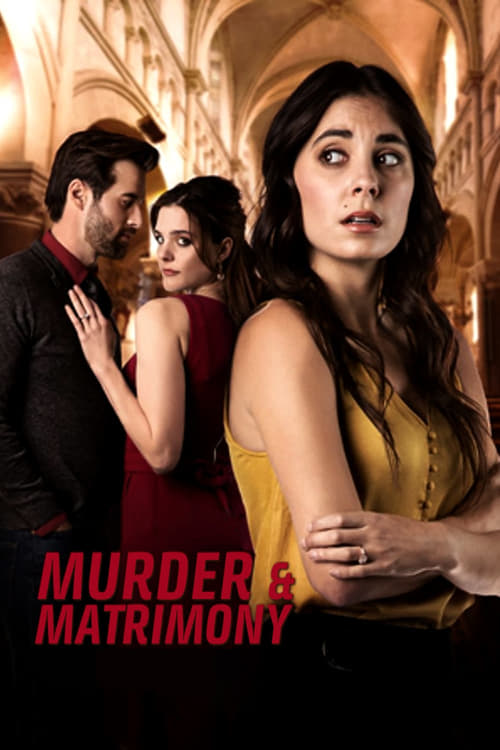
Who is the main character in Murder & Matrimony and what motivates their actions throughout the film?
How does Claire's relationship with her best friend, Sarah, evolve throughout the film?
What significant clues does Claire discover that lead her closer to the truth?
What is the significance of the wedding venue in the story?
Should I watch it?
Ask Your Own Question

What is the plot?
Sorry, we aren't able to watch and write up a full detailed plot yet. Check back in a few days.
More Movies Like This
Browse All Movies →

What is the ending?
In the ending of "Murder & Matrimony," the protagonist, a determined woman named Claire, uncovers the truth behind a series of murders linked to her fiancé, revealing his dark past. In a tense confrontation, she confronts him, leading to a dramatic climax where she must choose between love and justice. Ultimately, Claire decides to expose the truth, leading to her fiancé's arrest. The film concludes with Claire finding strength in her decision, moving forward with her life, and embracing her independence.
As the film approaches its climax, the tension escalates. Claire, having pieced together the clues surrounding the murders, finds herself in a dimly lit room filled with shadows, the air thick with suspense. She confronts her fiancé, Mark, who stands with a mix of anger and desperation. The room is charged with emotion as Claire's heart races; she feels betrayed yet resolute.
"Why didn't you tell me?" Claire demands, her voice trembling but firm. Mark's expression shifts from defiance to vulnerability as he tries to justify his actions, revealing snippets of his troubled past. He speaks of a life filled with regret, but Claire's eyes harden. She realizes that the man she thought she knew is a stranger, and the love she felt is now tainted by deception.
In a pivotal moment, Claire pulls out a recording device, revealing that she has documented their conversation. Mark's face pales as he realizes the implications of her actions. The tension in the room thickens, and Claire's internal struggle is palpable; she grapples with the love she once had for him and the moral obligation to seek justice for the victims.
As the confrontation escalates, Mark attempts to manipulate Claire, pleading for her to stand by him. "We can start over," he insists, desperation creeping into his voice. But Claire, fueled by a newfound strength, shakes her head. "I can't be with someone who hides the truth," she replies, her voice steady despite the turmoil within.
The scene shifts as Claire makes the decision to call the police, her hands trembling as she dials. The sound of sirens fills the air, a stark contrast to the silence that had enveloped them moments before. Mark's expression shifts from anger to panic as he realizes he is cornered. The police arrive, and Claire watches as they take Mark into custody, her heart heavy yet relieved.
In the aftermath, Claire stands outside the building, the weight of her decision settling in. She feels a mix of sorrow and empowerment, knowing she has chosen justice over love. The camera captures her face, a blend of determination and sadness, as she takes a deep breath, ready to embrace her future.
The film concludes with Claire walking away from the scene, her silhouette framed against the setting sun. She reflects on her journey, the trials she faced, and the strength she discovered within herself. The final shot lingers on her face, a symbol of resilience and independence, as she steps into a new chapter of her life, free from the shadows of her past.
In the end, Claire emerges as a stronger individual, having chosen to prioritize her values over a toxic relationship. Mark, on the other hand, faces the consequences of his actions, arrested and taken away, a stark reminder of the darkness that can lurk beneath the surface of seemingly perfect lives. The film closes on a note of hope, emphasizing the importance of truth and self-empowerment in the face of adversity.
Is there a post-credit scene?
In the movie "Murder & Matrimony," there is indeed a post-credit scene that adds an intriguing twist to the story. After the credits roll, the screen fades back in to reveal a dimly lit room where a character, previously thought to be sidelined in the main narrative, is seen poring over a series of documents and photographs. The atmosphere is tense, underscored by a haunting score that hints at unresolved mysteries.
As the camera zooms in, we see the character's face, a mix of determination and anxiety, as they piece together clues that suggest a deeper conspiracy linked to the events of the film. The character mutters to themselves, revealing their internal struggle and obsession with uncovering the truth. Just as they uncover a crucial piece of evidence, the scene cuts to black, leaving the audience with a sense of suspense and the implication that the story is far from over.
This post-credit scene not only serves to heighten the intrigue surrounding the film's plot but also hints at potential future developments, inviting viewers to ponder the implications of what they have just witnessed.
What role does the character of Detective Harris play in the investigation?
Detective Harris serves as the lead investigator in the murder case surrounding Claire's fiancé. He is portrayed as a no-nonsense detective who initially appears skeptical of Claire's involvement in the case. However, as the story unfolds, he becomes an ally to Claire, helping her piece together clues while grappling with his own feelings of attraction towards her.
Who is the main character in Murder & Matrimony and what motivates their actions throughout the film?
The main character in Murder & Matrimony is a woman named Claire, who is deeply motivated by her desire to uncover the truth behind her fiancé's mysterious death. As she navigates through the complexities of love and betrayal, her determination to seek justice drives her actions, leading her to confront various suspects and unravel hidden secrets.
How does Claire's relationship with her best friend, Sarah, evolve throughout the film?
Claire's relationship with her best friend Sarah is initially supportive, as Sarah encourages Claire to move on after her fiancé's death. However, as Claire delves deeper into the investigation, tensions arise when Sarah's loyalty is questioned. The emotional strain leads to confrontations that test their friendship, revealing underlying jealousy and secrets that complicate their bond.
What significant clues does Claire discover that lead her closer to the truth?
Throughout the film, Claire uncovers several significant clues, including a hidden diary belonging to her fiancé that reveals his fears and suspicions about people in his life. Additionally, she finds a series of cryptic messages on his phone that point to a secret relationship, which ultimately leads her to confront key suspects and piece together the events leading up to his death.
What is the significance of the wedding venue in the story?
The wedding venue plays a crucial role in the narrative, symbolizing both hope and despair for Claire. Initially, it represents her dreams of a future with her fiancé, but as the investigation unfolds, it becomes a site of confrontation and revelation. The venue's picturesque setting contrasts sharply with the dark secrets that emerge, highlighting the film's themes of love intertwined with betrayal.
Is this family friendly?
"Murder & Matrimony," produced in 2021, is a film that intertwines themes of crime and relationships, which may not be suitable for younger audiences or sensitive viewers. Here are some potentially objectionable or upsetting aspects:
-
Murder and Crime Themes: The central plot revolves around a murder investigation, which may include scenes depicting violence or the aftermath of a crime.
-
Emotional Turmoil: Characters experience significant emotional distress, including grief, betrayal, and anxiety, which could be intense for younger viewers.
-
Romantic Tension: The film explores complex romantic relationships, which may include themes of infidelity or manipulation that could be inappropriate for children.
-
Suspenseful and Tense Scenes: There are moments of high tension and suspense that could be frightening or unsettling, particularly for sensitive viewers.
-
Adult Language and Situations: The dialogue may include adult language or situations that are not suitable for a family-friendly audience.
Overall, while the film may have engaging storytelling and character development, its themes and content may not be appropriate for children or those who are sensitive to such topics.







