



Popular
What motivates Dante to confront his past in the film?
How does the character of Lilith influence Dante's journey?
What role does the setting play in Dante's emotional state throughout the film?
How does Dante's relationship with his mentor shape his character development?
What is the significance of the recurring motif of shadows in Dante's journey?
Should I watch it?
Ask Your Own Question

What is the plot?
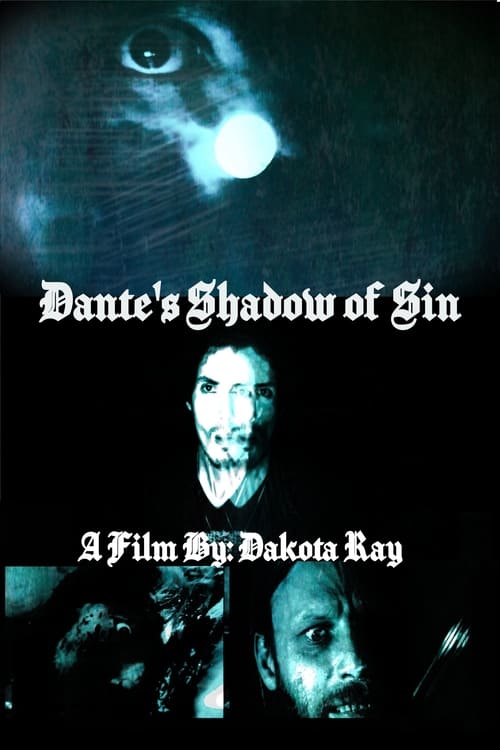
Dante wakes in blue moonlight already covered in guilt, already doing what he does best: hiding the evidence. He stands over a fresh grave on the grounds of Boleskin House and calmly buries a severed head, the camera making the act feel less like panic than ritual. The head is not just a body part but a symbol of his corruption, the final ugly remnant of a killing he has not yet emotionally survived. In that opening stretch, the film makes its first promise clear: this is a story about men who have gone so far into violence that even their remorse has curdled into habit.
Then the package arrives.
It is an absurdly small thing to carry so much menace, but inside is a creepy wooden head and a note from Mahoganny, the friend Dante has not seen in two years. The note tells Dante that Mahoganny's father has died, that Mahoganny has inherited money and property, and that he wants Dante to come to the house so they can reconnect. The invitation is framed as a reunion, but the tone is too cheerful, too deliberate, and too loaded with memory to feel safe. Dante reads it with the expression of a man who knows he is being pulled back toward a crime scene. He has buried a victim on that land before. He knows the place. He knows what is still under the dirt. Still, the note lands like fate, and the house begins to call him home.
The wooden head soon becomes more than a prop. When Dante sits down and starts drinking, the doll comes alive as Mogwai, Dante's "spiritual advisor." It is one of the film's strangest and most telling images: a conscience with a face, a private demon given a voice. Mogwai does not comfort Dante so much as mock, guide, and expose him. In its uncanny presence, the movie slips between grim realism and delirious hallucination, making it feel as though Dante's own mind is staging the night against him. He is not simply returning to Boleskin House. He is being dragged there by the part of himself that will not let the murder stay buried.
Mahoganny's arrival turns the film from haunted intro into a live wire. He is the man who inherited the house, the fortune, and the right to throw the place open for one long, poisonous party. He is also, beneath the swagger, just as rotten as Dante. From the start, the reunion is not warm. It is theatrical. Two damaged men circling one another with drinks in hand, each pretending the past is just a story they can laugh about. Mahoganny brings the promise of indulgence: alcohol, absinthe, cocaine, sex, and the kind of self-destruction that passes for celebration when shame has eaten away every normal feeling. Dante accepts because he is weak, curious, and still hoping the night can be used to end a burden that has been eating at him for years.
Once they reach Boleskin House, the film settles into a sickly, feverish rhythm. The rooms feel stale with old sins. The walls seem to remember what happened there. Every laugh sounds rehearsed, every toast sounds like a dare. The two men drink harder, smoke more, and speak in half-taunts that gradually reveal the shape of their real relationship. They are not merely estranged friends. They are co-conspirators in a former atrocity, men whose bond has been poisoned by a murder they were both involved in and by the lie or betrayal that followed it. Dante has come back because he wants to confront his past. Mahoganny has brought him there because he knows that past can be weaponized.
The house itself feels like a trap built out of inheritance and rot. Mahoganny's grandmother is there too, wheelchair-bound and pushed to the margins of the estate, a frail, decaying presence that underscores the family's moral collapse. In some of the film's uglier corners, there is also a sex slave in the house, another reminder that exploitation is not an exception here but the system. Mahoganny moves through all of it with contempt and entitlement. He despises the weakness around him, even as he indulges his own appetite without shame. The house becomes a kind of private kingdom of corruption, where privilege and degradation sit at the same table.
As the night deepens, the old murder stops being an abstract memory and starts to press through the present in concrete, stomach-turning ways. Dante's secret is the central horror: years earlier, he murdered a young woman, described in some accounts as a prostitute, and buried her body on the property. That act is the reason Boleskin House matters so much. It is not just where the men once partied. It is where Dante hid the evidence of his crime. The ground itself is contaminated. Every step around the estate threatens to uncover what has been kept down there in the dark.
The film sharpens that dread with flashbacks, hallucinations, and ugly reminders. Dante is haunted by what he did, but not in a noble, redemptive way. He is haunted like a man whose nerves have been scraped raw and left exposed. He keeps circling the same truth: he wants to kill Mahoganny, erase the one witness or accomplice who can still tie him to the past, and finally put the whole nightmare to rest. But the situation is symmetrical. Mahoganny is secretly planning the same thing. Neither man has come for reconciliation. Each has come to finish what the other began.
That symmetry becomes brutally clear when the two sit down and watch a DVD showing the slow torture of a victim from years earlier. The film within the film is one of the biggest revelations in the story. It confirms that the shared past is not just about one death, but about a whole chain of sadistic violence. The tape acts like a confession that no one wants to speak aloud. It turns memory into evidence and forces the men to watch what they have spent years trying to normalize. The room around them seems to shrink under the weight of it. Their past is no longer buried in rumor or guilt. It is playing back in front of them, and it is far worse than either would like to admit.
The tape also exposes the emotional architecture of their relationship. Dante and Mahoganny are not only enemies. They are mirrors. Each sees in the other the same appetite, the same cruelty, the same willingness to exploit and destroy. Their conversation begins to crack open under the pressure. Accusations surface. Smirks vanish. Threats get sharper. The language of friendship collapses into the language of survival. At one point the dynamic feels almost absurdly intimate, as if the house itself is forcing them to admit that they have always been moving toward this night.
Drug use keeps everything unstable. Absinthe, cocaine, alcohol, and whatever else can be taken to blur conscience all flow through the evening. The men lose focus, then regain it only to become more dangerous. Sex and intoxication are not relief here; they are accelerants. The film uses them to keep the viewer off balance, making the house feel less like a setting and more like a pressure chamber where violence is bubbling up under every surface. Mogwai's commentary adds another layer of unease, as though Dante's own psyche is trying to narrate its way out of collapse.
Mahoganny's inheritance, which initially seems like an excuse for a reunion, turns out to be a kind of loaded gun. His father's death has given him money and the house, but not peace, maturity, or responsibility. Instead, he uses the inheritance to feed the same appetites that have always defined him. The property becomes a stage on which he can indulge himself while also luring Dante into a deadly confrontation. What he presents as nostalgia is really strategy. What he calls a party is really a murder plot.
As the night grinds on, the confrontations become more direct. Dante and Mahoganny trade glances that are almost challenges. Their dialogue carries the weight of unspoken history. Each man tries to keep the upper hand, but the tension is too dense to hide. Every drink feels like a countdown. Every room in the house feels like a possible execution site. The buried corpse on the grounds hovers over them like a secret waiting to be dragged into daylight. Dante knows the land holds the evidence of his first murder. Mahoganny knows that Dante knows. That mutual awareness is what makes the house feel impossible to escape.
The grandmother's presence further darkens the mood, because she stands as a living reminder that the house is not merely a hideout for vice; it is a family graveyard of sorts, a place where weakness is preserved and contempt passed along like an heirloom. Mahoganny's disdain for her and for the general condition of the house underscores how little empathy remains in him. He is not sentimental about bloodlines or legacy. He is only interested in what can be consumed, used, or destroyed.
Eventually, the night reaches its breaking point. The rivalry that has been simmering from the beginning finally surfaces as open murderous intent. Dante moves through the house with the awareness of a hunted man, but he is not helpless. He is still determined to eliminate Mahoganny before Mahoganny can turn the night against him. Mahoganny, for his part, has been waiting to strike as well. Their confrontation is the inevitable collision of two predatory wills trapped in the same decaying estate. The film's suspense comes not from whether betrayal will happen, but from when and in what ugly form.
The climax is violent and suffocating, the house becoming a battlefield for accumulated guilt. The exact mechanics of every blow are less important than the emotional logic that drives them: these two men are trying to erase each other because each is the living proof of the other's sins. The hidden corpse, the torture tape, the inherited house, the drugs, the old resentments, and the buried lies all converge at once. By this point, there is no path back to innocence, no possibility of a simple escape. Their final fight is not just about dominance. It is about who gets to survive with the story of what happened.
The ending, in the available plot descriptions, is deliberately bleak and not cleanly spelled out shot for shot, but the outcome is unmistakable: at least one of the two men does not leave the house alive, and the showdown serves as the final reckoning for everything they have tried to conceal. The film refuses to offer redemption. Instead, it lets the house swallow their ambitions and expose the rot beneath them. The buried past does not stay buried. The inheritance does not heal anything. The reunion does not restore friendship. It only accelerates a collapse that has been waiting for years.
The final scenes carry the weight of that failure. Boleskin House, once a place of partying and memory, becomes a tomb for the lies that have sustained these men. The atmosphere is not triumphant but suffocating, as though the estate itself has absorbed too much violence to remain neutral. The last image leaves the sense that Dante's attempt to "put those events to rest" has only reopened them, and that Mahoganny's attempt to turn inheritance into indulgence has ended in self-destruction. The hidden body, the severed head, the tape, the drugs, the grandmother, the haunted head Mogwai--all of it converges into a final vision of men consumed by what they do to one another.
By the end, no one gets out clean. Dante's sin remains the film's original wound: he killed a young woman and buried her on the property. Mahoganny's own corruption, whether through direct violence or through the deliberate orchestration of the reunion, makes him just as guilty in spirit if not in exactly the same way. The house becomes the place where all of it is finally forced into the open, not through confession, but through carnage. The story closes as a grim portrait of two nihilists trapped inside the consequences of their own appetite, with the estate standing over them like a monument to everything rotten that money, power, drugs, and guilt can build when left to fester.








What is the ending?
In the ending of "Dante's Shadow of Sin," Dante confronts the embodiment of his guilt and sins, leading to a climactic battle that tests his resolve. Ultimately, he finds redemption through acceptance and forgiveness, allowing him to move forward. The fates of the main characters are intertwined with Dante's journey, culminating in a resolution that reflects their struggles and growth.
As the final act unfolds, the scene opens in a dimly lit, abandoned church, where Dante stands alone, the weight of his past heavy on his shoulders. Shadows flicker across the walls, echoing the turmoil within him. The air is thick with tension as he prepares to face the manifestation of his guilt, a dark figure that looms ominously in the corner, representing all the sins he has tried to escape.
Dante's heart races as he steps forward, his breath shallow. The figure taunts him, whispering the failures and regrets that haunt him. Each word strikes like a dagger, and Dante's internal struggle is palpable. He grapples with feelings of shame and anger, but deep down, he knows that this confrontation is necessary for his redemption.
In a sudden burst of courage, Dante shouts back at the figure, declaring that he will no longer be defined by his past. The church begins to tremble as the confrontation escalates into a physical battle. Dante fights not just against the figure but against the very essence of his own despair. The struggle is fierce, with flashes of light and darkness clashing around them, symbolizing the battle between hope and hopelessness.
As the fight reaches its peak, Dante recalls the moments of love and kindness he experienced, memories of his family and friends who believed in him. These thoughts fuel his strength, and he begins to overpower the dark figure. With one final, desperate push, he confronts the embodiment of his guilt, embracing it rather than fighting it. In this moment of acceptance, the figure dissipates into a cloud of smoke, leaving Dante breathless but liberated.
The scene shifts to a serene landscape outside the church, where the sun begins to rise, casting a warm glow over the world. Dante stands at the threshold, a sense of peace washing over him. He realizes that he has the power to forgive himself and move forward. The burden of his past no longer weighs him down; instead, it has transformed into a source of strength.
In the final moments, we see the fates of the other main characters. Dante's estranged sister, who had been a source of conflict throughout the film, arrives at the church just as he steps outside. Their eyes meet, and there is a moment of understanding and reconciliation. She approaches him cautiously, and they embrace, signaling a new beginning for their relationship.
Meanwhile, the antagonist, who had manipulated Dante's fears and insecurities, is left behind in the shadows of the church, defeated and powerless. The darkness that once thrived on Dante's guilt is now extinguished, symbolizing the triumph of light over darkness.
As the film concludes, Dante walks away from the church, hand in hand with his sister, ready to face the future together. The camera pans up to the sky, where the sun shines brightly, representing hope and the possibility of redemption for all who seek it. The screen fades to black, leaving the audience with a sense of closure and the message that it is never too late to confront one's demons and find peace.
Is there a post-credit scene?
In "Dante's Shadow of Sin," there is indeed a post-credit scene that adds an intriguing layer to the film's narrative. As the credits roll, the screen fades to black before illuminating a dimly lit room filled with shadows. The camera slowly pans across the space, revealing a series of photographs pinned to a corkboard, each depicting key moments from the film, including Dante's struggles and confrontations.
In the center of the board, a new photograph catches the viewer's eye: it shows a mysterious figure standing in the rain, their face obscured by a hood. The atmosphere is thick with tension, and the sound of thunder rumbles in the background, enhancing the sense of foreboding. The figure turns slightly, revealing a glint of something metallic in their hand--a weapon, perhaps, or a symbol of power.
As the camera zooms in on the photograph, a voiceover of Dante echoes, filled with a mix of determination and uncertainty. He reflects on the choices he made throughout the film, hinting at unresolved conflicts and the potential for new challenges ahead. The scene leaves viewers with a sense of anticipation, suggesting that Dante's journey is far from over and that darker forces may still be at play.
The screen then fades to black once more, leaving the audience with lingering questions about the identity of the mysterious figure and what it means for Dante's future, effectively setting the stage for potential sequels or further exploration of the story.
What motivates Dante to confront his past in the film?
Dante is driven by a deep sense of guilt and unresolved trauma stemming from his childhood. The haunting memories of his family's tragic fate push him to seek redemption and closure, compelling him to confront the dark forces that have shaped his life.
How does the character of Lilith influence Dante's journey?
Lilith serves as both a guide and a temptress in Dante's journey. Her enigmatic presence challenges Dante's perceptions of good and evil, often leading him to question his own moral compass. She embodies the seductive allure of sin, drawing Dante deeper into a world of temptation while also providing crucial insights that help him navigate his internal struggles.
What role does the setting play in Dante's emotional state throughout the film?
The film's setting, a decaying urban landscape filled with shadows and remnants of a once-vibrant community, mirrors Dante's internal turmoil. As he traverses through dark alleys and abandoned buildings, the oppressive atmosphere amplifies his feelings of isolation and despair, reflecting his battle against the demons of his past.
How does Dante's relationship with his mentor shape his character development?
Dante's mentor serves as a father figure, providing wisdom and guidance that contrasts with Dante's chaotic life. Their relationship is fraught with tension, as the mentor's attempts to steer Dante away from darkness often clash with Dante's impulsive nature. This dynamic forces Dante to confront his own weaknesses and ultimately leads to significant growth as he learns to balance his instincts with the lessons imparted by his mentor.
What is the significance of the recurring motif of shadows in Dante's journey?
The motif of shadows represents the lingering effects of Dante's past and the sins he grapples with. Shadows appear in various forms throughout the film, symbolizing the hidden fears and regrets that Dante must face. As he confronts these shadows, he begins to understand that they are not just remnants of his past but also integral to his path toward redemption.
Is this family friendly?
"Dante's Shadow of Sin," produced in 2021, is not considered family-friendly due to its mature themes and content. The film explores complex emotional and psychological struggles, which may be distressing for children or sensitive viewers.
Potentially objectionable or upsetting aspects include:
- Violence: The film contains scenes of intense violence that may be graphic and unsettling.
- Dark Themes: It delves into themes of guilt, betrayal, and existential despair, which could be heavy for younger audiences.
- Substance Abuse: There are depictions of drug use and addiction that may be inappropriate for children.
- Emotional Turmoil: Characters experience significant emotional distress, including depression and anxiety, which could be triggering for some viewers.
- Mature Language: The dialogue includes strong language that may not be suitable for younger audiences.
Overall, the film's exploration of sin and redemption is layered with complex emotional narratives that may not be appropriate for all viewers.