
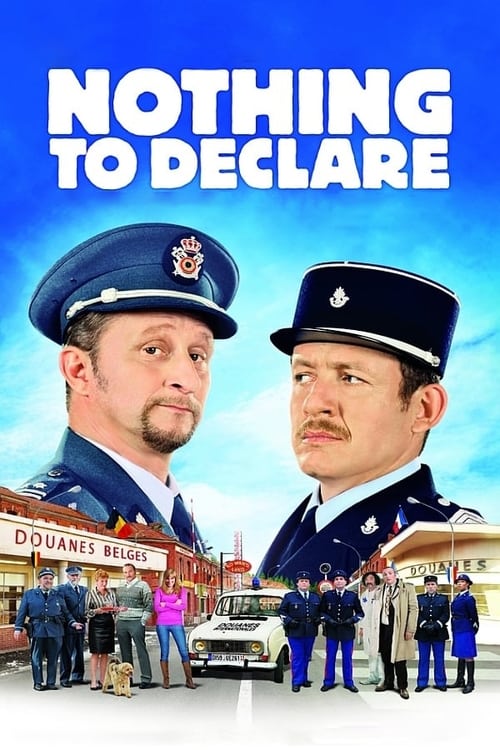




























Popular
What is the main conflict between the two main characters in Nothing to Declare?
How does the relationship between Ruben and Mathias evolve throughout the film?
What role does the setting play in the story of Nothing to Declare?
What is the significance of the character of the female customs officer, and how does she impact the story?
How do Ruben's personal beliefs affect his actions throughout the film?
Should I watch it?
Ask Your Own Question

What is the plot?
Sorry, we aren't able to watch and write up a full detailed plot yet. Check back in a few days.





What is the ending?
In the movie "Nothing to Declare," the ending sees the main characters, two customs officers, come to terms with their differences and the consequences of their actions. The film concludes with a sense of resolution as they find common ground despite their initial animosity.
As the final scenes unfold, we see the two customs officers, the Frenchman, and the Belgian, who have been at odds throughout the film, facing a critical moment. The tension between them has been palpable, fueled by their nationalistic pride and personal grievances. However, as they confront a significant threat, they realize that their cooperation is essential for overcoming the challenges they face.
In a climactic moment, they work together to thwart a smuggling operation, showcasing their growth and newfound respect for one another. The emotional stakes are high as they navigate the chaos, and their teamwork highlights the importance of unity over division.
As the dust settles, the characters reflect on their journey. The Frenchman, who initially harbored resentment, begins to understand the value of collaboration. The Belgian, who has been steadfast in his beliefs, learns to appreciate the nuances of their relationship. Their fates intertwine as they emerge from the ordeal not just as colleagues but as friends, having dismantled the barriers that once separated them.
The film closes on a hopeful note, emphasizing the themes of reconciliation and the power of understanding across cultural divides. The characters leave behind their animosity, stepping into a future where they can coexist peacefully, symbolizing a broader message about overcoming prejudice and embracing diversity.
In summary, the ending of "Nothing to Declare" encapsulates the journey of its characters, illustrating their transformation and the importance of unity in the face of adversity.
Is there a post-credit scene?
In the movie "Nothing to Declare," produced in 2010, there is no post-credit scene. The film concludes without any additional scenes or content after the credits roll. The story wraps up with the main characters having resolved their conflicts, and the narrative reaches a satisfying conclusion without the need for further elaboration or a teaser for future events.
What is the main conflict between the two main characters in Nothing to Declare?
The main conflict in 'Nothing to Declare' revolves around the intense rivalry and animosity between two customs officers, Ruben and Mathias. Ruben, a staunch nationalist, is deeply resentful of Mathias, who represents the new European Union policies that threaten his traditional way of life. Their opposing views on border control and immigration create a palpable tension that drives much of the film's narrative.
How does the relationship between Ruben and Mathias evolve throughout the film?
Initially, Ruben and Mathias are bitter enemies, with Ruben's hostility towards Mathias stemming from his belief that Mathias embodies everything he despises about the changing political landscape. However, as the story progresses, they are forced to work together during a crisis, leading to moments of vulnerability and understanding. Their relationship evolves from one of hatred to a begrudging respect, showcasing the complexities of human connection amidst conflict.
What role does the setting play in the story of Nothing to Declare?
The setting of a border crossing between Belgium and France serves as a critical backdrop for the film. It symbolizes the tension between old and new ideologies, as well as the personal struggles of the characters. The physical space of the customs office, with its stark, bureaucratic environment, amplifies the characters' emotional states and highlights the absurdity of their rivalry in the face of larger societal changes.
What is the significance of the character of the female customs officer, and how does she impact the story?
The female customs officer, who works alongside Ruben and Mathias, serves as a catalyst for change in their dynamic. Her presence introduces a more empathetic perspective, challenging the rigid views of both men. She becomes a source of tension and attraction, ultimately influencing their actions and decisions, and highlighting the theme of personal connection amidst professional rivalry.
How do Ruben's personal beliefs affect his actions throughout the film?
Ruben's personal beliefs, rooted in nationalism and a fear of change, heavily influence his actions and decisions. His disdain for Mathias and the European Union leads him to act irrationally at times, often putting himself and others in danger. His internal struggle with these beliefs is a driving force in the narrative, as he grapples with the implications of his ideology on his relationships and his role as a customs officer.
Is this family friendly?
"Nothing to Declare," produced in 2010, is a comedy that revolves around the interactions between two customs officers from opposing sides of the Belgian border during the time of the European Union's border changes. While the film is primarily light-hearted and comedic, there are a few elements that may be considered objectionable or upsetting for children or sensitive viewers.
-
Language: The film contains some instances of strong language, which may not be suitable for younger audiences.
-
Violence: There are comedic scenes that involve slapstick violence, such as physical altercations between characters. While these are played for laughs, they may still be unsettling for some viewers.
-
Drug References: The plot involves customs officers dealing with smuggling, which includes references to drugs and illegal activities. These themes may be inappropriate for children.
-
Romantic Situations: There are romantic subplots that include suggestive humor and situations that may not be suitable for younger viewers.
-
Cultural Stereotypes: The film plays on cultural stereotypes for comedic effect, which might be viewed as insensitive or offensive by some audiences.
Overall, while "Nothing to Declare" is a comedy, parents may want to consider these aspects when deciding if it is appropriate for their children or sensitive viewers.







