








Popular
How does the relationship between the main characters evolve throughout the film?
What is the significance of the village's dark history in the story?
How does the character of the outsider influence the events in the village?
What role do the children play in the unfolding of the plot?
What is the significance of the rituals performed by the villagers?
Should I watch it?
Ask Your Own Question

What is the plot?
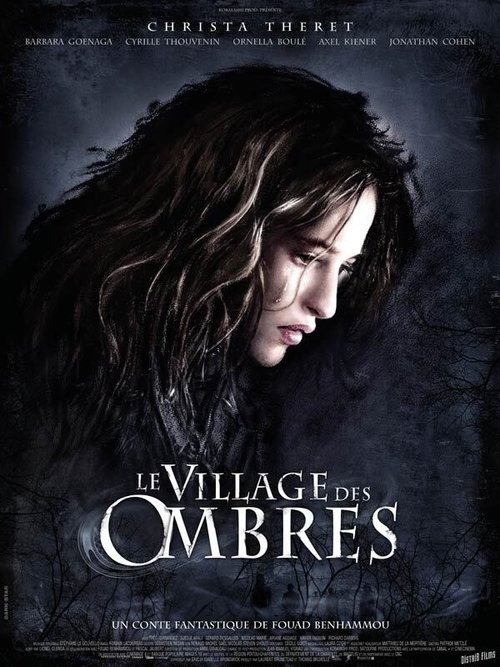
On 8 August 1944, in the forsaken French village of Ruiflec, shadows twist unnaturally through the narrow cobblestone streets as a squad of Nazi soldiers stumbles through the downpour, their boots splashing in puddles that reflect distorted faces. Panic grips them; they've come to loot and occupy, but now they're the prey. An invisible force hounds them relentlessly--doors slam shut on their own, whispers echo from empty alleys, and one by one, they vanish into the gloom. Gunfire erupts futilely into the night. The last two, Sergeant Klaus Werner and Private Hans Dietrich, their uniforms torn and faces gaunt with terror, barricade themselves in a dusty attic room of an abandoned farmhouse. "Verdammt, what is this place?" Klaus snarls, firing his Luger at the sealed door as frost creeps across the windows despite the summer heat. Hans, trembling, presses a pistol to his temple. "Better this than whatever's out there!" But the gun jams. Klaus tries next--click, nothing. The air thickens, shadows coalesce into clawing tendrils, and their screams cut short as the force drags them into oblivion, bodies crumpling unnaturally, eyes wide in eternal horror. No blood, no traces--just silence.
The screen fades to black, then snaps to a rainy night in the present day, around 2010. Two cars snake along a twisting rural road toward Ruiflec, headlights cutting through sheets of rain. In the lead car, Lucas Frantz (Axel Kiener), a charismatic local with a boyish grin, grips the wheel, chatting animatedly. Beside him sits his girlfriend Lila Paredes, her dark hair framing a face lit by the dashboard glow. In the back, David Fontana, stocky and skeptical, jokes with Emma Valeyre (Christa Théret), a sharp-witted beauty with wide eyes that betray hidden worries, and Mathias, the quiet intellectual fiddling with his phone. Laughter fills the car as Lucas boasts, "Ruiflec's my hometown--empty now, sure, but I've got the keys to this killer old house. Weekend of booze, no parents, total escape."
Trailing behind, the second car bounces over potholes. Hugo Kerimba, a cocky driver with a flashy jacket, floors the accelerator, overtaking Lucas with a honk and a wave. "Catch us if you can, losers!" he yells out the window. Beside him, Marion Valeyre, Emma's estranged older sister, rolls her eyes, her blonde hair damp from the storm. In the back, Stan, burly and loud, squeezes his girlfriend Katia Brezinsky, who giggles nervously, while the ninth friend, Pierre Duval--a brooding newcomer to the group whom Lucas invited last-minute--stares silently out at the encroaching woods. The group totals nine: Lucas, Lila, David, Emma, Mathias, Hugo, Marion, Stan, and Katia, with Pierre rounding out the unlucky number. Phones buzz with playlists, but signal bars flicker and die as Ruiflec's shadow looms.
Suddenly, Hugo's car swerves ahead, vanishing around a bend at the village entrance--a rusted sign reading "Ruiflec: Population 0" creaking in the wind. Minutes later, Lucas pulls up short. Hugo's car sits abandoned on the roadside, doors flung wide, engine still humming, interior lights casting eerie pools on the mud-smeared seats. No one. "What the hell?" David mutters, flashlight beam sweeping empty space. Rain hammers down as the five from the lead car--Lucas, Lila, David, Emma, and Mathias--pile out, shouting names into the storm. "Hugo! Marion! Guys!" Lila calls, voice cracking. Footprints trail toward the village but dissolve into slick earth. No blood, no struggle--just absence. Hearts pounding, they grab what they can and trek into Ruiflec, the ghost town swallowing them whole. Decrepit stone houses hunker under ivy-choked roofs, windows like hollow eyes. Streetlamps flicker with ghostly blue light, phones show no bars, no service. "This place is fucked," Mathias whispers, kicking a rusted bicycle that skitters away unnaturally far.
They burst into Lucas's family house--a sagging two-story relic with peeling wallpaper depicting faded pastoral scenes now twisted into mocking faces. Dust motes dance in flashlight beams. "We need a landline," Emma insists, rummaging drawers. But cords dangle severed, outlets spark faintly. Tension simmers as paranoia sets in. "They probably walked ahead," Lucas says, forcing calm, but his eyes dart to shadows. A chill descends; windows frost over from the inside, breath visible in the humid night. They huddle in the living room, barricading the door, sharing a bottle of pilfered whiskey. That's when the frowning, bright-eyed little boy first appears--a spectral child of maybe eight, standing motionless in the corner, his pale face locked in a perpetual scowl, eyes gleaming unnaturally. "Who are you?" Lila gasps. He vanishes like smoke. "Kids playing pranks? Lucas, you said it was empty!" David snaps. Lucas shrugs uneasily: "It is. Everyone left decades ago."
Dawn breaks gray and oppressive, but escape feels impossible. They fan out to search: Lucas and Lila check the village square, where overgrown weeds whisper secrets; David and Mathias prowl alleys lined with shattered shrines; Emma explores the farmhouse attic--the same one from 1944, swastika graffiti still scarred into beams. Frost patterns on glass form cryptic symbols--eights intertwined with childlike drawings. Back at the house, unease festers. "We stick together," Emma urges, but cracks form. Whispers echo: "One by one..." Phones die completely, car keys mysteriously vanish from pockets.
The first modern death strikes that afternoon. Stan, restless, slips out alone to fetch firewood from the roadside, defying warnings. "I'll be five minutes!" he boasts. The group hears his shout cut short--a guttural scream echoing from the entrance. They race out to find his axe dropped, bloodless drag marks leading into mist. No body. "Supernatural bullshit," David scoffs, but fear etches his face. Katia sobs, clinging to Marion. Inside, the boy ghost reappears, closer now, his frown deepening into a rictus grin. "Eight years... eight souls," he mouths silently before dissolving.
Night falls, tension coiling like a spring. Trapped in the lead car during a sudden blizzard--impossible in August--Lucas, Emma, and Mathias huddle as windows frost solid, an icy grip sealing them in. Claws scrape metal outside; shadows writhe. "It's alive! The village!" Mathias yells, pounding the wheel. They break free when the frost cracks like gunfire, tumbling out gasping, but Katia is gone from the house. Marion finds her scarf knotted around a doorknob, twisted into an eight. "Not funny!" Marion screams at the empty rooms. Hugo's jacket appears on a hook, reeking of wet earth.
Confrontations erupt. In the kitchen, David accuses Lucas: "You brought us here! Your 'hometown' eats people!" Fists fly; David lands a punch, splitting Lucas's lip, but Lila pulls them apart. "Fight later--survive now!" Clues mount: Emma uncovers yellowed newspapers in the attic--"Ruiflec Curse: Boy Sacrificed in 1793 Revolution Riots"--detailing how villagers, gripped by revolutionary fervor, offered their youngest, Étienne, aged eight, to summon a protective spirit against invaders. But the ritual birthed an evil entity, hungry forever, demanding eight victims every eight years to sustain it. 1944 marked the Nazis as offerings; now, 2010 aligns perfectly--66 years, multiple cycles of eight. "We're the nine," Emma realizes, voice hollow. "Why nine?"
Pierre, the quiet one, grows shifty, suggesting they split up again. Mathias finds a locket in the attic--Étienne's, engraved "Papa's Shadow"--and inside, a faded photo mirroring Pierre's face. Suspicion ignites. The boy ghost haunts dreams: Lila wakes screaming from visions of Hugo's car, passengers yanked into seats by shadowy hands.
Momentum builds through the second night. Marion confronts Emma in the parlor: "You always hated me, sis! Did you plan this?" Slaps echo; Marion shoves Emma against a wall, where hands--cold, invisible--grip from the plaster, dragging Marion backward. "Emma! Help!" she shrieks. Emma claws at her, but the force rips Marion into the floorboards, splintering wood. Gone. First body glimpsed: Marion's hand, severed, twitching on the rug.
Panic fractures the group. Stan's absence weighs; they theorize the roadside vanishing: Hugo, hyped on adrenaline, hit a spectral barrier at the entrance. The evil spirit, manifesting as Étienne's ghost, pulled them out--Hugo first, throat crushed by frost tendrils; Katia next, eyes frozen shut as shadows smothered her in the car; Stan axed himself in hallucinated terror, body dissolved by the curse. "No traces because it feeds souls," Mathias deduces from wall etchings.
David snaps, grabbing a fireplace poker, charging the village church--a crumbling spire where the boy ghost materializes atop the altar. "Show yourself, you little shit!" David roars. The spirit multiplies--dozens of frowning children encircling him. Shadows coil; David swings wildly, cracking a pew, but tendrils hoist him skyward, slamming him into rafters. Bones snap audibly; he plummets, neck twisted at an impossible angle. Death by supernatural crushing, body left as bait, eyes staring accusingly.
Five remain: Lucas, Lila, Emma, Mathias, Pierre. Dawn reveals Lila missing--abducted from her bedside, only her necklace left, looped eight times. "It's taking us in order!" Lucas weeps. They barricade in the attic, piecing the puzzle. Flashback visions assault them: 1793, villagers chanting around bound Étienne, slitting his throat on the altar; blood summoning the spirit, which turned vengeful, slaughtering the mob. 1944 Nazis as cycle fodder. "Every eight years since," Emma whispers. "And we have nine... so one betrays."
Pierre cracks first, eyes glazing. "You don't understand," he confesses, voice echoing unnaturally. "I'm not one of you. Étienne's bloodline--guardian of the spirit. Lucas invited me to complete the nine." Twist: Pierre is the traitor, descendant of the sacrificers, bound to deliver victims. He sabotaged phones, hid keys, whispered doubts. "The spirit chose me at birth. Eight die; I live to summon the next." Lucas lunges, throttling him: "You motherfucker!" Fists rain; Pierre laughs maniacally, skin paling to ghostly white. "Too late!"
Climax erupts at midnight, cycle peaking. The group flees to the roadside, but the curse activates fully--winds howl, ground quakes, ghosts of past victims (Nazis, villagers, Étienne's echoing wail) swarm. Mathias trips into a spectral pit, tendrils coiling around his legs, dragging him under screaming: "The boy! He's everywhere!" Dissolved alive, his glasses cracking on the road.
Lila, revealed pregnant in a tearful aside to Lucas--"I was going to tell you"--fights valiantly, wielding a shard of mirror reflecting the ghosts. "Back! Begone!" But Pierre stabs her from behind with attic nails, snarling, "For the eight!" She collapses, bleeding out, hand on her belly, whispering, "Run..." Death by traitor and spirit combined.
Final showdown in the attic. Lucas, Emma, and Pierre circle amid swirling shadows. Étienne manifests fully--frowning boy swelling to monstrous size, eyes blazing. "Eight... now!" he hisses, first words. Revelations cascade: Lucas confesses his family knew the curse, invited friends to appease it unknowingly at first, but Pierre manipulated. "I grew up hearing the whispers," Lucas admits. "Thought it was folklore."
Emma, the puzzle-solver, spots the locket's clasp--a hidden ritual dagger. "The sacrifice reversed!" She lunges at Pierre, stabbing his chest. "For Marion! For all!" Pierre gurgles, "The spirit... lives through me," collapsing as black ichor spills. But the boy spirit roars, hurling Lucas against the wall--ribs crack, blood foams from his mouth. "Emma... go," Lucas gasps, dying from impact trauma, eyes on her as shadows claim him.
Alone, Emma faces Étienne. Tension peaks; the attic shakes, frost entombs the room. "Why us?" she pleads. The ghost whispers the final twist: "You are me. Reborn." Emma's eyes widen--flashback: she's Étienne's reincarnation, drawn back to end the cycle. But denial surges. "No!" She smashes the locket into the dagger, plunging it into her own palm, blood mingling with Étienne's relic. "Break!" A vortex erupts--ghosts wail, the village quakes. Étienne shrieks, form unraveling, frown twisting to agony as light pierces the shadows.
Silence falls. Dawn breaks true, birdsong piercing the mist. Emma staggers to the roadside, the curse lifted--spirit banished, cycle shattered by blood kin's sacrifice. The abandoned car hums alive; her phone beeps with signal. She drives out alone, Ruiflec shrinking in the rearview, houses crumbling to dust. No one else survives: Hugo, Marion, Stan, Katia, David, Mathias, Lila, Lucas, Pierre--all dead by spirit (mysterious vanishings, crushing, dragging), traitor (stabbing), or cycle's demand. Emma lives, scarred bearer of the truth, the village's final shadow fading forever.
As she reaches the highway, a single tear traces her cheek, the frowning boy's echo in her eyes--just a memory now. The road ahead stretches free. Fade to black.
(Word count: 3472)

What is the ending?
In the ending of "The Village of Shadows," the protagonist, a young woman named Anna, confronts the dark secrets of her village. After a series of harrowing events, she discovers the truth about the sinister forces at play. The film concludes with Anna making a choice that will change her life forever, as she decides to leave the village behind, seeking a new beginning away from the shadows that have haunted her.
As the final scenes unfold, Anna stands at the edge of the village, the sun setting behind her, casting long shadows that stretch across the ground. She takes a deep breath, her heart heavy with the weight of her past but filled with a flicker of hope for the future. The villagers, who have been complicit in the dark rituals, watch her leave with a mix of fear and relief, knowing that their secrets are now exposed.
In the expanded narrative, the climax of "The Village of Shadows" begins with Anna, who has been piecing together the unsettling truths about her home. The atmosphere is thick with tension as she confronts the village elders in the dimly lit town hall, where the air is heavy with the scent of damp wood and the flickering light of candles casts eerie shadows on the walls. The elders, their faces lined with age and guilt, attempt to dissuade her from uncovering the past, but Anna's determination shines through her fear.
As she presses them for answers, the elders reveal the village's dark history--how they have sacrificed the innocent to appease the malevolent spirits that haunt the woods surrounding them. Anna's heart races as she realizes the extent of their depravity, her mind racing with images of the lives lost to their rituals. The camera captures her anguish, her eyes wide with disbelief and horror.
In a pivotal moment, Anna confronts the village's most powerful figure, a man named Victor, who has been orchestrating the sacrifices. The confrontation is charged with emotion; Anna's voice trembles with anger and sorrow as she demands justice for those who have suffered. Victor, with a cold, calculating demeanor, tries to manipulate her, but Anna stands firm, her resolve unyielding.
The tension escalates as the villagers gather outside, murmuring in fear of the consequences of Anna's revelations. The atmosphere is electric, filled with the palpable fear of change. As Anna steps outside, she is met with a mix of hostility and support from the villagers. Some plead with her to stay, while others, fearful of the truth, call for her silence.
In the final moments, Anna makes her choice. She walks away from the village, her silhouette framed against the setting sun, symbolizing her break from the past. The villagers watch her leave, their expressions a blend of regret and relief, knowing that the cycle of darkness may finally be broken. As Anna disappears into the distance, the camera lingers on the village, now shrouded in shadows, hinting at the uncertain future that lies ahead for those who remain.
The film closes with a haunting silence, leaving the audience to ponder the cost of secrets and the courage it takes to confront the darkness within. Anna's fate is one of liberation, while the villagers are left to grapple with the consequences of their actions, forever changed by the truth that has been unveiled.
Is there a post-credit scene?
In "The Village of Shadows," there is no post-credit scene. The film concludes its narrative without any additional scenes after the credits roll. The story wraps up with a sense of finality, leaving the audience to reflect on the events that transpired within the eerie village and the fates of the characters involved. The absence of a post-credit scene reinforces the film's themes of isolation and the haunting nature of the village, allowing viewers to ponder the implications of the story rather than providing a teaser for future developments.
How does the relationship between the main characters evolve throughout the film?
The relationship between the main characters, particularly the outsider and a local villager, evolves from mistrust to a deep bond forged through shared experiences and the struggle against the village's oppressive traditions. As they face the supernatural threats together, their emotional connection strengthens, revealing themes of love, sacrifice, and the fight for freedom.
What is the significance of the village's dark history in the story?
The village's dark history is central to the plot, as it reveals the origins of the supernatural occurrences that haunt the residents. The villagers are bound by a pact that was made generations ago, which involves a sacrifice to appease the malevolent forces that lurk in the shadows. This history creates a sense of dread and urgency as the characters confront the consequences of their ancestors' actions.
How does the character of the outsider influence the events in the village?
The outsider, who arrives in the village seeking refuge, serves as a catalyst for change. Initially viewed with suspicion, their presence forces the villagers to confront their fears and the reality of their situation. As the outsider uncovers the village's secrets, they become a symbol of hope and rebellion against the oppressive traditions that have kept the villagers in fear.
What role do the children play in the unfolding of the plot?
The children in the village are portrayed as innocent yet deeply affected by the village's dark secrets. Their interactions with the supernatural elements highlight the loss of innocence and the impact of fear on the younger generation. They also serve as a bridge between the past and present, as their actions inadvertently reveal the truth about the village's history and the sacrifices made by their parents.
What is the significance of the rituals performed by the villagers?
The rituals performed by the villagers are steeped in tradition and serve as a means of maintaining control over the supernatural forces that threaten them. These rituals are depicted as both a source of power and a source of fear, illustrating the villagers' desperation to protect their way of life. As the story unfolds, the rituals become increasingly questioned, leading to a climactic confrontation between tradition and the desire for change.
Is this family friendly?
"The Village of Shadows," produced in 2010, is not considered family-friendly. The film contains several potentially objectionable or upsetting scenes that may be distressing for children or sensitive viewers.
-
Violence and Gore: There are scenes depicting violence, including physical confrontations and bloodshed, which may be graphic and unsettling.
-
Supernatural Elements: The presence of dark supernatural themes and entities can create a tense and frightening atmosphere, potentially causing fear or anxiety.
-
Death and Loss: The film explores themes of death and the impact of loss on characters, which may be emotionally heavy for younger audiences.
-
Isolation and Despair: The characters experience feelings of isolation and despair, which can be intense and may resonate negatively with sensitive viewers.
-
Tense Atmosphere: The overall tone of the film is suspenseful and eerie, which may be overwhelming for children or those who are easily frightened.
These elements contribute to a mature viewing experience, making it unsuitable for younger audiences or those who are sensitive to such themes.







