







Popular
What role does the antagonist play in Kiran's journey?
What motivates the main character, Kiran, throughout the film?
How does the relationship between Kiran and his mentor evolve in the story?
How does Kiran's family background influence his decisions in the film?
What pivotal event changes the course of Kiran's life in the film?
Should I watch it?
Ask Your Own Question

What is the plot?
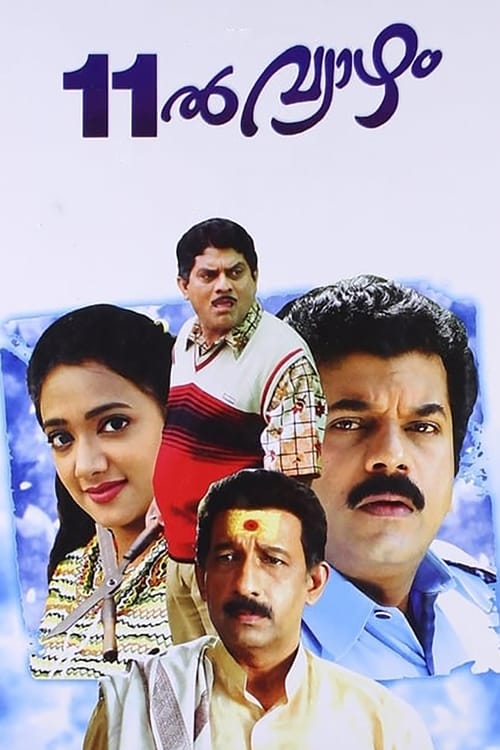
Appu begins life in Palakkad as a bearer in a five-star hotel, a man whose daily world is trays, towels, and other people's comfort, until one night he meets Chandran Pillai, a millionaire from Ooty and the owner of the Chandraprabha Group, who is staying there to meet the astrologer Kizhakkedam. The meeting looks ordinary at first, but it immediately pulls Appu into a dangerous circle of wealth, secrets, and social power. Chandran is not simply a rich guest; he is a man whose private life is already under threat, and Appu, still an employee at the bottom of the hotel hierarchy, is about to become the one person who can leverage that threat against him.
The first turn into chaos comes through Rajesh and an unnamed young woman, two scamsters who approach Chandran, get him drunk, and stage a compromising scene by placing the woman in bed with him. By morning they are no longer pretending; they blackmail him for 30 lakhs, using the threat of exposure as a weapon. In the middle of this disgrace, Appu steps in and rescues Chandran Pillai from the fiasco by allegedly burning the duo's video cassettes. The act looks heroic on the surface, but it also gives Appu access to Chandran's secret, and that knowledge changes everything. From that point on, Appu is no longer just a bearer who happened to be in the wrong place; he is a man who understands exactly how vulnerable Chandran really is.
After Chandran returns to Ooty, the people who had been chasing him turn their attention toward Appu instead, which makes Appu rush to Ooty and beg Chandran for a job. Chandran initially refuses him, but Appu does not retreat. He tries to blackmail Chandran with the secret he knows, and that pressure finally forces Chandran to give in. Chandran appoints Appu as his driver, bringing him into the millionaire's household and placing him at the center of the film's domestic drama. The shift in status is crucial: Appu moves from hotel bearer to trusted driver, and the story's tone shifts with him from roadside scandal to upper-class family conflict.
Inside Chandran Pillai's Ooty home, the atmosphere is tense from the start because Meenakshi, Chandran's daughter, hates Appu and repeatedly gets him removed from the job. Each time she succeeds, Chandran takes Appu back, which only deepens her frustration. That repeated cycle reveals that Chandran has reasons of his own for keeping Appu nearby, though the film does not yet fully explain them. The household becomes a battleground of class resentment, paternal authority, and private calculation, with Appu surviving each dismissal through his own persistence and Chandran's unexplained protection.
The real engine of the plot is set in motion when Chandran sends Nakulan with Meenakshi's horoscope to deliver it to Kizhakkedam. On the way, Nakulan stops at Kalyani's home, and because Kalyani's mother is absent, temptation overwhelms him. He sleeps with Kalyani, forgetting the horoscope he was supposed to carry, and the document is left behind long enough to be eaten by a goat. It is one of the film's most absurdly consequential moments: a paper meant to determine destiny is literally devoured by an animal, turning fate into farce. Kalyani, horrified by what has happened, substitutes her own horoscope for the lost one and sends the unsuspecting Nakulan onward. The whole sequence is built on embarrassment, haste, and panic, and it creates the misunderstanding that drives the rest of the film.
When Kizhakkedam receives the substituted horoscope, the consequences begin to surface in the household. The astrologer, who was supposed to leave immediately, instead comes to the house and reveals the shocking facts he claims to have discovered from Meenakshi's horoscope. According to that horoscope, Meenakshi has a chance of marriage either within three months or only 10 years later. The exact prediction matters because it becomes the basis for everyone's assumptions about her future. The family reads destiny as if it were a fixed script, and that expectation begins to collapse the moment the horoscope is exposed as false.
Before that full revelation lands, Chandran is already thrown into emotional turmoil. In the morning after the Nakulan-Kalyani incident, he is horrified because he believes Meenakshi has been compromised by Appu. Embarrassment, anger, and protective panic force him to bring Kizhakkedam into the matter at once, as though astrology can sort out what social shame has already made unmanageable. But the central twist breaks open here: the substitution of horoscopes is revealed before everyone, and the entire chain of assumptions changes direction. The astrologer's conclusion is no longer that Meenakshi's future lies elsewhere; instead, he advises that Appu is the right husband for Meenakshi. The revelation flips the film's moral and romantic logic upside down. The man who began as a blackmailer, then became a driver, is now declared the intended match.
The emotional movement of the film reaches its peak in the aftermath of that disclosure. Appu, rather than triumphing, shows a willingness to leave everything and go away. That reaction keeps the character from becoming simply opportunistic; it gives him the dignity of hesitation, as though he understands that the household's approval is built on a mess of misunderstandings and he does not want to force himself into a life that began with scandal. But Meenakshi's response closes the gap between them. She decides to be Appu's wife forever, and the two reconcile. The ending converts chaos into consent, humiliation into resolution, and the film's long-running confusion into a marriage ending that the story finally accepts as fate. The final emotional note is not suspicion but surrender: the couple ends together, and the household's uproar settles into acceptance.
What makes the story so chaotic is that the plot keeps using one concealed truth to overwrite another. Chandran's scandal with the scamsters is one secret, Appu's knowledge of it is another, Nakulan's misconduct with Kalyani is another, and the horoscope switch hides the most important truth of all: that the document everyone is treating as destiny is not even the original one. The film's central comic mechanism is that everyone acts on mistaken information until the final reveal forces the truth into the open. Even the job conflicts serve this pattern. Meenakshi thinks Appu is unworthy and repeatedly ejects him; Chandran keeps restoring him; Appu uses blackmail to stay; and then the astrologer's revelation turns Appu from nuisance into the husband fate supposedly intended.
The story also depends heavily on location shifts that mirror Appu's changing place in the world. It begins in the five-star hotel in Palakkad, where he is a servant among elites. It moves to Ooty, where Chandran Pillai's house becomes the center of social conflict and family tension. It briefly detours through Kalyani's home, where a sexual lapse and a missing horoscope create the film's absurd hinge. From hotel, to highway scandal, to hillside mansion, the locations keep widening while Appu's role keeps becoming more central.
There are no on-screen deaths in the plot as described by the available sources. One external note says CI Paul and James had died by the time of the film's release, but that is a production fact about the actors rather than a death within the story. So the film's danger is social, not fatal: blackmail, embarrassment, sexual scandal, and the collapse of reputation do the work that death might do in a darker drama.
By the time the film reaches its last stretch, every major thread converges on the same household and the same truth. Chandran Pillai's attempt to manage destiny through astrology has failed because the horoscope was lost, replaced, and reinterpreted. Nakulan's lapse with Kalyani sets the whole mechanism in motion. Appu's earlier rescue of Chandran gives him leverage, then employment, then entry into the family, and finally an unexpected place in the marriage resolution. The household's shock gives way to recognition, recognition gives way to correction, and correction gives way to acceptance.
The closing image is emotional rather than spectacular. Appu prepares to leave, as if he has finally decided to step out of the confusion he has caused and survived. But Meenakshi does not let him disappear. She chooses him openly, forever, and the reconciliation seals the film's final meaning: the man who arrives as an accidental witness to a scandal ends as the approved husband in a marriage that the horoscope, however accidentally, seems to have foretold.






What is the ending?
In the ending of "Pathinonnil Vyazham," the main characters face the consequences of their choices. The protagonist, who has been on a journey of self-discovery and conflict, ultimately confronts the reality of his actions. The film concludes with a sense of resolution, as the characters come to terms with their past and the impact of their decisions on their lives and relationships.
As the final scenes unfold, the protagonist stands at a crossroads, reflecting on the tumultuous events that have led him to this moment. He is filled with a mix of regret and hope, understanding that while he cannot change the past, he can influence his future. The film closes with a poignant moment of acceptance, leaving the audience with a sense of closure regarding the characters' arcs.
As the film approaches its climax, the atmosphere is thick with tension. The protagonist, who has been grappling with his identity and the consequences of his actions throughout the narrative, finds himself in a dimly lit room, the walls echoing with the weight of his choices. He stands alone, the flickering light casting shadows that dance around him, symbolizing the turmoil within.
In this pivotal scene, he reflects on the relationships he has strained, particularly with his family and friends. The camera zooms in on his face, capturing the turmoil in his eyes--regret, sorrow, and a flicker of determination. He recalls moments of joy and pain, the laughter shared with loved ones juxtaposed against the arguments and misunderstandings that have driven them apart.
As he steps outside, the world seems to hold its breath. The sun is setting, casting a golden hue over the landscape, a visual metaphor for the hope that still lingers. He walks through the streets, each step heavy with the weight of his past but also lightened by the possibility of redemption. The sounds of the city--children playing, vendors calling out--serve as a backdrop to his internal struggle, reminding him of the life he yearns to reclaim.
In a crucial moment, he encounters a close friend, someone who has been affected by his choices. Their conversation is charged with emotion; the friend expresses disappointment but also a willingness to understand. This exchange is raw and honest, showcasing the complexities of their relationship. The protagonist's vulnerability shines through as he admits his mistakes, seeking forgiveness and understanding.
As the film nears its conclusion, the protagonist returns home, where his family awaits. The atmosphere is tense, filled with unspoken words and unresolved feelings. He takes a deep breath, steeling himself for the confrontation that lies ahead. The camera captures the anxious expressions of his family members, each one reflecting their own pain and longing for connection.
In a heartfelt scene, he opens up to them, sharing his journey and the lessons he has learned. Tears flow as he acknowledges the hurt he has caused, and in this moment of vulnerability, the walls that have separated them begin to crumble. His family, initially hesitant, starts to respond, their expressions shifting from anger to understanding. The emotional weight of the moment is palpable, as they embrace, signaling a tentative step towards healing.
The film concludes with a montage of scenes depicting the characters moving forward. The protagonist is seen engaging with his family, laughter returning to their home, while his friend is shown pursuing his own path, inspired by the protagonist's journey. The final shot lingers on the protagonist, standing at the same crossroads where he once felt lost, but now with a renewed sense of purpose and hope.
As the credits roll, the audience is left with a sense of resolution, witnessing the characters' growth and the importance of forgiveness, understanding, and the courage to change. Each character's fate is intertwined, reflecting the film's central themes of redemption and the enduring power of relationships.
Is there a post-credit scene?
The movie "Pathinonnil Vyazham," produced in 2010, does not feature a post-credit scene. The film concludes its narrative without any additional scenes or content after the credits roll. The focus remains on the story and character arcs presented throughout the film, leaving no lingering moments or teasers for a sequel or further developments.
What role does the antagonist play in Kiran's journey?
The antagonist serves as a significant obstacle in Kiran's path, embodying the challenges and corruption within the industry. This character's ruthless tactics and manipulative nature push Kiran to confront his own values and ultimately catalyze his transformation into a more resilient and principled individual.
What motivates the main character, Kiran, throughout the film?
Kiran, portrayed as a passionate and ambitious individual, is driven by his desire to prove himself in a competitive world. His internal struggle with self-doubt and the pressure to succeed fuels his determination to overcome obstacles, both personal and professional.
How does the relationship between Kiran and his mentor evolve in the story?
Initially, Kiran views his mentor as a guiding figure who provides him with valuable insights and support. However, as the story progresses, their relationship becomes strained due to differing ideologies and Kiran's growing independence, leading to moments of conflict that challenge Kiran's loyalty and respect.
How does Kiran's family background influence his decisions in the film?
Kiran's family background is marked by expectations and sacrifices, which weigh heavily on him. His desire to honor his family's struggles drives him to pursue success relentlessly, but it also creates a conflict between his personal aspirations and familial obligations, leading to emotional turmoil.
What pivotal event changes the course of Kiran's life in the film?
A pivotal event occurs when Kiran faces a major setback in his career, which forces him to reevaluate his priorities and relationships. This moment of crisis acts as a turning point, prompting him to seek deeper meaning in his pursuits and ultimately reshaping his approach to life and success.
Is this family friendly?
"Pathinonnil Vyazham," produced in 2010, contains several elements that may not be suitable for children or sensitive viewers. Here are some potentially objectionable aspects:
-
Violence: The film includes scenes of physical confrontations and aggressive behavior that may be distressing for younger audiences.
-
Emotional Turmoil: Characters experience significant emotional struggles, including themes of betrayal, loss, and despair, which could be upsetting for sensitive viewers.
-
Mature Themes: The narrative explores complex adult relationships and moral dilemmas that may be difficult for children to understand.
-
Language: There may be instances of strong language or dialogue that could be inappropriate for younger viewers.
-
Intense Situations: Certain scenes may depict high-stress situations that could evoke anxiety or fear.
These elements contribute to a tone that may not be considered family-friendly, particularly for younger children or those who are sensitive to such themes.







