
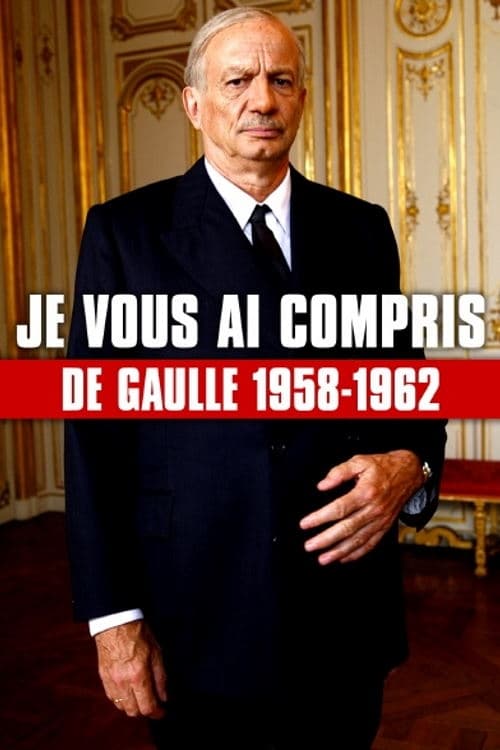










Popular
What were Charles de Gaulle's motivations for his decisions during the Algerian War?
How did de Gaulle's relationship with the French military evolve throughout the film?
What role did the OAS play in the events depicted in the film?
How does de Gaulle's approach to diplomacy change during the course of the film?
What impact did the events in Algeria have on de Gaulle's political career as shown in the film?
Should I watch it?
Ask Your Own Question

What is the plot?
Sorry, we aren't able to watch and write up a full detailed plot yet. Check back in a few days.
More Movies Like This
Browse All Movies →







What is the ending?
In the ending of "Je vous ai compris: De Gaulle, 1958-1962," Charles de Gaulle faces the culmination of his political struggles, particularly regarding Algeria. The film concludes with de Gaulle's decision to grant Algeria independence, a move that leads to significant political upheaval and personal conflict. The emotional weight of his choices is palpable, as he grapples with the consequences of his leadership and the sacrifices made along the way.
As the final scenes unfold, we see de Gaulle in a moment of reflection, surrounded by his advisors and the weight of history pressing down on him. The film closes with a sense of both resolution and uncertainty, highlighting the complexities of leadership and the personal toll it takes on those in power.
The ending of "Je vous ai compris: De Gaulle, 1958-1962" unfolds with a series of poignant scenes that encapsulate the emotional and political turmoil surrounding Charles de Gaulle's decision regarding Algeria.
Scene 1: The atmosphere in the Élysée Palace is tense. De Gaulle sits at his desk, papers strewn about, reflecting on the weight of his decisions. His advisors, including key figures like Michel Debré and Georges Pompidou, enter the room, their expressions a mix of concern and anticipation. The air is thick with the gravity of the situation; Algeria's future hangs in the balance.
Scene 2: A flashback sequence reveals the escalating violence in Algeria, with images of protests and military confrontations. De Gaulle's internal conflict is evident as he recalls the promises made to the French people and the soldiers fighting in Algeria. The juxtaposition of the chaos in Algeria and his calm demeanor highlights the burden he carries.
Scene 3: Back in the present, de Gaulle addresses his advisors. He articulates his belief that granting Algeria independence is the only viable path forward, despite the potential backlash from hardliners in France. His voice is steady, but his eyes betray a flicker of doubt. The advisors exchange worried glances, knowing the political ramifications of this decision could be catastrophic.
Scene 4: The scene shifts to a public address where de Gaulle announces the decision to the nation. The camera captures the mixed reactions of the crowd--some cheer, while others express outrage. De Gaulle stands resolute, embodying the weight of leadership as he faces the consequences of his choice. The emotional intensity of the moment is palpable, as he acknowledges the sacrifices made by both the French and Algerians.
Scene 5: In the aftermath of the announcement, de Gaulle returns to the palace, where he is met with protests from former military supporters. The tension escalates as he confronts the dissent, showcasing his unwavering commitment to his decision. The emotional strain is evident on his face, reflecting the isolation that often accompanies leadership.
Scene 6: The film concludes with de Gaulle in solitude, gazing out of a window, contemplating the future. The camera lingers on his expression, a mixture of resolve and sorrow. The final shot captures the weight of history on his shoulders, leaving the audience with a sense of the complexities of leadership and the sacrifices inherent in making difficult choices.
As the credits roll, the fates of the main characters are left to linger in the viewer's mind. De Gaulle, though achieving a significant political milestone, faces the personal cost of his decisions. His advisors, once loyal supporters, are left grappling with the implications of his choices, while the nation stands divided, reflecting the broader conflict that defined this tumultuous period in French history.
Is there a post-credit scene?
The movie "Je vous ai compris: De Gaulle, 1958-1962" does not feature a post-credit scene. The film concludes its narrative without any additional scenes or content after the credits roll. The focus remains on the significant events and decisions made by Charles de Gaulle during his presidency, particularly regarding Algeria and France's role in the world, leaving the audience with a sense of closure on the historical themes explored throughout the film.
What were Charles de Gaulle's motivations for his decisions during the Algerian War?
Charles de Gaulle's motivations during the Algerian War were deeply rooted in his desire to maintain France's global stature while also seeking a resolution to the conflict that would preserve peace. He grappled with the complexities of colonialism and the rising tide of nationalism, ultimately believing that a negotiated settlement was necessary to avoid further bloodshed and to stabilize France's position.
How did de Gaulle's relationship with the French military evolve throughout the film?
Throughout the film, de Gaulle's relationship with the French military is depicted as increasingly strained. Initially, he relies on their support to assert his authority, but as he pushes for a peaceful resolution in Algeria, tensions rise. The military's hardline stance contrasts with de Gaulle's vision, leading to moments of confrontation and a deepening rift as he prioritizes political solutions over military action.
What role did the OAS play in the events depicted in the film?
The OAS, or Organisation de l'Armée Secrète, plays a significant role in the film as a clandestine group of French military officers and civilians who oppose de Gaulle's policies regarding Algeria. Their violent actions and attempts to destabilize his government highlight the intense opposition he faced from hardliners who believed in maintaining French Algeria at all costs, creating a backdrop of tension and danger throughout the narrative.
How does de Gaulle's approach to diplomacy change during the course of the film?
De Gaulle's approach to diplomacy evolves significantly throughout the film. Initially, he adopts a more traditional, authoritative stance, but as the conflict in Algeria escalates, he begins to embrace dialogue and negotiation with nationalist leaders. This shift reflects his internal struggle between upholding French interests and recognizing the inevitability of change, ultimately leading him to seek a peaceful resolution.
What impact did the events in Algeria have on de Gaulle's political career as shown in the film?
The events in Algeria have a profound impact on de Gaulle's political career as depicted in the film. His decision to pursue a path towards independence for Algeria, despite significant opposition, solidifies his reputation as a pragmatic leader willing to make difficult choices. This move ultimately reshapes his legacy, positioning him as a transformative figure in French history, but also subjects him to criticism and threats from those who felt betrayed by his policies.
Is this family friendly?
"Je vous ai compris: De Gaulle, 1958-1962" is a historical drama that delves into the complex political landscape of France during Charles de Gaulle's presidency. While the film primarily focuses on political events and historical context, there are several aspects that may be considered objectionable or upsetting for children or sensitive viewers.
-
Political Tension and Conflict: The film portrays significant political unrest, including protests and civil disobedience, which may be intense for younger audiences.
-
War and Violence: There are references to the Algerian War, including scenes depicting violence and the impact of war on civilians, which could be distressing.
-
Emotional Struggles: Characters experience deep emotional turmoil, including feelings of betrayal, loss, and the weight of leadership, which may be heavy themes for children to process.
-
Historical Context: The film includes discussions of colonialism and its consequences, which may require a mature understanding of history to fully grasp.
-
Mature Themes: The narrative touches on themes of power, sacrifice, and moral dilemmas, which may be complex and challenging for younger viewers.
Overall, while the film is rich in historical detail and character development, its themes and content may not be suitable for all children or sensitive individuals. Viewer discretion is advised.








