


Popular
What are the main challenges Orny Adams faces during his stand-up performances?
How does Orny's relationship with his family influence his comedy?
What specific moments in the film showcase Orny's vulnerability?
How does Orny's comedic style evolve throughout the film?
What role do Orny's interactions with other comedians play in the film?
Should I watch it?
Ask Your Own Question

What is the plot?
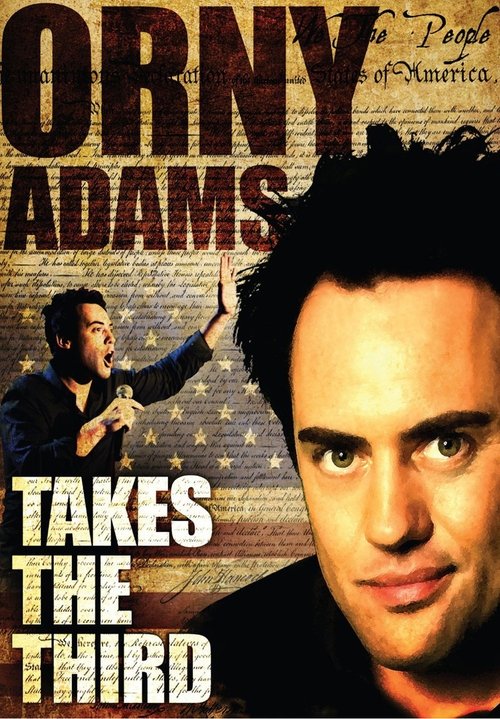
"Orny Adams: Takes the Third" does not have a fictional plot, cast of characters, deaths, or dramatic ending to spoil; it is a 2010 Comedy Central stand-up special in which Orny Adams appears as himself for an hour of observational comedy. The closest accurate way to tell its "story" is as a live performance that moves from one frustrated thought to the next, building a comic persona rather than a narrative arc.
The special opens with the familiar tension of Orny Adams stepping into the spotlight as an angry, wired, hyper-observant comic, the kind of performer who looks like he has already been irritated by the audience before he has even started speaking. From the beginning, his presence is the joke: he stands there with a grin that undercuts the fury in his voice, turning ordinary annoyance into performance energy. The room is alive with that Comedy Central special atmosphere, a clean stage, bright lights, and a performer who seems determined to wrestle the entire modern world into submission through complaint. The show premiered in the United States on October 29, 2010, and the material is built as a rapid chain of observational bits rather than a scripted sequence of scenes.
He starts with everyday frustrations, treating trivial things as if they are existential threats. One of the recurring rhythms of the special is his exasperation with kids and the tiny social absurdities that come with them, including the image of "fat kids wheeling their books around," which becomes part of his angry persona and the show's combative tone. He talks as though the world itself is badly designed, and the jokes keep arriving from that same source of irritation. His delivery is sharp and fast, but the comedy comes from how seriously he takes things that do not deserve seriousness at all. Nothing in the special is presented as a secret or revelation; instead, each new topic feels like another skirmish in a larger war against modern inconvenience.
As the set flows forward, he shifts into material about computers and technology, turning even the simple location of the delete key into a cause for outrage. The bit lands because it is so specific and so petty, and yet he treats it like a personal insult. That same mindset carries into jokes about keyboards, handwriting, and the way technology changes basic human habits. In one of the clips associated with the special, he jokes about the keyboard making no sense and about handwriting becoming outdated, and that captures the broader spirit of the hour: he sees progress everywhere, but he experiences it as a nuisance. The transitions between topics are part of the performance's texture. Reviews note that the movement from one subject to the next can feel a little slow, which makes the special feel somewhat episodic, but that episodic quality also fits the way his mind seems to jump from irritation to irritation.
The middle of the special keeps expanding that chain of complaints. Adams moves through topics like parenting, technology, and the strange little rules of modern life, and each bit is delivered with the same escalating conviction. He often seems to be arguing with the world rather than merely joking about it. That anger is softened by his grin, which creates a comic contradiction: he sounds genuinely annoyed, but the smile tells the audience that the anger is the act, or at least the art. This is the central dramatic engine of the special. There are no supporting characters to expose, no hidden motives to uncover, and no major plot twists. The "action" is the accumulation of comic pressure as one gripe follows another and the energy keeps ratcheting up.
Because the special is not a narrative film, there are no deaths, no murders, no victims, and no one causing anything fatal. There are no confrontations in the story sense, either. The only real battles are rhetorical ones, with Adams attacking bad design, bad habits, and bad manners through punch lines. The show's tension comes from rhythm and timing, not from danger. Even when he seems at his most furious, the audience understands that the rage is theatrical, part of the act that makes his observations sharper and funnier. The special's visual style reinforces that. The camera cuts and edits are brisk, with frequent angle changes that keep the performance feeling active and dynamic, almost as though the production is trying to match the speed of his mind.
Later in the set, the material circles through more personal and social frustrations, always returning to the same comic identity: a man who is permanently offended by the world's inability to function correctly. He treats small annoyances as if they are evidence of civilization's decline, and that overreaction is what turns the routine into a sustained comic arc. The emotional effect is less about empathy than recognition. The audience is invited to laugh because everyone knows the feeling of being irritated by something trivial, even if Adams takes that feeling far beyond normal proportion. There is no hidden backstory, no secret family history, no climactic confession. The special is simply a sharpened portrait of his persona, sustained long enough for the audience to settle into the rhythm of his complaints.
As the hour nears its end, the energy does not resolve into a dramatic revelation. Instead, it closes the way a stand-up set closes: with the final wave of jokes landing, the pressure releasing, and the performer leaving the stage having turned annoyance into applause. The ending is the end of the performance itself, not a plot conclusion. There is no final twist, no last-minute death, no redemption, and no loose thread to tie up. The resolution is the completion of the set, with Orny Adams remaining exactly what he has been all along: a fast-talking, aggrieved, observational comedian using frustration as fuel.
In the final scene, the special simply concludes as a live comedy show ends, with the comic's persona intact and the audience left with the afterimage of that furious grin. The story, such as it is, is the story of a man who turns everyday irritation into a sustained comic argument with the world, and the ending is just the applause after he wins that argument for the night.









What is the ending?
In the ending of "Orny Adams: Takes the Third," Orny Adams delivers a powerful stand-up performance that encapsulates his journey and struggles as a comedian. He confronts his fears and insecurities, ultimately finding a sense of acceptance and resolution. The film concludes with a sense of triumph as he embraces his identity and the challenges he has faced.
As the final scenes unfold, we see Orny backstage, pacing nervously before his performance. The atmosphere is charged with anticipation, and the audience's murmurs create a palpable tension. Orny's internal conflict is evident; he grapples with self-doubt and the pressure to succeed. He takes a deep breath, reminding himself of the hard work and dedication he has put into his craft.
The lights dim, and the spotlight shines on him as he steps onto the stage. The audience erupts in applause, and Orny's initial anxiety begins to dissipate. He launches into his routine, weaving personal anecdotes with sharp humor. Each joke reflects his experiences, touching on themes of failure, ambition, and the pursuit of happiness. As he performs, we see flashes of his past struggles--moments of rejection, frustration, and the relentless pursuit of validation.
Throughout his set, Orny's confidence grows. He connects with the audience, eliciting laughter and applause, which fuels his energy. The camera captures his expressions--joy, relief, and a sense of belonging. He shares a poignant story about his journey, revealing the vulnerability that lies beneath his comedic exterior. This moment of honesty resonates deeply with the audience, creating a bond that transcends mere entertainment.
As he reaches the climax of his performance, Orny delivers a heartfelt message about perseverance and self-acceptance. He acknowledges the challenges he has faced and the importance of embracing one's true self. The audience responds with a standing ovation, a testament to the impact of his words and the authenticity of his performance.
In the final moments, Orny stands on stage, soaking in the applause. His face reflects a mixture of relief and triumph, a culmination of his journey as a comedian. The film closes with a shot of him smiling, a man who has faced his fears and emerged stronger, ready to continue his path in comedy with renewed vigor and self-acceptance. The credits roll, leaving the audience with a sense of hope and inspiration, mirroring Orny's own transformation.
Is there a post-credit scene?
In "Orny Adams: Takes the Third," there is no post-credit scene. The film concludes without any additional content after the credits roll. The focus remains on Orny Adams' stand-up performance and the insights into his life and career, leaving the audience with the reflections and humor presented throughout the special. The absence of a post-credit scene aligns with the film's straightforward approach to showcasing Adams' comedic journey rather than setting up any further narrative or comedic moments.
What are the main challenges Orny Adams faces during his stand-up performances?
Throughout 'Orny Adams: Takes the Third', Orny Adams grapples with the pressures of performing live comedy, including dealing with hecklers, managing his own insecurities, and the constant pursuit of approval from both the audience and his peers. His internal struggle is palpable as he navigates the highs and lows of his career.
How does Orny's relationship with his family influence his comedy?
Orny's interactions with his family, particularly his mother, reveal a complex dynamic that shapes his comedic voice. He often reflects on his upbringing and the expectations placed upon him, which adds depth to his material and highlights the emotional undercurrents of his performances.
What specific moments in the film showcase Orny's vulnerability?
Several moments in the film highlight Orny's vulnerability, such as when he candidly discusses his fears of failure and the pressure to succeed in the competitive world of comedy. These scenes often juxtapose his comedic bravado with moments of introspection, revealing the man behind the jokes.
How does Orny's comedic style evolve throughout the film?
As the film progresses, Orny's comedic style evolves from a more aggressive, confrontational approach to a more nuanced and self-reflective one. This evolution is marked by his willingness to share personal stories and insights, allowing the audience to connect with him on a deeper level.
What role do Orny's interactions with other comedians play in the film?
Orny's interactions with fellow comedians serve as a mirror to his own journey, showcasing both camaraderie and rivalry. These encounters highlight the competitive nature of the comedy scene and provide insight into Orny's aspirations and the challenges he faces in gaining respect among his peers.
Is this family friendly?
"Orny Adams: Takes the Third" is a stand-up comedy special that features Orny Adams performing his routine in front of a live audience. The content is primarily aimed at an adult audience and includes themes and language that may not be suitable for children or sensitive viewers.
Potentially objectionable aspects include:
- Strong Language: The performance includes frequent use of profanity, which may be inappropriate for younger audiences.
- Adult Themes: Orny discusses topics related to relationships, personal struggles, and societal observations that may not resonate with children or could be considered too mature.
- Humor Style: The comedic style often involves self-deprecation and commentary on personal experiences that might be upsetting or uncomfortable for some viewers.
Overall, the special is best suited for adults and may not be considered family-friendly due to its content.