





Popular
What motivates Rusalka to wish for a human form?
How does the Witch influence Rusalka's transformation?
What is the significance of Rusalka's silence after her transformation?
How does the Prince's attitude change towards Rusalka throughout the story?
What role does the forest play in Rusalka's journey?
Should I watch it?
Ask Your Own Question

What is the plot?
Sorry, we aren't able to watch and write up a full detailed plot yet. Check back in a few days.
More Movies Like This
Browse All Movies →




What is the ending?
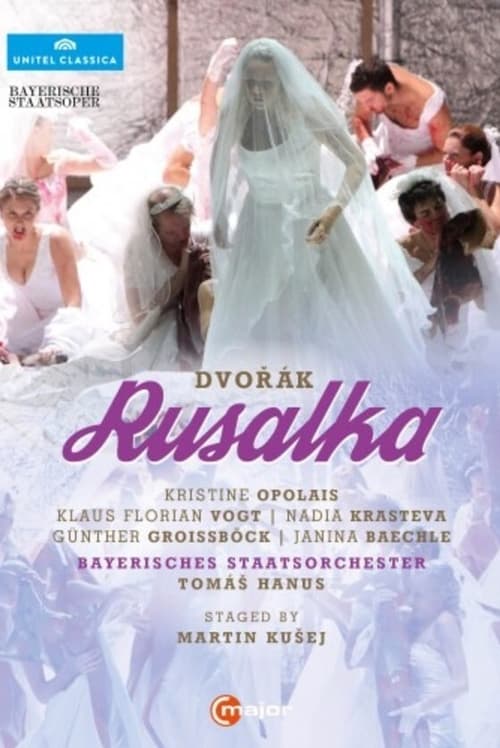
In the ending of "Rusalka" at the Bayerische Staatsoper, the water nymph Rusalka sacrifices herself for love, ultimately transforming into a spirit of the lake. The Prince, who has fallen in love with her, is left heartbroken and alone. The Witch, who had granted Rusalka her human form, is also present, having played a pivotal role in the tragic events. The opera concludes with a haunting atmosphere, emphasizing themes of love, sacrifice, and the consequences of desires.
As the final act unfolds, the scene is set in a dark, ethereal forest, where Rusalka, now a human, is filled with a mix of hope and despair. She has longed for the Prince's love, and her transformation has come at a great cost. The air is thick with tension as she confronts the reality of her choice. The Prince, having initially been enchanted by her beauty, is now torn between his feelings for Rusalka and the societal expectations that surround him.
In a pivotal moment, Rusalka and the Prince share a fleeting connection, but it is overshadowed by the arrival of the foreign princess, who represents the world of human desires and societal norms. The Prince is drawn to her, and Rusalka's heart breaks as she realizes that her sacrifice may not lead to the love she yearned for. The Witch, who had granted Rusalka her wish, appears, reminding her of the consequences of her choices. Rusalka's internal struggle is palpable; she is caught between her love for the Prince and the reality of her existence as a human.
As the climax approaches, Rusalka is faced with a heartbreaking decision. She understands that her love cannot be reciprocated in the way she had hoped. In a moment of profound sorrow, she chooses to return to the water, accepting her fate as a spirit of the lake. The transformation is both beautiful and tragic, as she is enveloped by the water, symbolizing her return to her true nature.
The Prince, now alone, is left to grapple with the emptiness of his choices. He realizes too late the depth of Rusalka's love and the sacrifice she made for him. The haunting melodies of the opera echo in the air, underscoring the themes of loss and longing. The Witch, having fulfilled her role in the tragic tale, watches as the Prince is consumed by regret.
In the final moments, the stage is filled with a sense of melancholy. Rusalka, now a spirit, glides through the water, a symbol of eternal love and sacrifice. The Prince stands on the shore, a figure of despair, as he mourns the love he lost. The opera concludes with a poignant reminder of the complexities of love, the sacrifices made in its name, and the haunting beauty of unfulfilled desires. Each character's fate is sealed in this tragic ending, leaving the audience with a lingering sense of sorrow and reflection on the nature of love and sacrifice.
Is there a post-credit scene?
The 2010 production of "Rusalka" by Bayerische Staatsoper does not feature a post-credit scene. The opera concludes with a poignant and haunting finale that encapsulates the themes of longing, sacrifice, and the tragic consequences of unfulfilled desires. After Rusalka's transformation and her ultimate fate, the story ends on a somber note, leaving the audience to reflect on the emotional weight of the narrative rather than providing any additional scenes or resolutions. The focus remains on the powerful conclusion of Rusalka's journey, emphasizing her love for the Prince and the tragic cost of her choices.
What motivates Rusalka to wish for a human form?
Rusalka, a water nymph, is deeply in love with a human prince. Her desire to become human stems from her longing to be with him and to experience the world of humans, which she believes will bring her closer to him. This yearning is intensified by her feelings of isolation in the water and her fascination with the human realm.
How does the Witch influence Rusalka's transformation?
The Witch plays a crucial role in Rusalka's transformation by granting her wish to become human. However, this comes with a heavy price: Rusalka will lose her voice and the ability to express her feelings. The Witch's motivations are complex; she is both a facilitator of Rusalka's desires and a reminder of the dangers that come with such a transformation.
What is the significance of Rusalka's silence after her transformation?
After Rusalka transforms into a human, she loses her voice, which symbolizes her loss of identity and agency. This silence becomes a poignant barrier between her and the prince, highlighting the tragic consequences of her choice and the difficulty of communication in their relationship. Rusalka's silence also reflects her internal struggle and the sacrifices she has made for love.
How does the Prince's attitude change towards Rusalka throughout the story?
Initially, the Prince is enchanted by Rusalka's beauty and the mystery surrounding her. However, as the story progresses, he becomes increasingly distracted by the allure of another woman, leading to a sense of betrayal for Rusalka. His shifting affections reveal his superficiality and the fragility of their connection, ultimately contributing to Rusalka's tragic fate.
What role does the forest play in Rusalka's journey?
The forest serves as a mystical and transformative space in Rusalka's journey. It is where she first encounters the Witch and where her longing for the human world intensifies. The forest is also a place of danger and enchantment, representing the boundary between her aquatic life and the human experience. It reflects Rusalka's internal conflict and the natural world's response to her choices.
Is this family friendly?
The 2010 production of "Rusalka" by Bayerische Staatsoper contains several elements that may be considered objectionable or upsetting for children or sensitive viewers. Here are some aspects to consider:
-
Themes of Unrequited Love: The central narrative revolves around Rusalka's longing for a human prince, which leads to emotional turmoil and heartache.
-
Dark Atmosphere: The opera has a haunting and melancholic tone, with scenes that evoke feelings of sadness and despair, particularly in Rusalka's journey.
-
Supernatural Elements: The presence of water nymphs and other mystical creatures may be unsettling for some children, especially in scenes depicting transformation and loss.
-
Tragic Outcomes: The story culminates in tragic events that may be distressing, including themes of sacrifice and the consequences of desires.
-
Visual Imagery: Some scenes may include dark or eerie visuals that could be frightening, such as depictions of the forest and the water's depths.
-
Emotional Conflict: Characters experience intense emotional struggles, including jealousy, betrayal, and despair, which may be difficult for younger audiences to process.
These elements contribute to a complex emotional landscape that may not be suitable for all viewers, particularly younger children or those sensitive to themes of loss and tragedy.








