









Popular
What motivates Agamemnon to sacrifice his daughter Iphigenia?
How does Clytemnestra react to Agamemnon's return from the Trojan War?
What role does Orestes play in avenging his father's death?
What is the significance of the Furies in Orestes' journey?
How does the theme of justice manifest in the trial of Orestes?
Should I watch it?
Ask Your Own Question

What is the plot?
Sorry, we aren't able to watch and write up a full detailed plot yet. Check back in a few days.









What is the ending?
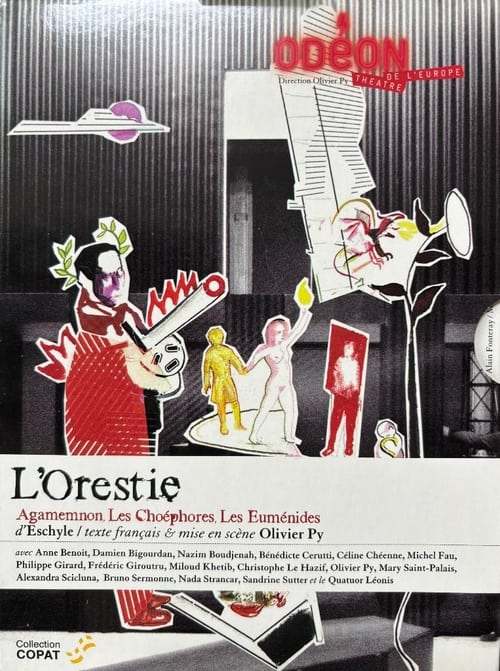
In the ending of L'Orestie, the story culminates in a tense confrontation and resolution of the cycle of vengeance that has plagued the House of Atreus. Orestes, having avenged his father Agamemnon by killing his mother Clytemnestra, faces the wrath of the Furies, ancient deities of vengeance. The climax unfolds in a trial where Orestes seeks absolution for his actions. The verdict ultimately favors him, leading to a transformation in the understanding of justice and the establishment of a new order.
As the film concludes, Orestes is freed from the Furies' torment, symbolizing a shift from personal vengeance to a more structured legal system. The Furies, now transformed into the Eumenides, represent a new beginning for the community, suggesting a reconciliation between the old ways of retribution and the new ideals of justice.
In a more detailed narrative:
The final act of L'Orestie begins with Orestes standing before the court, a tense atmosphere enveloping the scene. The Furies, fierce and relentless, accuse him of matricide, their voices echoing with the weight of ancient traditions. Orestes, visibly shaken yet resolute, defends his actions, explaining that he acted under the command of Apollo, who had instructed him to avenge his father's murder. His internal conflict is palpable; he grapples with the horror of his deed while feeling justified in his quest for vengeance.
As the trial progresses, the tension escalates. The jury, composed of citizens, is divided, reflecting the broader societal conflict between the old ways of blood vengeance and the emerging principles of justice. Orestes' friend Pylades stands by him, offering silent support, while the Furies loom ominously, their presence a constant reminder of the consequences of his actions.
In a pivotal moment, Athena, the goddess of wisdom, intervenes. She proposes a new system of justice, one that transcends the cycle of revenge. Her presence brings a sense of hope and authority, and she calls for a vote among the jurors. The scene is charged with anticipation as the citizens cast their votes, the outcome hanging in the balance. Orestes' fate is uncertain, and the audience can feel the weight of history resting on this decision.
When the verdict is finally announced, the tension breaks. Orestes is acquitted, a decision that reverberates through the court and beyond. The Furies, initially furious at the outcome, begin to transform. Athena offers them a new role in society, rebranding them as the Eumenides, or the Kindly Ones. This transformation signifies a shift from vengeance to protection, a crucial turning point for the community.
As the film draws to a close, Orestes stands relieved yet contemplative, aware of the heavy burden he carries. He has avenged his father but at a great cost. The Furies, now Eumenides, accept their new role, symbolizing the reconciliation of old and new values. The final scene captures the essence of this transformation, with the community coming together to embrace a new order of justice, one that seeks to heal rather than harm.
In summary, Orestes is freed from the Furies, who are transformed into protectors of the city, marking a new beginning for both him and the society. The film ends on a note of hope, suggesting that even in the darkest cycles of vengeance, there is a possibility for redemption and a new path forward.
Is there a post-credit scene?
The movie "L'Orestie," produced in 2010, does not feature a post-credit scene. The film concludes its narrative without any additional scenes or content after the credits roll. The focus remains on the intense and dramatic retelling of the classic Greek tragedy, exploring themes of justice, revenge, and the cycle of violence. The ending leaves the audience with a sense of closure regarding the characters' fates and the overarching themes presented throughout the film.
What motivates Agamemnon to sacrifice his daughter Iphigenia?
Agamemnon is driven by a desire to appease the goddess Artemis, who has halted the Greek fleet's journey to Troy due to a lack of favorable winds. He believes that sacrificing Iphigenia will ensure the fleet's success and fulfill his duty as a leader, despite the emotional turmoil it causes him.
How does Clytemnestra react to Agamemnon's return from the Trojan War?
Clytemnestra's reaction is one of both joy and deep-seated resentment. She initially welcomes Agamemnon with open arms, but her underlying anger over the sacrifice of their daughter Iphigenia simmers beneath the surface, leading to a complex mix of love, betrayal, and vengeance.
What role does Orestes play in avenging his father's death?
Orestes, upon learning of his father's murder at the hands of Clytemnestra and her lover Aegisthus, is compelled by the Furies and the expectations of revenge to take action. His internal conflict is palpable as he grapples with the moral implications of killing his own mother, ultimately leading him to fulfill his duty to avenge Agamemnon.
What is the significance of the Furies in Orestes' journey?
The Furies represent the embodiment of vengeance and guilt in Orestes' journey. After he kills Clytemnestra, they pursue him relentlessly, symbolizing his internal struggle with the consequences of his actions and the weight of familial duty, ultimately leading him to seek purification and justice.
How does the theme of justice manifest in the trial of Orestes?
The trial of Orestes serves as a pivotal moment where the theme of justice is explored through the conflict between the Furies and the newly established legal system represented by Athena. Orestes' fate hangs in the balance as the jury deliberates, reflecting the tension between ancient notions of retribution and the emerging ideals of civic justice.
Is this family friendly?
"L'Orestie," produced in 2010, is an adaptation of Aeschylus's ancient Greek trilogy, "The Oresteia." The film delves into themes of revenge, justice, and the cycle of violence within a family, which may not be suitable for younger audiences or sensitive viewers.
Potentially objectionable or upsetting aspects include:
-
Violence and Murder: The narrative involves themes of murder, including the killing of family members, which is central to the plot and may be distressing.
-
Bloodshed: There are scenes depicting bloodshed and the aftermath of violent acts, which can be graphic and unsettling.
-
Emotional Turmoil: Characters experience intense emotional states, including grief, rage, and despair, which may be heavy for younger viewers to process.
-
Themes of Betrayal and Revenge: The exploration of betrayal within a family and the quest for revenge can be dark and complex, potentially leading to confusion or discomfort.
-
Supernatural Elements: The presence of the Furies and themes of divine retribution may be unsettling for some viewers, particularly children.
Overall, the film's mature themes and intense emotional content suggest that it may not be family-friendly and could be better suited for older teens and adults.









