












Popular
What challenges did Tony Warren face while creating Coronation Street?
How did the character of Ena Sharples come to be portrayed in the show?
What role did the character of Jack and Vera Duckworth play in the development of Coronation Street?
How did the film portray the relationship between Tony Warren and the BBC executives?
What personal struggles did Tony Warren experience during the production of Coronation Street?
Should I watch it?
Ask Your Own Question

What is the plot?
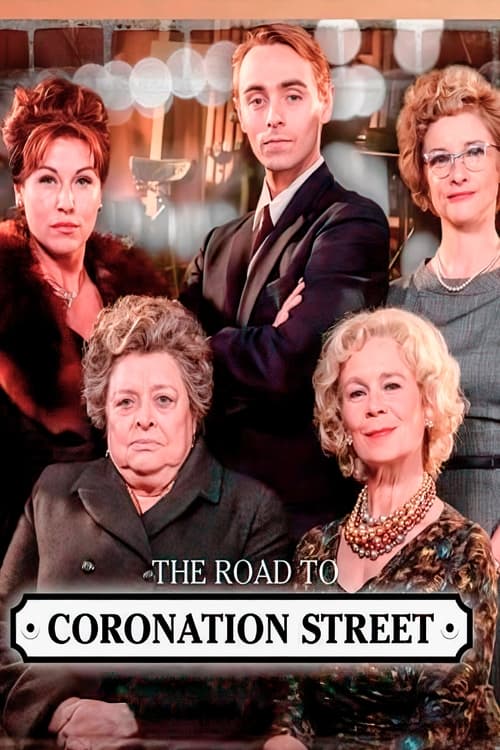
The film opens on 9 December 1960 at Granada Television in Manchester, where the first live transmission of the new series is only minutes away and Tony Warren is hiding in the toilets, sick with nerves as the studio buzzes around him. From that panic-stricken present tense image, the story flashes back months earlier to show how an obscure, ambitious young Mancunian writer-actor fights to bring a working-class northern drama to television, against executive indifference, casting headaches, and a title that almost sinks the whole project before it is born.
Months before the broadcast, Tony arrives at Granada as a frustrated former child actor with writing ambitions, hoping for screen work and a way out of radio. He meets Margaret Morris, the casting director, who briskly tells him there are no acting roles for him and suggests he stick to radio instead, a dismissal that lands like a slap because Tony wants to write and wants to be taken seriously. As he is preparing to leave, Margaret mentions that producer Harry Elton is desperate for new writing talent, and the remark sparks Tony's determination. He quickly writes half a script for Shadow Squad, trying to wedge his way into Granada through whatever door will open first, but his deeper ambition is already forming: he wants to write about the ordinary streets and the real people he knows, not the glossy, fashionable London-centered television executives imagine audiences want.
That ambition becomes explicit when Tony pitches his own dramatic idea, a series originally called Florizel Street, named after a picture of Prince Florizel in his office. He explains to Harry Elton that he wants a drama rooted in northern life, in the "back streets of Manchester," and in one of the story's most important lines, he tells Harry, "I know about out there. I know about Manchester." Harry is one of the first people in power who genuinely listens to him, and his support gives Tony just enough momentum to keep pushing. But the main obstacle is Sidney Bernstein, Granada's boss, who is cool, skeptical, and openly unimpressed by the idea of a seedy, unglamorous northern street drama. Sidney does not see prestige in terraced houses, corner shops, pub gossip, and working-class characters; he sees something cheap, dull, and commercially questionable. The conflict between Tony's realism and Sidney's taste for something more polished becomes the engine of the whole story.
As Tony keeps fighting for the project, the film shows Granada becoming the battleground where the series must be legitimized, scene by scene and person by person. Sidney remains wary, but his brother Cecil Bernstein is more practical and more open to the idea that a cheaply made studio drama using local actors could work. Cecil sees value where Sidney sees risk, and that split inside Granada is crucial: Tony does not win through enthusiasm so much as through the recognition that his idea is economical and potentially populist. With Cecil leaning in and Harry Elton championing the concept, the project begins to move forward, and additional creative help arrives in the form of writer Harry Kershaw and director Derek Bennett, who help shape the show as it becomes more than just one man's script and more like an actual production.
Even then, the battle is far from over, because the story is as much about casting as it is about writing. Margaret Morris and her young assistant Josie Scott are put in charge of finding the right actors, and their search becomes one of the film's most tense and revealing threads. Tony wants the street to feel authentic, which means the cast must not look like polished television professionals dropped into a set; they must feel like the people who would actually live on that street. The search is especially difficult for the role of Ena Sharples, the formidable battle-axe at the heart of the community, because the character needs presence, texture, and authority. The film makes clear that this part is so important that it becomes a test of whether the whole series can be made believable at all.
Tony's breakthrough comes from his own past in radio, where he remembers an actress who can supply exactly the right blend of sharpness and lived-in grit: Violet Carson. He brings her in himself, and when she appears, the production finally seems to click into place. The film treats this as a moment of near-revelation, because Violet Carson is not merely acceptable--she is perfect. Ena Sharples becomes the kind of character who can anchor the whole street, and Tony's instinct proves correct in a way the executives cannot ignore. This is one of the drama's key turning points: Tony stops being just the irritating young writer with a regional obsession and becomes the man who has found the soul of the program.
But the show is still burdened by a title that does not yet feel right. Florizel Street may have literary charm to Tony, but the film emphasizes that to others it sounds wrong, and one of the most memorable comic criticisms comes from the tea lady, who says it sounds like disinfectant. That line carries real dramatic force because it exposes the gap between Tony's first idea and what the series actually needs to become: something plain, memorable, and rooted in ordinary life rather than something quaint or pseudo-aristocratic. The title dispute becomes a final symbolic battle over identity. If the show is going to belong to the street and to the audience, it cannot sound like a chemical cleaner or a contrived writerly flourish.
Under pressure, the team searches for a new name, and the last-minute transformation from Florizel Street into Coronation Street gives the story its decisive creative breakthrough. That change is not presented as a neat administrative correction but as a rescue, the moment when the concept snaps into place and the series acquires the weight and resonance it needs. The title becomes part of the show's identity, and the film presents the birth of Coronation Street as a hard-won act of creative clarity after months of struggle, disbelief, and negotiation. The executives may still be uneasy, but the project now has a cast, a director, a writer, and a name that can survive first contact with the audience.
By this point, the narrative has built a sense of mounting pressure inside Granada's studios in Manchester, where every corridor, office, and casting room feels like a test of whether Tony Warren's vision will live or die. The production floor becomes the physical embodiment of the conflict: this is where the show must finally become real, with cobbles, a pub, terraced houses, and a shop, all the details Tony insists on because he wants the street to feel inhabited rather than staged. Every earlier confrontation feeds into this stage of the story. Tony has argued for authenticity against Sidney Bernstein's skepticism, persuaded Harry Elton to trust him, benefited from Cecil Bernstein's practical support, and relied on Margaret Morris and Josie Scott to build the cast around his vision. Now all of that has to survive the final countdown to transmission.
The film's opening frame returns as the climax approaches: 6:53 p.m. on 9 December 1960, with the live broadcast of episode one only minutes away. The air is thick with panic and last-minute chaos. Tony is in the toilets, physically unwell with fear, hiding in the most undignified place imaginable while the show he has fought for is about to go out to the nation. The image encapsulates everything the story has been building toward: the creator of a show about ordinary life is himself reduced to a very human, very unglamorous state, sick with nerves in a Granada bathroom while the machine of television grinds toward history. The film underscores that the launch is not a triumphant, polished victory but a live-wire scramble, with missing elements and anxious staff scrambling to hold it together.
At this point, the series is almost sabotaged by the small practical disasters that always accompany live television. The BBC synopsis notes that Pat Phoenix is missing and even the cat from the opening shot cannot be found, making the final moments before transmission feel absurdly precarious. These details heighten the tension because they show how fragile the whole enterprise is: after all the arguments over class, tone, casting, and title, the show can still be shaken by something as mundane as a missing performer or a wandering cat. That volatility is exactly why the film works as a backstage drama. The birth of Coronation Street is not treated as destiny fulfilled with effortless grace; it is a near-miss that only barely stabilizes into a first broadcast.
When the moment finally arrives, the series is ready enough to go. The title has been changed at the last minute, the cast has been assembled, and the team has transformed a rejected idea into an actual live television drama. There is no grand ceremonial speech or sentimental epilogue; the ending is the launch itself, the instant when Tony Warren's stubborn conviction becomes public reality. What began as a young man's insistence that he knows Manchester, and knows how ordinary northern people live, becomes a television program broadcast to the country. The film closes on the understanding that the real victory is not personal glory but survival: Tony has forced Granada to take a chance on a story about streets, neighbors, pub talk, and working-class domestic life, and that chance is now going out live for the first time.
There are no deaths in the film, no murder, no fatal sacrifice, and no tragic final loss; the drama's stakes are professional, creative, and emotional rather than lethal. The only "losses" are the repeated humiliations Tony suffers along the way: the dismissal from Margaret Morris, the skepticism of Sidney Bernstein, the pressure of the title problem, and the terror of the live broadcast countdown. Those reversals are not resolved by violence but by persistence. Tony keeps returning to the same core belief--that the lives of ordinary northerners are worth telling--and the film's final movement confirms that belief by allowing the first episode to go out under the new title.
By the end, Tony Warren stands vindicated not because everyone suddenly agrees with him in theory, but because the machinery of Granada has finally been forced to accommodate his vision. Harry Elton has helped protect the idea long enough for it to survive. Cecil Bernstein has seen the practical sense in it. Margaret Morris and Josie Scott have found the performers who can make the street feel real. Derek Bennett and Harry Kershaw have helped translate the concept into a working production. And Violet Carson has become the crucial breakthrough casting that gives the show its gravity. The final image is not of a man basking in triumph, but of a creator who has pushed his idea through every obstacle and is now left waiting, sick with nerves, while history begins without him in the toilet.
If you want, I can also turn this into a more cinematic beat-by-beat recap or a character-focused spoiler version.
More Movies Like This
Browse All Movies →



What is the ending?
In the ending of "The Road to Coronation Street," the film culminates with the successful launch of the iconic British television series "Coronation Street." The characters, including Tony Warren, are filled with a mix of pride and anxiety as they witness their hard work come to fruition. The film closes with a sense of accomplishment and the beginning of a new era in television history.
As the final scenes unfold, we see Tony Warren, portrayed with a blend of determination and vulnerability, standing in the studio, anxiously awaiting the first broadcast of "Coronation Street." The atmosphere is charged with anticipation; the crew is bustling around, making last-minute adjustments, and the tension is palpable. Tony's internal struggle is evident as he reflects on the challenges he faced in bringing his vision to life, battling skepticism from executives and the pressures of the industry.
The camera shifts to the faces of the cast and crew, capturing their nervous excitement. Each character, from the seasoned actors to the fresh faces, embodies a mix of hope and fear. They are aware that this moment could change their lives forever. As the clock ticks down to the broadcast, Tony's thoughts drift to the stories he wants to tell, the characters he has created, and the impact he hopes they will have on the audience.
When the show finally airs, the screen fills with the familiar opening sequence of "Coronation Street." The characters watch intently, their expressions a blend of joy and disbelief. As the first lines are delivered, the realization of their hard work and dedication washes over them. The film captures the moment with close-ups of their faces, showcasing the emotional weight of the occasion.
As the episode concludes, the characters celebrate their success, embracing one another in a moment of triumph. Tony, though still feeling the weight of responsibility, allows himself a smile, knowing that he has created something meaningful. The film ends with a montage of the show's iconic moments, hinting at the legacy that "Coronation Street" will leave behind.
In the final moments, we see Tony Warren reflecting on his journey, surrounded by his colleagues, who have become like family. The film closes on a hopeful note, suggesting that while the road to this moment was fraught with challenges, it has ultimately led to a groundbreaking achievement in television history. Each character, having faced their own struggles, emerges with a renewed sense of purpose and belonging, ready to embrace the future that lies ahead.
Is there a post-credit scene?
The movie "The Road to Coronation Street," produced in 2010, does not contain a post-credit scene. The film concludes its narrative without any additional scenes or content after the credits roll. The focus remains on the story of the creation of the iconic British television series "Coronation Street," highlighting the struggles and triumphs of its early creators and the impact the show had on British culture. The ending wraps up the character arcs and the historical context without extending into a post-credit sequence.
What challenges did Tony Warren face while creating Coronation Street?
Tony Warren, portrayed in the film, faced numerous challenges in bringing his vision of Coronation Street to life. He struggled with the skepticism of the BBC executives who doubted the show's potential success. Additionally, he dealt with the pressure of writing a compelling script that would resonate with audiences, all while navigating the complexities of the television industry in the early 1960s.
How did the character of Ena Sharples come to be portrayed in the show?
Ena Sharples, a pivotal character in Coronation Street, was brought to life by actress Violet Carson. The film depicts how Tony Warren envisioned Ena as a strong, opinionated woman who would serve as a moral compass for the community. The casting process and Carson's fierce dedication to the role are highlighted, showcasing the character's impact on the show's dynamic.
What role did the character of Jack and Vera Duckworth play in the development of Coronation Street?
Jack and Vera Duckworth, played by actors Bill Tarmey and Liz Dawn, were integral to the show's development. The film illustrates how their characters provided comic relief and emotional depth, reflecting the struggles of working-class life. Their relationship dynamics and the chemistry between the actors contributed significantly to the show's popularity.
How did the film portray the relationship between Tony Warren and the BBC executives?
The film portrays a tumultuous relationship between Tony Warren and the BBC executives, particularly highlighting their initial reluctance to embrace his vision for Coronation Street. Warren's determination and passion for storytelling often clashed with the executives' conservative views, creating tension that underscored his journey to get the show on air.
What personal struggles did Tony Warren experience during the production of Coronation Street?
Throughout the film, Tony Warren is depicted as grappling with personal struggles, including his identity as a gay man in a conservative society. His experiences of isolation and the fear of rejection are woven into the narrative, showcasing how these challenges influenced his writing and the authenticity of the characters he created for Coronation Street.
Is this family friendly?
"The Road to Coronation Street" is a biographical drama that explores the creation of the iconic British television series "Coronation Street." While the film is generally suitable for a family audience, there are a few elements that may be considered objectionable or upsetting for children or sensitive viewers:
-
Depictions of Struggle: The film portrays the challenges faced by the creators and cast, including financial difficulties and personal struggles, which may be heavy for younger viewers to process.
-
Emotional Tension: There are scenes that depict emotional conflict and stress among characters, reflecting the pressures of the television industry, which could be intense for some viewers.
-
Mild Language: The film includes some instances of mild profanity, which may not be appropriate for all children.
-
Themes of Rejection and Failure: Characters experience rejection and setbacks in their careers, which could be upsetting for sensitive viewers who empathize deeply with their struggles.
-
Historical Context: The film touches on the social issues of the time, including class differences and gender roles, which may require some contextual understanding that younger viewers might not have.
Overall, while the film is not overtly graphic or violent, its themes and emotional depth may resonate differently with children and sensitive individuals.







