





















Popular
Who is Mary Surratt and what role does she play in the conspiracy?
What is the significance of Frederick Aiken's character in the story?
How does the film portray the trial of Mary Surratt?
What role does the character of Edwin Stanton play in the film?
How does Mary Surratt's relationship with her son John Surratt affect the plot?
Should I watch it?
Ask Your Own Question

What is the plot?
Sorry, we aren't able to watch and write up a full detailed plot yet. Check back in a few days.






What is the ending?
In the ending of "The Conspirator," Mary Surratt is found guilty of conspiracy in the assassination of President Abraham Lincoln and is sentenced to death. Despite the efforts of her attorney, Frederick Aiken, to prove her innocence, she is executed by hanging. The film concludes with Aiken reflecting on the injustice of the trial and the impact of the events on his life.
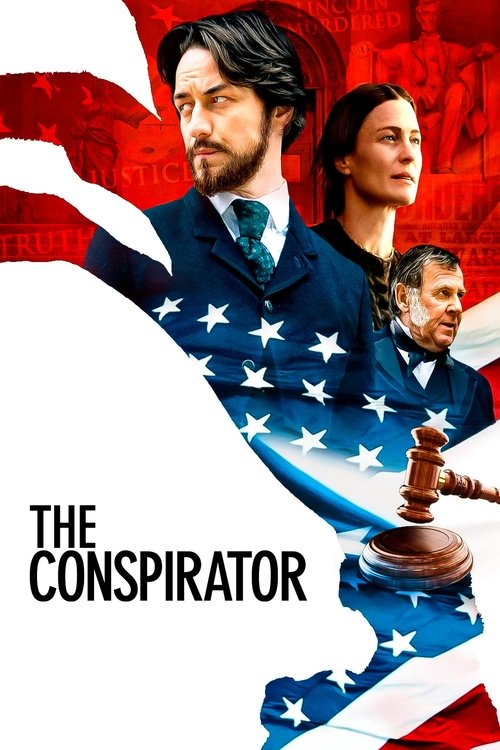
As the film approaches its climax, the tension in the air is palpable. The courtroom is filled with spectators, and the atmosphere is heavy with anticipation. Mary Surratt, portrayed with a haunting vulnerability by Robin Wright, sits in her chair, her face a mask of despair and determination. Frederick Aiken, played by James McAvoy, stands resolutely by her side, his brow furrowed with concern as he prepares to deliver his closing arguments.
In a pivotal scene, Aiken passionately argues for Surratt's innocence, emphasizing the lack of concrete evidence linking her to the conspiracy. He implores the court to consider the implications of convicting an innocent woman, appealing to their sense of justice. The audience watches, captivated, as Aiken's voice rises with fervor, his emotions spilling over as he fights not just for Surratt's life, but for the very principles of justice and fairness that the nation was built upon.
Despite Aiken's impassioned defense, the military tribunal is swayed by the overwhelming public sentiment and the political climate of the time. The verdict is delivered: guilty of conspiracy. The words hang in the air like a death knell, and Surratt's face crumples in despair. Aiken's heart sinks as he realizes the futility of his efforts, the weight of the injustice crashing down upon him.
The scene shifts to the execution day, where the atmosphere is grim and somber. Surratt is led to the gallows, her demeanor a mixture of resignation and quiet strength. The camera captures the stark contrast between her fragile figure and the imposing structure of the gallows, symbolizing the overwhelming forces arrayed against her. As she stands on the platform, surrounded by soldiers and spectators, her eyes reflect a deep well of sorrow and defiance.
In her final moments, Surratt is offered a chance to speak, and she uses this opportunity to proclaim her innocence one last time. Her voice trembles but remains steady, a poignant reminder of her humanity amidst the cold machinery of justice. The noose is placed around her neck, and the executioner prepares to carry out the sentence. Aiken watches from a distance, his heart heavy with regret and anger, knowing that he could not save her.
As the trapdoor opens, Surratt's body drops, and the screen fades to black. The final moments of the film linger on Aiken's face, a mixture of grief and disillusionment etched into his features. He is left to grapple with the consequences of a flawed system, the haunting realization that justice was not served. The film closes with a sense of unresolved tension, leaving the audience to ponder the implications of the trial and the fate of those who dared to challenge the status quo.
In the aftermath, Aiken is forever changed by the experience. He walks away from the scene, burdened by the knowledge that he fought for a woman who was ultimately betrayed by the very system he believed in. The film ends on a somber note, emphasizing the themes of justice, sacrifice, and the moral complexities of a nation in turmoil.
Is there a post-credit scene?
The movie "The Conspirator," produced in 2011, does not have a post-credit scene. The film concludes with the final credits rolling after the last scene, which focuses on the aftermath of the trial of Mary Surratt, the only woman charged in the conspiracy to assassinate President Abraham Lincoln. The narrative wraps up with a poignant reflection on justice and the consequences of the trial, leaving the audience to ponder the historical implications without any additional scenes following the credits.
Who is Mary Surratt and what role does she play in the conspiracy?
Mary Surratt is a central character in 'The Conspirator,' portrayed as a widow who owns a boarding house in Washington, D.C. She becomes embroiled in the conspiracy to assassinate President Abraham Lincoln due to her connections with the conspirators, particularly her son, John Surratt. Throughout the film, her character is depicted as a complex figure, torn between her loyalty to her son and her own innocence, as she faces the harsh realities of being accused of treason.
What is the significance of Frederick Aiken's character in the story?
Frederick Aiken, played by James McAvoy, is a young lawyer who is assigned to defend Mary Surratt. His character undergoes significant development as he grapples with the moral implications of defending a woman accused of such a heinous crime. Initially skeptical of her innocence, Aiken's journey reveals his growing conviction in her right to a fair trial, reflecting his internal conflict between duty and justice.
How does the film portray the trial of Mary Surratt?
The trial of Mary Surratt is depicted as a politically charged and deeply flawed process. The film illustrates the military tribunal's disregard for due process, showcasing the intense pressure from the government to secure a conviction. Aiken faces numerous obstacles, including biased witnesses and a lack of proper legal representation for Surratt, highlighting the tension between justice and political expediency during a tumultuous time in American history.
What role does the character of Edwin Stanton play in the film?
Edwin Stanton, portrayed by Kevin Kline, is the Secretary of War and a key figure in the prosecution of Mary Surratt. His character embodies the government's determination to punish those involved in the assassination plot, often prioritizing political stability over justice. Stanton's interactions with Aiken reveal the power dynamics at play, as he exerts pressure on the legal proceedings, showcasing his unwavering commitment to the government's agenda.
How does Mary Surratt's relationship with her son John Surratt affect the plot?
Mary Surratt's relationship with her son John is pivotal to the plot, as he is one of the conspirators involved in Lincoln's assassination. Her maternal instincts clash with her desire to protect him, creating a profound emotional conflict. As the trial unfolds, it becomes clear that her loyalty to John complicates her defense, as she is torn between her love for him and the implications of his actions, ultimately leading to her tragic fate.
Is this family friendly?
"The Conspirator," directed by Robert Redford, is a historical drama that deals with the aftermath of President Abraham Lincoln's assassination and the trial of Mary Surratt, who is accused of being part of the conspiracy. While the film is not overtly graphic, it does contain several elements that may be objectionable or upsetting for children or sensitive viewers.
-
Themes of Violence and Assassination: The film revolves around the assassination of Lincoln, which is a central event. There are discussions and depictions of violence related to this historical moment.
-
Trial and Injustice: The courtroom scenes depict the trial of Mary Surratt, showcasing the tension and emotional turmoil surrounding her situation. The themes of injustice and the struggle for a fair trial may be distressing.
-
Emotional Distress: Characters experience significant emotional pain, particularly Mary Surratt, who faces the loss of her son and the weight of the accusations against her. Her despair and the societal judgment she endures can be heavy for younger viewers.
-
Death and Execution: The film touches on the concept of capital punishment, with discussions about the potential execution of the accused, which may be unsettling.
-
Historical Context: The film portrays a tumultuous period in American history, including the Civil War's aftermath, which may include themes of betrayal, loyalty, and the moral complexities of war.
Overall, while "The Conspirator" is a thought-provoking film that offers a glimpse into a significant historical event, its themes and emotional weight may not be suitable for younger audiences or those sensitive to such topics.








