















Popular
What motivates Davis to compete in the Black Ball Final against Taylor?
How does Taylor's character contrast with Davis throughout the film?
What pivotal moment changes the course of the match between Davis and Taylor?
How does the relationship between Davis and his coach evolve during the film?
What role does the setting of the Black Ball venue play in the story?
Should I watch it?
Ask Your Own Question

What is the plot?
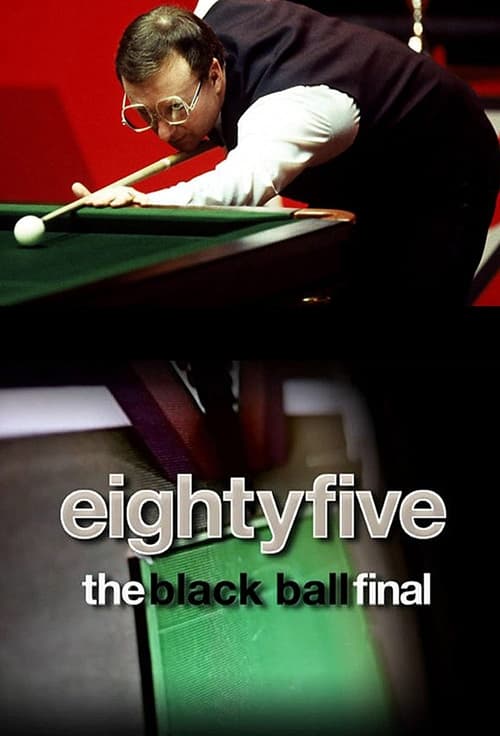
The program is a documentary, not a drama, so there are no deaths, no murder plot, and no hidden character twists to invent. What it does deliver is a full retelling of one of snooker's most famous nights: Steve Davis's ruthless start, Dennis Taylor's long recovery, and the final black-ball decider that ends after midnight with Taylor's only world title.
It opens by framing the 1985 World Snooker Championship final as a legendary sporting moment and a national television event, with Colin Murray guiding the story through archive footage, interviews, and reflections on why the match still matters. The documentary makes clear from the start that this is the story of a match that captured more than 18 million viewers on BBC Two and turned a two-day final into something close to myth. It positions the Crucible Theatre in Sheffield as the battleground and the final frame as the destination, then begins to rewind the tension that leads there.
Steve Davis enters the narrative as the cold, clinical defending champion and world number one, the man expected to win. Dennis Taylor is introduced as the underdog: ranked number 11, a previous finalist, popular and resilient, but not the obvious favorite. That contrast shapes everything that follows. The documentary stresses the psychological weight of the final, the pressure of expectation on Davis, and the sense that Taylor has nothing to lose and everything to gain. The atmosphere is one of quiet suspense, with the film repeatedly returning to the idea that everyone watching knows history is being made, even before the final shot is taken.
The early part of the final is shown as Davis at his most destructive. He surges into an 8-0 lead, playing with total control and making Taylor look overwhelmed. The documentary emphasizes how one-sided the opening seems and how the match already appears close to over. At this point, the narrative is almost about inevitability: Davis is doing what champions do, and Taylor is left chasing the contest from a deep hole. The tone, however, begins to shift as the film explains Taylor's stubborn refusal to collapse.
Taylor slowly fights back, and the documentary turns this recovery into the emotional spine of the story. Frame by frame, he claws his way back into the final, refusing to let the match disappear. The film underscores the length of the battle and the physical and mental grind of a championship match that stretches far past the usual finishing time. The crowd, the commentators, the families, and the millions at home all begin to feel that the night might not end in the simple coronation everyone first expected. Taylor's comeback is shown as both technical and emotional: he is calmer, more opportunistic, and increasingly dangerous whenever Davis gives him an opening.
The film makes the turning points explicit. Taylor narrows the gap, then closes it further, and the final becomes a duel of nerves rather than a display of dominance. Davis, who looks in control for much of the match, is shown growing more uncomfortable as Taylor keeps surviving. The documentary uses the pace of the comeback to build momentum: the more Davis tries to put the match away, the more Taylor pushes it back into contention. By the time the score reaches 17-17, the tension has become unbearable. The story is no longer about whether Davis can win, but about which man will hold himself together in the final, deciding frame.
The final frame begins with the match already over fourteen hours old, and the documentary treats it like a contained thriller. The Crucible lights, the hush of the arena, and the visible strain on both players make the sequence feel almost suspended in time. Davis is still the reigning champion and still the man with the reputation for control, but Taylor now has momentum, belief, and the crowd's emotional investment. The frame becomes a series of tiny shifts in fortune, each one carrying the weight of the championship itself.
As the deciding frame unfolds, Davis edges into a strong position and appears to be on the verge of closing out the title. The documentary explains the pressure of the final balls and how, with just the black remaining, the championship comes down to one last pot. Taylor has already missed one chance in the sequence, and Davis then gets his own opportunity. The film dwells on the awkwardness of the black, the pressure on both men, and the sense that the title can still swing either way. Davis misses, and the room seems to freeze. That miss is the fracture point of the whole match: the champion has one last chance to assert his authority and does not take it.
Taylor now gets the chance that defines his life. The documentary shows him returning to the table with the weight of the world on his shoulders and the entire audience watching. He steps in, composes himself, and pots the black to win the frame, the match, and the world title. The shot is not presented as flashy, but as emotionally overwhelming: a simple stroke carrying immense history. Taylor's reaction is pure release. He raises his cue in celebration, the famous image of triumph after exhaustion, while Davis is left stunned by the collapse of his expected victory. The film lingers on the symbolism of the moment: the underdog beating the champion on the final ball, after a match that has already lasted through the night and into the early hours of the next day.
The documentary then broadens out into reflection. It shows how the match became known forever as the "black ball final," because the entire championship is decided by the last ball on the table. It highlights that the deciding frame finishes after midnight and that the audience is enormous, making the final one of BBC Two's greatest sporting moments. Taylor's victory is presented not only as a personal triumph but as a piece of sporting folklore, the kind of finish that helps define an era. Davis is not humiliated so much as outlasted; Taylor is not merely lucky, but the man who keeps himself alive long enough to seize the final chance.
The ending returns to the larger meaning of the match. The documentary frames the 1985 final as one of the key reasons snooker explodes in popularity in the 1980s, because it combines high skill, extreme tension, and a finish so dramatic that it can be retold forever. Taylor's win remains his only world title, and Davis's loss becomes one of the most famous near-misses in the sport. The final image is not of conflict or tragedy, but of sporting immortality: Dennis Taylor victorious at the table, the black ball gone, the championship decided, and a whole nation still awake to see it.







What is the ending?
In the ending of "Davis v Taylor: The '85 Black Ball Final," the intense match culminates in a dramatic showdown between the two main characters, Davis and Taylor. After a series of tense exchanges and emotional moments, Davis ultimately triumphs, winning the championship. The victory is bittersweet, as it highlights the sacrifices and struggles both players faced throughout their careers. The film concludes with a sense of resolution, as Davis reflects on his journey, while Taylor grapples with the loss but finds a sense of respect for his rival.
Expanding on the ending, the final scenes unfold in a dimly lit, packed arena, the atmosphere thick with anticipation. The camera pans across the faces of the audience, capturing the tension and excitement as the match reaches its climax. Davis, visibly focused and determined, stands at the edge of the table, his brow furrowed in concentration. He recalls the years of hard work and dedication that brought him to this moment, the sacrifices made, and the support of his family and friends echoing in his mind.
As the match progresses, Taylor, equally skilled and passionate, counters Davis's every move with precision. The two players exchange glances filled with unspoken rivalry and mutual respect. The stakes are high, and the pressure mounts with each shot. The sound of the balls clacking together reverberates through the arena, punctuating the silence that envelops the spectators.
In a pivotal moment, Davis executes a remarkable shot that leaves the audience gasping. The camera zooms in on his face, revealing a mix of determination and vulnerability. He knows that this shot could define his career. As the ball rolls toward the pocket, time seems to slow down. The crowd holds its breath, and in that instant, Davis's internal struggle is palpable; he is not just playing for victory but for validation and recognition.
Taylor, sensing the shift in momentum, digs deep and responds with a series of impressive plays, showcasing his own skill and tenacity. The back-and-forth exchange heightens the drama, and the audience is on the edge of their seats, fully invested in the outcome. Each player's emotional state is laid bare; Davis is fueled by a desire to prove himself, while Taylor wrestles with the fear of failure and the weight of expectations.
As the final moments of the match approach, the tension reaches a fever pitch. Davis makes a critical decision, opting for a risky shot that could either seal his victory or lead to his downfall. The camera captures the sweat on his brow, the quickening of his breath, and the intensity in his eyes. He takes a deep breath, steadies himself, and strikes the ball with precision.
The ball glides smoothly across the table, and the arena erupts as it sinks into the pocket. Davis has won. The realization washes over him, a mix of relief and elation. He raises his arms in triumph, but the victory is tinged with a sense of melancholy as he looks over at Taylor, who stands in stunned silence, processing the loss.
In the aftermath, Davis is surrounded by supporters, their cheers ringing in his ears, but he feels a moment of empathy for Taylor. The camera captures Taylor's expression, a blend of disappointment and respect. He approaches Davis, and in a poignant exchange, they shake hands, acknowledging the fierce competition and the journey they both undertook to reach this point.
As the film draws to a close, Davis reflects on his victory, understanding that it is not just about the title but the friendships forged and the lessons learned along the way. Taylor, while grappling with his defeat, begins to find solace in the respect he has earned and the realization that this rivalry has pushed him to be better.
The final scene fades out with Davis looking out into the crowd, a sense of hope and determination in his eyes, while Taylor walks away, contemplating his next steps. The film ends on a note of resilience, emphasizing the importance of perseverance, respect, and the bonds formed through competition.
Is there a post-credit scene?
In the movie "Davis v Taylor: The '85 Black Ball Final," there is no post-credit scene. The film concludes with a powerful and emotional resolution to the intense rivalry between the two main characters, Davis and Taylor, encapsulating the spirit of competition and the personal stakes involved in their match. The final moments focus on the aftermath of the game, highlighting the characters' reflections on their journey, the sacrifices made, and the respect they have developed for one another through their fierce competition. The absence of a post-credit scene allows the audience to fully absorb the weight of the story's conclusion without any additional distractions.
What motivates Davis to compete in the Black Ball Final against Taylor?
Davis is driven by a deep-seated desire to prove himself, not only to his peers but also to his family, who have always doubted his abilities. The pressure of the final match weighs heavily on him, as he seeks redemption for past failures and aims to establish his legacy in the sport.
How does Taylor's character contrast with Davis throughout the film?
Taylor is portrayed as a confident and somewhat arrogant player, embodying the traits of a seasoned champion. His calm demeanor and strategic mindset serve as a foil to Davis's more emotional and passionate approach, highlighting the differences in their backgrounds and motivations.
What pivotal moment changes the course of the match between Davis and Taylor?
A critical turning point occurs when Davis, initially trailing, makes a stunning comeback after a moment of self-reflection. This moment of clarity allows him to regain focus and harness his skills, shifting the momentum of the match and showcasing his resilience.
How does the relationship between Davis and his coach evolve during the film?
Davis's relationship with his coach is initially strained, as the coach struggles to connect with Davis's emotional turmoil. However, as the match progresses, they find common ground, leading to a moment of mutual respect and understanding that ultimately empowers Davis to perform at his best.
What role does the setting of the Black Ball venue play in the story?
The Black Ball venue serves as a character in itself, with its vibrant atmosphere and intense energy amplifying the stakes of the final match. The crowd's reactions and the historical significance of the venue add layers of pressure and excitement, influencing both players' performances and emotional states.
Is this family friendly?
"Davis v Taylor: The '85 Black Ball Final" is a sports drama that centers around the intense rivalry and personal struggles of two professional players, Davis and Taylor, during a pivotal match. While the film primarily focuses on the sport and the characters' emotional journeys, there are a few aspects that may be considered objectionable or upsetting for children or sensitive viewers.
-
Intense Rivalry: The film portrays a fierce competition that can lead to heightened emotions, including anger and frustration, which may be unsettling for younger audiences.
-
Personal Struggles: Characters face personal challenges, including issues related to pressure, failure, and the impact of competition on relationships, which may evoke strong emotional responses.
-
Conflict and Confrontation: There are scenes of verbal confrontations between players and their supporters, which may include heated exchanges that could be distressing.
-
Emotional Turmoil: The film delves into the characters' internal conflicts, showcasing moments of despair and vulnerability that might resonate deeply with sensitive viewers.
-
Physical Strain: The sport itself involves physical challenges and moments of injury or exhaustion, which could be concerning for some viewers.
Overall, while the film is centered around sports and competition, the emotional depth and intensity of the characters' experiences may not be suitable for all children or sensitive individuals.