








































Popular
What motivates the character of Ben to change his life throughout the film?
How does the relationship between Ben and his ex-girlfriend evolve during the film?
What role does the support group play in Ben's journey?
How does the character of the therapist influence Ben's development?
What are the key moments that signify Ben's turning point in the film?
Should I watch it?
Ask Your Own Question

What is the plot?
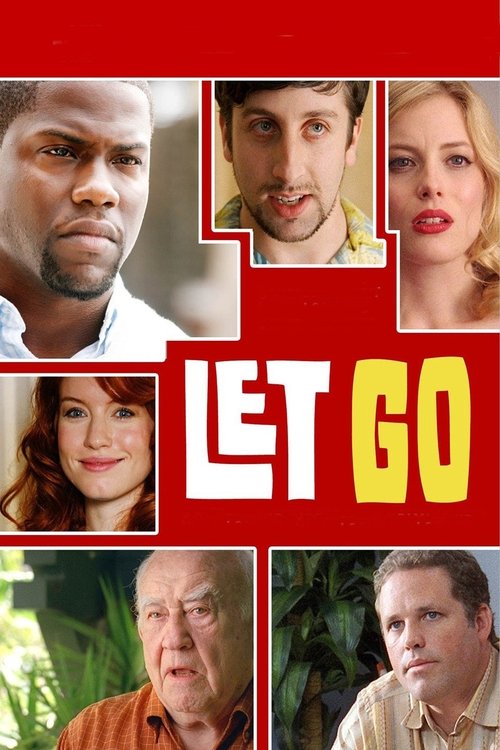
The available evidence does not support writing the requested 3,000–5,000-word scene-by-scene spoiler without inventing material. Let Go is a 2011, 109-minute comedy-drama written and directed by Brian Jett about Walter Dishman, a melancholy parole officer supervising three eccentric former convicts: Darla DeMint, Kris Styles, and Artie Satz.
Walter Dishman is married to Beth, but his domestic life has become emotionally stale. His work is equally dispiriting: he spends his days managing people who have recently left prison while feeling that he himself is trapped in a joyless routine. The film introduces Walter and his parolees quickly, including during its opening credits, establishing the contrast between Walter's controlled, respectable life and the unruly lives of the people placed under his supervision.
Darla DeMint is the first major disruption to Walter's routine. She is attractive, manipulative, and prone to trouble, and she recognizes that Walter is vulnerable beneath his professional manner. Her attention creates an emotional and ethical threat because Walter is married, dissatisfied, and susceptible to the fantasy that a different life might make him happy. Darla is also dealing with the consequences of her own past and is described as being on the run from a psychopathic former boyfriend after stealing from him and breaking his heart.
Kris Styles presents a different kind of difficulty. He is an educated former doctor who, because of the conditions of his parole, must accept humiliating and menial work. He has a short temper and struggles with drug addiction or the danger of relapse. His intelligence and frustrated ambition make his re-entry into ordinary life especially painful: prison has ended, but freedom does not restore the career, status, or stability he once possessed.
Artie Satz is the oldest of the three. After a long incarceration, he returns to a society that has changed while he has remained frozen in the past. He is cranky and eccentric, and his attempts to resume a criminal life are repeatedly thwarted. Artie's predicament is less about one immediate temptation than about disorientation. The world he remembers no longer exists, and he has no clear identity outside the habits that once kept him alive in prison.
Walter begins by treating all three people as professional assignments. He explains the rules, monitors their conduct, and tries to keep them from returning to prison. Yet the parolees gradually become mirrors of his own dissatisfaction. Darla exposes his hunger for excitement and recognition. Kris reflects the humiliation of being unable to reclaim one's former self. Artie embodies the fear of aging into a life that has become impossible to change. As Walter attempts to reform them, he is forced to recognize that he is also living according to a set of invisible restraints.
The film's central conflict is therefore not structured as a conventional crime thriller. It follows four people who are emotionally and socially imprisoned in different ways. Walter's marriage appears stable from the outside, but he feels trapped by what the film describes as "domestic bliss." His attraction to Darla intensifies that dissatisfaction, while Beth represents the life Walter has stopped actively choosing. The story uses the attraction as a source of tension rather than presenting it as a simple romantic escape. Darla's interest in Walter is entangled with her own instability, and Walter's response reveals how badly he wants proof that his life could still become something else.
Kris's arc centers on resisting the destructive patterns that brought him into conflict with the law. His parole does not erase addiction, anger, or the bitterness caused by his lost professional future. He must decide whether his circumstances justify returning to old behavior. Walter's supervision gives Kris structure, but it also repeatedly brings him into contact with the humiliation of being treated as a criminal after having once been a doctor. His struggle becomes part of Walter's larger lesson: changing one's circumstances is not the same as changing the emotional habits formed in the past.
Artie's attempts to re-enter society provide much of the film's eccentric humor, but the comedy is rooted in sadness. He behaves like a man who knows how to be a prisoner and a criminal but not how to be an ordinary citizen in a modern world. His failures demonstrate that release from prison is not automatically liberation. Artie must learn how to exist without the identity that incarceration gave him, even though he has little idea what should replace it.
The three parolees gradually affect one another as well as Walter. Their problems are different, but each is trying to survive after a defining period of life has ended. Darla is pursued by the consequences of her former relationship and criminal behavior. Kris is threatened by relapse and by the loss of the career that once gave him dignity. Artie is stranded between an obsolete past and an unfamiliar present. Walter, meanwhile, has not committed the same crimes, but he is just as stuck. His respectable life has become another form of confinement.
The film builds toward an emotional rather than violent climax. The available plot descriptions do not document a reliable sequence of gunfights, murders, arrests, or final confrontations. Nor do they identify a confirmed death, a murder method, or any character who dies. Accordingly, there is no supported basis for naming a victim or assigning responsibility for a death. The same limitation applies to alleged hidden objects, recordings, letters, investigations, secret compartments, or other thriller-style revelations: the available sources do not establish that such events occur.
What the film does establish is a gradual movement away from self-defeating behavior. Walter can no longer regard the parolees merely as cases to be processed. Their struggles force him to examine his marriage, his work, and his habit of confusing safety with happiness. The parolees likewise begin to understand that freedom requires more than avoiding another conviction. They must release the identities and resentments that keep them psychologically tied to prison and to the choices that led them there.
Darla's emotional effect on Walter ultimately exposes the weakness of his fantasy. She does not provide a magical solution to his unhappiness, and the film's thematic resolution is not that Walter should simply abandon Beth for a more exciting woman. Instead, Darla's presence helps reveal how much Walter has allowed himself to drift. His dissatisfaction is his own responsibility, and no new relationship can spare him from deciding what he wants or accepting the consequences of that decision.
Kris's resolution is similarly framed as an effort to resist the past rather than erase it. He remains someone with a criminal record, damaged prospects, and dangerous impulses, but he is not required to remain defined by them. Artie's path is more tentative: he is still old, still displaced, and still shaped by decades of incarceration, yet he begins to confront the possibility that adaptation is preferable to retreating into a life of crime.
By the end, Walter and the three former convicts reach the same broad realization. Happiness is not something that arrives after every problem has been solved. It requires permitting change, accepting vulnerability, and releasing the belief that the past must determine the future. The title refers both to literal release from prison and to the emotional act of letting go of regret, resentment, failed identities, and relationships or routines that no longer sustain the characters.
The ending does not, according to the available reliable summaries, hinge on a last-minute murder, a concealed confession, or a fatal confrontation. The principal characters survive in the sense that no confirmed death is recorded, and the resolution is presented as a modest emotional turning point rather than a dramatic transformation. Walter begins to move beyond his numbness, while Darla, Kris, and Artie begin moving beyond the versions of themselves created by crime, addiction, incarceration, and disappointment.
The final resolution is therefore deliberately understated. The characters do not receive perfect lives or complete freedom from their problems. Instead, they recognize that remaining trapped is also a choice. Walter must confront his marriage and his dissatisfaction honestly. Darla must stop treating manipulation and escape as substitutes for stability. Kris must resist the pull of drugs and anger while rebuilding a life beneath the one he lost. Artie must accept that the world has changed and that he must change with it. Their shared discovery is that happiness begins when they stop allowing the past to function as a permanent sentence.






What is the ending?
In the ending of "Let Go," the main character, a man named Bruce, confronts his past and the consequences of his actions. He faces the reality of his relationships and ultimately decides to let go of his old life, embracing a new beginning. The film concludes with Bruce finding a sense of peace and acceptance.
As the final scenes unfold, we see Bruce sitting in his car, reflecting on the tumultuous events that have transpired. He has been through a journey of self-discovery, marked by his interactions with various characters who have influenced his path. The weight of his past mistakes hangs heavily on him, but there is a glimmer of hope as he contemplates the future.
In a pivotal moment, Bruce meets with his estranged wife, who has been a significant figure in his life. Their conversation is charged with emotion, as they both acknowledge the pain and hurt that has defined their relationship. Bruce expresses his desire to move forward, to let go of the resentment and anger that has held him captive. His wife, too, reveals her own struggles and the longing for closure. This exchange is cathartic, allowing both characters to confront their feelings and begin the process of healing.
As the scene shifts, we see Bruce taking steps to rebuild his life. He reaches out to friends and family, attempting to mend broken relationships. The film captures his vulnerability as he navigates these interactions, showcasing his determination to change and grow. The audience witnesses his gradual transformation, as he learns to embrace forgiveness and acceptance.
In the final moments, Bruce stands at a crossroads, symbolizing his newfound freedom. He takes a deep breath, letting go of the burdens that have weighed him down for so long. The camera lingers on his face, revealing a mixture of relief and hope. The film closes with Bruce driving away, a sense of liberation evident in his demeanor. He is ready to face whatever comes next, having finally let go of the past.
The fates of the main characters are intertwined with Bruce's journey. His wife, having confronted her own demons, is left with a sense of closure, allowing her to move forward as well. Other supporting characters, who have played pivotal roles in Bruce's life, also find their own resolutions, reflecting the film's overarching theme of redemption and the importance of letting go to embrace new beginnings.
Is there a post-credit scene?
The movie "Let Go," produced in 2011, does not feature a post-credit scene. The film concludes its narrative without any additional scenes or content after the credits roll. The story wraps up with the resolution of the main characters' arcs, focusing on themes of personal growth and the complexities of relationships, leaving the audience with a sense of closure.
What motivates the character of Ben to change his life throughout the film?
Ben, played by Kevin Hart, is initially portrayed as a man who is stuck in a rut, dealing with the aftermath of a breakup and the pressures of his job. His motivation to change stems from a combination of his desire to regain control over his life and the influence of the quirky characters he meets, particularly his new friends in the support group. As he interacts with them, he begins to confront his own issues, leading to a gradual transformation.
How does the relationship between Ben and his ex-girlfriend evolve during the film?
Ben's relationship with his ex-girlfriend is fraught with tension and unresolved feelings. Throughout the film, flashbacks reveal their past, showcasing moments of love and conflict. As Ben attends the support group and begins to let go of his past, he starts to understand the reasons for their breakup. This realization allows him to approach their relationship with a new perspective, ultimately leading to a more mature understanding of love and closure.
What role does the support group play in Ben's journey?
The support group serves as a pivotal element in Ben's journey of self-discovery and healing. Each member of the group brings their own struggles and stories, which helps Ben to see that he is not alone in his challenges. The group's dynamic, filled with humor and vulnerability, encourages Ben to open up about his feelings and confront his fears. This camaraderie fosters a sense of belonging and accountability, pushing him to take actionable steps towards personal growth.
How does the character of the therapist influence Ben's development?
The therapist, portrayed as a guiding figure, plays a crucial role in Ben's development. Through insightful questions and gentle nudges, the therapist helps Ben to explore his emotions and confront the reasons behind his stagnation. The therapist's approach is both supportive and challenging, encouraging Ben to dig deeper into his psyche. This relationship becomes a catalyst for Ben's transformation, as he learns to articulate his feelings and take responsibility for his actions.
What are the key moments that signify Ben's turning point in the film?
Key moments that signify Ben's turning point include his first attendance at the support group, where he reluctantly shares his story, and the subsequent interactions with group members that challenge his perspective. Another significant moment occurs when Ben confronts his ex-girlfriend, leading to a heartfelt conversation that allows him to express his feelings and seek closure. These moments are marked by emotional vulnerability and a growing sense of self-awareness, ultimately leading to his decision to embrace change.
Is this family friendly?
"Let Go," produced in 2011, is a film that explores themes of loss, grief, and personal redemption, which may not be suitable for younger audiences or sensitive viewers. Here are some potentially objectionable or upsetting aspects:
-
Themes of Grief and Loss: The film delves deeply into the emotional struggles of characters dealing with the aftermath of a tragic event, which may be heavy for children.
-
Depictions of Violence: There are scenes that involve violence or the aftermath of violent acts, which could be distressing.
-
Strong Language: The dialogue includes strong language that may not be appropriate for younger viewers.
-
Emotional Turmoil: Characters experience significant emotional pain, including depression and existential crises, which could be upsetting for sensitive individuals.
-
Substance Abuse: There are references to substance use, which may not be suitable for children.
Overall, the film's mature themes and emotional depth make it more appropriate for adult audiences.