






















Popular
What motivates Bruce Wayne to become Batman in Year One?
How does Bruce Wayne's relationship with Jim Gordon develop in the film?
What role does Selina Kyle play in Batman: Year One?
What challenges does Batman face in his first year of crime-fighting?
How does the film portray the theme of corruption within the Gotham Police Department?
Should I watch it?
Ask Your Own Question

What is the plot?
Sorry, we aren't able to watch and write up a full detailed plot yet. Check back in a few days.


What is the ending?
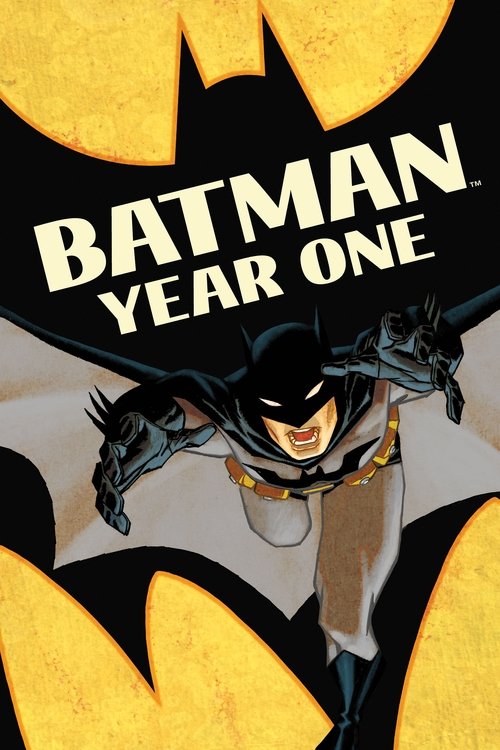
In the ending of "Batman: Year One," Bruce Wayne fully embraces his role as Batman, establishing himself as a symbol of hope and justice in Gotham City. He confronts the corrupt elements of the city, particularly the mob and the police, while forming a crucial alliance with Lieutenant James Gordon. The film concludes with Batman's first major confrontation with the criminal underworld, setting the stage for his ongoing battle against crime.
As the film approaches its climax, we see Bruce Wayne, having spent a year honing his skills and understanding the depths of Gotham's corruption, fully donning the mantle of Batman. The scene opens with a dark, rain-soaked Gotham City, where the atmosphere is thick with tension. Bruce, now confident in his abilities, prepares to confront the organized crime that has plagued the city for far too long.
In a pivotal moment, he faces off against Carmine Falcone, the powerful mob boss who has a stranglehold on Gotham. The confrontation is intense, showcasing Bruce's determination and the physical prowess he has developed. He uses his gadgets and combat skills to outmaneuver Falcone's men, demonstrating his evolution from a vengeful vigilante to a strategic hero. The stakes are high, and the tension is palpable as Bruce fights not just for himself, but for the soul of Gotham.
Meanwhile, Lieutenant James Gordon, who has been navigating the treacherous waters of a corrupt police force, finds himself increasingly aligned with Batman. Their partnership is solidified during a critical moment when Gordon realizes that Batman is not just a criminal but a necessary force for good. The two men share a mutual respect, and Gordon's moral compass becomes a guiding light for Batman as he continues his crusade against crime.
As the final confrontation unfolds, Batman's presence begins to shift the dynamics in Gotham. The criminals, once emboldened by fear, now find themselves on the defensive. The film captures the moment when Batman, silhouetted against the city skyline, becomes a symbol of hope for the citizens of Gotham. His resolve to fight against the darkness is unwavering, and he understands that this is just the beginning of a long and arduous journey.
In the closing scenes, we see the aftermath of Batman's actions. The city is still fraught with danger, but there is a sense of hope as citizens begin to rally against the corruption that has long plagued them. Bruce Wayne, now fully committed to his dual identity, stands as a guardian of Gotham, ready to face whatever challenges lie ahead.
The film concludes with a powerful image of Batman standing atop a building, looking out over the city he has vowed to protect. His internal struggle is evident; he knows that the fight against crime will be ongoing, but he is resolute in his mission. The final shot encapsulates his transformation from a man seeking vengeance to a symbol of justice, setting the stage for the battles to come.
In summary, Bruce Wayne has embraced his role as Batman, forging a crucial alliance with James Gordon, while Gotham begins to see a glimmer of hope amidst the darkness. The film ends with Batman poised to continue his fight, embodying the spirit of resilience and justice that will define his legacy.
Is there a post-credit scene?
In the movie "Batman: Year One," produced in 2011, there is no post-credit scene. The film concludes with a focus on the establishment of Batman as a symbol of hope and justice in Gotham City, emphasizing his partnership with Jim Gordon and the beginning of their fight against crime. The narrative wraps up without any additional scenes or teasers after the credits.
What motivates Bruce Wayne to become Batman in Year One?
In 'Batman: Year One', Bruce Wayne is driven by a deep sense of justice and a desire to combat the rampant crime in Gotham City. After years of training and preparation, he returns to Gotham, witnessing the city's decay and corruption firsthand. The murder of his parents haunts him, fueling his determination to fight against the criminal underworld. His initial attempts to establish himself as a vigilante are fraught with challenges, but he is resolute in his mission to protect the innocent and instill fear in criminals.
How does Bruce Wayne's relationship with Jim Gordon develop in the film?
Bruce Wayne's relationship with Jim Gordon begins with mutual distrust. Initially, Gordon is a police officer struggling against the corruption within the Gotham Police Department, while Bruce operates outside the law as Batman. Their paths cross when Gordon realizes that Batman is not just a criminal but a potential ally in the fight against crime. As they face common enemies, their relationship evolves into a partnership built on respect and shared goals, culminating in Gordon's recognition of Batman as a crucial ally in restoring order to Gotham.
What role does Selina Kyle play in Batman: Year One?
Selina Kyle, who later becomes Catwoman, is introduced as a complex character in 'Batman: Year One'. She is depicted as a skilled thief with her own moral code, navigating the dangerous underbelly of Gotham. Her interactions with Bruce Wayne are charged with tension and attraction, as both characters are drawn to each other's dual lives. Selina's motivations are driven by survival and independence, and her presence adds depth to the narrative, highlighting the blurred lines between heroism and criminality.
What challenges does Batman face in his first year of crime-fighting?
In 'Batman: Year One', Batman faces numerous challenges as he attempts to establish himself as a force for good in Gotham. He struggles with the limitations of his training and the unpredictability of crime, often finding himself outmatched by seasoned criminals. His initial encounters with figures like Carmine Falcone and the corrupt police force test his resolve and strategy. Additionally, he grapples with the psychological toll of his mission, as he confronts his fears and the consequences of his actions, leading to moments of doubt and vulnerability.
How does the film portray the theme of corruption within the Gotham Police Department?
The film vividly illustrates the theme of corruption within the Gotham Police Department through the character of Jim Gordon and his struggles against his colleagues. As Gordon navigates a system rife with bribery and collusion, he becomes increasingly disillusioned with the very institution he serves. The portrayal of corrupt officers, particularly through their interactions with organized crime, highlights the pervasive moral decay in Gotham. This backdrop serves to emphasize the necessity of Batman's emergence as a vigilante, as he represents a stark contrast to the failing system.
Is this family friendly?
"Batman: Year One" is not considered family-friendly due to several potentially objectionable or upsetting scenes. Here are some aspects that may be concerning for children or sensitive viewers:
-
Violence: The film contains scenes of intense violence, including hand-to-hand combat, gunfire, and the depiction of injuries. Characters are shown in perilous situations, which may be distressing.
-
Mature Themes: The story explores themes of crime, corruption, and moral ambiguity. The darker aspects of Gotham City, including the presence of organized crime and the struggles of law enforcement, may be unsettling.
-
Death and Loss: There are references to death and the impact of violence on families and communities, which could be emotionally heavy for younger viewers.
-
Adult Situations: The film includes scenes that imply adult relationships and situations, which may not be suitable for children.
-
Emotional Turmoil: Characters experience significant emotional struggles, including fear, anger, and isolation, which may resonate deeply and be challenging for sensitive viewers.
Overall, while the film is a compelling adaptation of Batman's origin story, its mature content makes it more appropriate for older teens and adults.









