







Popular
What motivates the character of Marie throughout the film?
How does the relationship between Marie and Leonie evolve during the film?
What role does the character of the stranger play in the story?
How does the environment impact the characters' decisions and actions?
What is the significance of the recurring theme of trust among the characters?
Should I watch it?
Ask Your Own Question

What is the plot?
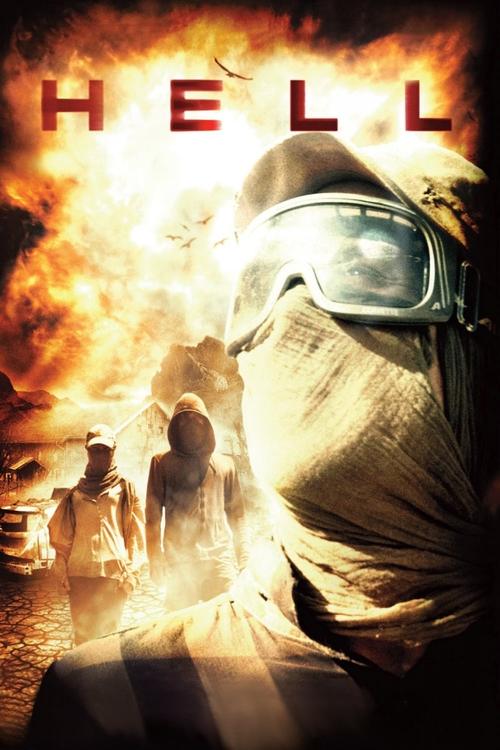
In 2016, the world is already broken beyond recognition: solar flares have driven the global temperature up by about 10 degrees Celsius, the sun burns with a cruel white intensity, and central Europe has become a dry, lifeless wasteland where water is precious and daylight can kill. The film opens on this scorched reality and immediately makes survival feel like a race against time, with every stop, every shadow, and every mile on the road carrying danger.
Marie, a young woman hardened by the collapse around her, is traveling with her boyfriend Phillip and her younger sister Leonie in a battered Volvo station wagon fitted with metal mesh on the windows. They are heading toward the German Alps, where they hope water may still exist in greater supply, and their journey is defined by constant scavenging for gas, water, and supplies. The car is not a comfort but a moving shelter, packed with everything they own, and every object inside it has become a survival tool rather than an ordinary possession. Outside, the landscape is a dead blur of cracked earth, stripped trees, and blinding heat, and the family's tense, exhausted silence makes clear that they have been living this way long enough to understand how quickly hope can turn into panic.
Marie is the emotional center of the early story, while Phillip is practical, guarded, and increasingly anxious about how fragile their situation is. Leonie, younger and more vulnerable, depends on the others but is also part of the family's tight survival unit. The film establishes almost immediately that trust is a luxury in this world, because every encounter with another human being might be the last good decision they make. The sun is not just background; it is a constant threat, and travel is safest only when they can move through cooler stretches and keep themselves from exposure.
The trio stops at ruined places along the route to search for anything useful, and these pauses are never restful. Every abandoned structure promises water or fuel, but every empty room also suggests that someone else has already passed through, desperate and dangerous. In one such ruined area, they encounter Tom, a lone male survivor played by Stipe Erceg. Tom's arrival is an important shift because it expands the story from a small family unit into a fragile group of strangers forced to decide whether cooperation is safer than suspicion. The confrontation that introduces him is tense, but the group accepts him as a useful addition, another pair of hands in a world where one person alone can die quickly. His presence adds a new layer of uncertainty, because he may be helpful, but he may also be hiding motives of his own.
As the four continue through the wasteland, the film grows more oppressive. The road is empty in a way that feels unnatural, and the silence of the environment is constantly broken by the sound of their vehicle struggling over the broken ground. The characters are not merely avoiding other people; they are trying to outrun dehydration, heat, and the creeping knowledge that civilization has failed them. Their goal is still the same--reach safer land, find water, survive the day--but the journey has become emotionally heavier now that there are more mouths to feed and more personalities to protect.
That fragile balance shatters when the group is attacked by carjackers. The ambush is sudden and brutal, staged at the roadside where the survivors are vulnerable and exposed. In the chaos, Leonie is abducted, and the attackers take the vehicle as well. The kidnapping is the first major break in the family and transforms the film from a survival road movie into a rescue story driven by guilt, panic, and the urgent need to recover the youngest member of the group. For Marie, the loss lands with particular force because Leonie is not just a companion; she is her sister, and the world outside the car has just proven that it will consume the weak without hesitation.
The ambush also strips the survivors of one of their most valuable protections: mobility. Without the Volvo, they are exposed to the sun, to raiders, and to anyone else who sees them as easy prey. The film uses this rupture to intensify the sense that every safety net has been cut away. Marie and Phillip are left with less hope and more fear, and Tom's role becomes more significant because he is now part of a smaller, more desperate group trying to recover someone lost to a world that has no mercy.
Their search eventually leads them into deeper danger, where the story reveals its darkest truth. The survivors are captured by a farming family who have adapted to the collapse in the most horrifying way possible: they keep human beings in the farm's former slaughterhouse and use them as a food source. The slaughterhouse, once meant for animals, becomes a place where human bodies are processed, contained, and treated as livestock. This is the film's central revelation, and it redefines everything that came before it. The real threat is not only the dying climate but the way human beings have begun to organize survival around predation.
The farm family's existence is especially chilling because it suggests a whole hidden economy of cannibalism built inside the ruins of ordinary rural life. The slaughterhouse is not an improvised hideout; it is a system. Victims are held, controlled, and fed upon, and the family's cruelty is presented not as madness but as adaptation. The horror comes from how functional the place is. In a world where food is scarce, the family has turned survival into industrialized violence. The characters who arrive hoping to rescue Leonie now face the possibility that they themselves will become meat.
The film's tension grows from this point through a series of confrontations, escapes, and desperate attempts to outthink their captors. The recap material indicates a later rescue plan involving a hooded man, a bottle bomb, and a coordinated distraction, and while the naming in that account is less reliable than the core plot summaries, it reflects the shape of the film's late-stage action: the prisoners and their allies attempt to exploit chaos, create a diversion, and free the captive sister from the family's control. In that sequence, the captors are distracted by an explosion while Marie's side tries to break Leonie free and reach the car. The plan is tense because it depends on split-second timing; one mistake means death or recapture. The moment becomes a furious scramble, with bodies moving through smoke and confusion as the captors react to the blast.
But even when they manage to get away temporarily, the escape is incomplete. The recap describes how Marie and Phillip move off, only to learn that Leonie is still in the captors' hands, forcing Marie into a new wave of desperation. Phillip resists the idea of turning back, but Marie refuses to accept leaving her sister behind. This emotional divide becomes one of the film's sharpest human conflicts: survival says keep running, but family says go back. Marie chooses Leonie over safety and goes alone, a decision that makes her both reckless and heroic, because in this world love and self-destruction often look the same.
Her search leads her to a railway tunnel, where she finds Leonie's bag and realizes that the kidnappers have taken her sister further along that route. The tunnel is a powerful visual shift from the blinding openness of the sunlit wasteland to an enclosed, shadowed space where danger feels closer and more intimate. It is a place of echoes and narrow sightlines, the kind of location where fear multiplies because one cannot see what is coming until it is nearly upon them. Marie presses onward, and Phillip eventually follows, but by this point the pursuit has become more fragmented and exhausting, each step forward driven by panic rather than strategy.
The final phase of the story pushes Marie into direct confrontation with the people who have taken Leonie. The recap indicates that Marie reaches a forested area where she has told Leonie to run if they are separated, only to discover that Elizabeth and her son have recaptured her sister. Elizabeth is one of the farm's key figures, and her presence personalizes the horror of the cannibal household by giving it a human face. When Marie confronts her, the encounter is immediate and physical: Marie attacks Elizabeth and injures her. The moment is not elegant or triumphant; it is raw, furious, and fueled by the need to save Leonie at any cost.
The film's ending, as reflected in the recap material, is built around this final attempt to break the family's control and free Leonie from captivity. Marie's determination becomes the emotional engine of the climax, and the tension comes from how close rescue always seems to be before it slips away again. Phillip's role in the later escape attempt is defined by action and hesitation--he tries to help, but he also remains more cautious about returning into danger than Marie does. That difference gives the climax additional emotional strain, because the characters are no longer united by a single plan; they are separated by fear, grief, and competing ideas about what survival means.
The available sources do not provide a fully consistent, scene-by-scene account of every final beat, but they do make clear that the story ends with a violent struggle against the cannibal family, with Marie pushing through the chaos to recover Leonie. The world remains broken; there is no clean restoration or miracle rescue, only the possibility of continuing to live in the aftermath of what they have endured. The film's bleak power lies in the fact that survival itself is the resolution. The sun still burns, the land is still dead, and the human beings left behind are still forced to choose between mercy and hunger.
What remains most vivid is the film's steady transformation of ordinary necessities into desperate obsessions. A car becomes shelter, a road becomes a trap, a farmhouse becomes a slaughterhouse, and a family becomes prey or predator depending on who holds the power. Marie's journey is not just about crossing distance; it is about watching the world erase every assumption of safety and then deciding, again and again, to move forward anyway. Her relationship with Leonie gives the story its beating heart, and the kidnapping, rescue attempts, and final showdown all flow from that bond. By the time the violence peaks, the film has made its point with relentless clarity: in this scorched future, the most dangerous force is not the sun alone, but what people become when they are hungry enough to eat one another.
More Movies Like This
Browse All Movies →






What is the ending?
In the ending of the movie "Hell," the main characters, Marie and her brother, are confronted by a group of men who have been hunting them. The tension escalates as they struggle for survival in a desolate landscape. Ultimately, Marie makes a desperate choice to protect herself and her brother, leading to a tragic conclusion.
As the film approaches its climax, Marie and her brother, who have been on the run in a post-apocalyptic world ravaged by the sun's intense heat, find themselves cornered by a group of men. The men, driven by desperation and the need for survival, represent a threat to Marie and her brother's already fragile existence.
In a tense scene, Marie and her brother attempt to evade capture, but the men are relentless. The atmosphere is thick with fear and desperation as the siblings navigate the barren landscape, their bodies weary and their spirits dwindling. The sun beats down mercilessly, a constant reminder of the harsh reality they are living in.
As the confrontation escalates, Marie's protective instincts kick in. She realizes that the only way to ensure her brother's safety is to make a harrowing decision. In a moment of sheer desperation, she sacrifices herself, allowing her brother a chance to escape. This act of selflessness is filled with emotional weight, showcasing the bond between the siblings and the lengths to which one will go to protect family.
The final moments are heart-wrenching. Marie faces the men, her resolve unwavering despite the fear that grips her. The screen fades to black, leaving the audience with the haunting image of her sacrifice and the uncertainty of her brother's fate. The film closes on a note of despair, emphasizing the brutal reality of survival in a world stripped of humanity and compassion.
In summary, Marie's fate is sealed as she confronts the men, while her brother's future remains uncertain, encapsulating the film's themes of sacrifice, survival, and the harshness of a world in chaos.
Is there a post-credit scene?
The movie "Hell," produced in 2011, does not contain a post-credit scene. The film concludes its narrative without any additional scenes or content after the credits roll. The story wraps up with a focus on the characters' struggles and the harsh realities of their environment, leaving the audience with a sense of finality regarding the events that have transpired.
What motivates the character of Marie throughout the film?
Marie is driven by a desperate need to survive in a post-apocalyptic world where the sun has scorched the earth, leading to a lack of water and food. Her determination to protect her younger sister, Leonie, fuels her actions, as she navigates the dangers of their environment and the threats posed by other survivors.
How does the relationship between Marie and Leonie evolve during the film?
Initially, Marie is fiercely protective of Leonie, showcasing a strong sisterly bond. As the film progresses, the harsh realities of their situation strain their relationship, with Leonie becoming more aware of the dangers around them and questioning Marie's decisions. This evolution highlights the tension between innocence and survival.
What role does the character of the stranger play in the story?
The stranger represents both a potential threat and a glimmer of hope for Marie and Leonie. His arrival complicates their survival as he offers assistance but also poses a risk to their safety. His intentions are ambiguous, creating tension and uncertainty about whether he can be trusted.
How does the environment impact the characters' decisions and actions?
The desolate, sun-scorched landscape profoundly affects the characters' choices. The scarcity of resources forces them into morally ambiguous situations, as they must decide how far they are willing to go to secure food and water. The oppressive heat and barren surroundings serve as a constant reminder of their dire circumstances.
What is the significance of the recurring theme of trust among the characters?
Trust is a critical theme that shapes the interactions between characters. Marie's initial reluctance to trust the stranger reflects her protective instincts, while Leonie's growing curiosity about others highlights the tension between survival and connection. The film explores how trust can be both a lifeline and a potential downfall in a world where betrayal is common.
Is this family friendly?
The movie "Hell," produced in 2011, is not considered family-friendly and contains several potentially objectionable or upsetting elements. Here are some aspects that may be concerning for children or sensitive viewers:
-
Violence and Death: The film features scenes of violence, including the aftermath of violent encounters and the presence of dead bodies, which can be disturbing.
-
Survival Themes: The characters are placed in extreme survival situations that evoke feelings of desperation and hopelessness, which may be unsettling.
-
Emotional Distress: The characters experience significant emotional turmoil, including fear, despair, and anxiety, which can be intense and distressing.
-
Dark Atmosphere: The overall tone of the film is bleak and oppressive, contributing to a sense of dread that may be uncomfortable for younger viewers.
-
Mature Themes: The film explores themes of survival in a post-apocalyptic world, including the breakdown of societal norms, which may be too complex or heavy for children.
These elements combine to create a film that is more suitable for mature audiences rather than children or sensitive individuals.







