














Popular
What is the origin of Bem's humanoid monster abilities?
How does Bem's relationship with the human characters evolve throughout the film?
What role does the antagonist play in Bem's journey?
How does Bem's appearance affect his interactions with others?
What significant events lead to Bem's transformation throughout the film?
Should I watch it?
Ask Your Own Question

What is the plot?
Sorry, we aren't able to watch and write up a full detailed plot yet. Check back in a few days.
More Movies Like This
Browse All Movies →







What is the ending?
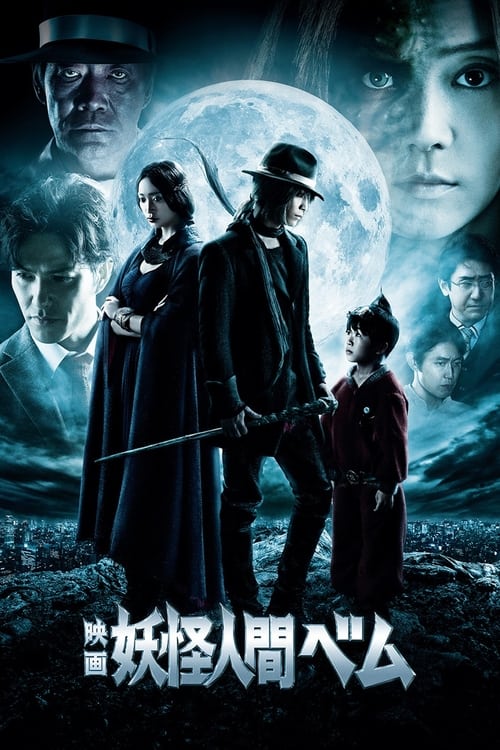
In the ending of "Humanoid Monster, Bem," Bem, the humanoid monster, confronts the antagonist, who has been manipulating events throughout the story. In a climactic battle, Bem fights to protect humanity and ultimately sacrifices himself to save the people he has come to care for. The film concludes with a sense of loss but also a glimmer of hope, as the remaining characters reflect on Bem's sacrifice and the impact he had on their lives.
As the final act unfolds, the atmosphere is tense and charged with emotion. The scene opens with Bem standing at the edge of a desolate landscape, the remnants of a city ravaged by chaos and conflict. His monstrous form is a stark contrast to the destruction around him, yet there is a flicker of humanity in his eyes. He knows that the time has come to confront the true enemy, the one who has orchestrated the turmoil.
The camera shifts to the antagonist, a figure shrouded in darkness, who has been manipulating both humans and monsters for his own gain. He stands in a lair filled with ominous machinery, a twisted smile on his face as he prepares to unleash his final plan. The tension builds as Bem approaches, his heart heavy with the weight of his choices. He is determined to protect the humans who have shown him kindness, despite his monstrous appearance.
As they engage in a fierce battle, the visuals are striking--flashes of light and shadow dance across the screen as Bem uses his unique abilities to counter the antagonist's attacks. Each blow exchanged is not just a physical confrontation but a clash of ideologies. Bem fights not only for his own redemption but for the future of those he has come to love.
In a pivotal moment, the antagonist reveals his true intentions, showcasing the depths of his cruelty. He believes that monsters should reign over humans, and he taunts Bem, trying to provoke him into despair. However, Bem's resolve only strengthens. He recalls the moments of connection he shared with the humans, particularly with the young girl who saw beyond his monstrous exterior. This memory fuels his determination.
The battle reaches its climax as Bem, realizing that he must make the ultimate sacrifice, channels all his energy into a final attack. With a powerful surge, he strikes the antagonist, but the cost is high. As the antagonist is defeated, a shockwave of energy radiates outward, engulfing Bem. The scene is heart-wrenching; he is torn between the joy of victory and the sorrow of his impending fate.
In his final moments, Bem looks back at the humans he has fought to protect. Tears glisten in his eyes as he acknowledges the love and acceptance he has found among them. The camera captures the expressions of the remaining characters--fear, sadness, and a profound sense of loss. They realize that Bem's sacrifice has saved them, but it has also taken away a friend who had fought against the odds to prove his worth.
As the dust settles, the remaining characters gather in the aftermath of the battle. They stand in silence, reflecting on the impact of Bem's actions. The young girl, who had formed a bond with him, clutches a small token he left behind, a symbol of hope and the possibility of understanding between humans and monsters. The film closes on a poignant note, emphasizing the themes of sacrifice, acceptance, and the enduring struggle between good and evil.
In the end, Bem's fate is sealed as he becomes a legend among the humans, a reminder of the complexities of identity and the capacity for love and sacrifice, even in the most unexpected forms. The remaining characters, though grieving, are inspired to carry on his legacy, striving for a world where monsters and humans can coexist peacefully.
Is there a post-credit scene?
In the movie "Humanoid Monster, Bem," produced in 2012, there is indeed a post-credit scene. After the main credits roll, the scene opens in a dimly lit, abandoned laboratory. The atmosphere is thick with tension, and the faint sound of dripping water echoes in the background.
The camera pans slowly across the room, revealing remnants of experiments and broken equipment, hinting at the dark past of the place. Suddenly, a flickering light illuminates a large containment chamber in the center of the room. Inside, a shadowy figure stirs, its features obscured by the darkness.
As the camera zooms in, the figure begins to take shape, revealing a humanoid form that bears a striking resemblance to Bem, the protagonist. The creature's eyes snap open, glowing with an eerie light, suggesting a blend of human and monstrous traits. It appears to be awakening from a long slumber, and a low growl emanates from its throat, filled with both confusion and rage.
The scene cuts to a close-up of the creature's face, showcasing a mix of fear and determination. It seems to be grappling with its identity, torn between its monstrous nature and the remnants of its humanity. The tension builds as the creature begins to pound against the glass of the chamber, desperate to break free.
The screen fades to black, and the final words appear: "The story is far from over." This leaves the audience with a sense of unease and anticipation, hinting at potential future conflicts and the ongoing struggle between humanity and monstrosity. The post-credit scene effectively encapsulates the film's themes of identity, transformation, and the consequences of scientific experimentation, while also teasing the possibility of further exploration of Bem's world.
What is the origin of Bem's humanoid monster abilities?
Bem, the protagonist, is a humanoid monster who possesses unique abilities that stem from his alien heritage. He is part of a race that has been misunderstood and feared by humans, leading to his struggle for acceptance and understanding.
How does Bem's relationship with the human characters evolve throughout the film?
Throughout the film, Bem's interactions with human characters, particularly a young girl named Kiki, showcase his internal conflict. Initially, he is seen as a threat, but as he protects Kiki and others from danger, their relationship deepens, highlighting themes of trust and acceptance.
What role does the antagonist play in Bem's journey?
The antagonist, a government agent, represents the fear and prejudice against Bem's kind. His relentless pursuit of Bem forces the protagonist to confront his identity and the societal rejection he faces, ultimately driving the narrative tension.
How does Bem's appearance affect his interactions with others?
Bem's monstrous appearance, with his distinct features and alien traits, elicits fear and hostility from humans. This physicality creates barriers in his interactions, as he struggles to communicate his true intentions and desires, leading to moments of isolation and longing for acceptance.
What significant events lead to Bem's transformation throughout the film?
Key events, such as his encounters with humans who show kindness, and moments of conflict where he must choose between violence and compassion, catalyze Bem's transformation. These experiences challenge his understanding of humanity and ultimately shape his character arc towards embracing his identity.
Is this family friendly?
"Humanoid Monster, Bem" is not considered family-friendly due to several potentially objectionable or upsetting aspects. Here are some elements that may be concerning for children or sensitive viewers:
-
Violence and Horror Elements: The film contains scenes of violence, including confrontations with monsters and the resulting chaos, which may be frightening for younger audiences.
-
Dark Themes: The narrative explores themes of alienation, identity, and the struggle between good and evil, which can be heavy and unsettling.
-
Monstrous Transformations: The visual representation of characters transforming into humanoid monsters can be disturbing, featuring grotesque imagery that may evoke fear.
-
Emotional Turmoil: Characters experience significant emotional distress, including feelings of loneliness and rejection, which may resonate negatively with sensitive viewers.
-
Mature Situations: There are moments that touch on complex moral dilemmas and societal issues, which may not be suitable for younger viewers.
Overall, the film's tone and content may not be appropriate for children or those who are easily upset by horror and dark themes.







