
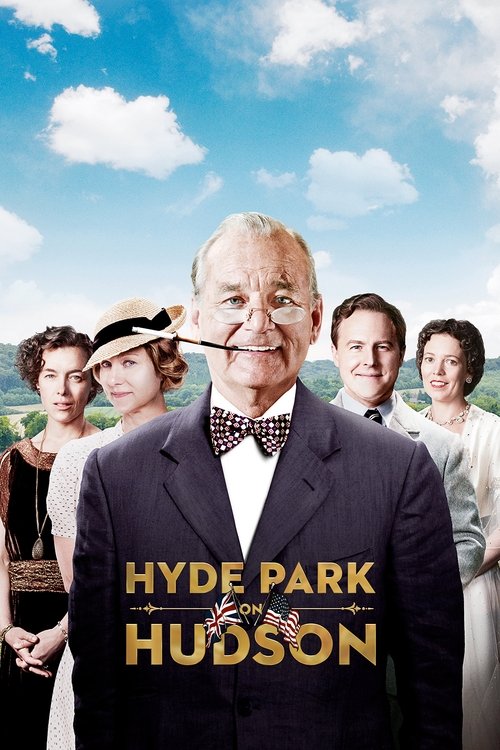
















Popular
What is the significance of Franklin D. Roosevelt's relationship with Daisy Suckley in the film?
How does the visit of King George VI and Queen Mary impact the dynamics at Hyde Park?
What role does the setting of Hyde Park play in the story?
How does FDR's polio condition affect his interactions with other characters?
What is the significance of the picnic scene in the film?
Should I watch it?
Ask Your Own Question

What is the plot?
Sorry, we aren't able to watch and write up a full detailed plot yet. Check back in a few days.







What is the ending?
In the ending of "Hyde Park on Hudson," Franklin D. Roosevelt's relationship with his distant cousin, Margaret "Daisy" Suckley, comes to a poignant conclusion as they navigate the complexities of love, duty, and the impending challenges of World War II. The film closes with Daisy reflecting on her time with FDR, acknowledging the bittersweet nature of their relationship as she realizes the weight of his responsibilities as President.
As the film progresses towards its conclusion, we find ourselves in the summer of 1939. The atmosphere is charged with anticipation as the world stands on the brink of war. Daisy, who has been a close confidante and lover to FDR, is increasingly aware of the demands placed upon him by his role as President. The film captures the intimate moments shared between them, filled with warmth and affection, yet shadowed by the looming responsibilities that FDR must face.
In a pivotal scene, Daisy accompanies FDR to a picnic at Hyde Park, where they share a tender moment, reflecting on their relationship and the challenges ahead. The picnic serves as a metaphor for their connection, a brief escape from the pressures of the outside world. However, the reality of FDR's political obligations soon intrudes, reminding both characters of the limitations imposed by his position.
As the narrative unfolds, we witness the arrival of King George VI and Queen Elizabeth of the United Kingdom, who visit Hyde Park to seek FDR's support in the face of Nazi aggression. The royal visit highlights the gravity of the situation and the weight of FDR's decisions. Daisy, feeling the strain of being in the background, grapples with her feelings of love and the knowledge that FDR's duty to the nation must come first.
In the final scenes, Daisy is left to reflect on her relationship with FDR as he becomes increasingly consumed by his role as a leader. The emotional distance grows, and Daisy understands that their time together is limited. The film closes with Daisy looking out over the landscape of Hyde Park, a symbol of both their shared memories and the inevitable separation brought on by FDR's responsibilities.
Ultimately, FDR remains committed to his role as President, facing the challenges of the impending war with resolve. Daisy, while heartbroken, comes to terms with her place in his life, recognizing that her love for him is intertwined with the sacrifices he must make for the greater good. The film ends on a note of bittersweet acceptance, encapsulating the complexities of love, duty, and the personal sacrifices made in the face of historical events.
Is there a post-credit scene?
Hyde Park on Hudson does not have a post-credit scene. The film concludes without any additional scenes or content after the credits roll. The story wraps up with a focus on the relationship between Franklin D. Roosevelt and his distant cousin, Margaret "Daisy" Suckley, highlighting the emotional complexities and historical context of their connection during a pivotal moment in American history. The film ends on a reflective note, emphasizing the personal and political challenges faced by Roosevelt as he navigates his role as President while dealing with his health issues and the onset of World War II.
What is the significance of Franklin D. Roosevelt's relationship with Daisy Suckley in the film?
Franklin D. Roosevelt's relationship with Daisy Suckley is central to the narrative, showcasing a personal side of the president that contrasts with his public persona. Daisy, portrayed as a distant cousin, becomes a confidante and romantic interest for FDR during a pivotal time in his life. Their relationship is marked by intimacy and vulnerability, revealing FDR's struggles with his polio condition and the pressures of his political role. The emotional connection they share highlights themes of love, secrecy, and the complexities of human relationships amidst the backdrop of historical events.
How does the visit of King George VI and Queen Mary impact the dynamics at Hyde Park?
The visit of King George VI and Queen Mary to Hyde Park serves as a catalyst for both comedic and tense moments in the film. The royal visit is intended to strengthen Anglo-American relations during a time of impending war. However, it also creates a sense of chaos and pressure for FDR and his family, as they navigate the expectations of the royal protocol. The interactions between the characters, particularly FDR's informal and relaxed demeanor in contrast to the formality of the royals, highlight cultural differences and the personal stakes involved in diplomacy.
What role does the setting of Hyde Park play in the story?
Hyde Park serves as a crucial setting that encapsulates the personal and political life of Franklin D. Roosevelt. The lush, serene landscape of the estate contrasts with the weight of the historical events unfolding during the time. It becomes a refuge for FDR, where he can escape the pressures of Washington, D.C., and connect with Daisy Suckley. The setting also facilitates intimate gatherings and discussions that reveal character motivations and relationships, making it a character in its own right that influences the narrative's emotional tone.
How does FDR's polio condition affect his interactions with other characters?
FDR's polio condition profoundly affects his interactions with other characters, shaping both his physical presence and emotional state. His reliance on a wheelchair and the need for assistance create a sense of vulnerability, yet he often compensates with charm and wit. This dynamic influences his relationship with Daisy, as she becomes both a source of support and a partner in navigating his limitations. Additionally, his condition adds layers of complexity to his interactions with the royal couple, as he balances the need to project strength and authority while grappling with his own physical challenges.
What is the significance of the picnic scene in the film?
The picnic scene in the film is significant as it encapsulates the informal and personal nature of FDR's relationship with Daisy Suckley, contrasting sharply with the formalities of political life. During this scene, the characters share laughter and candid moments, allowing viewers to witness the genuine connection between them. The picnic also serves as a metaphor for the simplicity and joy that can exist amidst the complexities of leadership and impending global conflict. It highlights the theme of finding solace in personal relationships, even in turbulent times.
Is this family friendly?
"Hyde Park on Hudson" is a historical drama that explores the personal life of Franklin D. Roosevelt and his relationship with his distant cousin, Margaret "Daisy" Suckley. While the film is not overtly graphic or violent, there are several elements that may be considered objectionable or upsetting for children or sensitive viewers:
-
Themes of Infidelity: The film delves into Roosevelt's extramarital affair with Daisy, which may be confusing or inappropriate for younger audiences.
-
Depictions of Illness: There are scenes that portray Roosevelt's struggle with polio and the physical limitations it imposes on him, which could be distressing for some viewers.
-
Political Tension: The film includes discussions of political issues and the lead-up to World War II, which may be heavy or complex for younger viewers to understand.
-
Emotional Turmoil: Characters experience moments of sadness, longing, and conflict, particularly in relation to family dynamics and personal relationships, which may evoke strong emotions.
-
Mature Themes: The film touches on themes of power, privilege, and the complexities of human relationships, which may not resonate with younger audiences.
Overall, while the film is not explicitly inappropriate, its mature themes and emotional depth may make it more suitable for older teens and adults.







