
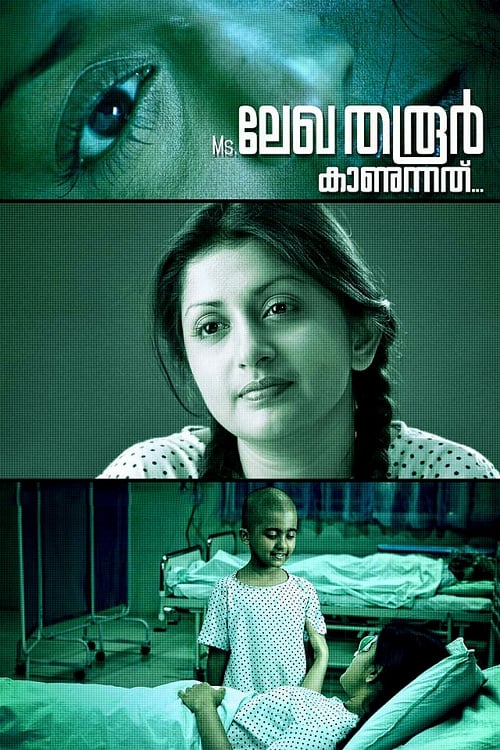













Popular
What role does the setting play in the development of the plot?
What is the significance of the character Lekha Tharoor in the story?
How does the relationship between Lekha and her love interest develop throughout the film?
How do secondary characters influence Lekha's decisions throughout the film?
What are the key challenges Lekha faces in her personal life?
Should I watch it?
Ask Your Own Question

What is the plot?
Sorry, we aren't able to watch and write up a full detailed plot yet. Check back in a few days.









What is the ending?
In the ending of "Ms. Lekha Tharoor Kaanunnathu," Lekha, after a series of emotional and supernatural experiences, comes to terms with her past and the choices she has made. She finds closure regarding her relationship with her deceased husband, and the film concludes with her embracing a new beginning in her life.
As the final scenes unfold, we see Lekha standing in her home, reflecting on the memories of her husband, who has been a significant presence throughout her journey. The atmosphere is heavy with nostalgia, yet there is a sense of liberation in her demeanor. She acknowledges the love they shared but also recognizes the need to move forward.
In a poignant moment, she visits the places that hold memories of her past, allowing herself to grieve and celebrate the life they had together. The film closes with her stepping out into the world, symbolizing her readiness to embrace the future, leaving behind the shadows of her past.
Now, let's delve into the ending in a more detailed, chronological narrative.
As the climax of "Ms. Lekha Tharoor Kaanunnathu" approaches, the tension builds around Lekha's internal struggle. She has been haunted by the memories of her late husband, and the supernatural elements that have surrounded her journey come to a head. In the penultimate scene, Lekha finds herself in a dreamlike state, where she confronts the spirit of her husband. This encounter is filled with emotional weight, as she expresses her feelings of loss, guilt, and longing.
Her husband, appearing serene yet sorrowful, reassures her that he is at peace and encourages her to let go of the past. This moment is pivotal for Lekha, as it allows her to confront her grief directly. The visual imagery is striking; the room is bathed in soft light, symbolizing hope and the possibility of healing. Lekha's face reflects a mixture of sadness and relief as she listens to his words, realizing that holding onto the past is preventing her from moving forward.
Following this encounter, the film transitions to a series of scenes that depict Lekha's journey towards acceptance. She visits their favorite spots, each location triggering memories that are both painful and beautiful. The cinematography captures the essence of these places, with vibrant colors contrasting the somber emotions she feels. As she walks through the park where they used to spend time, she smiles through her tears, allowing herself to remember the joy they shared.
In the final scenes, Lekha stands in her home, surrounded by photographs and mementos of her husband. The camera lingers on her face, showcasing her transformation from sorrow to a sense of peace. She takes a deep breath, symbolizing her readiness to embrace life again. The film culminates with her stepping outside, the sunlight illuminating her path. This moment signifies her acceptance of the past and her willingness to face the future.
As the credits roll, we see glimpses of Lekha engaging with the world around her, suggesting that she is ready to open her heart to new experiences. The fate of Lekha is one of renewal; she has learned to honor her past while looking forward to what lies ahead. The film concludes on a hopeful note, emphasizing themes of love, loss, and the resilience of the human spirit.
Is there a post-credit scene?
The movie "Ms. Lekha Tharoor Kaanunnathu" does not have a post-credit scene. The film concludes its narrative without any additional scenes or content after the credits roll. The story wraps up with the main character, Lekha, having gone through a journey of self-discovery and personal growth, leaving the audience with a sense of closure regarding her experiences and relationships. The absence of a post-credit scene aligns with the film's focus on its central themes rather than extending the narrative further.
What role does the setting play in the development of the plot?
The setting, primarily in a vibrant urban landscape, serves as a backdrop that reflects Lekha's internal struggles and aspirations. The bustling city life contrasts with her personal journey, highlighting themes of isolation amidst crowds. Key locations, such as her workplace and favorite hangouts, become significant in shaping her experiences and interactions.
What is the significance of the character Lekha Tharoor in the story?
Lekha Tharoor is the central character whose journey drives the narrative. She is portrayed as a strong-willed and independent woman, navigating the complexities of love and personal identity. Her character embodies the struggles of modern women in society, and her decisions reflect her desire for autonomy and self-discovery.
How does the relationship between Lekha and her love interest develop throughout the film?
The relationship between Lekha and her love interest unfolds gradually, marked by moments of tension and connection. Initially, there is a sense of attraction mixed with misunderstandings. As they face various challenges, their bond deepens, revealing vulnerabilities and shared dreams, ultimately leading to a more profound emotional connection.
How do secondary characters influence Lekha's decisions throughout the film?
Secondary characters, including friends and family, play crucial roles in shaping Lekha's choices. They provide support, challenge her views, and sometimes create conflict. Their perspectives force Lekha to confront her own beliefs and desires, ultimately influencing her path towards self-acceptance and love.
What are the key challenges Lekha faces in her personal life?
Lekha faces several challenges, including societal expectations, familial pressures, and her own insecurities. These obstacles manifest in her romantic life and career, forcing her to make difficult choices that test her resilience and commitment to her own happiness.
Is this family friendly?
"Ms. Lekha Tharoor Kaanunnathu" is generally considered family-friendly, but there are a few aspects that might be sensitive for children or more sensitive viewers.
-
Themes of Loss and Grief: The film touches on themes of loss, which may evoke strong emotions. Characters deal with the absence of loved ones, leading to moments of sadness.
-
Romantic Elements: There are romantic subplots that may include mild innuendos or discussions about relationships, which could be uncomfortable for younger audiences.
-
Conflict and Tension: Some scenes involve interpersonal conflicts that may be intense, showcasing arguments or emotional confrontations that could be distressing for sensitive viewers.
-
Cultural References: Certain cultural nuances and societal issues may be difficult for younger viewers to fully understand, potentially leading to confusion.
Overall, while the film is suitable for a family audience, these elements may require parental guidance for younger viewers.








