












Popular
What motivates Arturo to pursue his love for Flora despite the dangers of the Mafia in Palermo?
How does the relationship between Arturo and his father evolve throughout the film?
What role does the Mafia play in shaping the events of Arturo's life and his community?
How does Flora's character contribute to the themes of love and danger in the film?
What significant events lead to Arturo's realization about the impact of the Mafia on his life?
Should I watch it?
Ask Your Own Question

What is the plot?
Sorry, we aren't able to watch and write up a full detailed plot yet. Check back in a few days.
More Movies Like This
Browse All Movies →
What is the ending?
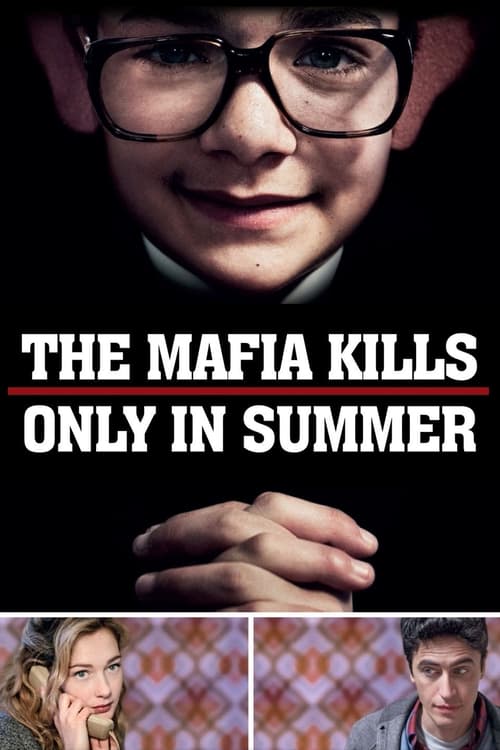
In the ending of "The Mafia Kills Only in Summer," the protagonist, Arturo, reflects on his life and the impact of the Mafia on his family and community. He ultimately finds a sense of hope and resilience despite the chaos around him. The film concludes with a poignant moment that emphasizes the importance of love and family amidst the backdrop of violence and crime.
As the film approaches its conclusion, we see Arturo, now an adult, grappling with the memories of his childhood and the pervasive influence of the Mafia in Palermo. The narrative shifts to a scene where he is at a family gathering, surrounded by loved ones. The atmosphere is bittersweet, filled with laughter and warmth, yet underscored by the lingering shadows of the Mafia's presence.
Arturo's mother, who has always been a source of strength, shares a heartfelt moment with him, reminding him of the importance of staying true to oneself and valuing family above all else. This scene is filled with emotional weight, as Arturo reflects on the sacrifices made by his parents and the impact of their choices on his life.
In a parallel storyline, we see the fate of the Mafia members who have been central to the narrative. Their violent lifestyle catches up with them, leading to a series of arrests and confrontations with law enforcement. The tension escalates as the community begins to push back against the Mafia's influence, signaling a shift in the power dynamics of Palermo.
As the film draws to a close, Arturo stands on a balcony overlooking the city, contemplating the future. He is filled with a sense of determination to break the cycle of violence that has plagued his family and community. The final scene captures him looking out at the horizon, symbolizing hope and the possibility of a brighter future.
The film ends with a powerful message about resilience, love, and the importance of family, leaving the audience with a sense of optimism despite the dark realities depicted throughout the story.
Is there a post-credit scene?
The movie "The Mafia Kills Only in Summer" does not have a post-credit scene. The film concludes its narrative without any additional scenes after the credits roll. The story wraps up with a focus on the main characters and their experiences, leaving the audience with a sense of closure regarding the events that unfolded throughout the film.
What motivates Arturo to pursue his love for Flora despite the dangers of the Mafia in Palermo?
Arturo's motivation to pursue Flora is deeply rooted in his childhood infatuation and his desire for a normal life amidst the chaos of Mafia violence in Palermo. He is determined to win her affection, seeing her as a symbol of hope and normalcy. His love for Flora drives him to take risks, often leading him into precarious situations as he navigates the treacherous landscape of Mafia influence.
How does the relationship between Arturo and his father evolve throughout the film?
Arturo's relationship with his father, who is a journalist, is complex and evolves as the story progresses. Initially, Arturo admires his father's bravery and commitment to exposing the Mafia, but as the dangers escalate, he becomes increasingly worried about his father's safety. This tension culminates in moments of conflict where Arturo's desire to protect his father clashes with his father's dedication to his work, highlighting the generational divide in their approaches to confronting the Mafia.
What role does the Mafia play in shaping the events of Arturo's life and his community?
The Mafia serves as a constant, looming threat in Arturo's life, shaping not only his personal experiences but also the dynamics of his community. Their presence is felt in the everyday lives of the characters, influencing decisions, instilling fear, and dictating social norms. The Mafia's actions directly impact Arturo's family, friends, and even his romantic pursuits, creating a backdrop of tension that drives the narrative forward.
How does Flora's character contribute to the themes of love and danger in the film?
Flora embodies the dual themes of love and danger throughout the film. As Arturo's love interest, she represents the ideal of a peaceful life away from the Mafia's influence. However, her connection to Arturo also places her in jeopardy, illustrating the risks associated with love in a violent environment. Flora's character development reflects her own struggles with the realities of living in a Mafia-dominated society, making her a pivotal figure in highlighting the stakes of their relationship.
What significant events lead to Arturo's realization about the impact of the Mafia on his life?
Several significant events lead to Arturo's realization about the Mafia's impact on his life, including witnessing violent acts, the loss of friends and family members to Mafia-related incidents, and the constant fear that permeates his daily existence. These experiences culminate in a moment of clarity when he understands that the Mafia's influence is inescapable, forcing him to confront the reality that his dreams of a peaceful life with Flora may be forever tainted by the violence surrounding them.
Is this family friendly?
"The Mafia Kills Only in Summer" is a dark comedy that intertwines themes of crime, family, and the impact of the Mafia on everyday life in Palermo, Italy. While it has humorous elements, there are several aspects that may be objectionable or upsetting for children or sensitive viewers:
-
Violence and Crime: The film depicts the Mafia's influence and the violence associated with it, including references to murders and criminal activities. While not graphically violent, the implications can be unsettling.
-
Death and Loss: Characters experience loss and the emotional weight of death, which may be distressing for younger audiences or those sensitive to themes of grief.
-
Corruption: The portrayal of political corruption and its effects on society may be complex and difficult for children to understand fully.
-
Mature Themes: The film explores adult themes such as love, betrayal, and the moral dilemmas faced by individuals living in a crime-ridden environment, which may not resonate with younger viewers.
-
Language: There are instances of strong language that may not be suitable for children.
Overall, while the film has comedic elements, its underlying themes and content may not be appropriate for all audiences, particularly younger children or those sensitive to such topics.








