











Popular
What motivates the main character, King Ping, throughout the film?
How does the relationship between King Ping and his mentor evolve during the film?
What role does the antagonist play in King Ping's journey?
How do the supporting characters influence King Ping's decisions?
What key events lead to King Ping's transformation by the end of the film?
Should I watch it?
Ask Your Own Question

What is the plot?
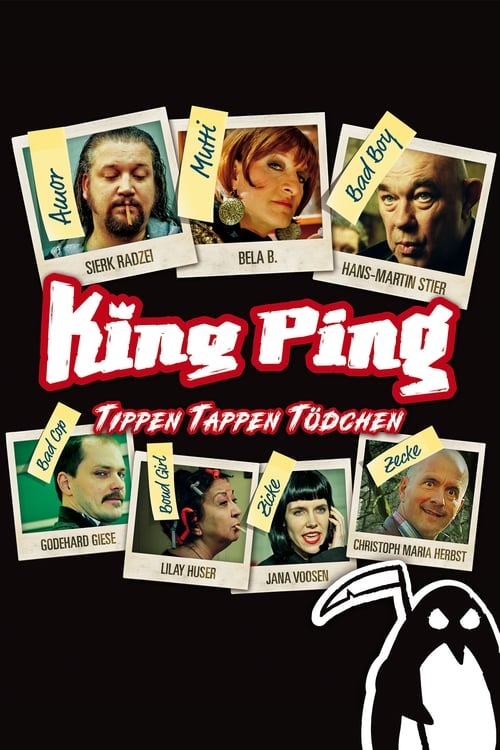
Clemens "King" Frowein has already fallen far from his old life when the story opens: suspended from the Wuppertal police force for taking justice into his own hands, he now spends his days as a penguin keeper at the Wuppertal Zoo and his nights in the back room of Biggi's outrageous hair salon, a cramped refuge that somehow feels warmer than his old career ever did. Even in exile, though, he cannot stop being a cop. He has created bullenjagd.de, a website where citizens can upload photos of police officers committing traffic offenses, and the idea captures exactly who he is now: bitter, funny, stubborn, and still obsessed with exposing abuse of power even after the institution has thrown him out. Around him, the film settles into its odd little orbit of misfits. Biggi, the salon owner and King's landlady, is his most reliable shelter; Wolfken, the gay bouncer, is part drinking buddy and part street-level ally; two slightly eccentric fellow animal keepers drift in and out of the investigation; Dr. Nicole Werner, the forensic pathologist, is the woman King wants and cannot have; and local reporter Jörg Schönfeld is the constant irritant who appears whenever King gets close to anything interesting, turning every clue into a public spectacle before it can be used carefully.
That uneasy balance breaks the night one of King's former colleagues, Ahaus, goes drinking and ends up dead at the bottom of a Wuppertal stairway. The body is found with a broken neck, and the police immediately settle into the comfort of the obvious explanation: a drunk man, a bad stair, an accident. King sees the case differently from the first moment. To him, the scene feels staged, too neat, too convenient, and too much like the sort of official lie police like to tell themselves when the truth is messier than the paperwork. Elli Ellbroich, now King's successor, and Alexander Dudenbrock, another of the officers in charge, prefer the same explanation for the opposite reason: they do not want trouble, and they certainly do not want a suspended ex-commissioner telling them they are wrong. King's investigation begins almost as a personal act of rebellion. He prowls through the city, asks questions nobody wants to answer, and leans on whatever scraps of evidence he can find while trying to keep his pride intact and his life from falling apart.
The film keeps returning to the places that define King's strange new existence. The zoo is his emotional reset button, a place where animals respond to routine rather than corruption, and where his work with the penguins gives him a strange, almost childlike peace. Biggi's salon is the opposite: loud, garish, theatrical, and full of gossip, music, and personality. It is there that King can still be "King" without being a policeman. But the city itself is the real maze. Wuppertal's steep staircases become more than scenery; they become the murder weapon and the cover story, the repeated vertical drop that turns deliberate killings into something that can be mistaken for a simple fall. The title's joke--"Tippen Tappen Tödchen," a dark play on local stair culture--becomes increasingly sinister as King realizes the first death is only the beginning.
Ahaus's death is followed by two more, each one echoing the first. Again the victims are found after apparently falling down a staircase, again the neck is broken, and again the official reaction is sluggish and self-protective. The repetition changes the mood completely. No one can call three identical "accidents" an accident anymore, and King's suspicion hardens into certainty. This is no random series of misfortunes. It is a pattern, and patterns are what detectives live for. He begins connecting the victims through their pasts and through the people they knew, and the story's real shape starts to emerge: all three dead men are tied to a strange sect, some obscure and unsettling network that seems to link them in a way the police have not bothered to understand. What initially looks like a local crime story suddenly opens into a hidden social world of loyalty, secrecy, and fear.
The investigation grows more dangerous with every step. King and his improvised team move between Kneipen, box clubs, shadowy streets, and the city's rougher districts, chasing half-clues and talking to people who would rather not remember anything. Schönfeld keeps trailing after him, turning up wherever King goes, asking questions, filing stories, and generally making himself a nuisance. He is not exactly an enemy, but he is the kind of man who feeds on chaos, and King can never decide whether he helps the case or makes it harder. The official police, meanwhile, stay infuriatingly passive. Elli Ellbroich and Alexander Dudenbrock would rather keep the peace than disturb it, and every confrontation with King is built on the same tension: he believes they are incompetent at best and complicit at worst, while they regard him as a reckless nuisance who cannot accept that he no longer has authority.
Dr. Nicole Werner becomes crucial as the case deepens. King's romantic pursuit of her has already established that he wants more from her than professional help, but she stays emotionally distant, which only makes her steadier and more useful. Her forensic findings help strip the mystery of its accidental appearance. The broken-neck injuries are consistent, the stair falls do not fit together naturally, and the evidence begins to support what King has been shouting from the start: these are murders disguised as accidents. The details matter because the killer is using the city itself as camouflage. Wuppertal's staircases, so ordinary to the locals and so defining of the city's geography, become an elegant killing machine. They allow someone to push, stage, and disappear, leaving behind only a body and a convenient explanation.
As King digs further, the conspiracy becomes clearer but also more unsettling. The sect is not just a vague background detail; it is the key that binds the victims together and explains why they were targeted. The film withholds the exact internal logic of the group until late, but the implication is unmistakable: the murders are tied to something the victims knew, something the sect needed hidden, and perhaps something they once participated in. King's instinctive anger, which got him suspended in the first place, becomes his greatest asset. He is not patient, not diplomatic, and not willing to stop when official channels tell him to. He pushes through the city's underbelly, through nightlife dens and criminal corners, through the kinds of places respectable police officers only visit when they are forced to. The unseen killer, aware of the pressure, starts to watch King back. The investigator becomes a target, and the film shifts from mystery to chase. Every new step carries the sense that the killer is one move ahead and waiting for King to slip.
Biggi's salon remains the one place where King can still exhale. The scenes there have a comic tenderness that keeps the film from tipping fully into darkness. Biggi's presence is larger than life, and King's home in her back room gives him a strange domestic stability. But even there, the case follows him. There is no clean separation between life and work, between affection and danger. Wolfken, the two animal-keeper colleagues, and Biggi all become part of King's informal support network, each in their own way helping him continue when the police would rather he disappear. This scattered team is part of the film's charm: nobody acts like a traditional detective assistant, yet together they form a noisy, affectionate, slightly ridiculous machine for getting at the truth.
The final stretch tightens around the sect and its hidden connections. King follows the trail into darker and darker spaces, where the city's social layers seem to collapse into one another. A box club, a bar, a back alley, a rumor passed by someone who is too scared to say too much--each step brings him closer to the people behind the deaths. The film builds its climax by stacking confrontations. King clashes again with Elli Ellbroich and Alexander Dudenbrock, who continue to resist his accusations and remain trapped inside the comfortable delusion that the city is safer when unpleasant truths are ignored. He is pressured by Schönfeld, whose nose for a story threatens to expose things before King is ready. And somewhere in the dark, the killer keeps moving, aware that King is closing in.
The revelation that matters most is not just that the deaths were murders, but that they were organized around a secret that the sect cannot allow to surface. The victims are not random; they are connected by membership, knowledge, or involvement in that hidden group, and the stairway deaths are a method of silencing them while making the killings look like the kind of everyday urban mishap nobody wants to investigate too closely. The repeated broken necks are the killer's signature and the city's shame. The more King learns, the more his own role changes from suspended cop to something closer to avenger, even if the film keeps the tone playful and comic. He is no longer simply solving a case. He is forcing a city to look at the violence it would prefer to misread.
In the climax, King finally breaks through the web of secrecy by tracing the staircase murders back to the sect and into the spaces where the truth has been hidden. The confrontation is less about a tidy procedural arrest than about exposure: the people behind the deaths are brought into the light, and the masquerade of "accidents" collapses. King's persistence, the very thing that got him suspended, is what saves the case. He proves that the deaths of Ahaus and the two later victims are not random falls but deliberate killings linked by a conspiracy the police were too timid--or too indifferent--to confront. The exact mechanics of every blow are less important than the fact that King has outlasted the lie.
The final scenes restore the film's unusual emotional balance rather than offering a grim victory. The murder case is solved, the conspiracy is cracked open, and King's stubborn need to know the truth is vindicated. The world does not become normal; it simply becomes legible again. He remains suspended from the old order in spirit, if not in status, but he has also proved that he still belongs in the business of uncovering crime. He returns, in effect, to the small circle that has sustained him from the beginning: Biggi's salon, the zoo, the oddball allies who never stopped believing him, and the city he cannot quite leave behind. The story ends not with triumph in a grand sense, but with the satisfaction of someone who has stared into corruption, followed it down the stairwells of his own city, and dragged it into the daylight one broken-necked lie at a time.








What is the ending?
In the ending of "King Ping - Tippen Tappen Tödchen," the main characters face the consequences of their actions throughout the film. The story culminates in a tense confrontation that leads to a resolution of their conflicts, revealing the true nature of their relationships and the choices they have made.
As the film progresses towards its conclusion, we find ourselves in a dimly lit room where the atmosphere is thick with tension. The main character, a young man named Max, is grappling with the weight of his decisions. He stands at a crossroads, reflecting on the chaos that has unfolded around him. His internal struggle is palpable; he feels the burden of responsibility for the events that have transpired.
In the next scene, we see Max confront his former friends, who have been drawn into a web of deceit and betrayal. The room is filled with a sense of impending doom as accusations fly and emotions run high. Each character reveals their vulnerabilities, and the audience can feel the desperation in their voices. Max's friends, once loyal companions, now stand divided, each grappling with their own guilt and regret.
As the confrontation escalates, the tension reaches a breaking point. Max, feeling cornered, makes a bold decision to take responsibility for the fallout of their actions. He steps forward, his voice steady but filled with emotion, and admits his role in the chaos. This moment of vulnerability shifts the dynamics in the room, forcing his friends to confront their own shortcomings.
In a pivotal scene, one of Max's friends, Lisa, breaks down, revealing her own fears and insecurities. The emotional weight of her confession resonates with the others, and they begin to realize the impact of their choices on one another. The atmosphere shifts from hostility to a fragile understanding, as they all acknowledge their shared mistakes.
As the film nears its conclusion, the characters begin to reconcile. They share a moment of silence, reflecting on their journey and the lessons learned. Max, now more self-aware, expresses a desire to move forward and rebuild their friendships. The camera captures the subtle changes in their expressions, hinting at the possibility of healing.
In the final scenes, we see the characters part ways, but this time with a sense of hope. Max walks away from the confrontation, a newfound determination in his stride. The film closes with a lingering shot of the group, now united in their understanding, as they step into the uncertain future together.
The fate of each main character is intertwined with this resolution. Max emerges as a more mature individual, ready to face the consequences of his actions. Lisa, having confronted her fears, finds a sense of empowerment. The other friends, too, begin to understand the importance of accountability and the strength of their bonds. The ending leaves the audience with a sense of closure, highlighting the themes of friendship, responsibility, and the journey towards redemption.
Is there a post-credit scene?
In the movie "King Ping - Tippen Tappen Tödchen," there is indeed a post-credit scene that adds a humorous twist to the film's conclusion. After the credits roll, the scene opens in a dimly lit room where a group of characters, previously seen in the film, are gathered around a table. They are engaged in a lively discussion about the events that transpired throughout the story, reflecting on their misadventures and the absurdity of their situations.
As the conversation unfolds, one character suddenly stands up, dramatically declaring that they have a brilliant plan for their next big scheme. The others lean in, intrigued yet skeptical, as the character begins to outline an outrageous idea that involves a mix of elements from their previous escapades. The scene is filled with laughter and playful banter, showcasing the camaraderie that has developed among them.
The camera then zooms in on a mysterious object on the table, hinting at a potential sequel or further adventures. The scene ends with a comedic cliffhanger, leaving the audience with a sense of anticipation and amusement, perfectly encapsulating the film's lighthearted tone.
What motivates the main character, King Ping, throughout the film?
King Ping is driven by a desire to prove himself and gain respect in a world that often underestimates him. His journey is marked by a struggle for identity and acceptance, as he navigates the challenges of his environment.
How does the relationship between King Ping and his mentor evolve during the film?
Initially, King Ping views his mentor as a source of wisdom and guidance, but as the story progresses, he begins to challenge his mentor's teachings, seeking to carve out his own path. This evolution reflects King Ping's growing confidence and independence.
What role does the antagonist play in King Ping's journey?
The antagonist serves as a significant obstacle for King Ping, embodying the societal pressures and expectations that he must confront. Their confrontations are pivotal moments that force King Ping to confront his fears and ultimately grow stronger.
How do the supporting characters influence King Ping's decisions?
The supporting characters provide a mix of encouragement and doubt, shaping King Ping's choices. Some characters inspire him to pursue his dreams, while others represent the skepticism he faces, creating a complex web of influences that impact his journey.
What key events lead to King Ping's transformation by the end of the film?
Key events include moments of failure that challenge King Ping's resolve, encounters with pivotal characters that offer new perspectives, and climactic confrontations that test his limits. Each event contributes to his growth, culminating in a profound transformation that redefines his understanding of success.
Is this family friendly?
"King Ping - Tippen Tappen Tödchen" is a film that blends elements of comedy and drama, and while it has a whimsical premise, it does contain some scenes that may be considered objectionable or upsetting for children or sensitive viewers.
-
Dark Humor: The film employs dark humor that may not be suitable for younger audiences, as it touches on themes of death and existentialism in a comedic context.
-
Violence: There are moments of slapstick violence that, while exaggerated and comedic, could be unsettling for some viewers, particularly younger children.
-
Emotional Turmoil: Characters experience significant emotional struggles, including feelings of loss and despair, which may be intense for sensitive viewers.
-
Mature Themes: The film explores themes of mortality and the absurdity of life, which may be difficult for children to fully understand or process.
-
Language: There may be instances of mild profanity or suggestive language that could be inappropriate for younger audiences.
Overall, while "King Ping - Tippen Tappen Tödchen" has comedic elements, its darker themes and humor may not be entirely family-friendly. Viewer discretion is advised, especially for younger children or those sensitive to such content.








