





Popular
What role does the setting play in the development of the story?
What is the significance of the character of the child in Vara: A Blessing?
How does Vara's relationship with her husband evolve throughout the film?
How does the film portray the theme of motherhood through Vara's character?
What is the significance of the title 'Vara: A Blessing' in relation to the main character's journey?
Should I watch it?
Ask Your Own Question

What is the plot?
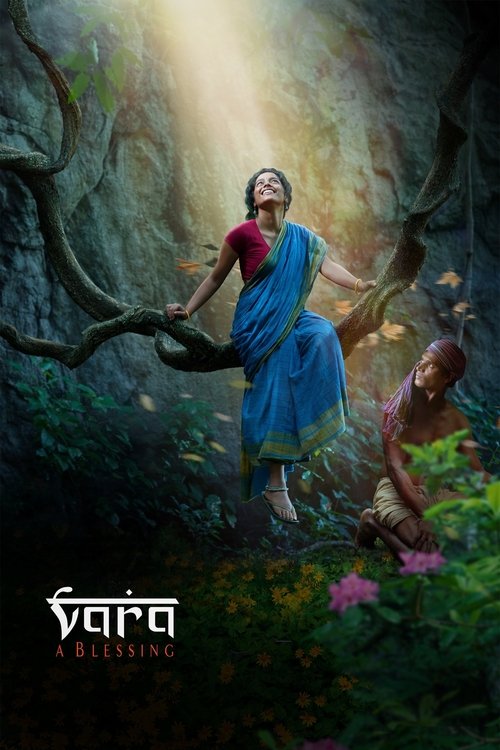
In rural India, during a single summer in the 1970s, Lila lives in a world where devotion, caste, desire, and duty are all knotted together so tightly that every glance feels dangerous. She and her mother, Vinata, are the last remnants of an old devadasi tradition in the village: Vinata is a temple dancer, ceremonially wed to Krishna, and Lila is being raised in the same discipline, learning Bharatanatyam as both sacred inheritance and social burden. Their home is poor and austere, but it is also filled with ritual--the sound of feet stamping the floor, the hush before prayer, the careful instruction of a mother determined to preserve a fading way of life. Lila begins as a dutiful daughter, beautiful and contained, her life organized around dance and devotion, but from the opening scenes there is already a fracture in her inner world. When she dances as Krishna's beloved Radha, the god she imagines begins to shift in her mind, first subtly and then overwhelmingly, until the divine presence is no longer separate from human longing.
That transformation is the film's first great emotional current. Lila's devotion is genuine, but it grows increasingly sensual, and the camera lingers on the way her body responds to music and imagination. Krishna, in her mind, slowly becomes Shyam, a young Muslim artisan from a lower social standing who dreams of becoming a sculptor in the city. Shyam is introduced as a quiet, ambitious boy with an artist's hunger and a village boy's vulnerability. He works with clay and stone, and his aspiration to create beauty sets him apart from the narrow life the village expects of him. The first time Lila truly sees him, the film makes the moment feel like a private revelation: what begins as curiosity hardens into fascination, and fascination into desire. The spiritual ecstasy of her dance and the erotic pull of her awakening begin to blur, so that every performance becomes a duel between goddess and lover. In her visions, the blue skin of Krishna is replaced by Shyam's face, and the substitution is not just romantic but sacrilegious, a dangerous collapsing of sacred and earthly love.
The village itself watches everything, even when it pretends not to. Social hierarchy is embedded in daily life, and the film shows how poverty, religion, and caste enforce one another. Vinata understands these rules intimately. She is not merely Lila's mother; she is also a guardian of tradition, severe because she knows how quickly a woman like Lila can be punished if she steps outside the narrow path available to her. Her teaching is at once loving and controlling. She instructs Lila in devotion, posture, and restraint, but she also represents the cost of survival in a world where women's bodies are already read as public property. The tension between them is often quiet, expressed in looks and pauses rather than shouting. Vinata wants Lila to remain anchored in duty, while Lila is increasingly carried away by feeling she cannot name without fear.
Shyam's own path intersects with Lila's through art. He asks her to pose for him as he works on a sculpture of Saraswati, the goddess of wisdom and knowledge. The request is simple in outward form, but in the logic of the village it is explosive. A devadasi-trained Hindu dancer posing for a Muslim sculptor is already taboo; the fact that the two are drawn to each other makes the act feel even more perilous. Lila agrees anyway, fully aware that if they are discovered, both their lives will be endangered. Their secret meetings become the emotional center of the film. In these scenes, the world feels hushed and suspended. Shyam shapes the goddess in clay while Lila sits before him, the lines of her body becoming part of the sculpture's imagined holiness. What begins as artistic collaboration becomes intimacy, then love. Each visit deepens the bond, and the more time they spend together, the more Lila's dance, prayer, and fantasy are invaded by him.
The woods become one of the film's most charged spaces. There, near a Krishna statue hidden among the trees, Lila performs rituals and allows her imagination to run free. The setting is liminal, neither village nor temple, and it gives form to the conflict inside her. She comes there to honor Krishna, but the more intensely she worships, the more Shyam enters the image. The statue in the woods is both a devotional anchor and a site of transformation, as though the film is watching a sacred identity being rewritten in real time. Lila's private devotion becomes inseparable from the memory of Shyam's face, and this emotional fusion is the story's core secret long before anyone in the village explicitly discovers the affair.
While Lila is pulled deeper into this hidden love, another social force is quietly closing in. The village chief, Subha, is tasked with finding a suitable wife for Prakash, a wealthy young landlord and recluse. Subha is not simply a matchmaker; he is the village's social machinery made flesh, the man who translates custom into coercion. Prakash, meanwhile, is almost the opposite of Shyam in social terms: wealthy, acceptable, and protected by status. He is presented as shy, bookish, and detached from the village's ordinary social life, but he too has been watching Lila from a distance, and his attraction is not innocent. He may not pursue her with the same urgency as Shyam, yet his gaze carries power precisely because it is sanctioned by class. He is the socially legitimate path, the kind of husband who can offer stability and comfort, but also another form of enclosure.
The triangle that forms around Lila is not symmetrical. Shyam offers passion and risk; Prakash offers safety and social ascent; Vinata offers duty and the burden of inheritance. Lila is caught between desire and survival, between the body's truth and the village's judgment. The film deepens this conflict by showing how Lila's inner life is no longer fully her own. As she dances, she no longer only imagines Krishna as a god. Her worship has become an arena in which earthly love and divine longing repeatedly merge. The sacred and the erotic are no longer opposites. They become interchangeable, and that interchange is both ecstatic and terrifying.
Eventually, the inevitable happens: the relationship between Lila and Shyam is discovered by Subha. The discovery does not arrive as a melodramatic explosion but as the tightening of a net. The village's moral order, which has been observing them all along, finally speaks. Once Subha knows, private love becomes public scandal. The emotional atmosphere changes immediately. What had been secret and alive now feels exposed, brittle, and doomed. Lila is forced to face reality, and the dream world that had been sustained by dance and hidden meetings begins to collapse. Shyam's hope of becoming an artist in the city, and of building a life with Lila, is suddenly placed against the weight of communal disapproval and caste boundaries that neither art nor passion can dissolve.
This is the film's central confrontation, and it is fought without swords or fists, through silence, shame, and social pressure. Vinata stands at one pole of the conflict, trying to protect both her daughter and the fragile dignity of their tradition. Subha stands at another, embodying the village's insistence on propriety and hierarchy. Shyam represents the possibility of a life beyond the village's control, but he is also trapped by the very structure that makes his love illicit. Prakash enters this crisis as an alternative that appears safer and more acceptable, especially to the village order, but his presence only sharpens the choice before Lila rather than resolving it. She is asked, in effect, to decide whether to follow the truth of her heart or submit to a future that preserves social peace.
No deaths punctuate the film's drama. The story's violence is structural and emotional rather than physical, and its casualties are privacy, youth, and the possibility of uncomplicated happiness. The film builds its tension through renunciation, not bloodshed. What is lost is not life but the chance to live freely.
In the final movement, the film shifts from secrecy to painful acceptance. The relationship has been exposed, and Lila is left with the impossible task of preserving her mother, her love, and her own future without being able to keep all three. The ending does not offer liberation in any simple sense. Instead, it resolves through sacrifice. Lila chooses duty over personal happiness, giving up the love that has awakened her. The choice is framed not as victory but as a wound that must be borne quietly. The film's emotional logic insists that in her world, love cannot be separated from cost. If she remains with Shyam, she risks destroying her mother and herself; if she relinquishes him, she preserves the only social order available to them, but at the price of her own heart.
The final scene turns this renunciation into a haunting image of continuity and loss. As Lila is carried in a palanquin toward her wedding ceremony, she glimpses a boy passing by through a narrow opening. The child's face carries Shyam's features, and for a moment the world splits open again. The boy's skin appears blue, and Lila understands him as a personification of Krishna, a sign that her bond with Shyam will endure through the child and through memory. This is the film's last great twist: the love she loses in life survives in symbolic form, folded back into devotion and myth. Rather than ending in catastrophe, the story ends in mystical recognition. Lila sees that the sacred and the human are still inseparable in her fate, even after renunciation. The wedding continues, the village's order is restored, and yet the final image suggests that nothing has truly been erased. Shyam remains in her imagination, Krishna remains in her worship, and the film closes on the eerie consolation that her life's two great identities--lover and devotee--are forever fused.
So the story ends where it began, in a world of ritual and constraint, but Lila is no longer the same. She has moved through desire, secrecy, discovery, and sacrifice, and the ending leaves her suspended between obedience and inner truth. Vinata's tradition survives in altered form, Shyam is lost to her as a lived future, and Prakash's social promise fades into the background as something accepted but emotionally hollow. What remains is Lila's transformed consciousness: she has seen love as danger, devotion as longing, and sacrifice as the price of belonging.
More Movies Like This
Browse All Movies →








What is the ending?
In the ending of "Vara: A Blessing," the story culminates in a poignant moment where the main character, a young woman named Vara, faces a life-altering decision regarding her future and the expectations placed upon her. The film concludes with a sense of unresolved tension, leaving the audience to ponder the implications of her choice.
As the narrative unfolds in the final scenes, we find Vara in a state of emotional turmoil. She has been grappling with the weight of her family's expectations and the societal pressures surrounding her. The setting is intimate, with soft lighting that casts a warm glow, emphasizing the personal nature of her struggle.
Scene by scene, the ending begins with Vara standing alone in a quiet, serene landscape, perhaps a field or a garden, symbolizing both freedom and confinement. The camera captures her contemplative expression, reflecting her internal conflict. She is torn between the traditional path laid out for her and her own desires for independence and self-fulfillment.
In the next scene, we see Vara's family gathered in a modest home, their faces a mixture of hope and anxiety. They discuss her future, revealing their deep-seated beliefs about marriage and duty. The dialogue is filled with cultural references, underscoring the generational divide between Vara and her family. As they speak, Vara's internal struggle intensifies; she feels the weight of their expectations pressing down on her.
The climax of the film occurs when Vara is confronted by a pivotal choice. She stands at a crossroads, both literally and metaphorically. The camera zooms in on her face, capturing the flicker of determination in her eyes. In this moment, she must decide whether to conform to her family's wishes or to carve her own path. The tension is palpable, and the audience can feel her heart racing as she weighs her options.
In the final moments, Vara makes her choice. The scene shifts to her walking away from her family home, a symbolic act of defiance and self-discovery. The landscape around her is expansive, representing the possibilities that lie ahead. As she walks, the camera lingers on her face, revealing a mixture of fear and exhilaration. The film closes with a shot of her silhouette against the horizon, leaving her fate open-ended. The audience is left to ponder what lies ahead for her, encapsulating the film's exploration of identity, choice, and the complexities of familial love.
In summary, the ending of "Vara: A Blessing" leaves the fate of Vara ambiguous, highlighting her journey towards self-empowerment while acknowledging the challenges she faces in breaking away from tradition. The other characters, particularly her family, remain in their established roles, representing the societal norms that continue to influence their lives. The film concludes with a sense of hope and uncertainty, inviting viewers to reflect on the nature of choice and the pursuit of personal happiness.
Is there a post-credit scene?
The movie "Vara: A Blessing" does not contain a post-credit scene. The film concludes its narrative without any additional scenes or content after the credits roll. The story wraps up with a focus on the emotional and spiritual journey of the characters, particularly the protagonist, as she navigates her complex relationship with her family and her own desires. The ending emphasizes the themes of sacrifice, love, and the search for personal identity, leaving the audience with a poignant reflection on the choices made throughout the film.
What role does the setting play in the development of the story?
The setting of 'Vara: A Blessing' is crucial to the narrative, as it reflects the cultural backdrop of rural India. The lush landscapes and traditional village life contrast with Vara's internal turmoil, emphasizing her isolation and the societal norms that confine her. The environment serves as both a sanctuary and a prison, influencing Vara's emotional state and decisions.
What is the significance of the character of the child in Vara: A Blessing?
The child in 'Vara: A Blessing' symbolizes hope and the complexities of motherhood. The protagonist, a young woman named Vara, grapples with her desire for a child and the societal pressures surrounding motherhood. The child's presence serves as a catalyst for Vara's emotional journey, highlighting her internal struggles and the cultural expectations placed upon her.
How does Vara's relationship with her husband evolve throughout the film?
Vara's relationship with her husband, who is initially supportive, becomes strained as the story progresses. His desire for a child contrasts with Vara's feelings of inadequacy and societal pressure. This tension is palpable in their interactions, showcasing a shift from intimacy to distance as they navigate their differing desires and the weight of expectations.
How does the film portray the theme of motherhood through Vara's character?
Vara's character is deeply intertwined with the theme of motherhood, as her longing for a child drives the narrative. Her emotional journey is marked by moments of joy, despair, and conflict, illustrating the societal pressures and personal desires that shape her identity. The film poignantly captures her struggles, making her quest for motherhood both a personal and cultural commentary.
What is the significance of the title 'Vara: A Blessing' in relation to the main character's journey?
The title 'Vara: A Blessing' reflects the duality of Vara's experience as she navigates the blessings and burdens of motherhood. It encapsulates her longing for a child, which is seen as a blessing in her culture, while also highlighting the emotional and societal challenges she faces. The title serves as a poignant reminder of the complexities of her journey, where the desire for a blessing becomes intertwined with pain and sacrifice.
Is this family friendly?
"Vara: A Blessing" is a film that explores deep emotional themes and cultural practices, which may not be suitable for all audiences, particularly children or sensitive viewers. Here are some potentially objectionable or upsetting aspects:
-
Cultural Practices: The film delves into the tradition of arranged marriages and the societal pressures surrounding them, which may be difficult for younger viewers to understand.
-
Emotional Turmoil: Characters experience significant emotional distress, including feelings of isolation, longing, and despair, which could be intense for sensitive viewers.
-
Family Dynamics: There are scenes that depict familial expectations and conflicts, showcasing the struggles between personal desires and cultural obligations.
-
Visual Imagery: The film includes scenes that may be visually striking or unsettling, particularly in how it portrays the characters' emotional states and the weight of their circumstances.
-
Themes of Sacrifice: The narrative involves themes of sacrifice and the impact of personal choices on family, which may resonate deeply and evoke strong emotions.
Overall, while the film is rich in storytelling and cultural exploration, its themes and emotional depth may not be suitable for younger audiences or those who are particularly sensitive to such topics.